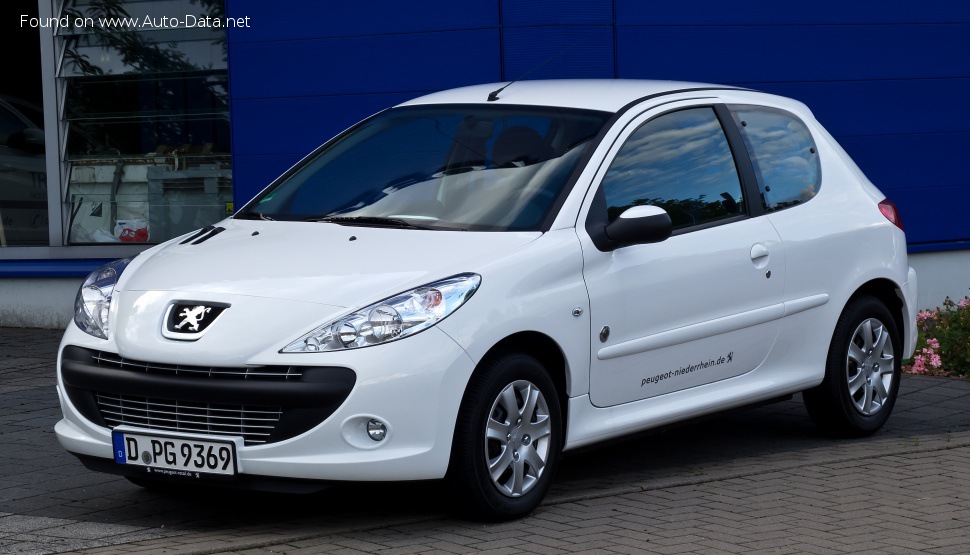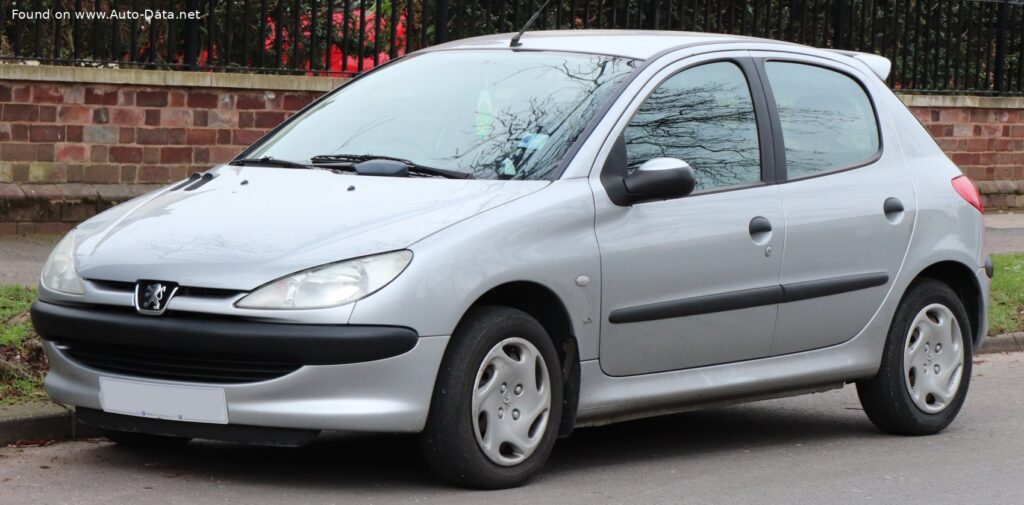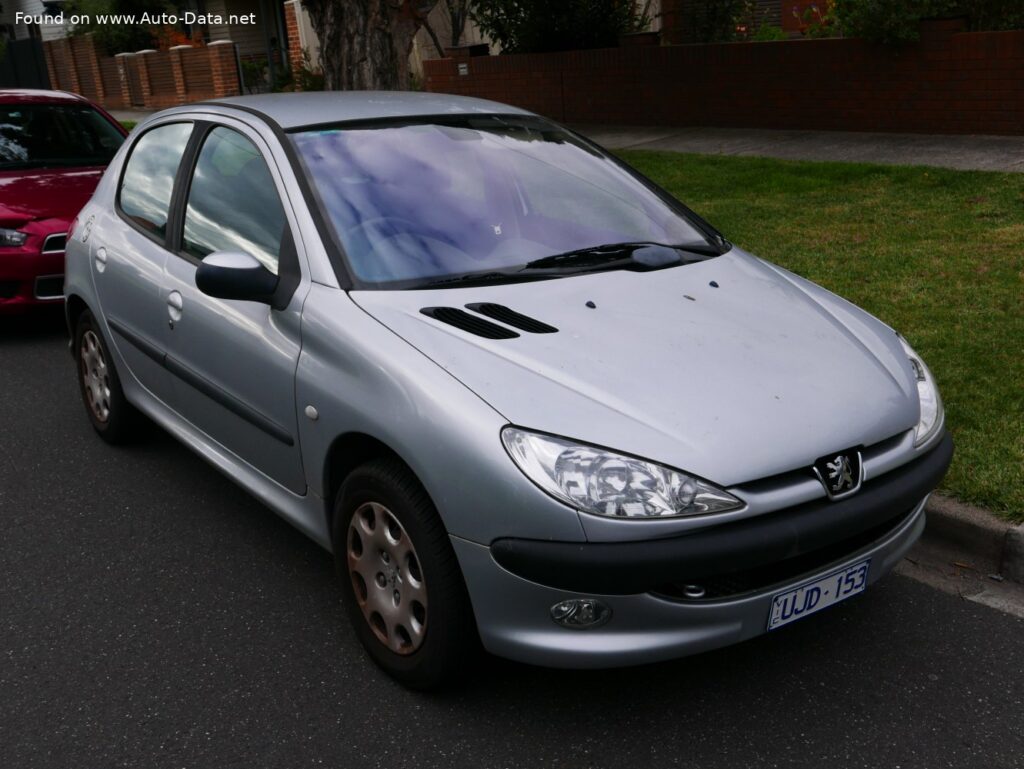
The Peugeot 206, produced from 1998 to 2012, was a supermini car manufactured by the French automaker Peugeot. The facelifted version, introduced in 2003, brought with it revised styling and mechanical updates. Among the various engine and trim combinations offered, the 2.0 RC (177 hp) variant, available between 2003 and 2007, represented a performance-oriented offering within the 206 range. This model was built on the T1 platform, also known as the 1HX0/A3 platform, and distinguished itself as a sporty hatchback aimed at enthusiasts seeking a more engaging driving experience.
Peugeot 206 2.0 RC (177 hp): Overview and Positioning
The 2.0 RC occupied a niche position within the 206 lineup. While the base models focused on affordability and fuel efficiency, and the GT trim offered a moderate performance boost, the 2.0 RC was designed to deliver a significantly more potent driving experience. It was positioned as the flagship performance model, sitting above the 1.6-liter and 2.0-liter non-RC variants. It was a direct competitor to other hot hatches of the era, such as the Renault Clio Sport and the Volkswagen Polo GTI. The “RC” designation stood for “Rallye Competition,” hinting at the model’s sporting aspirations, though it wasn’t directly derived from a rally car.
Powertrain & Engine Architecture
The heart of the 206 2.0 RC is the RFK EW10J4S2 engine, a 1.997-liter (121.86 cubic inches) inline-four cylinder gasoline engine. This engine is a naturally aspirated unit, meaning it does not utilize a turbocharger or supercharger. It features multi-port fuel injection and a double overhead camshaft (DOHC) valvetrain with four valves per cylinder. The engine produces a maximum power output of 177 horsepower (hp) at 7000 rpm and 202 Newton-meters (148.99 lb-ft) of torque at 4750 rpm. This translates to a power-to-liter ratio of 88.6 hp/liter. The engine’s internal dimensions include a cylinder bore of 85 mm (3.35 inches) and a piston stroke of 88 mm (3.46 inches), with a compression ratio of 11:1. The engine requires 5.25 liters (5.55 US quarts / 4.62 UK quarts) of engine oil and 5.3 liters (5.6 US quarts / 4.66 UK quarts) of coolant.
Unlike many performance models of the time, the 206 2.0 RC was exclusively offered with a 5-speed manual transmission. This was a deliberate choice by Peugeot to provide drivers with maximum control and engagement. The transmission is front-wheel drive, delivering power to the front wheels. The gearbox ratios are tuned for sporty performance, prioritizing acceleration over top-end fuel economy.
Driving Characteristics
The 206 2.0 RC delivers a noticeably more spirited driving experience compared to lower-powered 206 variants. The 177 hp engine provides brisk acceleration, achieving 0-100 km/h (0-62 mph) in approximately 7.5 seconds and 0-60 mph in around 7.1 seconds. The maximum speed is rated at 220 km/h (136.7 mph). The engine is responsive and eager to rev, making it enjoyable to drive on winding roads. The 5-speed manual transmission allows for precise gear changes, further enhancing the driving experience. While not a particularly refined engine, it offers a raw and engaging feel. The relatively short wheelbase of the 206 contributes to its nimble handling, although it can also make the ride slightly firmer than some competitors.
Equipment & Trim Levels
The 2.0 RC trim level came generously equipped, reflecting its position as the performance flagship. Standard features typically included alloy wheels (17-inch), sport seats with enhanced bolstering, a leather-wrapped steering wheel, air conditioning, and electric front windows. The interior often featured aluminum trim accents to emphasize the sporty character. Optional extras included a sunroof, upgraded audio system, and metallic paint finishes. The interior upholstery was typically a combination of cloth and Alcantara, providing a balance of comfort and grip. The dashboard layout was consistent with other 206 models, but the RC version often featured unique instrument cluster graphics.
Chassis & Braking
The 206 2.0 RC featured a MacPherson strut front suspension and a torsion beam rear suspension. The suspension was tuned to provide a firmer ride and improved handling compared to standard 206 models. The front stabilizer bar was thicker to reduce body roll during cornering. The braking system consisted of ventilated discs on the front wheels and solid discs on the rear wheels. Anti-lock Braking System (ABS) was standard. The tires were typically 205/40 ZR17, providing good grip and handling characteristics. The kerb weight of the vehicle is 1100 kg (2425.08 lbs), contributing to its relatively agile handling.
Market Reception & Comparison
The Peugeot 206 2.0 RC was generally well-received by automotive critics. It was praised for its lively engine, engaging handling, and relatively affordable price point. However, some critics noted the engine’s lack of refinement and the somewhat firm ride. Compared to other hot hatches of the era, the 206 2.0 RC offered a compelling combination of performance and value. Fuel economy was rated at 8.6 l/100 km (27.4 US mpg / 32.8 UK mpg) combined, which was reasonable for a performance car of its class. CO2 emissions were 204 g/km, placing it within the Euro 3 emission standard. Reliability was generally good, although some owners reported minor issues with the electrical system.
Technical Specifications
| Brand | Peugeot |
| Model | 206 |
| Generation | 206 (facelift 2003) |
| Type (Engine) | 2.0 RC (177 Hp) |
| Start of production | 2003 |
| End of production | 2007 |
| Fuel consumption (urban) | 11.8 l/100 km (19.9 US mpg / 23.9 UK mpg) |
| Fuel consumption (extra urban) | 6.7 l/100 km (35.1 US mpg / 42.2 UK mpg) |
| Fuel consumption (combined) | 8.6 l/100 km (27.4 US mpg / 32.8 UK mpg) |
| CO2 emissions | 204 g/km |
| Fuel Type | Petrol (Gasoline) |
| Acceleration 0-100 km/h | 7.5 sec |
| Acceleration 0-62 mph | 7.5 sec |
| Acceleration 0-60 mph | 7.1 sec |
| Maximum speed | 220 km/h (136.7 mph) |
| Emission standard | Euro 3 |
| Weight-to-power ratio | 6.2 kg/Hp |
| Weight-to-torque ratio | 5.4 kg/Nm |
| Power | 177 Hp @ 7000 rpm |
| Torque | 202 Nm @ 4750 rpm (148.99 lb.-ft. @ 4750 rpm) |
| Engine layout | Front, Transverse |
| Engine Model/Code | RFK EW10J4S2 |
| Engine displacement | 1997 cm3 (121.86 cu. in.) |
| Number of cylinders | 4 |
| Engine configuration | Inline |
| Cylinder Bore | 85 mm (3.35 in.) |
| Piston Stroke | 88 mm (3.46 in.) |
| Compression ratio | 11:1 |
| Number of valves per cylinder | 4 |
| Fuel injection system | Multi-port manifold injection |
| Engine aspiration | Naturally aspirated |
| Valvetrain | DOHC |
| Engine oil capacity | 5.25 l (5.55 US qt | 4.62 UK qt) |
| Coolant | 5.3 l (5.6 US qt | 4.66 UK qt) |
| Kerb Weight | 1100 kg (2425.08 lbs.) |
| Max. weight | 1560 kg (3439.21 lbs.) |
| Trunk (boot) space – minimum | 210 l (7.42 cu. ft.) |
| Trunk (boot) space – maximum | 992 l (35.03 cu. ft.) |
| Fuel tank capacity | 50 l (13.21 US gal | 11 UK gal) |
| Length | 3835 mm (150.98 in.) |
| Width | 1673 mm (65.87 in.) |
| Height | 1425 mm (56.1 in.) |
| Wheelbase | 2442 mm (96.14 in.) |
| Number of gears | 5 |
| Type of gearbox | Manual transmission |
Legacy
The Peugeot 206 2.0 RC remains a popular choice among enthusiasts in the used car market. Its combination of performance, affordability, and distinctive styling has ensured its continued appeal. While age and mileage can lead to maintenance issues, the engine and transmission are generally considered robust. Parts availability is good, and the 206 benefits from a large and active online community. The 2.0 RC is often seen as a classic example of a French hot hatch, representing a high point in Peugeot’s performance car history.