
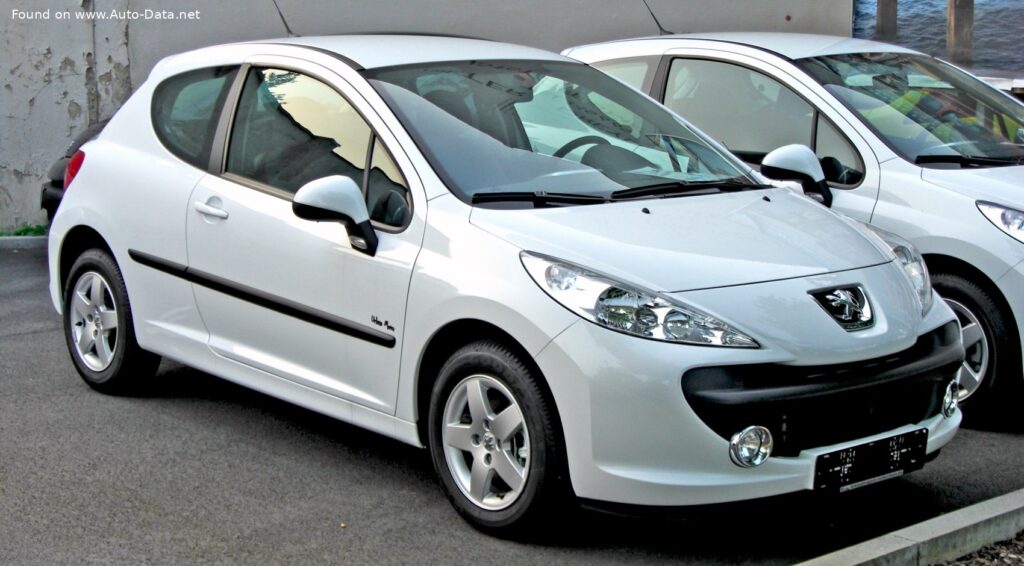
The Peugeot 207 1.6 HDi (110 Hp) was a significant offering from the French automaker, launched in 2006 as a successor to the immensely popular Peugeot 206. Positioned within the competitive European B-segment, the 207 aimed to be a more mature and technologically advanced supermini. Among its various powertrain options, the 1.6 HDi (110 Hp) variant, produced from 2006 to 2009, stood out for its combination of spirited performance and impressive fuel economy, characteristics highly valued in the European market. While never officially sold in the United States, the 207 played a crucial role in Peugeot’s European sales, competing with established rivals and showcasing the brand’s diesel engine expertise.
Powertrain & Engine Architecture
The heart of the Peugeot 207 1.6 HDi (110 Hp) was Peugeot’s 1.6-liter (1560 cm3 or 95.2 cu. in.) HDi turbodiesel engine, internally designated as the 9HZ DV6TED4. This four-cylinder, inline engine utilized advanced technologies for its time, including a common rail direct fuel injection system, a turbocharger, and an intercooler. The common rail system, operating at very high pressures, allowed for precise fuel delivery and optimized combustion, contributing to both power and efficiency. The engine produced 110 horsepower at 4000 rpm, resulting in a power-per-liter output of 70.5 hp/liter.
Crucially, the 1.6 HDi engine excelled in torque production. It generated 177 lb.-ft. (130.55 lb.-ft.) of torque at a low 1750 rpm. This substantial low-end torque provided excellent drivability, particularly in urban environments and during overtaking maneuvers. The engine featured a 16-valve, double overhead camshaft (DOHC) valvetrain, optimizing gas flow for improved performance. The engine was mounted transversely at the front of the vehicle, driving the front wheels. The standard transmission was a five-speed manual gearbox, chosen for its efficiency and driver engagement. While an automated manual transmission was available on some 207 models, it was less common with the 110 hp engine.
Driving Characteristics
The Peugeot 207 1.6 HDi (110 Hp) offered a distinctly different driving experience compared to lower-powered versions or those equipped with gasoline engines. The abundant low-end torque meant that drivers didn’t need to rev the engine aggressively to achieve brisk acceleration. The five-speed manual transmission was well-matched to the engine’s characteristics, with gear ratios designed to maximize fuel efficiency and provide responsive acceleration. First gear was relatively short, aiding in quick starts, while fifth gear was geared for comfortable highway cruising.
Compared to the 1.4-liter gasoline engine offered in the 207, the 1.6 HDi provided significantly more torque and a broader powerband. While the gasoline engine required more frequent gear changes to maintain momentum, the HDi engine’s torque allowed for relaxed cruising and effortless overtaking. Compared to higher-output HDi variants (like the 1.6 HDi 112 hp), the 110 hp version offered a slightly more economical driving experience, though with a marginal reduction in outright performance. The suspension tuning prioritized comfort and stability, making it a pleasant daily driver.
Equipment & Trim Levels
The Peugeot 207 1.6 HDi (110 Hp) was typically offered in several trim levels, varying by market. Base models generally included features such as power steering, central locking, electric front windows, and an ABS anti-lock braking system. Higher trim levels, such as ‘Sport’ or ‘SE’, added features like air conditioning, alloy wheels, a CD stereo with steering wheel-mounted controls, and front fog lights. Interior upholstery typically consisted of cloth seats, with higher trims offering upgraded fabric or partial leather options.
Optional extras included a panoramic sunroof, rear parking sensors, and a navigation system. The dashboard layout was modern for its time, with a centrally-mounted instrument cluster and a user-friendly control layout. Safety features, beyond ABS, included driver and passenger airbags, and seatbelt pretensioners. The 207 was available in both 3-door and 5-door body styles, catering to different customer preferences.
Chassis & Braking
The Peugeot 207 utilized a McPherson strut front suspension with coil springs and an anti-roll bar, providing a good balance of comfort and handling. The rear suspension employed a semi-independent torsion beam setup, which was cost-effective and provided adequate stability for everyday driving. The steering system was a rack and pinion type, offering precise and responsive steering feel.
The braking system consisted of ventilated disc brakes at the front and disc brakes at the rear, providing adequate stopping power for the vehicle’s weight and performance. ABS was standard across all trim levels. Wheel sizes typically ranged from 15 to 16 inches, with tire sizes varying accordingly. The chassis was designed to be relatively lightweight, contributing to the vehicle’s fuel efficiency and agility. Stabilizer bars were fitted to both the front and rear axles to reduce body roll during cornering.
Market Reception & Comparison
The Peugeot 207 1.6 HDi (110 Hp) received generally positive reviews from automotive critics. It was praised for its fuel efficiency, strong torque output, and comfortable ride. Critics noted that the HDi engine provided a more refined and enjoyable driving experience compared to the smaller gasoline engines. However, some reviewers pointed out that the interior materials, while improved over the 206, were still not class-leading.
Compared to other trims in the 207 lineup, the 1.6 HDi (110 Hp) offered a compelling balance of performance and economy. It was more expensive than the base 1.4-liter gasoline model but provided significantly more power and torque. Compared to the higher-output HDi variants, it offered slightly lower running costs, making it an attractive option for drivers who prioritized fuel efficiency. In terms of reliability, the 1.6 HDi engine proved to be generally robust, although, like all diesel engines, it required regular maintenance, including oil changes and filter replacements.
Technical Specifications
| Category | Feature |
| General Information | Brand: Peugeot |
| Model: 207 | |
| Generation: 207 | |
| Type (Engine): 1.6 HDi (110 Hp) | |
| Production Years: 2006 – 2009 | |
| Body Type: Hatchback (3-5 Doors, 5 Seats) | |
| Performance Specs | Fuel Consumption (Combined): 49 US mpg (4.8 l/100 km) |
| Fuel Type: Diesel | |
| Acceleration 0-60 mph: 9.6 seconds | |
| Acceleration 0-62 mph (0-100 km/h): 10.1 seconds | |
| Maximum Speed: 119.92 mph (193 km/h) | |
| Weight-to-Power Ratio: 11.3 kg/Hp (88.4 Hp/tonne) | |
| Weight-to-Torque Ratio: 7 kg/Nm (142.3 Nm/tonne) | |
| Drag Coefficient (Cd): 0.30 | |
| Engine Specs | Power: 110 Hp @ 4000 rpm |
| Power per Liter: 70.5 Hp/l | |
| Torque: 130.55 lb.-ft. @ 1750 rpm (177 Nm) | |
| Engine Layout: Front, Transverse | |
| Engine Model/Code: 9HZ DV6TED4 | |
| Engine Displacement: 1.6 Liters (1560 cm3 / 95.2 cu. in.) | |
| Number of Cylinders: 4, Inline | |
| Valves per Cylinder: 4 | |
| Fuel Injection System: Diesel Commonrail | |
| Engine Aspiration: Turbocharger, Intercooler | |
| Fluids & Capacities | Engine Oil Capacity: 3.96 US quarts (3.75 l) |
| Engine Oil Specification: (Specific requirements apply) | |
| Coolant Capacity: 5.92 US quarts (5.6 l) | |
| Dimensions | Kerb Weight: 2742.55 lbs (1244 kg) |
| Trunk Space (Minimum): 9.53 cu. ft. (270 l) | |
| Trunk Space (Maximum): 32.6 cu. ft. (923 l) | |
| Fuel Tank Capacity: 13.21 US gallons (50 l) | |
| Length: 158.66 in. (4030 mm) | |
| Width: 67.72 in. (1720 mm) | |
| Height: 57.95 in. (1472 mm) | |
| Wheelbase: 100 in. (2540 mm) |
Legacy
The Peugeot 207 1.6 HDi (110 Hp) powertrain has proven to be relatively reliable in the long term, provided it has received regular maintenance. The 9HZ DV6TED4 engine is known for its durability, although issues such as diesel particulate filter (DPF) clogging and injector wear can occur with age and mileage. On the used car market, the 207 1.6 HDi (110 Hp) remains a popular choice for buyers seeking an economical and practical supermini. Its fuel efficiency and relatively low running costs continue to appeal to budget-conscious drivers. However, potential buyers should be aware of the potential maintenance costs associated with diesel engines, particularly the DPF and fuel injection system. Overall, the 207 1.6 HDi (110 Hp) represents a well-engineered and capable vehicle that continues to offer good value in the used car market.
