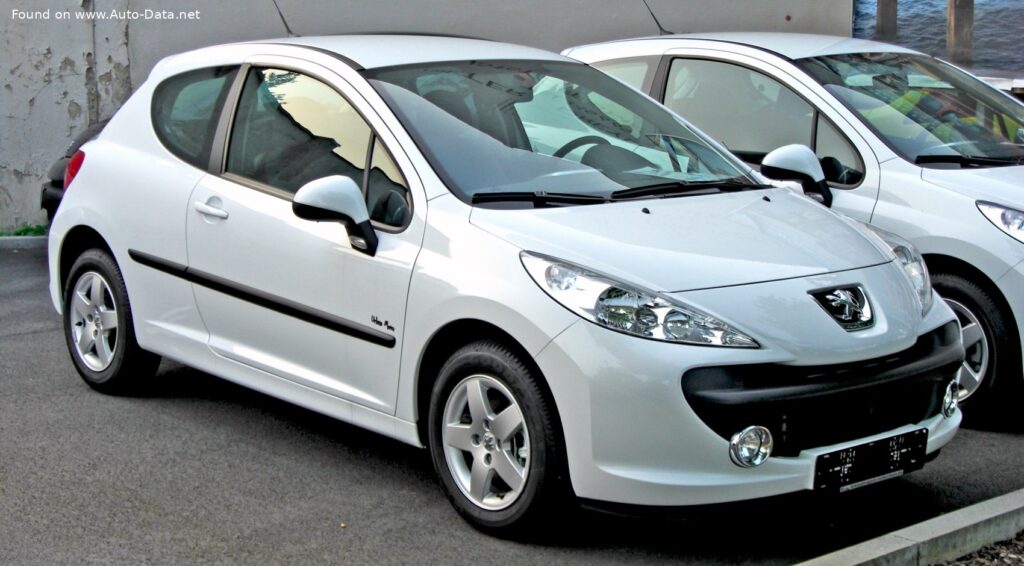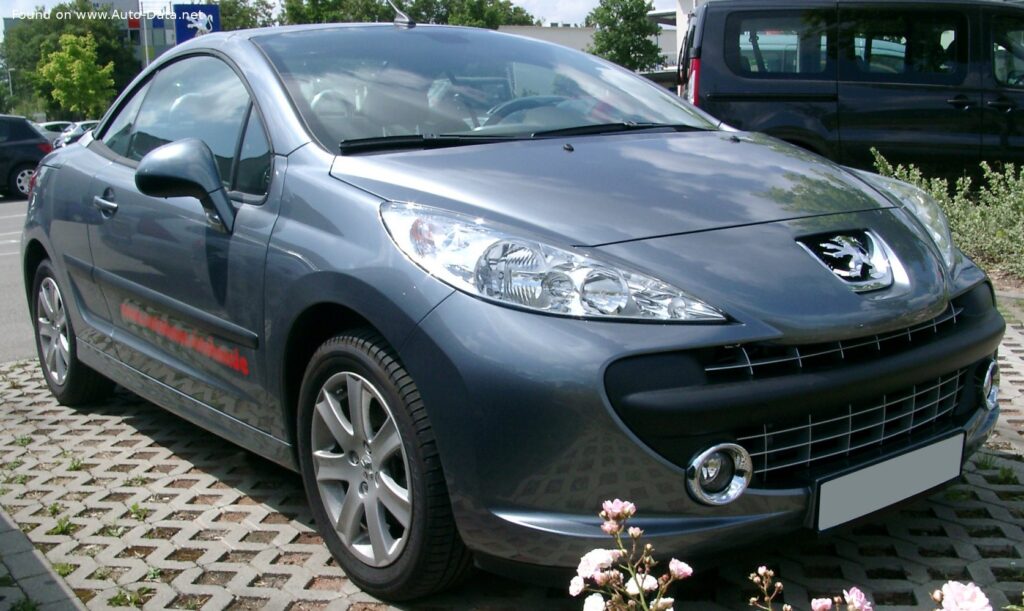
The Peugeot 207 CC 1.6 THP (150 Hp) represents a significant offering in the European compact convertible segment, building upon the success of its predecessor, the pioneering 206 CC. Launched in 2006 and produced until 2009, this generation of Peugeot’s “Coupe-Cabriolet” aimed to combine the practicality and security of a fixed-roof coupe with the open-air exhilaration of a convertible. While never officially sold in the United States, the 207 CC carved out a notable niche in its primary European market, appealing to buyers seeking an affordable, stylish, and versatile vehicle for varied driving conditions. It capitalized on Peugeot’s established reputation for creating engaging small cars, adding the allure of a retractable hardtop that could transform the car’s character at the touch of a button.
Positioning and Overview
The 207 CC was more than just a 207 hatchback with a folding roof; it featured a distinct design and engineering tailored for its convertible purpose. Its market positioning was clear: provide a more sophisticated, safer, and refined experience than previous soft-top convertibles in its class, without venturing into the premium price bracket. The 1.6 THP (Turbo High Pressure) engine variant, with its 150 horsepower output, was particularly noteworthy, offering a spirited performance that complemented the car’s youthful and dynamic aesthetics. This trim level sat in the mid-range of the 207 CC lineup, offering a balance between affordability and performance, appealing to buyers who wanted more than the base engine but didn’t require the higher costs associated with potential future, limited-edition models.
Powertrain & Engine Architecture
Under the hood of the Peugeot 207 CC 1.6 THP (150 Hp) lies a sophisticated 1.6-liter turbocharged inline-four engine, a product of the collaboration between PSA Peugeot Citroën and BMW. This powertrain, designated with the internal code 5FX EP6DT, was a highlight of the 207 CC lineup, offering a compelling blend of power and efficiency for its class. With a displacement of 1598 cubic centimeters (97.52 cubic inches), this compact engine delivered a robust 150 horsepower at 6000 rpm, translating to an impressive 93.9 horsepower per liter.
What truly set this engine apart was its torque delivery. Thanks to direct injection, a turbocharger, and an intercooler, it produced a substantial 240 Nm (177.01 lb.-ft.) of torque, available across a broad rev range from a low 1400 rpm up to 3500 rpm. This wide torque band ensured excellent responsiveness and flexibility in daily driving, making the 207 CC feel eager and capable whether navigating city streets or cruising on the highway. Power was sent to the front wheels via a precise 5-speed manual transmission, a common setup for compact European vehicles of this era, emphasizing driver engagement. The engine utilizes a double overhead camshaft (DOHC) valvetrain with variable valve timing (VVT) to optimize performance and efficiency across the engine’s operating range. The fuel injection system is direct injection, contributing to cleaner combustion and improved power output.
Driving Characteristics
The 1.6 THP engine in the 207 CC provided a noticeable step up in performance compared to the lower-powered naturally aspirated engines available in the 207 range. The broad torque band meant that strong acceleration was available from relatively low engine speeds, making it easy to keep pace with traffic and execute overtaking maneuvers. While not a sports car, the 1.6 THP offered a spirited driving experience, particularly when compared to the base 1.4-liter engine. The 5-speed manual transmission was well-matched to the engine’s characteristics, providing precise shifts and allowing the driver to fully exploit the available power. Compared to a potential diesel variant, the 1.6 THP prioritized responsiveness and a more engaging driving feel over outright fuel economy. The gear ratios were tuned for a balance between acceleration and cruising comfort, with a relatively short final drive to enhance responsiveness.
Equipment & Trim Levels
The 207 CC 1.6 THP typically came equipped with a generous level of standard features for its class. Interior upholstery generally consisted of cloth seats, although leather options were available as upgrades. Standard features included air conditioning, a CD stereo system, power windows, and central locking. Higher trim levels added features such as alloy wheels, automatic climate control, and a more sophisticated audio system. Optional extras included a panoramic sunroof (in addition to the retractable hardtop), parking sensors, and upgraded interior trim materials. The dashboard configuration was modern for the time, with a centrally mounted instrument cluster and a user-friendly layout. Safety features included ABS (Anti-lock Braking System) and front airbags as standard.
Chassis & Braking
The 207 CC utilized a McPherson strut front suspension and a semi-independent coil spring rear suspension. This setup provided a good balance between ride comfort and handling. The chassis was reinforced compared to the standard 207 hatchback to compensate for the removal of the fixed roof, enhancing structural rigidity and improving handling. Front brakes were ventilated discs, providing ample stopping power, while rear brakes were typically solid discs. The steering was a rack and pinion system, offering precise and responsive control. Stabilizer bars were fitted to both the front and rear axles to reduce body roll during cornering. The weight distribution was carefully managed to optimize handling balance.
Market Reception & Comparison
Critics generally praised the Peugeot 207 CC 1.6 THP for its stylish design, refined interior, and engaging driving experience. The THP engine was widely regarded as a strong performer, offering a good balance of power and efficiency. Fuel economy was rated at a combined 7.2 liters per 100 km (approximately 32.7 US mpg), which was competitive for a turbocharged gasoline engine of its time. Reliability was generally good, although some owners reported minor issues with the retractable hardtop mechanism. Compared to the base 1.4-liter engine, the 1.6 THP offered a significant performance upgrade, making it a more enjoyable car to drive. Compared to diesel variants, the 1.6 THP prioritized responsiveness and driving enjoyment over outright fuel economy. The 207 CC was often seen as a more stylish and refined alternative to other small convertibles in its segment.
Technical Specifications
| General Information | |
| Brand | Peugeot |
| Model | 207 CC |
| Generation | 207 CC |
| Engine Type | 1.6 THP (150 Hp) |
| Production Start | 2006 year |
| Production End | 2009 year |
| Powertrain Architecture | Internal Combustion Engine |
| Body Type | Coupe – Cabriolet |
| Seats | 4 |
| Doors | 2 |
| Performance Specifications | |
| Fuel Consumption (Urban) | 9.6 l/100 km (24.5 US mpg) |
| Fuel Consumption (Extra Urban) | 5.8 l/100 km (40.6 US mpg) |
| Fuel Consumption (Combined) | 7.2 l/100 km (32.7 US mpg) |
| CO2 Emissions | 171 g/km |
| Fuel Type | Gasoline |
| Acceleration 0 – 60 mph | 8.2 sec |
| Acceleration 0 – 100 km/h | 8.6 sec |
| Maximum Speed | 210 km/h (130.49 mph) |
| Emission Standard | Euro 4 |
| Weight-to-Power Ratio | 9.5 kg/Hp (105.8 Hp/tonne) |
| Weight-to-Torque Ratio | 5.9 kg/Nm (169.3 Nm/tonne) |
| Engine Specifications | |
| Power | 150 Hp @ 6000 rpm |
| Power per Liter | 93.9 Hp/l |
| Torque | 240 Nm (177.01 lb.-ft.) @ 1400-3500 rpm |
| Engine Layout | Front, Transverse |
| Engine Model/Code | 5FX EP6DT |
| Engine Displacement | 1598 cm3 (97.52 cu. in.) |
| Number of Cylinders | 4 |
| Engine Configuration | Inline |
| Cylinder Bore | 77 mm (3.03 in.) |
| Piston Stroke | 85.8 mm (3.38 in.) |
| Compression Ratio | 10.5:1 |
| Valves per Cylinder | 4 |
| Fuel Injection System | Direct injection |
| Engine Aspiration | Turbocharger, Intercooler |
| Valvetrain | DOHC-VVT |
| Engine Oil Capacity | 4.25 l (4.49 US qt) |
| Coolant Capacity | 5.3 l (5.6 US qt) |
| Dimensions, Volume, and Weights | |
| Kerb Weight | 1418 kg (3126.15 lbs.) |
| Max. Weight (GVWR) | 1760 kg (3880.14 lbs.) |
| Max Load | 342 kg (753.98 lbs.) |
| Trunk Space (Minimum) | 187 l (6.6 cu. ft.) |
| Trunk Space (Maximum) | 449 l (15.86 cu. ft.) |
| Fuel Tank Capacity | 50 l (13.21 US gal) |
| Permitted Trailer Load (with brakes) | 1060 kg (2336.9 lbs.) |
| Permitted Trailer Load (without brakes) | 600 kg (1322.77 lbs.) |
| Length | 4037 mm (158.94 in.) |
| Width | 1748 mm (68.82 in.) |
| Width with Mirrors Folded | 1818 mm (71.57 in.) |
| Width Including Mirrors | 1972 mm (77.64 in.) |
| Height | 1397 mm (55 in.) |
| Wheelbase | 2540 mm (100 in.) |
| Front Track | 1469 mm (57.83 in.) |
| Rear Track | 1470 mm (57.87 in.) |
| Minimum Turning Circle | 10.8 m (35.43 ft.) |
| Drivetrain, Brakes, and Suspension | |
| Drivetrain Architecture | Front-wheel drive, Internal Combustion Engine |
| Drive Wheel | Front wheel drive |
| Gearbox Type | 5 gears, manual transmission |
| Front Suspension | Independent type McPherson |
| Rear Suspension | Semi-independent, coil spring |
| Front Brakes | Ventilated discs |
| Rear Brakes | Disc |
| Assisting Systems | ABS (Anti-lock braking system) |
| Steering Type | Steering rack and pinion |
| Tires Size | 205/45 R17 |
| Wheel Rims Size | 17 inches |
Legacy
The Peugeot 207 CC 1.6 THP (150 Hp) remains a desirable used car today, particularly for those seeking a stylish and affordable convertible. The THP engine, while requiring regular maintenance (especially oil changes), is generally considered reliable. The retractable hardtop mechanism can be prone to occasional issues, but these are often relatively minor and can be addressed by specialist mechanics. The 207 CC’s enduring appeal lies in its combination of French flair, practical versatility, and engaging driving experience. It represents a significant chapter in Peugeot’s history, demonstrating the brand’s ability to innovate and create niche vehicles that capture the imagination of car buyers.