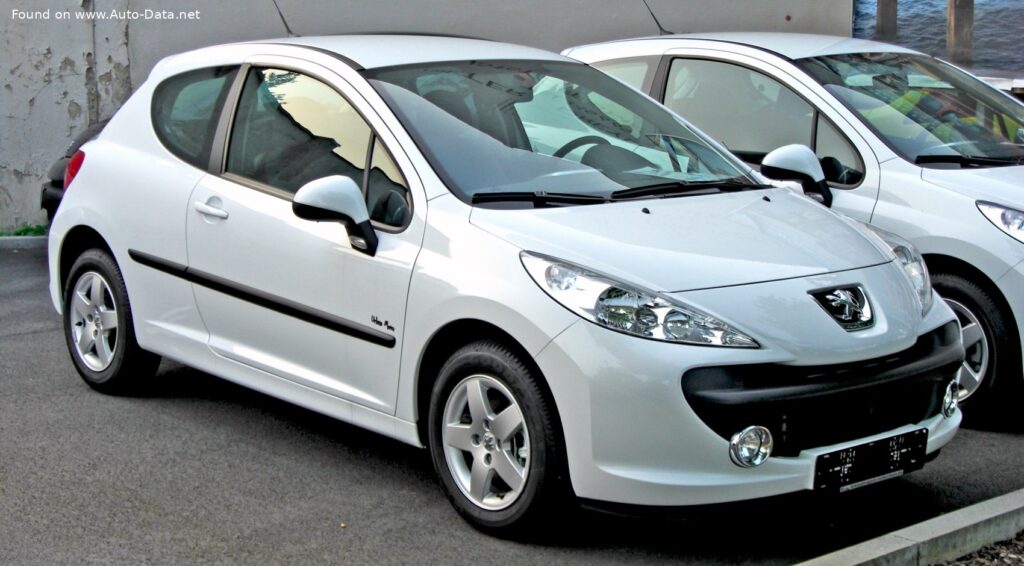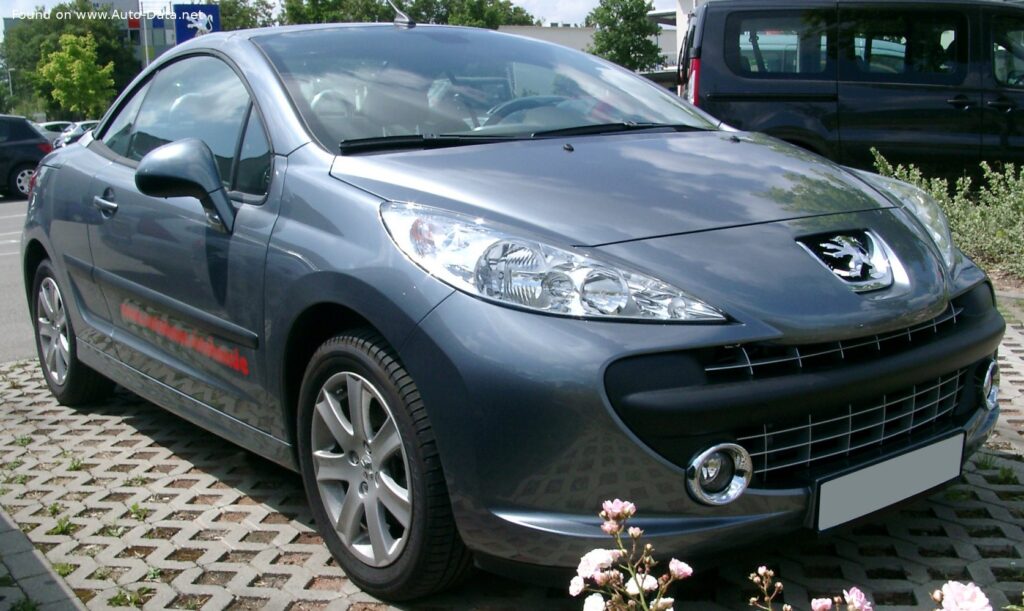
The Peugeot 207 CC 1.6 VTi (120 Hp) Automatic represents a significant chapter in the compact coupe-cabriolet segment, a niche particularly popular in Europe during the 2000s. Launched in 2006, the 207 CC was the successor to the highly successful 206 CC, which pioneered the affordable retractable hardtop in the mass market. As part of the broader Peugeot 207 lineup, this specific variant, with its 1.6-liter VTi engine and automatic transmission, offered a blend of open-air motoring, practical urban usability, and a touch of French style. While never officially sold in the United States, the Peugeot 207 CC 1.6 VTi (120 Hp) Automatic carved out a strong identity in its primary European markets, appealing to consumers seeking a versatile vehicle that could transform from a secure coupe to a sun-loving convertible at the touch of a button.
Powertrain & Engine Architecture
At the heart of the Peugeot 207 CC 1.6 VTi (120 Hp) Automatic lies a 1.6-liter VTi (Variable Valve Lift and Timing Injection) gasoline engine, a naturally aspirated inline-four-cylinder unit. This engine, designated with the internal code 5FW EP6, was part of the “Prince” engine family, a collaboration between PSA Peugeot Citroën and BMW. This collaboration aimed to create a new generation of efficient and refined engines suitable for a range of vehicles. The 1.6 VTi delivered a respectable 120 horsepower at 6000 rpm, providing adequate power for its segment. Peak torque stood at 118.01 lb.-ft. (160 Nm) at 4250 rpm, ensuring a responsive feel in city driving and sufficient grunt for highway cruising.
The engine features a double overhead camshaft (DOHC) valvetrain with variable valve timing (VVT) on both intake and exhaust valves. This technology optimizes engine performance across the rev range, improving both power and fuel efficiency. Fuel delivery is handled by a multi-port fuel injection system, providing precise control over the air-fuel mixture. The engine’s block is constructed from aluminum alloy, contributing to weight reduction. Power is channeled to the front wheels via a 4-speed automatic transmission. While a 4-speed automatic might seem somewhat dated by contemporary standards, even in 2006, it offered a smooth and effortless driving experience, perfectly suited to the relaxed nature of a compact convertible. The transmission utilizes a conventional torque converter and electronic control for smooth gear changes.
Driving Characteristics
The Peugeot 207 CC 1.6 VTi Automatic offered a comfortable and refined driving experience, prioritizing ease of use over outright performance. The 4-speed automatic transmission, while not offering the responsiveness of a manual or a more modern automatic, provided smooth and predictable gear changes. Acceleration from 0 to 62 mph (0-100 km/h) took approximately 12.6 seconds, and the top speed reached 121.17 mph (195 km/h). These figures were competitive within the compact convertible segment, but noticeably slower than the more powerful 207 CC variants equipped with larger engines.
The gear ratios were optimized for fuel efficiency and relaxed cruising rather than aggressive acceleration. First gear provided adequate launch power, while the higher gears allowed for comfortable highway speeds. Compared to the manual transmission versions of the 1.6 VTi, the automatic version felt slightly less engaging and offered a less direct connection to the engine. However, the convenience of the automatic transmission appealed to a broader range of drivers, particularly those who primarily used the car for urban commuting or leisurely drives. The relatively light weight of the 207 CC helped to mitigate the performance disadvantage of the 4-speed automatic, providing a reasonably nimble driving experience.
Equipment & Trim Levels
The Peugeot 207 CC 1.6 VTi Automatic typically came equipped with a reasonable level of standard features, reflecting its position as a mid-range offering within the 207 CC lineup. Standard interior features included cloth upholstery, air conditioning, a CD player with radio, power windows, and central locking. Safety features included an Anti-lock Braking System (ABS) with Electronic Brakeforce Distribution (EBD), front and side airbags, and seatbelt pretensioners. The steering wheel was adjustable for height and reach, and the seats were manually adjustable.
Optional extras available for this trim included alloy wheels, a panoramic sunroof, leather upholstery, automatic climate control, and a premium sound system. Many examples were also equipped with parking sensors, a trip computer, and fog lights. The dashboard layout was typical of the 207 range, featuring a centrally mounted instrument cluster and a user-friendly infotainment system. The interior design emphasized a modern and stylish aesthetic, with attention paid to detail and material quality. The retractable hardtop mechanism was a key feature, offering the convenience of a coupe with the open-air experience of a convertible.
Chassis & Braking
The Peugeot 207 CC 1.6 VTi Automatic utilized a MacPherson strut front suspension and a torsion beam rear suspension. This setup provided a good balance of ride comfort and handling, suitable for everyday driving conditions. The torsion beam rear suspension, while simpler and less sophisticated than a fully independent setup, helped to minimize weight and cost. The car rode on 195/55 R16 tires and 16-inch wheel rims, providing a balance of ride comfort and handling.
The braking system consisted of ventilated disc brakes on the front wheels and solid disc brakes on the rear wheels. ABS (Anti-lock Braking System) was standard, providing enhanced braking performance and stability in emergency situations. The braking system was adequately sized for the car’s weight and performance, offering confident stopping power. A stabilizer bar was fitted to both the front and rear axles to reduce body roll during cornering. The steering system was a power-assisted rack and pinion system, providing precise and responsive steering feel.
Market Reception & Comparison
Critics generally viewed the Peugeot 207 CC 1.6 VTi Automatic as a stylish and practical compact convertible. The retractable hardtop was widely praised for its convenience and security, offering a significant advantage over traditional fabric-roofed convertibles. The 1.6 VTi engine was considered adequate for its intended purpose, providing sufficient power for everyday driving. However, the 4-speed automatic transmission was often criticized for its dated technology and lack of responsiveness.
Compared to other trims in the 207 CC lineup, the 1.6 VTi Automatic offered a more affordable entry point into the coupe-cabriolet market. The higher-powered 2.0-liter variants offered significantly better performance, but at a higher price. Fuel economy for the 1.6 VTi Automatic was around 32.7 US mpg (7.2 l/100 km), which was competitive within its segment. Reliability was generally good, with few major issues reported. However, like many European cars, maintenance costs could be higher than those of some Japanese or American counterparts. The 207 CC 1.6 VTi Automatic appealed to buyers who prioritized style, convenience, and affordability over outright performance.
Technical Specifications
| General Information | |
| Brand | Peugeot |
| Model | 207 |
| Generation | 207 CC |
| Type (Engine) | 1.6 VTi (120 Hp) Automatic |
| Start of Production | 2006 year |
| End of Production | 2009 year |
| Powertrain Architecture | Internal Combustion engine |
| Body Type | Coupe – Cabriolet |
| Seats | 4 |
| Doors | 2 |
| Performance Specifications | |
| Fuel Consumption (Urban) | 10 l/100 km (23.5 US mpg) |
| Fuel Consumption (Extra Urban) | 5.7 l/100 km (41.3 US mpg) |
| Fuel Consumption (Combined) | 7.2 l/100 km (32.7 US mpg) |
| CO2 Emissions | 173 g/km |
| Fuel Type | Petrol (Gasoline) |
| Acceleration 0-62 mph (0-100 km/h) | 12.6 sec |
| Acceleration 0-60 mph (Calculated) | 12 sec |
| Maximum Speed | 195 km/h (121.17 mph) |
| Emission Standard | Euro 4 |
| Weight-to-Power Ratio | 11.6 kg/Hp (86.3 Hp/tonne) |
| Weight-to-Torque Ratio | 8.7 kg/Nm (115 Nm/tonne) |
| Engine Specifications | |
| Power | 120 Hp @ 6000 rpm |
| Power per Liter | 75.1 Hp/l |
| Torque | 160 Nm @ 4250 rpm (118.01 lb.-ft. @ 4250 rpm) |
| Engine Layout | Front, Transverse |
| Engine Model/Code | 5FW EP6 |
| Engine Displacement | 1598 cm³ (97.52 cu. in.) |
| Number of Cylinders | 4 |
| Engine Configuration | Inline |
| Cylinder Bore | 77 mm (3.03 in.) |
| Piston Stroke | 85.8 mm (3.38 in.) |
| Compression Ratio | 11:1 |
| Number of Valves per Cylinder | 4 |
| Fuel Injection System | Multi-port manifold injection |
| Engine Aspiration | Naturally aspirated engine |
| Valvetrain | DOHC-VVT |
| Engine Oil Capacity | 4.25 l (4.49 US qt) |
| Engine Oil Specification | Not Specified |
| Coolant Capacity | 5.4 l (5.71 US qt) |
| Space, Volume and Weights | |
| Kerb Weight | 1391 kg (3066.63 lbs.) |
| Max. Weight | 1765 kg (3891.16 lbs.) |
| Max Load | 374 kg (824.53 lbs.) |
| Trunk (Boot) Space – Minimum | 187 l (6.6 cu. ft.) |
| Trunk (Boot) Space – Maximum | 449 l (15.86 cu. ft.) |
| Fuel Tank Capacity | 50 l (13.21 US gal) |
| Permitted Trailer Load with Brakes (12%) | 1060 kg (2336.9 lbs.) |
| Permitted Trailer Load without Brakes | 600 kg (1322.77 lbs.) |
| Dimensions | |
| Length | 4037 mm (158.94 in.) |
| Width | 1748 mm (68.82 in.) |
| Width with Mirrors Folded | 1818 mm (71.57 in.) |
| Width Including Mirrors | 1972 mm (77.64 in.) |
| Height | 1397 mm (55 in.) |
| Wheelbase | 2540 mm (100 in.) |
| Front Track | 1469 mm (57.83 in.) |
| Rear (Back) Track | 1470 mm (57.87 in.) |
| Drag Coefficient (Cd) | 0.31 |
| Minimum Turning Circle (Turning Diameter) | 10.8 m (35.43 ft.) |
| Drivetrain, Brakes and Suspension Specifications | |
| Drivetrain Architecture | The Internal combustion engine (ICE) drives the front wheels of the vehicle. |
| Drive Wheel | Front wheel drive |
| Number of Gears and Type of Gearbox | 4 gears, automatic transmission |
| Front Suspension | Coil spring |
| Rear Suspension | Coil spring |
| Front Brakes | Ventilated discs |
| Rear Brakes | Disc |
| Assisting Systems | ABS (Anti-lock braking system) |
| Steering Type | Steering rack and pinion |
| Tires Size | 195/55 R16 |
| Wheel Rims Size | 16 |
Legacy
The Peugeot 207 CC 1.6 VTi Automatic, while not a high-performance machine, has proven to be a relatively reliable and durable vehicle. The “Prince” engine family, co-developed with BMW, has a generally good reputation for longevity, provided it receives regular maintenance. Common issues include occasional problems with the retractable hardtop mechanism and the electronic components of the automatic transmission. However, these issues are typically not catastrophic and can be addressed with proper repair.
In the used car market today, the 207 CC 1.6 VTi Automatic represents an affordable entry point into the world of coupe-cabriolet motoring. Prices vary depending on mileage, condition, and location, but well-maintained examples can be found for relatively low sums. The car’s stylish design, practical features, and open-air enjoyment continue to appeal to buyers seeking a fun and versatile vehicle. While it may not offer the performance or refinement of more modern convertibles, the Peugeot 207 CC 1.6 VTi Automatic remains a charming and enjoyable car that embodies a specific era of European automotive design.