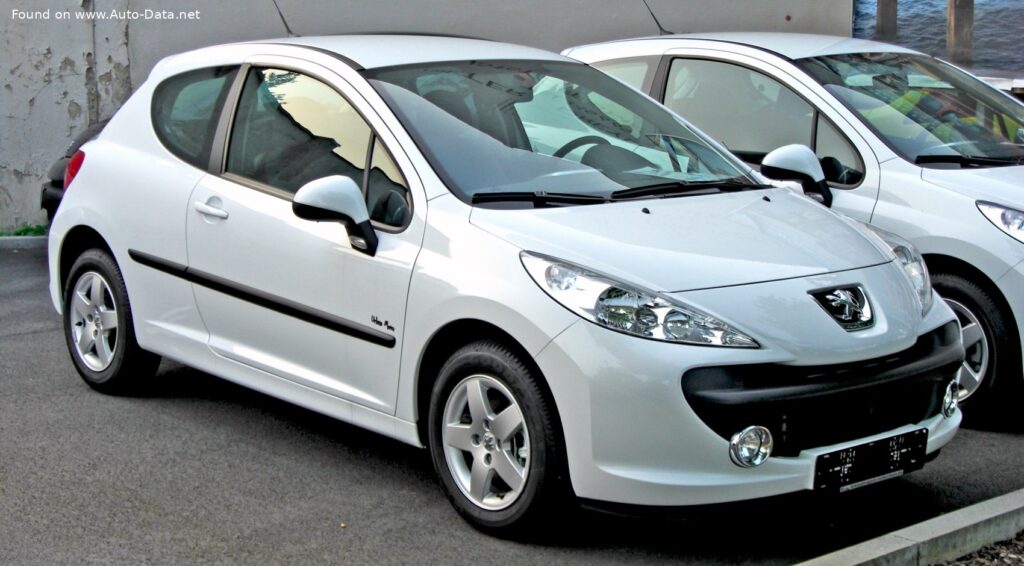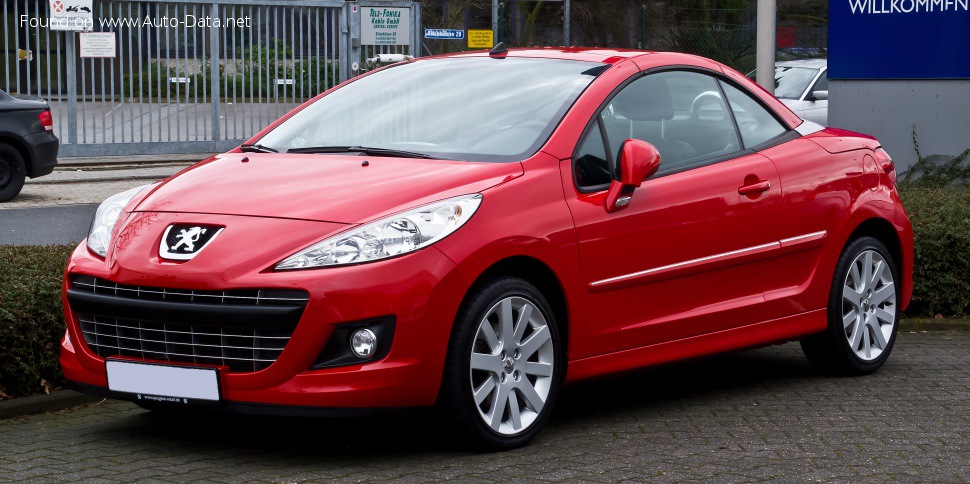
The Peugeot 207 CC (facelift 2009) represents a significant iteration of the compact coupe-cabriolet from the French automaker, Peugeot. Introduced in 2009 as a refreshed version of the original 207 CC, which first appeared in 2007, this model continued Peugeot’s successful lineage of affordable hardtop convertibles. While never officially sold in the United States market, the 207 CC played a crucial role in Europe, offering consumers the versatility of a fixed-roof coupe combined with the open-air exhilaration of a convertible, all within a compact and stylish package. This particular variant, equipped with the 1.6 THP (Turbo High Pressure) engine producing 156 horsepower, stood out as one of the more potent and refined options in its segment, blending spirited performance with respectable fuel efficiency.
The 207 CC Facelift: Positioning and Overview
The 207 CC, like its predecessor the 206 CC, capitalized on the burgeoning popularity of the coupe-cabriolet body style in Europe during the early 21st century. Its appeal lay in the enhanced security and year-round usability offered by a retractable hardtop, a distinct advantage over traditional soft-top convertibles. The 2009 facelift brought subtle but effective styling updates, improved interior materials, and technical refinements, ensuring the 207 CC remained competitive and visually appealing throughout its production run until 2015. Within the 207 range, the CC represented the premium offering, positioned above the standard hatchback models in terms of price and features, but below larger Peugeot convertibles like the 308 CC.
Powertrain & Engine Architecture
At the heart of this particular Peugeot 207 CC (facelift 2009) model is the highly regarded 1.6-liter THP gasoline engine, a product of collaboration between PSA Peugeot Citroën and BMW Group. This inline four-cylinder engine, designated internally as 5FR EP6DT, is a technological marvel for its time, featuring direct fuel injection, a twin-scroll turbocharger, and an intercooler. These advanced features allowed it to produce a robust 156 horsepower at 6000 rpm, delivering a power-per-liter figure of 97.6 horsepower per liter, an impressive output for a non-performance-oriented compact car. The engine utilizes a sophisticated Bosch MED17.4.4 engine control unit (ECU) to manage fuel delivery, ignition timing, and turbocharger boost.
The direct injection system, employing piezo injectors, allows for precise fuel metering and improved combustion efficiency. The twin-scroll turbocharger minimizes turbo lag by utilizing exhaust gas pulses to spin the turbine more efficiently. The valvetrain features double overhead camshafts (DOHC) with variable valve timing (VVT) on both intake and exhaust valves, optimizing engine performance across the rev range. Power is sent to the front wheels via a precise 6-speed manual transmission, offering engaging control for the driver. While an automatic transmission was available on other 207 models, it was not offered with the 156 hp THP engine in the CC variant.
Driving Characteristics
The 1.6 THP engine in the 207 CC delivers a noticeably more engaging driving experience compared to the lower-powered engine options available in the 207 range. The substantial 177.01 lb-ft of torque, available from just 1400 rpm, provides strong acceleration in everyday driving situations. The 6-speed manual transmission is well-matched to the engine’s powerband, allowing drivers to keep the engine in its optimal torque range. While not a sports car, the 207 CC 1.6 THP offers brisk performance, accelerating from 0 to 60 mph in 8.1 seconds. Compared to the base 1.4-liter engine, the THP variant feels significantly more responsive and capable, particularly when overtaking or climbing hills. The handling is generally secure and predictable, although the added weight of the retractable hardtop does result in slightly more body roll than the standard hatchback.
Equipment & Trim Levels
The 207 CC 1.6 THP typically came equipped with a generous level of standard features. Interior upholstery generally consisted of cloth or part-leather seats, with options for full leather available. Standard equipment included air conditioning, a CD stereo with MP3 compatibility, electric front windows, and central locking. Higher trim levels added features such as automatic climate control, a panoramic sunroof (in addition to the retractable hardtop), alloy wheels, and parking sensors. Optional extras included a navigation system, upgraded audio systems, and various cosmetic enhancements. The dashboard layout was typical of the 207 range, featuring a functional and modern design. Safety features included ABS, electronic brake-force distribution (EBD), and front airbags.
Chassis & Braking
The 207 CC utilizes a McPherson strut front suspension and a torsion beam rear suspension. This setup provides a good balance between ride comfort and handling. The torsion beam rear suspension is a cost-effective solution that minimizes complexity while still offering acceptable handling characteristics. The braking system consists of ventilated discs at the front and solid discs at the rear, providing adequate stopping power for the vehicle’s weight and performance. Anti-lock Braking System (ABS) is standard, enhancing safety during emergency braking situations. The steering is a power-assisted rack and pinion system, offering precise and responsive steering feel. Stabilizer bars are fitted to both the front and rear axles to reduce body roll during cornering.
Market Reception & Comparison
Critics generally praised the Peugeot 207 CC 1.6 THP for its stylish design, refined interior, and engaging driving experience. The 1.6 THP engine was widely regarded as a strong performer, offering a good balance of power and fuel efficiency. Compared to other trims in the 207 lineup, the 1.6 THP CC was significantly more expensive, but it offered a more premium experience and a more enjoyable driving experience. Fuel economy was respectable for a convertible, with combined fuel consumption rated at approximately 31.8 US mpg. Reliability was generally good, although some owners reported minor issues with the retractable hardtop mechanism. Compared to rivals like the Renault Megane CC and Volkswagen Eos, the 207 CC offered a more compact and nimble driving experience, but it lacked the spaciousness of some of its competitors.
Technical Specifications
| General Information | |
| Brand | Peugeot |
| Model | 207 |
| Generation | 207 CC (facelift 2009) |
| Engine Type | 1.6 THP (156 Hp) |
| Production Start | 2009 |
| Production End | 2015 |
| Powertrain Architecture | Internal Combustion Engine |
| Body Type | Coupe – Cabriolet |
| Seats | 4 |
| Doors | 2 |
| Performance Specifications | |
| Fuel Consumption (Urban) | 10.3 l/100 km (22.8 US mpg) |
| Fuel Consumption (Extra Urban) | 5.7 l/100 km (41.3 US mpg) |
| Fuel Consumption (Combined) | 7.4 l/100 km (31.8 US mpg) |
| CO2 Emissions | 170 g/km |
| Fuel Type | Petrol (Gasoline) |
| Acceleration 0 – 60 mph | 8.1 sec |
| Acceleration 0 – 100 km/h | 8.5 sec |
| Maximum Speed | 210 km/h (130.49 mph) |
| Emission Standard | Euro 5 |
| Weight-to-Power Ratio | 9 kg/Hp (110.7 Hp/tonne) |
| Weight-to-Torque Ratio | 5.9 kg/Nm (170.3 Nm/tonne) |
| Engine Specifications | |
| Power | 156 Hp @ 6000 rpm |
| Power per Liter | 97.6 Hp/l |
| Torque | 240 Nm @ 1400-4000 rpm (177.01 lb.-ft.) |
| Engine Layout | Front, Transverse |
| Engine Model/Code | 5FR EP6DT |
| Engine Displacement | 1598 cm3 (97.52 cu. in.) |
| Number of Cylinders | 4 |
| Engine Configuration | Inline |
| Cylinder Bore | 77 mm (3.03 in.) |
| Piston Stroke | 85.8 mm (3.38 in.) |
| Compression Ratio | 10.5:1 |
| Valves per Cylinder | 4 |
| Fuel Injection System | Direct injection |
| Engine Aspiration | Turbocharger, Intercooler |
| Valvetrain | DOHC-VVT |
| Space, Volume, and Weights | |
| Curb Weight | 1409 kg (3106.31 lbs.) |
| Trunk Space (Minimum) | 145 l (5.12 cu. ft.) |
| Trunk Space (Maximum) | 370 l (13.07 cu. ft.) |
Legacy
The Peugeot 207 CC 1.6 THP powertrain has proven to be relatively reliable over the long term, although the complex retractable hardtop mechanism can be prone to occasional issues. The 1.6 THP engine itself is generally considered a durable and capable unit, provided it receives regular maintenance. In the used car market, the 207 CC 1.6 THP remains a popular choice for buyers seeking a stylish and affordable convertible. Its combination of performance, fuel efficiency, and practicality makes it a compelling option in its price range. While it may not have the prestige of some of its German rivals, the 207 CC 1.6 THP offers a unique blend of French flair and engineering competence.