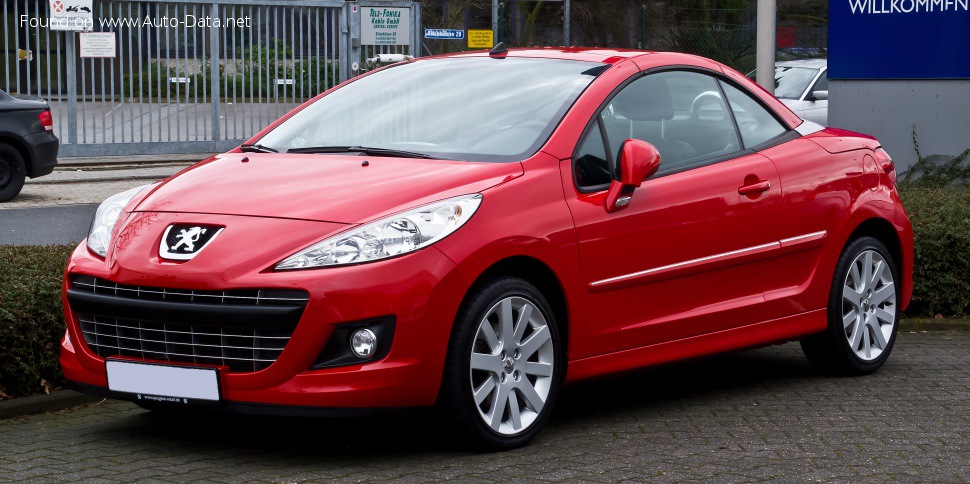
The Peugeot 207 CC (facelift 2009) 1.6 VTi (120 Hp) represents a significant evolution in the compact coupe-cabriolet segment, a niche largely pioneered and popularized by Peugeot itself. Launched in 2009 as a refreshed version of the original 207 CC, this vehicle continued the French automaker’s tradition of offering an affordable and stylish open-top experience. While never officially sold in the United States, the 207 CC played a crucial role in the European and other international markets, providing a blend of coupe practicality and convertible exhilaration. It was a direct successor to the hugely successful 206 CC, building upon its predecessor’s formula with improved styling, enhanced technology, and a more refined driving experience, particularly with its efficient 1.6 VTi (120 Hp) powertrain. This generation of the 207 CC maintained its position as a fashionable and accessible four-seater convertible, produced until 2015.
Powertrain & Engine Architecture
Under the hood, the Peugeot 207 CC (facelift 2009) 1.6 VTi (120 Hp) featured a modern and efficient gasoline engine, a product of the collaboration between PSA Peugeot Citroën and BMW. This naturally aspirated 1.6-liter (1598 cm³) inline-four engine, designated by the code 5FS EP6C, was engineered for a balance of performance and fuel economy, adhering to the Euro 5 emission standards prevalent at the time. It delivered a respectable 120 horsepower at 6000 rpm, translating to a power-per-liter ratio of 75.1 Hp/l, a strong figure for its class.
Torque output was rated at 118.01 lb.-ft. (160 Nm) peaking at 4250 rpm, providing adequate pulling power for city driving and comfortable cruising. Power was sent to the front wheels via a standard five-speed manual transmission, a common setup for compact cars in this segment. The drivetrain architecture, featuring a front, transverse engine layout, contributed to the car’s balanced handling characteristics. The engine utilized a DOHC-VVT (Double Overhead Camshaft with Variable Valve Timing) valvetrain and multi-port manifold injection system to ensure optimal combustion and responsiveness. The 5FS EP6C engine is known for its relatively simple design, contributing to its overall reliability. It does not employ direct injection, relying instead on port fuel injection, which is less complex but can result in slightly lower fuel efficiency compared to direct injection systems.
Driving Characteristics
The 207 CC 1.6 VTi offered a comfortable and refined driving experience, geared more towards cruising and style than outright performance. With 120 hp and 118 lb-ft of torque, acceleration from 0 to 60 mph took approximately 10.2 seconds. This was noticeably slower than the higher-performance versions of the 207, such as those equipped with the 1.6 THP turbocharged engine. The five-speed manual transmission was well-matched to the engine’s characteristics, providing adequate gear spacing for both city and highway driving. The gear ratios were tuned for fuel efficiency and smooth operation rather than aggressive acceleration.
Compared to the manual transmission version, the automatic option (though less common) would have further dulled acceleration due to inherent transmission losses and typically more conservative shift programming. The 1.6 VTi engine felt responsive enough for everyday driving, but lacked the punch needed for spirited overtaking maneuvers. The suspension was tuned for comfort, providing a relatively smooth ride, even on uneven road surfaces. However, this came at the expense of ultimate handling precision, with some body roll noticeable during cornering. Overall, the driving experience was best described as relaxed and enjoyable, making it well-suited for leisurely drives and city commuting.
Equipment & Trim Levels
The Peugeot 207 CC (facelift 2009) 1.6 VTi typically came equipped with a reasonable level of standard features. These included power windows, central locking, air conditioning, and a basic audio system with CD player. Safety features such as ABS (Anti-lock Braking System) and multiple airbags were also standard. Interior upholstery was typically cloth, with options for leather upgrades available at an additional cost.
Higher trim levels, such as the Sportium or Feline, added features like alloy wheels, automatic headlights and wipers, a more advanced audio system with Bluetooth connectivity, and parking sensors. Optional extras included a panoramic sunroof, leather seats, and a navigation system. The dashboard configuration was relatively simple and functional, with a focus on ease of use. The steering wheel was typically equipped with audio controls and cruise control (on higher trims). The 207 CC aimed to provide a stylish and well-equipped interior without being overly luxurious, reflecting its position as an affordable convertible.
Chassis & Braking
The Peugeot 207 CC (facelift 2009) utilized a McPherson strut front suspension and a semi-independent coil spring rear suspension. This setup provided a good balance of ride comfort and handling, although it wasn’t designed for particularly aggressive driving. The front suspension featured an anti-roll bar to reduce body roll during cornering. The rear suspension, while simpler, contributed to the car’s compact dimensions and relatively low weight.
Braking duties were handled by ventilated discs on the front wheels and discs on the rear wheels. ABS (Anti-lock Braking System) was standard, providing enhanced braking performance and stability in emergency situations. The braking system was adequate for the car’s weight and performance, but lacked the stopping power of more performance-oriented models. The 195/55 R16 tires provided a reasonable level of grip in both wet and dry conditions.
Market Reception & Comparison
The Peugeot 207 CC (facelift 2009) 1.6 VTi was generally well-received by critics as a stylish and affordable convertible. It was praised for its retractable hardtop, comfortable ride, and relatively fuel-efficient engine. However, it was also criticized for its lack of outright performance and its somewhat cramped rear seats. Compared to other trims in the 207 CC lineup, the 1.6 VTi offered a more accessible price point, making it attractive to buyers who prioritized affordability and fuel economy over performance. The 1.6 THP turbocharged engine offered significantly more power and a more engaging driving experience, but came at a higher cost.
In terms of fuel economy, the 1.6 VTi achieved a combined fuel consumption of 36.8 US mpg (6.4 l/100 km), which was competitive for its class. Reliability was generally good, with the 5FS EP6C engine proving to be a durable and dependable unit. However, like many French cars, the 207 CC could be prone to minor electrical issues. Overall, the 1.6 VTi represented a sensible and practical choice for buyers looking for a stylish and affordable convertible.
Technical Specifications
| Category | Specification |
| General Information | |
| Brand | Peugeot |
| Model | 207 |
| Generation | 207 CC (facelift 2009) |
| Engine Type | 1.6 VTi (120 Hp) |
| Production Start | 2009 |
| Production End | 2015 |
| Powertrain Architecture | Internal Combustion engine |
| Body Type | Coupe – Cabriolet |
| Seats | 4 |
| Doors | 2 |
| Performance Specs | |
| Fuel Consumption – Urban | 8.6 l/100 km (27.4 US mpg) |
| Fuel Consumption – Extra Urban | 5.2 l/100 km (45.2 US mpg) |
| Fuel Consumption – Combined | 6.4 l/100 km (36.8 US mpg) |
| CO2 Emissions | 149 g/km |
| Fuel Type | Petrol (Gasoline) |
| Acceleration 0 – 60 mph | 10.2 sec |
| Acceleration 0 – 100 km/h | 10.7 sec |
| Maximum Speed | 192 km/h (119.3 mph) |
| Emission Standard | Euro 5 |
| Weight-to-Power Ratio | 11.2 kg/Hp (89.4 Hp/tonne) |
| Weight-to-Torque Ratio | 8.4 kg/Nm (119.2 Nm/tonne) |
| Engine Specs | |
| Power | 120 Hp @ 6000 rpm |
| Power per Liter | 75.1 Hp/l |
| Torque | 160 Nm @ 4250 rpm (118.01 lb.-ft. @ 4250 rpm) |
| Engine Layout | Front, Transverse |
| Engine Model/Code | 5FS EP6C |
| Engine Displacement | 1598 cm³ (1.6 Liters / 97.52 cu. in.) |
| Number of Cylinders | 4 |
| Engine Configuration | Inline |
| Cylinder Bore | 77 mm (3.03 in.) |
| Piston Stroke | 85.8 mm (3.38 in.) |
| Compression Ratio | 11:1 |
| Valves per Cylinder | 4 |
| Fuel Injection System | Multi-port manifold injection |
| Engine Aspiration | Naturally aspirated engine |
| Valvetrain | DOHC-VVT |
| Engine Oil Capacity | 4.25 l (4.49 US qt) |
| Coolant Capacity | 5.7 l (6.02 US qt) |
| Space, Volume and Weights | |
| Kerb Weight | 1342 kg (2958.6 lbs.) |
| Max. Weight | 1709 kg (3767.7 lbs.) |
| Max Load | 367 kg (809.1 lbs.) |
| Trunk Space – Minimum | 145 l (5.12 cu. ft.) |
| Trunk Space – Maximum | 370 l (13.07 cu. ft.) |
| Fuel Tank Capacity | 50 l (13.21 US gal) |
| Permitted Trailer Load with Brakes (12%) | 1040 kg (2292.81 lbs.) |
| Permitted Trailer Load without Brakes | 600 kg (1322.77 lbs.) |
| Dimensions | |
| Length | 4044 mm (159.21 in.) |
| Width | 1748 mm (68.82 in.) |
| Width with mirrors folded | 1818 mm (71.57 in.) |
| Width including mirrors | 1972 mm (77.64 in.) |
| Height | 1393 mm (54.84 in.) |
| Wheelbase | 2540 mm (100 in.) |
| Front Track | 1469 mm (57.83 in.) |
| Rear Track | 1470 mm (57.87 in.) |
| Drag Coefficient (Cd) | 0.31 |
| Minimum Turning Circle | 11.0 m (36.09 ft.) |
| Drivetrain, Brakes and Suspension | |
| Drivetrain Architecture | Front wheel drive, Internal Combustion engine |
| Drive Wheel | Front wheel drive |
| Number of Gears and Type | 5 gears, manual transmission |
| Front Suspension | Independent type McPherson |
| Rear Suspension | Semi-independent, coil spring |
| Front Brakes | Ventilated discs |
| Rear Brakes | Disc |
| Assisting Systems | ABS (Anti-lock braking system) |
| Steering Type | Steering rack and pinion |
| Tires Size | 195/55 R16 |
| Wheel Rims Size | 16 inches |
Legacy
The Peugeot 207 CC (facelift 2009) 1.6 VTi, while not a high-performance variant, has proven to be a relatively reliable and affordable option in the used car market. The 5FS EP6C engine is known for its durability, and with regular maintenance, can provide many years of trouble-free service. The retractable hardtop mechanism, while complex, has also proven to be reasonably reliable, although potential buyers should be aware of the possibility of issues with the hydraulic system and seals.
Today, the 207 CC represents a unique offering in the used car market – a stylish and relatively affordable convertible with a practical hardtop. Its compact size and fuel-efficient engine make it well-suited for city driving, while its open-top design provides a fun and enjoyable driving experience. While it may not appeal to those seeking a high-performance sports car, the 207 CC remains a popular choice for buyers looking for a fashionable and accessible convertible.