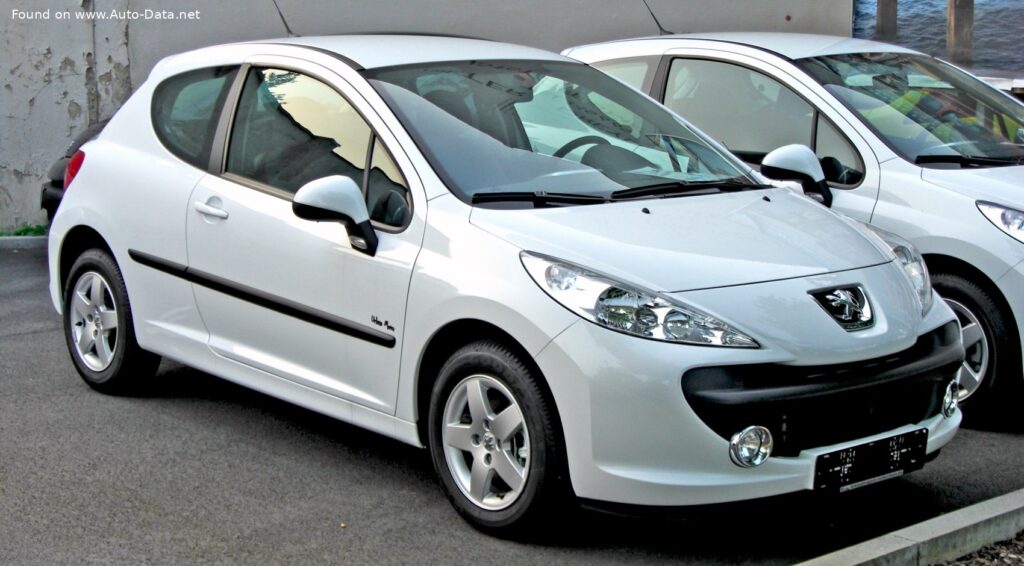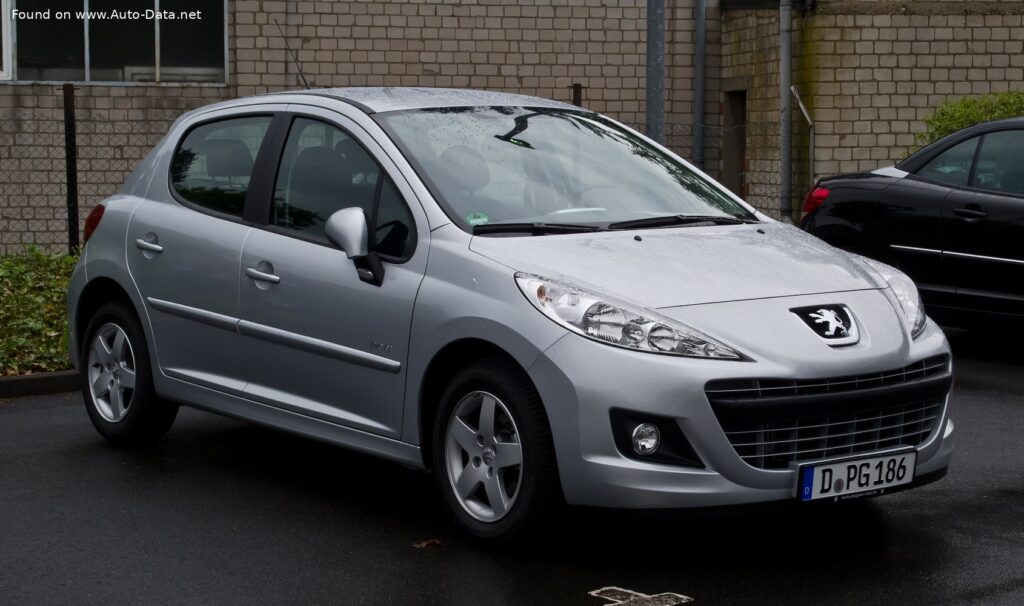
The Peugeot 207, a prominent player in the European B-segment (subcompact car market), received a significant refresh in 2009, aiming to bolster its appeal and maintain competitiveness. This particular variant, the Peugeot 207 (facelift 2009) 1.4 HDi (68 Hp), represents a quintessential European approach to personal transportation: compact dimensions, practical utility, and exceptional fuel economy, especially with its diesel powertrain. Manufactured between 2009 and 2012, this iteration of the 207 was designed primarily for urban environments and longer-distance commuting where efficiency was paramount. While never officially sold in the United States, the 207 played a crucial role in Peugeot’s global strategy, serving as a reliable and economical choice for millions of drivers across Europe and other international markets.
Powertrain & Engine Architecture: The 8HR/8HZ DV4C Diesel
Under the hood of this Peugeot 207 (facelift 2009) lies Peugeot’s well-regarded 1.4-liter HDi (High-Pressure Direct Injection) diesel engine. This engine is identified by the codes 8HR DV4C or 8HZ DV4TD, denoting slight variations in specification depending on the production year and market. It’s a four-cylinder, inline powerplant featuring a Single Overhead Camshaft (SOHC) valvetrain with two valves per cylinder, optimized for efficiency and low-end torque. The engine displacement measures 1398 cubic centimeters (85.31 cubic inches). A key to its performance and economy is the Diesel Commonrail fuel injection system, paired with a turbocharger and intercooler, which significantly boosts power delivery while maintaining fuel efficiency. The Commonrail system allows for precise control of fuel injection timing and pressure, maximizing combustion efficiency and reducing emissions.
The engine produces a modest 68 horsepower at 4000 rpm, translating to 48.6 horsepower per liter. More importantly for a diesel of this size, it generates a robust 118.01 lb.-ft. of torque at a low 2000 rpm. This torque delivery makes the 207 feel responsive in city traffic despite its relatively low horsepower figure. Power is sent to the front wheels via a smooth-shifting 5-speed manual transmission, a common and reliable setup for vehicles in this segment. The transmission’s gear ratios are geared towards maximizing fuel economy and providing adequate acceleration for everyday driving conditions.
Driving Characteristics: Efficiency Over Speed
The Peugeot 207 1.4 HDi prioritizes fuel efficiency over outright performance. Acceleration from 0 to 60 mph takes approximately 14.3 seconds, with a top speed of 103.15 mph. These figures are perfectly adequate for its intended use as a daily driver in European road conditions, where speed limits are often lower and traffic congestion is common. The engine’s peak torque, available from 2000 rpm, provides sufficient pulling power for overtaking maneuvers and navigating hilly terrain. However, drivers accustomed to more powerful engines will find the 207’s acceleration to be somewhat leisurely.
Compared to other variants of the 207, such as those equipped with larger gasoline engines, the 1.4 HDi offers significantly better fuel economy but sacrifices performance. The gasoline engines, while providing quicker acceleration, typically consume considerably more fuel. The 1.4 HDi also differs from the later 1.6 HDi models, which offered increased power and torque but at the expense of slightly reduced fuel efficiency. The 5-speed manual transmission is well-matched to the engine’s characteristics, providing smooth gear changes and contributing to the overall driving experience.
Equipment & Trim Levels: Practical and Functional
The Peugeot 207 (facelift 2009) 1.4 HDi was typically positioned as an entry-level or mid-range trim within the 207 lineup. Standard equipment included power steering, central locking, electric front windows, and an audio system with MP3 compatibility. Safety features, such as an Anti-lock Braking System (ABS) and front airbags, were also standard. Interior upholstery was typically cloth, with a functional and durable design. The dashboard layout was straightforward and ergonomic, with controls logically placed for ease of use.
Optional extras available for this trim included air conditioning, alloy wheels, rear electric windows, a trip computer, and upgraded audio systems. Higher trim levels offered additional features such as automatic headlights, rain-sensing wipers, and parking sensors. The 207 was available in both 3-door and 5-door hatchback configurations, offering buyers a choice based on their individual needs and preferences.
Chassis & Braking: Balanced Handling and Adequate Stopping Power
The 207 1.4 HDi utilizes a front-wheel-drive layout with an independent McPherson strut suspension at the front and a semi-independent rear suspension with coil springs and an elastic beam. This suspension setup provides a good balance between ride comfort and handling stability, essential for diverse road conditions. The front suspension features an anti-roll bar to reduce body roll during cornering. The steering utilizes a rack and pinion system, providing direct and predictable handling.
The braking system comprises ventilated discs at the front for effective stopping power and drum brakes at the rear, a cost-effective and adequate solution for the vehicle’s weight and performance. ABS (Anti-lock Braking System) was standard, enhancing braking performance and stability, particularly on slippery surfaces. The car rides on 185/65 R15 tires, mounted on 15-inch wheel rims. The relatively narrow tires contribute to fuel efficiency and provide adequate grip in most driving conditions.
Market Reception & Comparison: A Fuel-Efficient Choice
Critics generally praised the Peugeot 207 1.4 HDi for its exceptional fuel economy, comfortable ride, and practical interior. However, some reviewers noted its relatively modest performance and somewhat basic interior trim. Compared to other trims in the 207 lineup, the 1.4 HDi offered the best fuel economy but the lowest power output. It was often seen as an ideal choice for urban commuters and drivers who prioritized efficiency over speed.
In terms of reliability, the 1.4 HDi engine proved to be generally dependable, although, like all diesel engines, it required regular maintenance, including oil changes and filter replacements. The diesel particulate filter (DPF) required periodic regeneration to prevent clogging, and failure to do so could lead to costly repairs. Compared to gasoline-powered 207 variants, the 1.4 HDi typically had lower maintenance costs due to its greater fuel efficiency and longer engine life.
Technical Specifications: Peugeot 207 (facelift 2009) 1.4 HDi (68 Hp)
| Specification | Value |
| General Information | |
| Brand | Peugeot |
| Model | 207 |
| Generation | 207 (facelift 2009) |
| Type (Engine) | 1.4 HDi (68 Hp) |
| Start of production | 2009 |
| End of production | 2012 |
| Powertrain Architecture | Internal Combustion engine |
| Body type | Hatchback |
| Seats | 5 |
| Doors | 3-5 |
| Performance Specs | |
| Fuel consumption (economy) – urban | 5.1 l/100 km (46.1 US mpg) |
| Fuel consumption (economy) – extra urban | 3.7 l/100 km (63.6 US mpg) |
| Fuel consumption (economy) – combined | 4.2 l/100 km (56 US mpg) |
| CO2 emissions | 110 g/km |
| Fuel Type | Diesel |
| Acceleration 0 – 60 mph | 14.3 sec |
| Maximum speed | 103.15 mph |
| Emission standard | Euro 5 |
| Weight-to-power ratio | 17.6 kg/Hp (56.8 Hp/tonne) |
| Weight-to-torque ratio | 7.5 kg/Nm (133.6 Nm/tonne) |
| Engine Specs | |
| Power | 68 Hp @ 4000 rpm |
| Power per liter | 48.6 Hp/l |
| Torque | 118.01 lb.-ft. @ 2000 rpm |
| Engine layout | Front, Transverse |
| Engine Model/Code | 8HR DV4C, 8HZ DV4TD |
| Engine displacement | 1398 cm3 (85.31 cu. in.) |
| Number of cylinders | 4 |
| Engine configuration | Inline |
| Cylinder Bore | 2.9 in. |
| Piston Stroke | 3.23 in. |
| Compression ratio | 17.9:1 |
| Number of valves per cylinder | 2 |
| Fuel injection system | Diesel Commonrail |
| Engine aspiration | Turbocharger, Intercooler |
| Valvetrain | SOHC |
| Engine oil capacity | 3.75 l (3.96 US qt) |
| Engine oil specification | Not publicly available (varies by region/service) |
| Coolant | 5.6 l (5.92 US qt) |
| Engine systems | Particulate filter |
| Space, Volume and Weights | |
| Kerb Weight | 2641.14 lbs. |
| Max. weight | 3619.99 lbs. |
| Max load | 978.85 lbs. |
| Trunk (boot) space – minimum | 270 l (9.53 cu. ft.) |
| Trunk (boot) space – maximum | 923 l (32.6 cu. ft.) |
| Fuel tank capacity | 50 l (13.21 US gal) |
| Permitted trailer load with brakes | 1873.93 lbs. |
| Permitted trailer load without brakes | 1322.77 lbs. |
| Dimensions | |
| Length | 159.25 in. |
| Width | 68.82 in. |
| Width with mirrors folded | 71.57 in. |
| Width including mirrors | 77.64 in. |
| Height | 57.95 in. |
| Wheelbase | 100 in. |
| Front track | 58.07 in. |
| Rear (Back) track | 57.8 in. |
| Drag coefficient (Cd) | 0.30 |
| Minimum turning circle (turning diameter) | 35.43 ft. |
| Drivetrain, Brakes and Suspension Specs | |
| Drivetrain Architecture | Front-wheel drive Internal Combustion engine |
| Drive wheel | Front wheel drive |
| Number of gears and type of gearbox | 5 gears, manual transmission |
| Front suspension | Independent, McPherson with coil spring and anti-roll bar |
| Rear suspension | Semi-independent, coil spring, Elastic beam |
| Front brakes | Ventilated discs |
| Rear brakes | Drum |
| Assisting systems | ABS (Anti-lock braking system) |
| Steering type | Steering rack and pinion |
| Tires size | 185/65 R15 |
| Wheel rims size | 15 |
Legacy: A Reliable and Economical Used Car Option
The Peugeot 207 (facelift 2009) 1.4 HDi remains a popular choice in the used car market, particularly for buyers seeking an economical and reliable vehicle. Its reputation for fuel efficiency and relatively low maintenance costs continues to attract buyers. However, potential buyers should be aware of the potential for issues with the diesel particulate filter (DPF) and the importance of regular maintenance. Well-maintained examples of this model can provide many years of dependable service. The 207’s legacy lies in its ability to provide affordable and efficient transportation, embodying the practical values of European automotive engineering.