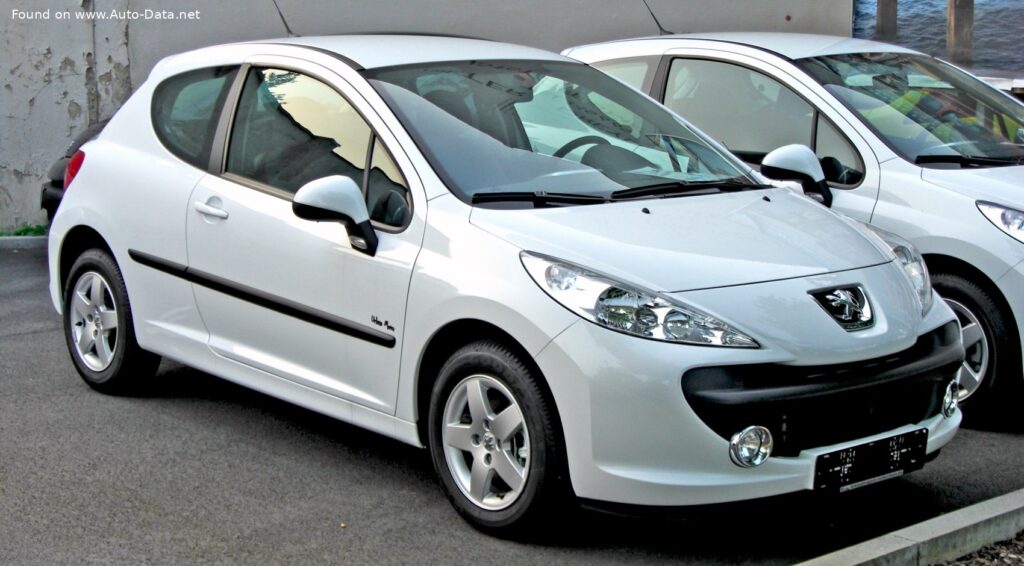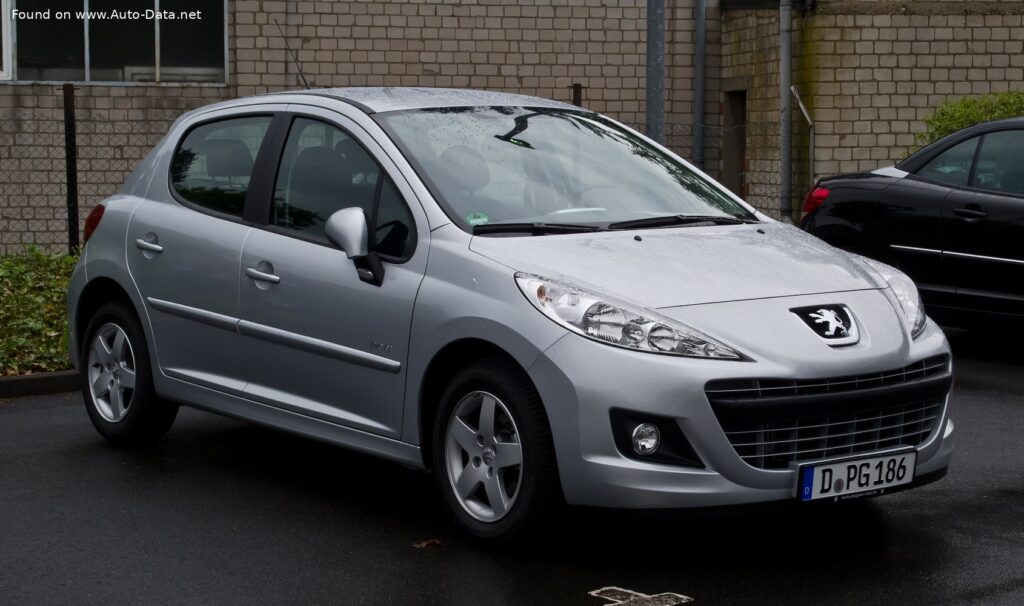
The Peugeot 207 (facelift 2009) 1.6 HDi (112 Hp) represents a significant iteration of Peugeot’s popular supermini, produced from 2009 to 2012. As a refresh of the original 207 launched in 2006, this variant aimed to refine the model’s aesthetics, improve interior quality, and enhance powertrain efficiency. While never officially sold in the United States, the 207 was a common sight on European roads, embodying the practicality, style, and fuel economy expected of its class. The 1.6 HDi 112 Hp version was a balanced offering, providing a good level of performance combined with excellent fuel consumption, appealing to European drivers seeking a versatile and economical daily vehicle built on the T1 platform.
Powertrain & Engine Architecture
The core of the Peugeot 207 (facelift 2009) 1.6 HDi (112 Hp) is its 1.6-liter (1560 cc) inline four-cylinder diesel engine, identified by the code 9HR DV6C. This engine utilizes a common rail direct fuel injection system, a key feature of modern diesel technology, ensuring precise fuel delivery for optimized combustion. A turbocharger with an intercooler further enhances performance and thermal efficiency, boosting power output. The engine features a compression ratio of 17.6:1 and a Single Overhead Camshaft (SOHC) valvetrain with two valves per cylinder. This configuration generates 112 horsepower (83 kW) at 3600 rpm.
The engine’s torque output is particularly noteworthy for a vehicle of this size, producing 270 Nm (199.14 lb-ft) of torque at a low 1750 rpm. This ample low-end torque contributes to a responsive driving experience, especially in urban environments and during overtaking maneuvers. Power is delivered to the front wheels through a smooth-shifting 6-speed manual transmission, allowing drivers to effectively utilize the engine’s capabilities. The engine also incorporates a Diesel Particulate Filter (DPF) to meet stringent Euro 5 emission standards.
Driving Characteristics
The Peugeot 207 (facelift 2009) 1.6 HDi (112 Hp) offers a driving experience characterized by its responsiveness and efficiency. The readily available torque makes it feel surprisingly lively for a small diesel car. Acceleration from 0 to 60 mph takes approximately 10.1 seconds, with a top speed of around 119.92 mph. While not a sports car, these figures are competitive within the supermini segment. Compared to lower-powered versions of the 207, the 1.6 HDi provides a noticeable performance boost, making highway driving and overtaking significantly easier. Compared to the petrol (gasoline) engines available in the 207 range, the 1.6 HDi offers superior fuel economy and torque, albeit with slightly less peak horsepower. The 6-speed manual transmission is well-matched to the engine, providing precise gear changes and allowing the driver to maintain optimal engine speed for efficiency or performance.
The gear ratios are tuned to prioritize fuel economy, with a relatively long sixth gear for comfortable cruising. However, the engine still delivers sufficient power for quick acceleration when needed. The steering is light and precise, making the 207 easy to maneuver in city traffic. The suspension provides a comfortable ride, absorbing bumps and imperfections in the road surface effectively.
Equipment & Trim Levels
The Peugeot 207 (facelift 2009) 1.6 HDi (112 Hp) was typically offered in several trim levels, varying by market. Standard equipment generally included air conditioning, power steering, electric front windows, a CD player with MP3 compatibility, and ABS brakes. Higher trim levels added features such as alloy wheels, a trip computer, remote central locking, and a height-adjustable driver’s seat. Optional extras included a panoramic sunroof, automatic headlights and wipers, and a navigation system. Interior upholstery typically consisted of cloth seats, with the option of leather upholstery on higher-spec models. The dashboard layout was functional and user-friendly, with a clear instrument cluster and logically placed controls. The facelifted model benefited from improved interior materials and a more refined overall feel compared to the pre-facelift 207.
Chassis & Braking
The Peugeot 207 (facelift 2009) 1.6 HDi (112 Hp) utilizes a McPherson strut suspension system with coil springs and an anti-roll bar at the front, providing responsive handling and a comfortable ride. The rear suspension features a semi-independent torsion beam setup, which is cost-effective and provides adequate stability. The braking system consists of ventilated discs at the front and solid discs at the rear, offering sufficient stopping power for everyday driving. ABS (Anti-lock Braking System) is standard, enhancing braking control in emergency situations. The steering is a rack and pinion system, providing precise and direct feedback. The standard tire size is 195/55 R16, mounted on 16-inch alloy wheels in higher trim levels. The vehicle’s relatively low weight contributes to its agility and handling characteristics.
Market Reception & Comparison
The Peugeot 207 (facelift 2009) 1.6 HDi (112 Hp) received generally positive reviews from automotive critics. It was praised for its fuel efficiency, responsive engine, and comfortable ride. Critics noted that the 1.6 HDi engine offered a good balance between performance and economy, making it a practical choice for everyday driving. Compared to other trims in the 207 lineup, the 1.6 HDi provided a noticeable performance advantage over the smaller-engined models, while still offering excellent fuel economy. Compared to competitors like the Renault Clio and Ford Fiesta, the 207 was often seen as offering a more stylish design and a more comfortable ride. However, some critics noted that the interior quality wasn’t quite as refined as some of its rivals. Fuel economy was a major selling point, with the 207 1.6 HDi achieving around 51.1 US mpg on the combined cycle. Reliability was generally considered to be good, although some owners reported issues with the DPF system, a common problem with diesel vehicles of this era.
Technical Specifications
| Category | Specification |
| General Information | |
| Brand | Peugeot |
| Model | 207 |
| Generation | 207 (facelift 2009) |
| Type (Engine) | 1.6 HDi (112 Hp) |
| Start of Production | 2009 |
| End of Production | 2012 |
| Powertrain Architecture | Internal Combustion engine |
| Body type | Hatchback |
| Seats | 5 |
| Doors | 3-5 |
| Performance Specs | |
| Fuel consumption (economy) – urban | 5.7 l/100 km (41.3 US mpg) |
| Fuel consumption (economy) – extra urban | 4 l/100 km (58.8 US mpg) |
| Fuel consumption (economy) – combined | 4.6 l/100 km (51.1 US mpg) |
| CO2 emissions | 119 g/km |
| Fuel Type | Diesel |
| Acceleration 0 – 60 mph | 10.1 sec |
| Maximum speed | 193 km/h (119.92 mph) |
| Emission standard | Euro 5 |
| Weight-to-power ratio | 10.6 kg/Hp (94.1 Hp/tonne) |
| Weight-to-torque ratio | 4.4 kg/Nm (226.9 Nm/tonne) |
| Engine Specs | |
| Power | 112 Hp @ 3600 rpm |
| Power per liter | 71.8 Hp/l |
| Torque | 270 Nm @ 1750 rpm (199.14 lb.-ft.) |
| Engine layout | Front, Transverse |
| Engine Model/Code | 9HR DV6C |
| Engine displacement | 1560 cm3 (95.2 cu. in.) |
| Number of cylinders | 4 |
| Engine configuration | Inline |
| Cylinder Bore | 75 mm (2.95 in.) |
| Piston Stroke | 88.3 mm (3.48 in.) |
| Compression ratio | 17.6:1 |
| Number of valves per cylinder | 2 |
| Fuel injection system | Diesel Commonrail |
| Engine aspiration | Turbocharger, Intercooler |
| Valvetrain | SOHC |
| Engine oil capacity | 3.75 l (3.96 US qt) |
| Coolant | 5.6 l (5.92 US qt) |
| Engine systems | Particulate filter |
| Space, Volume and Weights | |
| Kerb Weight | 1190 kg (2623.5 lbs.) |
| Max. weight | 1726 kg (3805.18 lbs.) |
| Max load | 536 kg (1181.68 lbs.) |
| Trunk (boot) space – minimum | 270 l (9.53 cu. ft.) |
| Trunk (boot) space – maximum | 923 l (32.6 cu. ft.) |
| Fuel tank capacity | 50 l (13.21 US gal) |
| Permitted trailer load with brakes (12%) | 1150 kg (2535.32 lbs.) |
| Permitted trailer load without brakes | 600 kg (1322.77 lbs.) |
| Dimensions | |
| Length | 4045 mm (159.25 in.) |
| Width | 1748 mm (68.82 in.) |
| Width with mirrors folded | 1818 mm (71.57 in.) |
| Width including mirrors | 1972 mm (77.64 in.) |
| Height | 1472 mm (57.95 in.) |
| Wheelbase | 2540 mm (100 in.) |
| Front track | 1475 mm (58.07 in.) |
| Rear (Back) track | 1468 mm (57.8 in.) |
| Drag coefficient (Cd) | 0.30 |
| Minimum turning circle (turning diameter) | 11.0 m (36.09 ft.) |
| Drivetrain, Brakes and Suspension Specs | |
| Drivetrain Architecture | Front wheel drive |
| Drive wheel | Front wheel drive |
| Number of gears and type of gearbox | 6 gears, manual transmission |
| Front suspension | Independent, type McPherson with coil spring and anti-roll bar |
| Rear suspension | Semi-independent, coil spring, Elastic beam |
| Front brakes | Ventilated discs |
| Rear brakes | Disc |
| Assisting systems | ABS (Anti-lock braking system) |
| Steering type | Steering rack and pinion |
| Tires size | 195/55 R16 |
| Wheel rims size | 16 |
Legacy
The Peugeot 207 (facelift 2009) 1.6 HDi (112 Hp) remains a popular choice in the used car market, particularly in Europe. Its reputation for fuel efficiency, reliability, and affordability continues to attract buyers. The 9HR DV6C engine, while not without its potential issues (particularly related to the DPF), is generally considered to be a robust and durable unit when properly maintained. The 207’s legacy lies in its contribution to the evolution of the supermini segment, demonstrating that small cars could offer both practicality and efficiency without sacrificing style or driving enjoyment. It served as a stepping stone for Peugeot’s future models, influencing the design and technology of the 208 and subsequent generations of small cars.