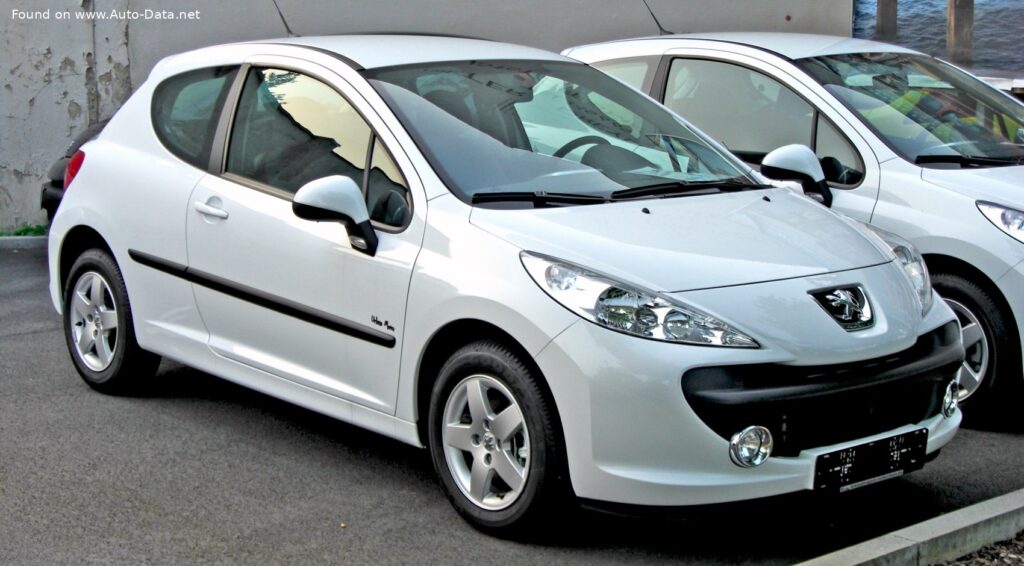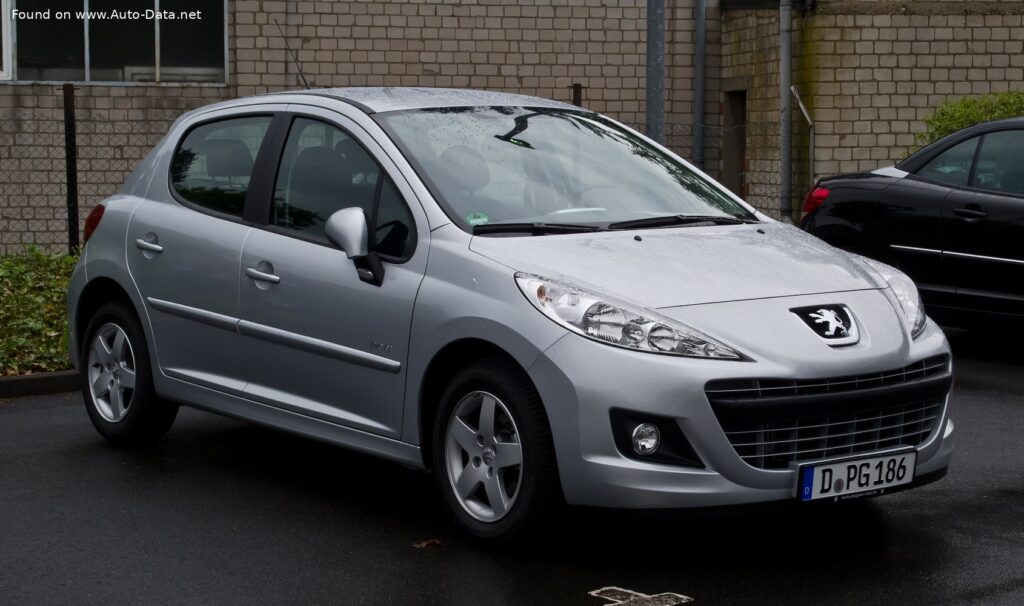
The Peugeot 207, particularly its facelifted iteration from 2009, represented a significant chapter in the French automaker’s long history of producing popular supermini vehicles. The specific variant, the Peugeot 207 (facelift 2009) 1.6 HDi (92 Hp), was a prime example of a practical, efficient, and well-equipped B-segment hatchback designed primarily for the discerning European market. Launched in 2006 as the successor to the immensely successful Peugeot 206, the 207 aimed to build upon its predecessor’s strengths while offering improved refinement, safety, and technological advancements. The 2009 facelift introduced subtle but impactful revisions, keeping the model competitive against a crowded field of rivals. This generation of the 207, produced from 2009 to 2012, was never officially sold in the United States, making it a distinctly European proposition where small, fuel-efficient diesel hatchbacks were, and largely remain, a cornerstone of the automotive landscape.
Positioning and Market Role
Positioned as a versatile compact car, the 207 (facelift 2009) was available in various body styles, but the 3-door and 5-door hatchback versions were its bread and butter. The 1.6 HDi (92 Hp) engine variant was a common choice, representing the mid-range offering in the 207 lineup. It sat below the more powerful petrol (gasoline) engines and above the base-level diesel options. This positioning targeted buyers who prioritized fuel economy and practicality without sacrificing a reasonable level of performance. It was a popular choice for urban commuters, small families, and those seeking a cost-effective vehicle for longer journeys. The 1.6 HDi aimed to strike a balance between the lower running costs of the smaller diesel engines and the slightly more spirited driving experience of the petrol variants.
Powertrain & Engine Architecture
At the heart of this particular Peugeot 207 (facelift 2009) was the efficient 1.6-liter (1560 cm3 or 95.2 cu. in.) HDi diesel engine, internally designated as the 9HP DV6DTED. This inline-four, single overhead camshaft (SOHC) unit was a testament to Peugeot’s expertise in diesel powertrain development. Generating 92 horsepower at 4000 rpm, the engine provided a respectable power output for a vehicle of its size and segment. More importantly for a diesel, it delivered a robust 169.64 lb.-ft. (230 Nm) of torque from a low 1750 rpm. This characteristic low-end torque was crucial for sprightly acceleration in city traffic and effortless cruising on highways, making the car feel more responsive than its horsepower figure might suggest.
The 1.6 HDi engine was equipped with a turbocharger and intercooler, enhancing both power delivery and efficiency. Its Diesel Commonrail fuel injection system ensured precise fuel delivery, contributing to both performance and fuel economy. A compression ratio of 18:1 was typical for a modern diesel engine of its era. With two valves per cylinder, the engine design balanced simplicity with effective combustion. A key environmental feature for this generation was the inclusion of a particulate filter, which helped the vehicle meet the Euro 5 emission standard, a significant achievement for a diesel engine in the late 2000s. The engine was typically paired with a 5-speed manual transmission, although a 4-speed automatic transmission was also available, albeit less common.
Driving Characteristics
The Peugeot 207 (facelift 2009) 1.6 HDi (92 Hp) offered a balanced driving experience. The 5-speed manual transmission provided adequate control over the engine’s power band, allowing drivers to maximize fuel efficiency or extract more performance when needed. The gear ratios were tuned for economy, with a relatively long fifth gear for highway cruising. Compared to the higher-output petrol versions, the 1.6 HDi felt less eager to rev, but its superior torque made it more relaxed and effortless to drive in everyday situations. The automatic transmission, while offering convenience, generally resulted in slightly slower acceleration and reduced fuel economy compared to the manual version. The suspension provided a comfortable ride, absorbing bumps and imperfections in the road surface effectively. Handling was predictable and safe, although not particularly sporty. The steering was light and easy to use, making it well-suited for urban driving.
Equipment & Trim Levels
The 207 (facelift 2009) 1.6 HDi (92 Hp) was typically offered in several trim levels, each adding more features and equipment. Standard features generally included power windows, remote central locking, an audio system with CD player, and air conditioning. Higher trim levels added features such as alloy wheels, a multi-function steering wheel, electric door mirrors, and a trip computer. Optional extras included a panoramic sunroof, parking sensors, and a navigation system. Interior upholstery was typically cloth, with higher trims offering upgraded fabric or partial leather options. The dashboard configuration was functional and ergonomic, with controls logically placed for ease of use. Safety features included ABS, front airbags, and seatbelt pretensioners.
Chassis & Braking
The Peugeot 207 (facelift 2009) utilized a front-wheel-drive layout with an independent McPherson strut suspension at the front and a semi-independent torsion beam suspension at the rear. This configuration provided a good balance between ride comfort and handling agility. The front brakes were ventilated discs, offering good stopping power, while the rear brakes were typically solid discs. The steering system was a power-assisted rack and pinion system, providing precise and responsive steering feel. The car rode on 195/55 R16 tires, mounted on 16-inch wheel rims, contributing to both grip and ride quality. The chassis was designed to be lightweight, contributing to the car’s fuel efficiency and agility.
Market Reception & Comparison
Critics generally viewed the Peugeot 207 (facelift 2009) 1.6 HDi (92 Hp) favorably, praising its fuel economy, comfortable ride, and practical interior. It was often compared to rivals such as the Volkswagen Polo, Ford Fiesta, and Renault Clio. The 207 generally offered a more affordable price point than the Polo, while the Fiesta was often considered to be more engaging to drive. The Clio offered a similar blend of practicality and economy. In terms of fuel economy, the 207 1.6 HDi consistently outperformed its petrol counterparts and offered comparable or better fuel efficiency than many of its diesel rivals. Reliability was generally good, although some owners reported issues with the diesel particulate filter (DPF) requiring regeneration. Overall, the 207 1.6 HDi was considered a sensible and well-rounded choice for buyers seeking a practical and economical supermini.
Technical Specifications
| General Information | |
| Brand | Peugeot |
| Model | 207 |
| Generation | 207 (facelift 2009) |
| Type (Engine) | 1.6 HDi (92 Hp) |
| Start of production | 2009 year |
| End of production | 2012 year |
| Powertrain Architecture | Internal Combustion engine |
| Body type | Hatchback |
| Seats | 5 |
| Doors | 3-5 |
| Performance Specs | |
| Fuel consumption (economy) – urban | 5.2 l/100 km (45.2 US mpg) |
| Fuel consumption (economy) – extra urban | 3.5 l/100 km (67.2 US mpg) |
| Fuel consumption (economy) – combined | 4.2 l/100 km (56 US mpg) |
| CO2 emissions | 110 g/km |
| Fuel Type | Diesel |
| Acceleration 0 – 60 mph | 11.3 sec |
| Maximum speed | 113.71 mph (183 km/h) |
| Emission standard | Euro 5 |
| Engine Specs | |
| Power | 92 Hp @ 4000 rpm |
| Torque | 169.64 lb.-ft. (230 Nm) @ 1750 rpm |
| Engine displacement | 1560 cm3 (95.2 cu. in.) |
| Number of cylinders | 4 |
| Compression ratio | 18:1 |
Legacy
The Peugeot 207 1.6 HDi (92 Hp) powertrain has proven to be relatively reliable over the long term, although, as with any diesel engine, the diesel particulate filter (DPF) can be a potential source of issues if not properly maintained. Regular servicing and the use of high-quality diesel fuel are essential for ensuring the longevity of the engine and DPF. In the used car market today, the 207 1.6 HDi remains a popular choice for buyers seeking an affordable and economical supermini. Its fuel efficiency and relatively low running costs continue to appeal to budget-conscious drivers. However, potential buyers should be aware of the potential for DPF issues and ensure that the vehicle has been well-maintained. The 207 1.6 HDi represents a solid and dependable option for those seeking a practical and economical European hatchback.