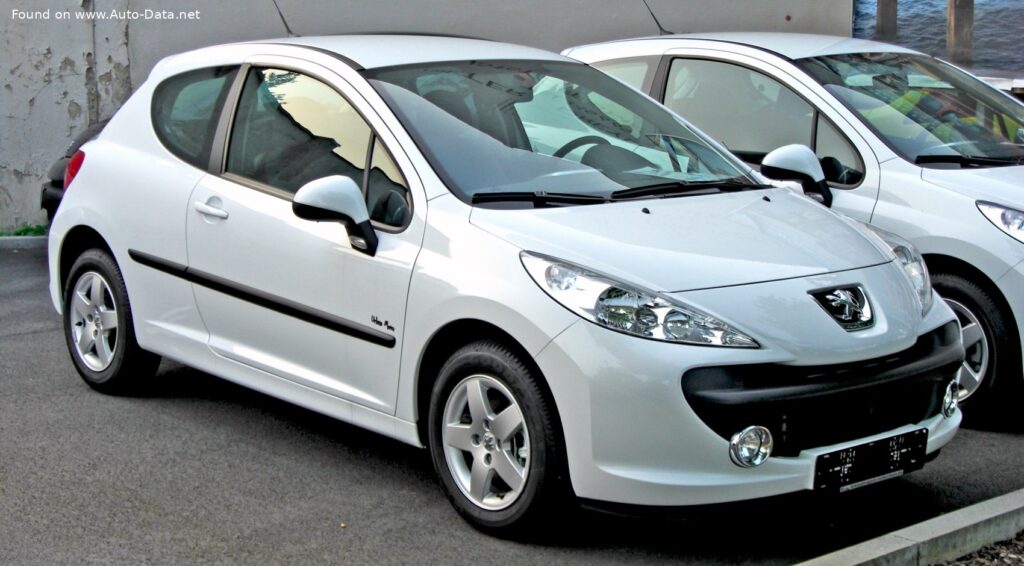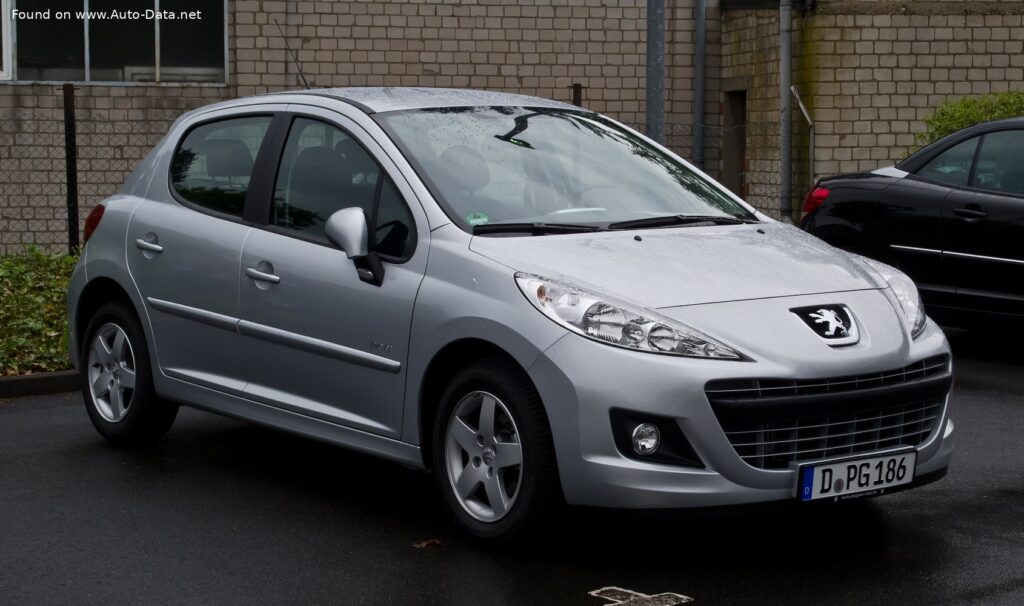
The Peugeot 207 (facelift 2009) 1.6 THP (156 Hp) represents a significant iteration of the French automaker’s popular B-segment supermini, a class of vehicles particularly dominant in the European market. Launched in 2009 as a mid-cycle refresh for the 207 generation, this particular variant stood out for its potent turbocharged engine, offering a compelling blend of performance and everyday usability. While the Peugeot 207 was never officially sold in the United States, it played a crucial role in Peugeot’s global strategy, especially in Europe, where it competed fiercely against established rivals like the Ford Fiesta, Renault Clio, and Volkswagen Polo. This model, produced from 2009 to 2012, showcased Peugeot’s commitment to dynamic driving characteristics and sophisticated powertrain technology in a compact package.
Evolution and Market Positioning
The Peugeot 207 itself was introduced in 2006 as the successor to the highly successful 206. The 2009 facelift aimed to refresh its exterior styling, update interior materials, and refine its engine lineup to meet evolving emission standards and consumer expectations. The 1.6 THP (Turbo High Pressure) engine, a collaborative effort with BMW, was a key highlight, offering a level of performance typically associated with larger, more expensive cars, but within the economical footprint of a small hatchback. This positioned the Peugeot 207 (facelift 2009) 1.6 THP (156 Hp) as a “warm hatch” – a step below full-blown performance models but significantly more spirited than standard variants, appealing to drivers seeking excitement without sacrificing practicality or fuel efficiency. Within the 207 lineup, this 1.6 THP variant occupied the upper-mid range, sitting above the base 1.4-liter gasoline and diesel options, but below any potential future performance-focused models that never materialized.
Powertrain & Engine Architecture
At the core of this particular 207 variant is the acclaimed 1.6-liter THP (Turbo High Pressure) gasoline engine, identified by its 5FR EP6DT code. This inline four-cylinder powerplant, featuring a DOHC-VVT (Dual Overhead Camshaft with Variable Valve Timing) valvetrain, direct fuel injection, and a turbocharger with an intercooler, was engineered for both efficiency and robust power delivery. The engine utilizes a Bosch MED17.4.4 engine control unit (ECU) to manage fuel delivery and ignition timing. Direct injection, a key feature, allows for precise fuel metering and improved combustion efficiency. The turbocharger is a twin-scroll unit, designed to minimize turbo lag and provide quicker throttle response. The valvetrain employs variable valve timing on both intake and exhaust camshafts, optimizing engine performance across the rev range. The 6-speed manual transmission used in this variant is a BE4 type, known for its relatively short throw and precise shift feel. It features a cable-operated shift linkage. The engine’s robust construction and advanced features were a result of the collaborative engineering effort between Peugeot and BMW.
Engine Specifications
- Engine Code: 5FR EP6DT
- Displacement: 1598 cc (1.6L)
- Configuration: Inline-4
- Valvetrain: DOHC, 16-valve, VVT
- Fuel Injection: Direct Injection
- Turbocharger: Twin-Scroll
- Compression Ratio: 10.5:1
Driving Characteristics
The 1.6 THP engine delivers a noticeable step up in performance compared to the lower-displacement engines available in the 207 range. The 156 horsepower and 177 lb-ft of torque provide brisk acceleration and confident overtaking capability. The wide torque band, available from 1400 to 4000 rpm, means that the engine feels responsive in most driving situations, minimizing the need for frequent downshifts. While not as raw or focused as a dedicated hot hatch like the Renault Clio RS, the 1.6 THP offers a more refined and accessible driving experience. The 6-speed manual transmission complements the engine well, allowing drivers to keep the engine in its optimal power band. Compared to a hypothetical diesel variant, the 1.6 THP offers a more eager and rev-happy character, albeit with slightly lower fuel economy. The gear ratios are tuned for a balance between acceleration and fuel efficiency, with a relatively tall sixth gear for highway cruising.
Equipment & Trim Levels
The 1.6 THP variant of the Peugeot 207 (facelift 2009) typically came equipped with a higher level of standard features than the base models. These often included air conditioning, power windows, power door locks, a CD/MP3 stereo system with steering wheel-mounted audio controls, and alloy wheels. Interior upholstery was typically a cloth material, though leather options were available as an upgrade. The dashboard featured a modern design with a centrally-mounted multi-function display. Optional extras included a panoramic sunroof, automatic climate control, parking sensors, and a navigation system. Safety features, such as ABS with Electronic Brakeforce Distribution (EBD), front and side airbags, and a stability control system (ESP) were often standard or available as options depending on the specific market. Trim levels varied by country, but generally, the 1.6 THP was offered in mid-range trims like “Sport” or “Allure,” offering a good balance of features and price.
Chassis & Braking
The Peugeot 207 (facelift 2009) utilizes a MacPherson strut front suspension with a coil spring and anti-roll bar, providing a comfortable yet controlled ride. The rear suspension employs a semi-independent elastic beam setup, which is a cost-effective solution that offers reasonable handling characteristics. The 1.6 THP variant typically featured a slightly stiffer suspension setup compared to the base models to enhance handling. Braking duties are handled by ventilated disc brakes at the front and solid disc brakes at the rear. ABS (Anti-lock Braking System) is standard, providing enhanced stopping power and stability. The steering system is a power-assisted rack and pinion setup, offering precise and responsive steering feel. The 1.6 THP models often came equipped with larger diameter wheels and tires (typically 205/45 R17) compared to the base models, further improving grip and handling.
Market Reception & Comparison
Critics generally praised the Peugeot 207 1.6 THP for its lively performance, refined engine, and comfortable ride. The engine was widely regarded as one of the best in its class, offering a compelling blend of power and efficiency. However, some reviewers noted that the interior quality, while improved over the pre-facelift model, still lagged behind some of its rivals, such as the Volkswagen Polo. Fuel economy was generally considered good, averaging around 34.6 US mpg in combined driving. Reliability was a mixed bag, with some reports of issues related to the timing chain tensioner and carbon buildup in the intake manifold. Compared to the 1.4-liter gasoline and diesel variants, the 1.6 THP offered significantly more performance but at the cost of slightly higher fuel consumption and potentially increased maintenance costs. Against competitors like the Ford Fiesta and Renault Clio, the 207 1.6 THP offered a more sophisticated and refined driving experience, but often at a slightly higher price point.
Technical Specifications
| Brand | Peugeot |
| Model | 207 |
| Generation | 207 (facelift 2009) |
| Type (Engine) | 1.6 THP (156 Hp) |
| Production Start | 2009 year |
| Production End | 2012 year |
| Powertrain Architecture | Internal Combustion engine |
| Body type | Hatchback |
| Seats | 5 |
| Doors | 3-5 |
| Fuel consumption (economy) – urban | 9.7 l/100 km (24.2 US mpg) |
| Fuel consumption (economy) – extra urban | 5.1 l/100 km (46.1 US mpg) |
| Fuel consumption (economy) – combined | 6.8 l/100 km (34.6 US mpg) |
| CO2 emissions | 159 g/km |
| Fuel Type | Petrol (Gasoline) |
| Acceleration 0 – 60 mph | 7.6 sec |
| Acceleration 0 – 62 mph (0 – 100 km/h) | 8 sec |
| Maximum speed | 134.22 mph (216 km/h) |
| Emission standard | Euro 5 |
| Weight-to-power ratio | 7.9 kg/Hp (126.4 Hp/tonne) |
| Weight-to-torque ratio | 5.1 kg/Nm (194.5 Nm/tonne) |
| Power | 156 Hp @ 6000 rpm |
| Power per liter | 97.6 Hp/l |
| Torque | 177.01 lb.-ft. (240 Nm) @ 1400-4000 rpm |
| Engine layout | Front, Transverse |
| Engine Model/Code | 5FR EP6DT |
| Engine displacement | 1598 cm3 (97.52 cu. in.) |
| Number of cylinders | 4 |
| Engine configuration | Inline |
| Cylinder Bore | 3.03 in. (77 mm) |
| Piston Stroke | 3.38 in. (85.8 mm) |
| Compression ratio | 10.5:1 |
| Number of valves per cylinder | 4 |
| Fuel injection system | Direct injection |
| Engine aspiration | Turbocharger, Intercooler |
| Valvetrain | DOHC-VVT |
| Kerb Weight | 2720.5 lbs. (1234 kg) |
Legacy
The Peugeot 207 1.6 THP, while not without its quirks, remains a fondly remembered model among enthusiasts. The 1.6 THP engine, despite some early reliability concerns, proved to be a capable and enjoyable powerplant. On the used car market, these models generally command a slightly higher price than the lower-spec 207 variants, reflecting the desirability of the more powerful engine. However, potential buyers should be aware of the potential for timing chain issues and carbon buildup, and ensure that the vehicle has been properly maintained. The 207’s successor, the 208, continued Peugeot’s tradition of offering stylish and engaging small cars, building upon the foundations laid by the 207 and its potent 1.6 THP engine.