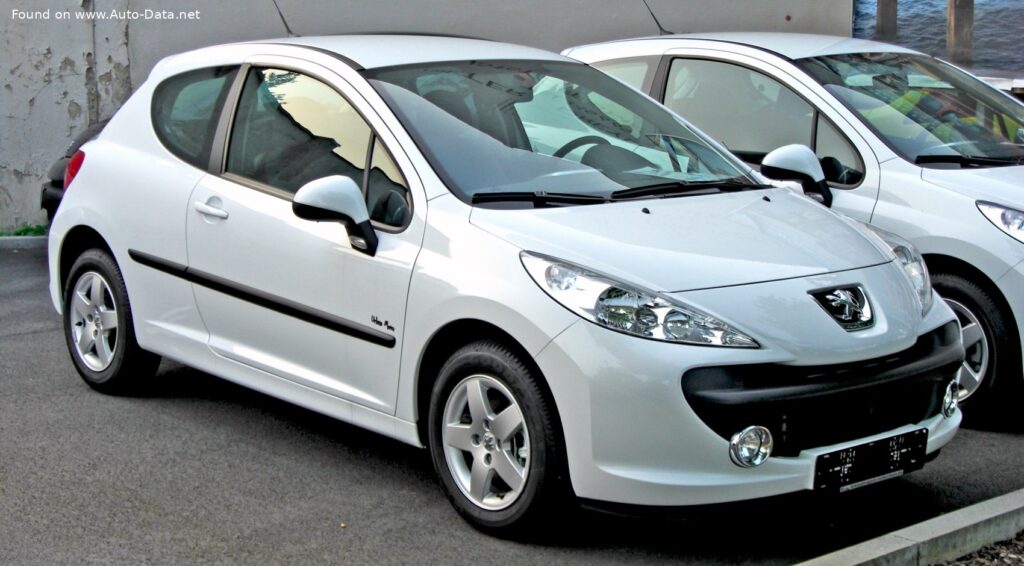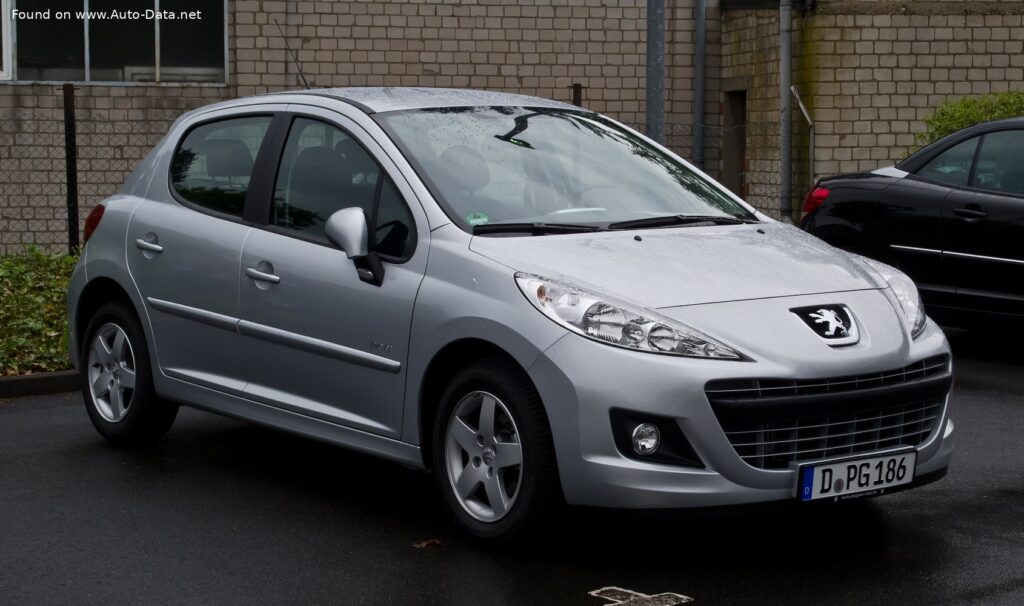
The Peugeot 207, particularly in its facelifted 2009 iteration, represented a significant chapter in the French automaker’s storied history of producing popular subcompact vehicles. Positioned in the highly competitive European B-segment, a class known for its diverse range of small yet practical cars, the 207 succeeded the incredibly successful Peugeot 206. While never officially sold in the United States, the 207 was a ubiquitous sight on European roads, embodying the continent’s preference for agile, fuel-efficient, and stylish urban commuters. This particular variant, the Peugeot 207 (facelift 2009) 1.6 VTi (120 Hp) Automatic, offered a compelling blend of accessible performance, modern design, and convenience for its primary market from its production start in 2009 until its conclusion in 2012. It was built on the PSA Peugeot Citroën B platform, also known as the 1HX0/A3 platform.
The 1.6 VTi Automatic: Positioning and Context
The 1.6 VTi Automatic trim level occupied a mid-range position within the 207 lineup. It sat above the base-level 1.4-liter gasoline engine options and the HDi diesel variants, but below the higher-performance GTi model. This positioning aimed to appeal to buyers who desired a step up in performance and refinement from the entry-level models, without the added cost and sportier focus of the GTi. The automatic transmission was a key selling point for those prioritizing ease of driving, particularly in congested urban environments. It was targeted towards drivers who valued comfort and convenience over outright performance.
Powertrain & Engine Architecture
Under the hood of the Peugeot 207 (facelift 2009) 1.6 VTi (120 Hp) Automatic lay a 1.6-liter (1598 cm³ or 97.52 cu. in.) naturally aspirated inline-four gasoline engine, designated with the model code 5FS EP6C. This engine was the result of a collaborative effort between PSA Peugeot Citroën and BMW, a partnership that produced a family of engines known for their efficiency and refinement. The engine utilizes Variable Valve Lift and Timing Injection (VTi) technology, optimizing valve control for improved power output and fuel economy. This system adjusts the timing and lift of the intake valves based on engine speed and load, enhancing both low-end torque and high-end horsepower.
The 5FS EP6C engine features a cast iron block and an aluminum cylinder head. It employs multi-point fuel injection and a double overhead camshaft (DOHC) valvetrain with four valves per cylinder. The compression ratio is 11:1. Power is delivered to the front wheels via a four-speed automatic transmission. This transmission, while not as sophisticated as modern multi-gear automatics, was known for its reliability and smooth shifting characteristics. It features electronic control for optimized gear selection based on driving conditions.
Driving Characteristics
The 207 1.6 VTi Automatic offered a comfortable and refined driving experience. While not a particularly sporty vehicle, it provided adequate performance for everyday driving. The four-speed automatic transmission, while lacking the responsiveness of a manual gearbox or a more modern automatic, offered smooth and predictable shifts. The gear ratios were optimized for fuel efficiency and ease of use, rather than outright acceleration. The engine delivered a linear power delivery, with peak torque available at 4250 rpm. This made it well-suited for navigating city streets and merging onto highways. Compared to the manual transmission versions of the 1.6 VTi, the automatic offered less driver engagement but greater convenience. It also lagged behind the performance of the GTi model, which featured a more powerful engine and a sport-tuned suspension.
Equipment & Trim Levels
The 1.6 VTi Automatic trim level typically included a generous array of standard features. These commonly included air conditioning, power windows, power door locks, a CD player with MP3 compatibility, and alloy wheels. Safety features such as ABS (Anti-lock Braking System), electronic brake-force distribution (EBD), and front airbags were also standard. Higher trim levels offered optional extras such as a panoramic sunroof, automatic headlights and wipers, rear parking sensors, and a more advanced audio system with Bluetooth connectivity. Interior upholstery typically consisted of cloth seats, with the option of leather upholstery on higher-spec models. The dashboard layout was functional and ergonomic, with controls logically placed for ease of use.
Chassis & Braking
The Peugeot 207 utilized a front-wheel-drive architecture. The suspension system comprised an independent McPherson strut setup at the front, with a coil spring and anti-roll bar, providing responsive handling and ride comfort. The rear suspension featured a semi-independent arrangement with coil springs and an elastic beam. This configuration offered a good balance between ride quality and handling stability. Braking was handled by ventilated discs at the front and solid discs at the rear, complemented by the ABS system for enhanced stopping power and control. The steering system was a responsive rack-and-pinion type. The 1.6 VTi Automatic models typically rode on 195/55 R16 tires mounted on 16-inch alloy wheels, contributing to both grip and ride quality.
Market Reception & Comparison
Critics generally viewed the Peugeot 207 1.6 VTi Automatic favorably, praising its comfortable ride, stylish design, and refined engine. The automatic transmission was appreciated for its smoothness and ease of use, making it a popular choice for urban drivers. However, some critics noted that the four-speed automatic felt dated compared to the more advanced transmissions offered in rival vehicles. Fuel economy was considered to be competitive, with a combined rating of around 34.6 US mpg (6.8 l/100 km). In terms of reliability, the 5FS EP6C engine proved to be generally robust, although some owners reported minor issues with the timing chain. Compared to the 1.4-liter gasoline and HDi diesel variants, the 1.6 VTi Automatic offered a noticeable improvement in performance and refinement. It also provided a more convenient driving experience than the manual transmission versions.
Technical Specifications
| Category | Specification |
| General Information | |
| Brand | Peugeot |
| Model | 207 |
| Generation | 207 (facelift 2009) |
| Type (Engine) | 1.6 VTi (120 Hp) Automatic |
| Start of Production | 2009 year |
| End of Production | 2012 year |
| Powertrain Architecture | Internal Combustion engine |
| Body type | Hatchback |
| Seats | 5 |
| Doors | 3-5 |
| Performance Specs | |
| Fuel Consumption (Economy) – Urban | 9.6 l/100 km (24.5 US mpg) |
| Fuel Consumption (Economy) – Extra Urban | 5.2 l/100 km (45.2 US mpg) |
| Fuel Consumption (Economy) – Combined | 6.8 l/100 km (34.6 US mpg) |
| CO2 Emissions | 159 g/km |
| Fuel Type | Petrol (Gasoline) |
| Acceleration 0 – 60 mph | 10.9 sec |
| Acceleration 0 – 100 km/h | 11.5 sec |
| Maximum Speed | 195 km/h (121.17 mph) |
| Emission Standard | Euro 5 |
| Weight-to-Power Ratio | 10 kg/Hp (100.4 Hp/tonne) |
| Weight-to-Torque Ratio | 7.5 kg/Nm (133.9 Nm/tonne) |
| Engine Specs | |
| Power | 120 Hp @ 6000 rpm |
| Power per Liter | 75.1 Hp/l |
| Torque | 160 Nm @ 4250 rpm (118.01 lb.-ft. @ 4250 rpm) |
| Engine Layout | Front, Transverse |
| Engine Model/Code | 5FS EP6C |
| Engine Displacement | 1598 cm³ (97.52 cu. in.) |
| Number of Cylinders | 4 |
| Engine Configuration | Inline |
| Cylinder Bore | 77 mm (3.03 in.) |
| Piston Stroke | 85.8 mm (3.38 in.) |
| Compression Ratio | 11:1 |
| Number of Valves per Cylinder | 4 |
| Fuel Injection System | Multi-port manifold injection |
| Engine Aspiration | Naturally aspirated engine |
| Valvetrain | DOHC-VVT |
| Engine Oil Capacity | 4.25 l (4.49 US qt) |
| Coolant Capacity | 5.7 l (6.02 US qt) |
| Space, Volume, and Weights | |
| Kerb Weight | 1195 kg (2634.52 lbs.) |
| Max. Weight | 1696 kg (3739.04 lbs.) |
| Max Load | 501 kg (1104.52 lbs.) |
| Trunk (Boot) Space – Minimum | 270 l (9.53 cu. ft.) |
| Trunk (Boot) Space – Maximum | 923 l (32.6 cu. ft.) |
| Fuel Tank Capacity | 50 l (13.21 US gal) |
| Permitted Trailer Load with Brakes (12%) | 1150 kg (2535.32 lbs.) |
| Permitted Trailer Load without Brakes | 600 kg (1322.77 lbs.) |
| Dimensions | |
| Length | 4045 mm (159.25 in.) |
| Width | 1748 mm (68.82 in.) |
| Width with Mirrors Folded | 1818 mm (71.57 in.) |
| Width Including Mirrors | 1972 mm (77.64 in.) |
| Height | 1472 mm (57.95 in.) |
| Wheelbase | 2540 mm (100 in.) |
| Front Track | 1475 mm (58.07 in.) |
| Rear (Back) Track | 1468 mm (57.8 in.) |
| Drag Coefficient (Cd) | 0.30 |
| Minimum Turning Circle (Turning Diameter) | 11.0 m (36.09 ft.) |
| Drivetrain, Brakes, and Suspension Specs | |
| Drivetrain Architecture | Front wheel drive (Internal combustion engine drives front wheels) |
| Drive Wheel | Front wheel drive |
| Number of Gears and Type of Gearbox | 4 gears, automatic transmission |
| Front Suspension | Independent, McPherson with coil spring and anti-roll bar |
| Rear Suspension | Semi-independent, coil spring, Elastic beam |
| Front Brakes | Ventilated discs |
| Rear Brakes | Disc |
| Assisting Systems | ABS (Anti-lock braking system) |
| Steering Type | Steering rack and pinion |
| Tires Size | 195/55 R16 |
| Wheel Rims Size | 16 inch |
Legacy
The Peugeot 207 1.6 VTi Automatic, while not a groundbreaking vehicle, remains a reasonably well-regarded option in the used car market. The 5FS EP6C engine is known for its durability, provided it has been properly maintained. Regular oil changes and adherence to the manufacturer’s recommended service intervals are crucial for long-term reliability. The automatic transmission, while not the most advanced, is generally reliable if treated with care. Common issues reported by owners include occasional problems with the electric windows and the central locking system. Overall, the 207 1.6 VTi Automatic offers a comfortable, stylish, and relatively affordable option for buyers seeking a practical and fuel-efficient subcompact car.