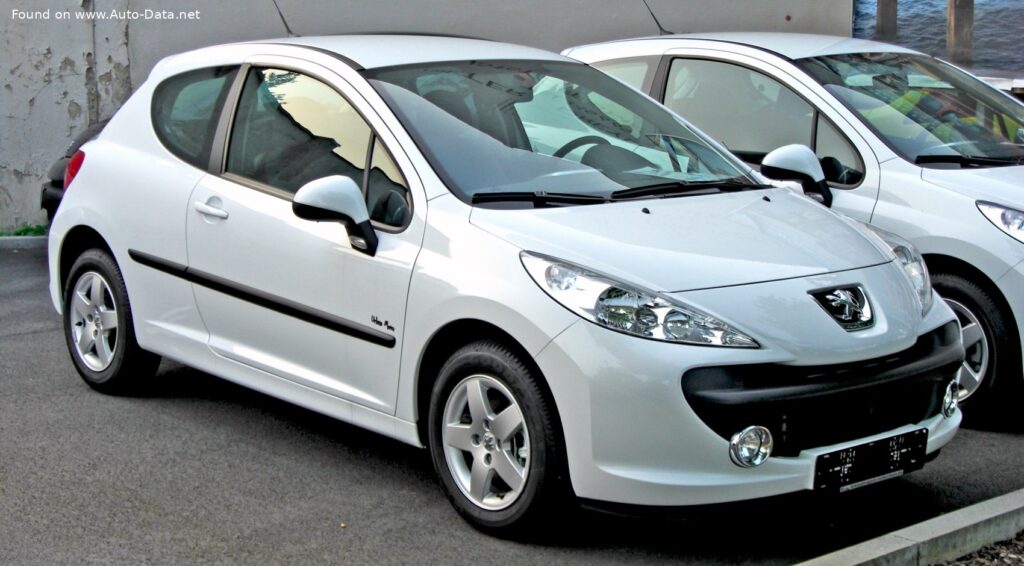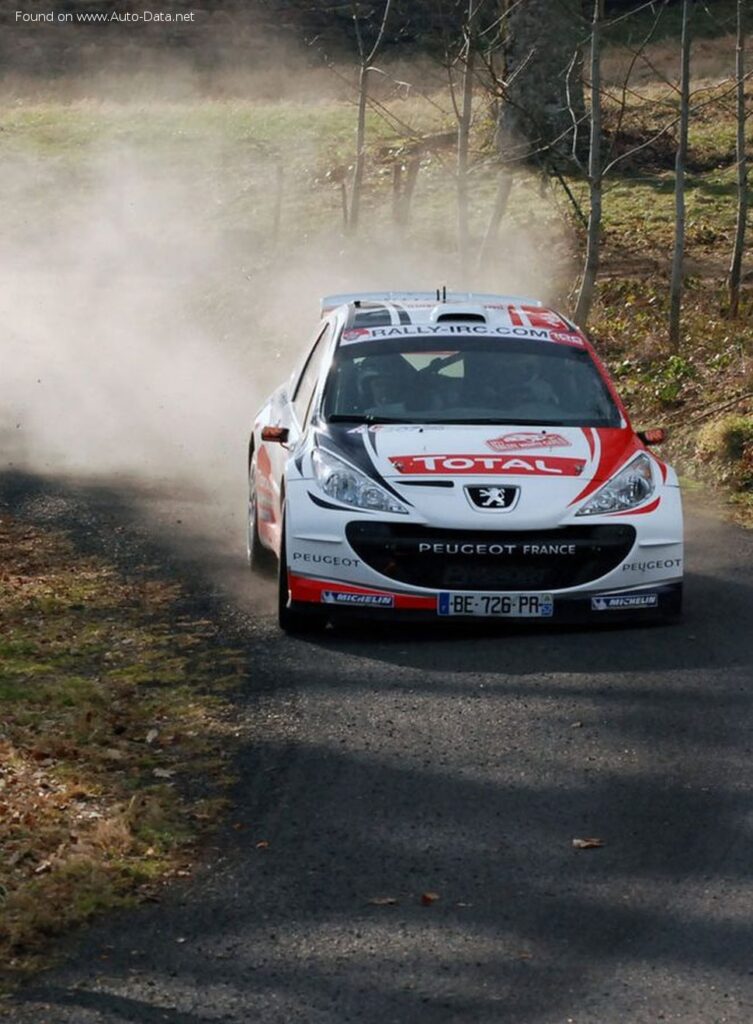
The Peugeot 207 Super 2000 represents a specialized chapter in Peugeot’s motorsport history, specifically engineered for the Super 2000 rally category. Introduced in 2006, this high-performance variant of the Peugeot 207 hatchback wasn’t intended for general sale in markets like the United States. Instead, it was a purpose-built competition car designed to meet the strict regulations of the Super 2000 class, serving as a stepping stone to the World Rally Championship (WRC) and a premier category in European and international rally series. Its limited production run in 2006 was solely for homologation purposes, enabling its participation in sanctioned rally events.
Peugeot 207 Super 2000: A Rally-Focused Machine
Developed by Peugeot Sport, the 207 Super 2000 embodied the characteristics of a modern rally car: a lightweight, compact body housing a powerful, high-revving naturally aspirated engine, a sophisticated all-wheel-drive system, and a durable chassis built to withstand the rigors of rally stages. While the standard Peugeot 207 offered practical transportation, the Super 2000 was a completely different machine, focused on speed, durability, and agility on gravel, tarmac, and snow. Its impact was felt on rally special stages globally, where it competed for victories and championships, upholding Peugeot’s long-standing rallying tradition.
Powertrain & Engine Architecture
The heart of the Peugeot 207 Super 2000 was a 2.0-liter (1997 cm3 or 121.86 cubic inches) naturally aspirated inline-four engine. This powertrain was a direct result of the Super 2000 regulations, which limited engines to 2.0 liters without forced induction. Despite lacking a turbocharger or supercharger, Peugeot Sport engineers achieved an impressive 280 horsepower at 8500 rpm. This high-revving nature is typical of competition engines, designed to deliver peak power at elevated engine speeds for maximum performance through corners and straights.
Torque output was 250 Nm (184.39 lb-ft) at 7500 rpm, providing a broad powerband suitable for rally driving, where precise throttle control and immediate response are crucial. The engine featured a DOHC (Double Overhead Camshaft) valvetrain with four valves per cylinder, optimizing airflow for maximum volumetric efficiency. Fuel was delivered via a multi-port fuel injection system, a reliable setup for high-performance naturally aspirated engines of the era. The front, transverse engine layout contributed to balanced weight distribution, essential for dynamic handling.
Power was transmitted to all four wheels through an advanced all-wheel-drive (4×4) system, providing exceptional traction on diverse surfaces. The specification lists a 6-speed automatic transmission. However, in the context of rally cars, this refers to a highly specialized sequential manual gearbox. While not a conventional torque-converter automatic, it allows for incredibly fast, clutchless shifts using paddle shifters or a sequential lever. This type of transmission is vital for maintaining momentum and minimizing shift times during intense competition. The combination of its potent engine, efficient drivetrain, and a low curb weight of 1150 kg (2535.32 lbs) resulted in an outstanding weight-to-power ratio of 4.1 kg/Hp (243.5 Hp/tonne), highlighting its performance capabilities.
Driving Characteristics
The Peugeot 207 Super 2000, with its 280 hp engine and sequential gearbox, offered a distinctly different driving experience compared to standard 207 models. The high-revving engine demanded precise gear selection to stay within its optimal powerband. The sequential gearbox allowed for rapid shifts, crucial for maintaining momentum on rally stages. While the standard 207’s 1.4L or 1.6L engines focused on fuel efficiency and everyday usability, the Super 2000 prioritized maximum performance. The all-wheel-drive system provided significantly enhanced traction, allowing for quicker acceleration and more confident cornering compared to front-wheel-drive 207 variants. The car’s responsiveness and agility were markedly superior, making it a challenging but rewarding machine for experienced rally drivers.
Equipment & Trim Levels
The Peugeot 207 Super 2000 wasn’t equipped with traditional trim levels. As a dedicated rally car, its interior was stripped down and focused entirely on functionality and safety. It featured only two specialized racing bucket seats with multi-point harnesses for the driver and co-driver. A mandatory roll cage was integrated into the chassis, providing structural rigidity and crucial occupant protection. While not explicitly detailed, rally cars of this caliber typically included advanced data logging systems, bespoke instrument panels displaying critical engine and vehicle parameters, and rally-specific controls for managing the all-wheel-drive system and other performance features.
Chassis & Braking
The chassis and suspension were paramount for rally performance. The 207 Super 2000 utilized an independent McPherson strut setup at both the front and rear, a robust and tunable configuration common in rally cars, designed to handle extreme loads and varied terrain. The braking system comprised large, ventilated discs on all four wheels, ensuring consistent and powerful stopping performance, crucial for negotiating tight corners at high speeds. An Anti-lock Braking System (ABS) was included, providing an additional layer of control, especially on mixed-surface stages. The vehicle rode on 18-inch wheels, fitted with specialized rally tires tailored for different surface conditions. Every aspect of its design, from its aerodynamic elements to its reinforced chassis, was meticulously crafted to endure the punishing environment of international rallying.
Market Reception & Comparison
The Peugeot 207 Super 2000 didn’t have a traditional “market reception” as it wasn’t a consumer vehicle. Its success was measured by its performance in rally competitions. Critics and teams praised its reliability, robust chassis, and potent engine. It was a competitive force in the Super 2000 class, often challenging rivals like the Fiat Punto S2000, Skoda Fabia S2000, Ford Fiesta S2000, and Volkswagen Polo S2000. Compared to the standard Peugeot 207, the Super 2000 offered vastly superior performance but sacrificed practicality and fuel economy. Within the Super 2000 category, it was considered a well-balanced and competitive package, offering a strong combination of power, handling, and durability.
Technical Specifications: Peugeot 207 Super 2000 2.0 (280 Hp) 4WD Automatic
| Category | Specification |
| Brand | Peugeot |
| Model | 207 |
| Generation | 207 Super 2000 |
| Type (Engine) | 2.0 (280 Hp) 4WD Automatic |
| Production Start | 2006 |
| Production End | 2006 |
| Powertrain Architecture | Internal Combustion Engine |
| Body Type | Hatchback |
| Seats | 2 |
| Doors | 3 |
| Performance Specs | |
| Fuel Type | Petrol (Gasoline) |
| Weight-to-power ratio | 4.1 kg/Hp, 243.5 Hp/tonne |
| Weight-to-torque ratio | 4.6 kg/Nm, 217.4 Nm/tonne |
| Engine Specs | |
| Power | 280 Hp @ 8500 rpm |
| Power per liter | 140.2 Hp/l |
| Torque | 250 Nm (184.39 lb-ft.) @ 7500 rpm |
| Engine Layout | Front, Transverse |
| Engine Displacement | 1997 cm3 (121.86 cu. in.) |
| Number of Cylinders | 4 |
| Engine Configuration | Inline |
| Cylinder Bore | 85 mm (3.35 in.) |
| Piston Stroke | 88 mm (3.46 in.) |
| Number of Valves per Cylinder | 4 |
| Fuel Injection System | Multi-port manifold injection |
| Engine Aspiration | Naturally aspirated engine |
| Valvetrain | DOHC |
| Space, Volume and Weights | |
| Kerb Weight | 1150 kg (2535.32 lbs) |
| Fuel Tank Capacity | 80 l (21.13 US gal) |
| Dimensions | |
| Length | 4030 mm (158.66 in.) |
| Width | 1800 mm (70.87 in.) |
| Wheelbase | 2560 mm (100.79 in.) |
| Drivetrain, Brakes and Suspension Specs | |
| Drive Wheel | All-wheel drive (4×4) |
| Number of Gears and Gearbox Type | 6 gears, automatic transmission (sequential manual) |
| Front Suspension | Independent type McPherson |
| Rear Suspension | McPherson |
| Front Brakes | Ventilated discs |
| Rear Brakes | Ventilated discs |
| Assisting Systems | ABS (Anti-lock braking system) |
| Wheel Rims Size | 18 inches |
Legacy
The Peugeot 207 Super 2000 established a significant legacy in international rallying. As a Super 2000 competitor, it offered a cost-effective alternative to World Rally Cars. Its success cemented Peugeot’s reputation in rallying, building on the legacy of models like the 205 T16 and 306 Maxi. While not available to the public, the 207 Super 2000 showcased Peugeot’s engineering capabilities and commitment to motorsport. It provided a platform for aspiring rally drivers and entertained rally fans worldwide. Today, the Peugeot 207 Super 2000 is remembered as a successful and influential rally machine, representing an era of naturally aspirated engines and high-revving performance in international rallying. Its reliability and performance continue to be appreciated by collectors and rally enthusiasts, and well-maintained examples command significant value in the used rally car market.