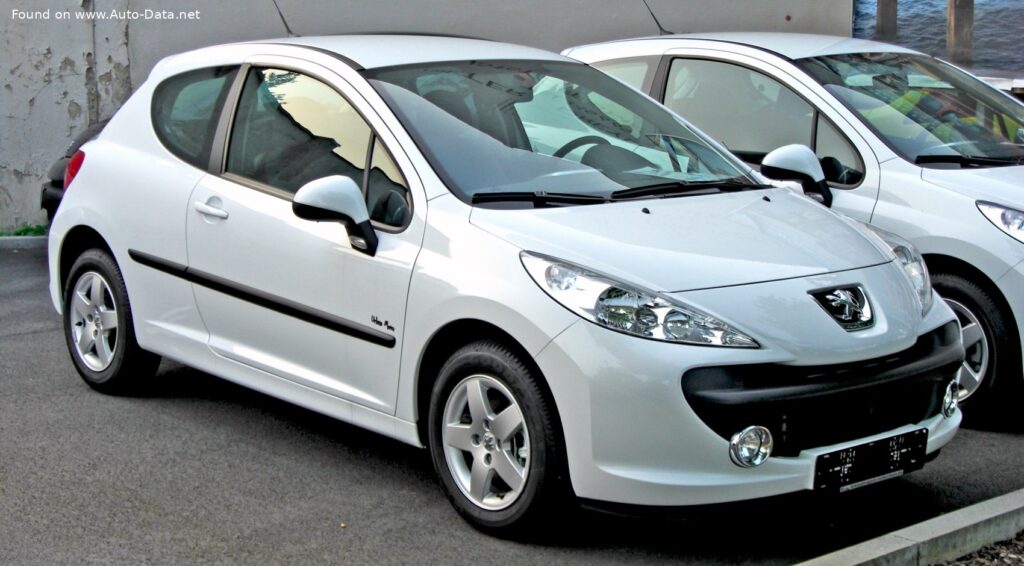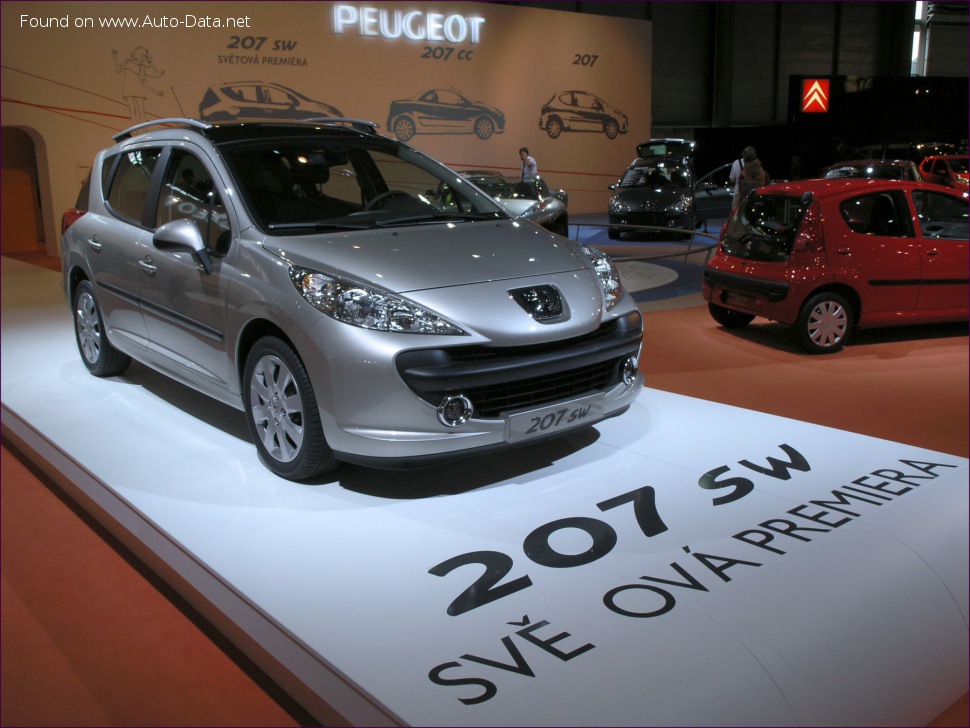
The Peugeot 207 SW 1.4 VTi (95 Hp) represents a compelling entry in the European B-segment, or supermini class, specifically tailored for practicality and versatility. Launched in 2007 as part of the broader 207 generation, the SW (Station Wagon) variant offered a more spacious and family-friendly alternative to its popular hatchback sibling. Produced until 2009 with this particular powertrain, the 207 SW was a significant player in markets where compact station wagons were highly valued for their blend of maneuverability, fuel efficiency, and expanded cargo capacity. While not officially imported to the United States, this model exemplifies the European automotive philosophy of maximizing utility within a compact footprint, catering to urban families and individuals requiring more space than a standard hatchback without the bulk of a larger vehicle. Its internal combustion engine architecture, coupled with a front-wheel-drive layout, underscored its conventional yet reliable engineering for everyday driving.
The Peugeot 207 SW: A Practical Evolution
Succeeding the immensely successful 206, the Peugeot 207 series, including the SW, aimed to elevate standards in terms of design, safety, and driving dynamics within its segment. The SW variant, in particular, carved out a niche by offering a considerably larger trunk and more flexible interior space, addressing a key consumer need in its primary European markets. The 1.4 VTi engine, a product of the PSA Group’s collaboration with BMW (known as the ‘Prince’ engine family), provided a modern, efficient, and adequately powered option for the segment, balancing performance with economical operation and adherence to contemporary emission standards. This particular iteration of the 207 SW was designed to be a pragmatic daily driver, capable of handling a variety of tasks from city commuting to weekend trips, all while maintaining the characteristic French flair for design and ride comfort.
Powertrain & Engine Architecture
At the heart of the Peugeot 207 SW 1.4 VTi (95 Hp) lies a sophisticated naturally aspirated inline-four gasoline engine, designated by the code 8FS EP3. This powerplant, featuring a displacement of 1397 cm3 (approximately 1.4 liters or 85.25 cubic inches), was engineered for a balance of efficiency and responsive performance. It generated a peak output of 95 horsepower at 6000 revolutions per minute (rpm), making it a competitive offering in its class. Torque was rated at 136 Nm (100.31 lb.-ft.) at a respectable 4000 rpm, providing sufficient pulling power for urban driving and highway cruising.
A key technological highlight of this engine was its Dual Overhead Camshaft (DOHC) valvetrain with Variable Valve Timing (VVT). This system allowed for precise control over valve lift and timing, optimizing engine breathing across the rev range. The result was improved fuel efficiency, reduced emissions, and a broader torque curve compared to engines without such advanced valvetrain technology. Fuel delivery was handled by a multi-port manifold injection system, a reliable and well-proven method for gasoline engines of this era.
Power was transmitted to the front wheels via a smooth-shifting 5-speed manual transmission, offering direct driver engagement and control over the power delivery. This drivetrain architecture, combined with the engine’s characteristics, allowed the 207 SW 1.4 VTi to achieve a 0 to 60 mph acceleration time of approximately 11.2 seconds, with a top speed of 114.95 mph (185 km/h). While not a performance leader, these figures were entirely adequate for its intended purpose as a practical family wagon.
Fuel economy was a strong point for the 207 SW 1.4 VTi, reflecting its efficient engine design and the manual gearbox. The combined fuel consumption was rated at 6.3 liters per 100 kilometers, which translates to an impressive 37.3 US miles per gallon. Urban driving yielded 28.7 US mpg (8.2 l/100 km), while extra-urban conditions saw consumption drop to 45.2 US mpg (5.2 l/100 km). With CO2 emissions of 150 g/km, the vehicle met the Euro 4 emission standard, demonstrating its commitment to environmental responsibility for its time. The car’s weight-to-power ratio stood at 12.8 kg/Hp (78.2 Hp/tonne), further underscoring its efficient use of the available power.
Driving Characteristics
The 1.4 VTi engine in the 207 SW, paired with the 5-speed manual transmission, provided a driving experience geared towards efficiency and ease of use rather than outright performance. Compared to higher-output versions of the 207, such as those equipped with the 1.6L engine, the 1.4 VTi felt less eager to rev and required more deliberate downshifts for overtaking maneuvers. However, this was a trade-off for improved fuel economy and a more relaxed driving style. The gear ratios were tuned to prioritize fuel efficiency, with taller gearing in higher gears for comfortable highway cruising. The engine’s torque delivery was relatively linear, providing predictable power throughout the rev range, but it lacked the punch of turbocharged alternatives. Compared to diesel variants, the 1.4 VTi offered a smoother and quieter driving experience, albeit with less low-end torque. The overall driving experience was best described as refined and practical, suitable for everyday commuting and family trips.
Equipment & Trim Levels
The Peugeot 207 SW 1.4 VTi (95 Hp) was typically offered in several trim levels, varying depending on the specific European market. Standard features generally included power steering, central locking, electric front windows, and an adjustable steering column. Safety equipment included ABS brakes, driver and passenger airbags, and seatbelt pretensioners. Higher trim levels added features such as air conditioning, alloy wheels, a CD player with MP3 compatibility, and remote central locking. Interior upholstery was typically cloth, with a range of color options available. Optional extras included a panoramic sunroof, parking sensors, and a navigation system. The dashboard configuration was functional and ergonomically designed, with clearly labeled controls and a straightforward instrument cluster. The overall interior ambiance was designed to be comfortable and practical, reflecting the car’s overall positioning as a family-friendly vehicle.
Chassis & Braking
The Peugeot 207 SW 1.4 VTi (95 Hp) utilized a MacPherson strut independent suspension system at the front, providing a comfortable ride and predictable handling. The rear suspension employed a semi-independent coil spring arrangement, which offered a good balance between ride comfort and stability. The braking system consisted of ventilated discs at the front and drum brakes at the rear. ABS (Anti-lock Braking System) was standard equipment, enhancing braking performance and control, particularly in emergency situations. The steering system was a rack and pinion type, providing precise and responsive steering feel. The car rode on 185/65 R15 tires, mounted on 15-inch steel or alloy wheels, offering a good compromise between grip, comfort, and rolling resistance. A front stabilizer bar was included to reduce body roll during cornering, improving handling stability. The chassis was designed to provide a comfortable and secure driving experience, prioritizing ride quality and predictable handling over sporty performance.
Market Reception & Comparison
Critics generally viewed the Peugeot 207 SW 1.4 VTi (95 Hp) as a practical and well-rounded vehicle, particularly praising its spacious interior, comfortable ride, and fuel efficiency. However, some reviewers noted that the engine lacked the punch of more powerful alternatives and that the interior materials were not as premium as those found in some competitors. Compared to other trims in the 207 lineup, the 1.4 VTi offered a more affordable entry point, making it attractive to budget-conscious buyers. Its fuel economy was comparable to other 1.4L gasoline engines in the segment, but it lagged behind diesel variants in terms of overall efficiency. In terms of reliability, the 1.4 VTi engine was generally considered to be reliable, although some owners reported minor issues with the engine’s cooling system. Overall, the 207 SW 1.4 VTi was seen as a sensible and practical choice for families and individuals seeking a versatile and economical compact station wagon.
Technical Specifications
| Category | Specification |
| Brand | Peugeot |
| Model | 207 SW |
| Engine Type | 1.4 VTi (95 Hp) |
| Production Start | 2007 |
| Production End | 2009 |
| Body Type | Station Wagon (Estate) |
| Seats | 5 |
| Doors | 5 |
| Fuel Type | Petrol (Gasoline) |
| Engine Layout | Front, Transverse |
| Engine Model/Code | 8FS EP3 |
| Engine Displacement | 1397 cm3 (85.25 cu. in.) |
| Number of Cylinders | 4, Inline |
| Cylinder Bore | 77 mm (3.03 in.) |
| Piston Stroke | 75 mm (2.95 in.) |
| Compression Ratio | 11:1 |
| Valves per Cylinder | 4 |
| Valvetrain | DOHC-VVT |
| Fuel Injection System | Multi-port manifold injection |
| Engine Aspiration | Naturally aspirated |
| Power | 95 Hp @ 6000 rpm |
| Power per Liter | 68 Hp/l |
| Torque | 136 Nm @ 4000 rpm (100.31 lb.-ft. @ 4000 rpm) |
| Acceleration 0-60 mph | 11.2 sec |
| Acceleration 0-100 km/h | 11.8 sec |
| Maximum Speed | 185 km/h (114.95 mph) |
| Fuel Consumption (Urban) | 8.2 l/100 km (28.7 US mpg) |
| Fuel Consumption (Extra Urban) | 5.2 l/100 km (45.2 US mpg) |
| Fuel Consumption (Combined) | 6.3 l/100 km (37.3 US mpg) |
| CO2 Emissions | 150 g/km |
| Emission Standard | Euro 4 |
| Engine Oil Capacity | 4.25 l (4.49 US qt) |
| Coolant Capacity | 6 l (6.34 US qt) |
| Drivetrain Architecture | Front-wheel drive |
| Gearbox Type | 5-speed manual |
| Front Suspension | Independent type McPherson |
| Rear Suspension | Semi-independent, coil spring |
| Front Brakes | Ventilated discs |
| Rear Brakes | Drum |
| Assisting Systems | ABS (Anti-lock braking system) |
| Steering Type | Steering rack and pinion |
| Tires Size | 185/65 R15 |
| Wheel Rims Size | 15 inches |
| Kerb Weight | 1215 kg (2678.62 lbs) |
| Max. Weight | 1691 kg (3728.02 lbs) |
| Max Load | 476 kg (1049.4 lbs) |
| Trunk Space (Min) | 337 l (11.9 cu. ft.) |
| Trunk Space (Max) | 1258 l (44.43 cu. ft.) |
| Fuel Tank Capacity | 50 l (13.21 US gal) |
| Permitted Trailer Load (with brakes) | 1150 kg (2535.32 lbs) |
| Permitted Trailer Load (without brakes) | 600 kg (1322.77 lbs) |
| Length | 4156 mm (163.62 in.) |
| Width | 1748 mm (68.82 in.) |
| Width with mirrors folded | 1818 mm (71.57 in.) |
| Width including mirrors | 1972 mm (77.64 in.) |
| Height | 1527 mm (60.12 in.) |
| Wheelbase | 2540 mm (100 in.) |
| Front Track | 1467 mm (57.76 in.) |
| Rear Track | 1461 mm (57.52 in.) |
| Drag Coefficient (Cd) | 0.3 |
| Minimum Turning Circle | 10.8 m (35.43 ft.) |
Legacy
The Peugeot 207 SW 1.4 VTi (95 Hp), while not a particularly rare or collectible vehicle, has established a reputation for being a reliable and economical used car. The 8FS EP3 engine, part of the ‘Prince’ family, is generally considered to be durable, although regular maintenance is crucial to prevent issues such as oil leaks and cooling system failures. In the used car market, these models are often sought after by buyers looking for an affordable and practical family vehicle. Their relatively low running costs and spacious interior make them an attractive option for those on a budget. While newer vehicles offer more advanced technology and safety features, the 207 SW 1.4 VTi remains a viable option for those seeking a simple, reliable, and economical mode of transportation. Its enduring appeal lies in its ability to fulfill the basic needs of a family car without compromising on comfort or practicality.