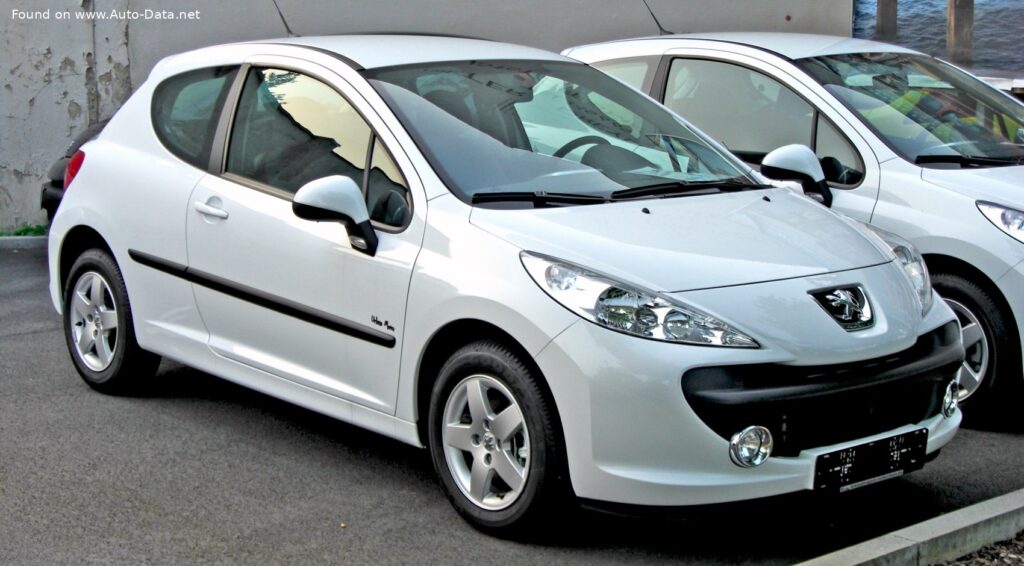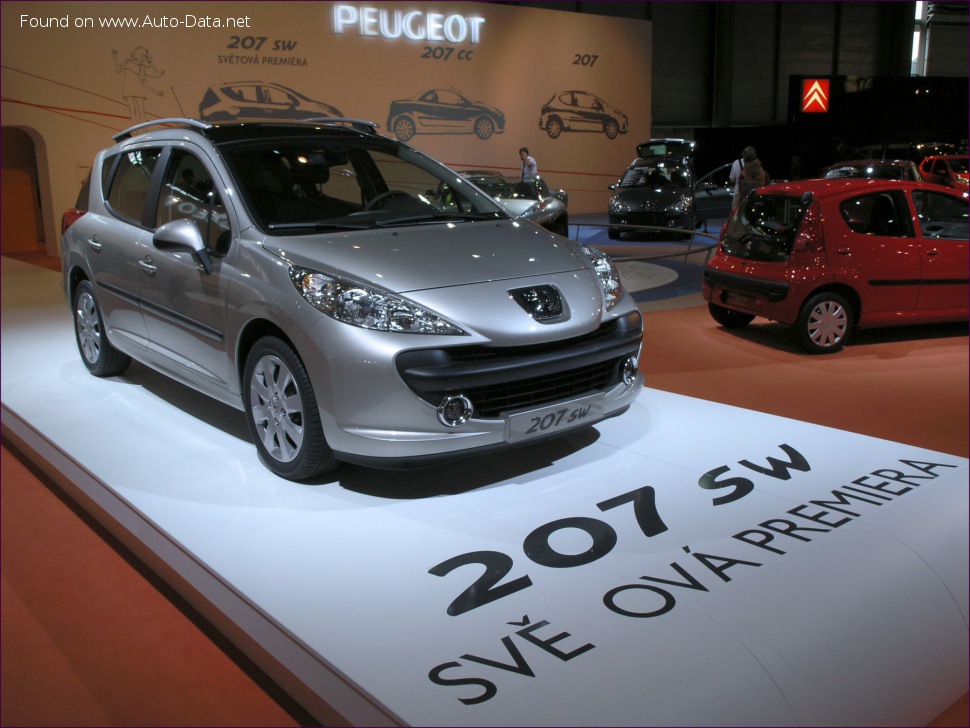
The Peugeot 207 SW 1.6 VTi (120 Hp) Automatic represents a practical and stylish offering from the French automaker Peugeot, designed primarily for the European market. Launched in 2007 as part of the 207 generation, the SW (Station Wagon) variant provided a more versatile and spacious alternative to the standard 207 hatchback. Positioned in the highly competitive European B-segment (subcompact) car market, the 207 SW aimed to combine the compact dimensions suitable for urban driving with enhanced cargo capacity and family-friendly features. While Peugeot withdrew from the North American market in the early 1990s, the 207 SW showcased the brand’s continued commitment to producing well-engineered, efficient, and aesthetically pleasing vehicles for its primary customer base. This specific model, featuring a 1.6-liter VTi engine paired with an automatic transmission, highlighted a balance of performance, fuel efficiency, and ease of use for everyday driving.
The Peugeot 207 SW Generation
The Peugeot 207 SW generation, produced from 2007 to 2009, was a key player in the European compact wagon segment. It built upon the success and styling of the 207 hatchback, which itself was a successor to the immensely popular Peugeot 206. The SW variant was specifically engineered to cater to families and individuals requiring more luggage space and rear passenger comfort than a traditional hatchback could offer, without moving into a larger, more expensive C-segment vehicle. Its design ethos was to blend practicality with an engaging driving experience, a hallmark of Peugeot vehicles. The addition of the 1.6 VTi engine, developed in collaboration with BMW (part of the “Prince” engine family), further underscored Peugeot’s focus on modern engine technology, offering a good blend of power and efficiency for its class.
Powertrain & Engine Architecture
At the heart of the Peugeot 207 SW 1.6 VTi (120 Hp) Automatic is a sophisticated 1.6-liter naturally aspirated inline-four cylinder engine, designated as the EP6 (5FW). This powerplant, a product of the PSA Peugeot Citroën and BMW Group collaboration, was known for its advanced features, including Double Overhead Camshafts (DOHC) and Variable Valve Timing (VVT). These technologies allowed for optimized valve lift and timing, contributing to a broader torque curve and improved fuel efficiency across various engine speeds. The engine delivers a respectable 120 horsepower at 6000 rpm, which, for a vehicle of its size and segment, provides adequate motivation for both city driving and highway cruising.
Torque output stands at 160 Newton-meters (approximately 118.01 lb.-ft.) delivered at 4250 rpm. This mid-range torque peak ensures responsive acceleration in typical driving conditions. The engine utilizes multi-port fuel injection, a common system for its time, delivering fuel directly into the intake ports. The valvetrain features four valves per cylinder, enhancing breathing and contributing to the engine’s overall efficiency. Mated to a 4-speed automatic transmission, the powertrain prioritizes smooth operation and ease of driving, particularly in congested urban environments. This transmission, while not offering the latest in gear ratios, was known for its reliability and smooth shifts. It featured a conventional torque converter design, providing a comfortable driving experience.
Driving Characteristics
The 207 SW 1.6 VTi Automatic offered a comfortable and predictable driving experience. The 4-speed automatic transmission, while lacking the responsiveness of modern multi-gear automatics or manual transmissions, provided smooth gear changes and made the car easy to drive in everyday conditions. Acceleration from a standstill was adequate, but not particularly brisk, with the 0-60 mph time around 10.9 seconds. The engine’s torque peak at 4250 rpm meant that most of the usable power was available in the mid-range, making overtaking maneuvers on the highway manageable. Compared to the manual transmission versions of the 207 SW 1.6 VTi, the automatic version offered less driver engagement but greater convenience. Compared to higher-output versions like the 1.6 THP (turbocharged), the VTi engine lacked the same level of punch, but it compensated with improved fuel economy and a smoother, more linear power delivery.
Equipment & Trim Levels
The Peugeot 207 SW 1.6 VTi Automatic was typically offered in several trim levels, varying by market. Standard equipment generally included air conditioning, power windows, central locking, and an audio system with CD player. Higher trim levels added features such as alloy wheels, a multi-function steering wheel, and upgraded interior trim. Interior upholstery was typically cloth, with options for more premium materials on higher-spec models. The dashboard layout was functional and user-friendly, with logically placed controls. Optional extras included a panoramic sunroof, parking sensors, and a navigation system. Safety features, even on base models, included ABS brakes and driver/passenger airbags. The SW’s rear seats offered good space for passengers, and the split-folding rear seats allowed for flexible cargo configurations.
Chassis & Braking
The Peugeot 207 SW 1.6 VTi Automatic utilized a McPherson strut front suspension and a semi-independent coil spring rear suspension. This setup provided a comfortable ride quality, absorbing bumps and imperfections in the road effectively. The front suspension featured an anti-roll bar to reduce body roll during cornering. The braking system consisted of ventilated discs on the front wheels and discs on the rear wheels, providing adequate stopping power for a vehicle of its weight class. ABS (Anti-lock Braking System) was standard, enhancing safety during emergency braking situations. The steering was a power-assisted rack and pinion system, offering precise and responsive handling. The 207 SW typically rode on 195/55 R16 tires, providing a good balance between grip and ride comfort.
Market Reception & Comparison
The Peugeot 207 SW 1.6 VTi Automatic received generally positive reviews from automotive critics. It was praised for its stylish design, practical interior, and comfortable ride. The 1.6 VTi engine was considered a good all-rounder, offering a balance of performance and fuel efficiency. However, some critics noted that the 4-speed automatic transmission felt dated compared to newer transmissions with more gears. In terms of fuel economy, the 207 SW 1.6 VTi Automatic achieved around 33.6 US mpg (combined), which was competitive for its class. Reliability was generally good, although some owners reported minor issues with the electrical system. Compared to other trims in the 207 SW lineup, the 1.6 VTi Automatic offered a more accessible price point than the higher-performance models, making it an attractive option for budget-conscious buyers. It provided a more refined driving experience than the lower-powered 1.4-liter engine option.
Technical Specifications
| Category | Specification |
| Brand | Peugeot |
| Model | 207 SW |
| Generation | 207 SW |
| Type (Engine) | 1.6 VTi (120 Hp) Automatic |
| Production Start | 2007 |
| Production End | 2009 |
| Body Type | Station wagon (estate) |
| Seats | 5 |
| Doors | 5 |
| Fuel Type | Petrol (Gasoline) |
| Fuel Consumption (Urban) | 9.8 l/100 km (24 US mpg) |
| Fuel Consumption (Extra Urban) | 5.5 l/100 km (42.8 US mpg) |
| Fuel Consumption (Combined) | 7 l/100 km (33.6 US mpg) |
| CO2 Emissions | 167 g/km |
| Emission Standard | Euro 4 |
| Acceleration 0-60 mph | 10.9 sec |
| Maximum Speed | 121.17 mph (195 km/h) |
| Power | 120 Hp @ 6000 rpm |
| Torque | 160 Nm (118.01 lb.-ft.) @ 4250 rpm |
| Engine Layout | Front, Transverse |
| Engine Model/Code | 5FW EP6 |
| Engine Displacement | 1598 cm³ (97.52 cu. in.) |
| Number of Cylinders | 4 |
| Engine Configuration | Inline |
| Valves per Cylinder | 4 |
| Compression Ratio | 11:1 |
| Fuel Injection System | Multi-port manifold injection |
| Engine Aspiration | Naturally aspirated |
| Valvetrain | DOHC-VVT |
| Engine Oil Capacity | 4.25 l (4.49 US qt) |
| Coolant Capacity | 5.4 l (5.71 US qt) |
| Kerb Weight | 1260 kg (2777.82 lbs.) |
| Maximum Weight | 1737 kg (3829.43 lbs.) |
| Maximum Load | 477 kg (1051.6 lbs.) |
| Trunk Space (Minimum) | 337 l (11.9 cu. ft.) |
| Trunk Space (Maximum) | 1258 l (44.43 cu. ft.) |
| Fuel Tank Capacity | 50 l (13.21 US gal) |
| Length | 4156 mm (163.62 in.) |
| Width | 1748 mm (68.82 in.) |
| Height | 1527 mm (60.12 in.) |
| Wheelbase | 2540 mm (100 in.) |
| Front Track | 1467 mm (57.76 in.) |
| Rear Track | 1461 mm (57.52 in.) |
| Drag Coefficient (Cd) | 0.3 |
| Minimum Turning Circle | 10.8 m (35.43 ft.) |
| Drive Wheel | Front-wheel drive |
| Gearbox Type | 4-speed automatic transmission |
| Front Suspension | Independent type McPherson |
| Rear Suspension | Semi-independent, coil spring |
| Front Brakes | Ventilated discs |
| Rear Brakes | Disc |
| Assisting Systems | ABS (Anti-lock braking system) |
| Steering Type | Steering rack and pinion |
| Tires Size | 195/55 R16 |
| Wheel Rims Size | 16 inches |
Legacy
The Peugeot 207 SW 1.6 VTi (120 Hp) Automatic remains a capable and economical used car option in its primary markets. The EP6 engine, developed in collaboration with BMW, is generally considered reliable, although regular maintenance is crucial. Common issues include occasional problems with the electronic throttle body and the ignition coils. The 4-speed automatic transmission, while not the most advanced, is known for its durability. Today, these vehicles can be found at affordable prices, making them an attractive option for buyers seeking a practical and stylish compact wagon. Its blend of French design, comfortable ride, and reasonable running costs ensures its continued appeal in the used car market.