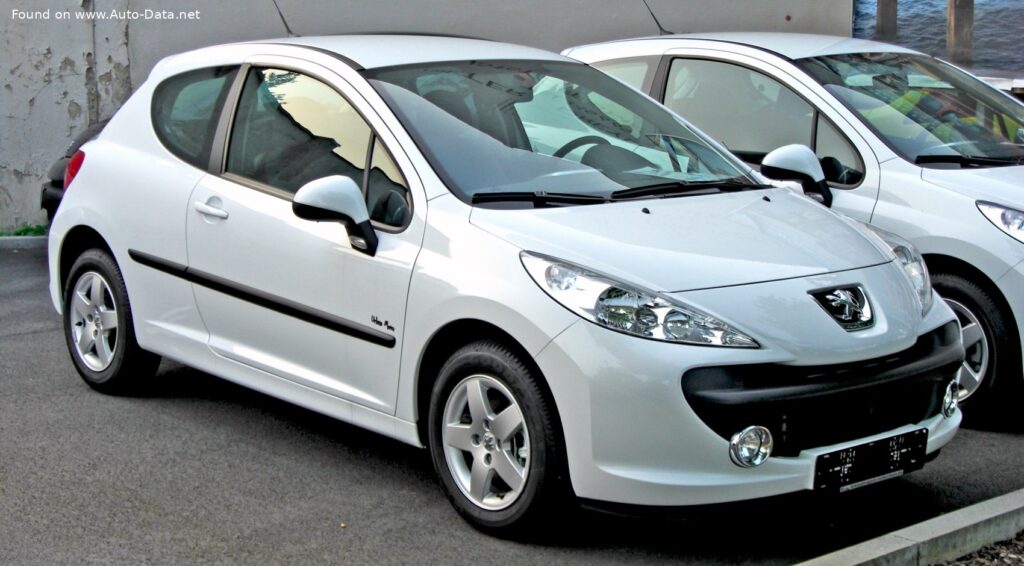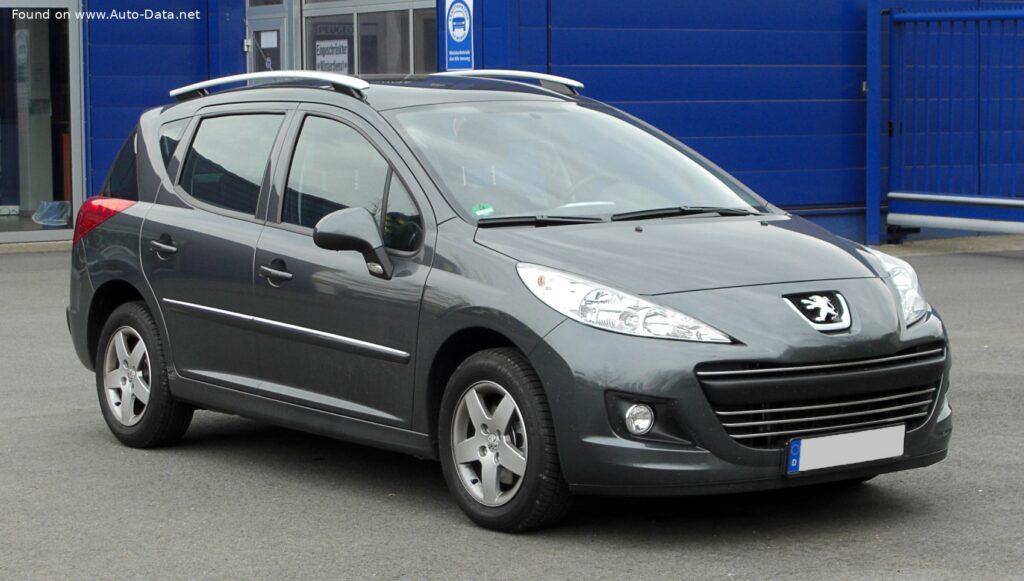
The Peugeot 207 SW (facelift 2009) is a compact station wagon representing a significant offering within the European B-segment, or supermini class. Produced by Peugeot from 2009 to 2013, this variant was designed to provide enhanced practicality and cargo capacity compared to the standard 207 hatchback. While never officially sold in the United States, the 207 SW (facelift 2009) exemplifies the European preference for fuel-efficient, space-conscious vehicles suitable for urban environments and family use. It builds upon the foundation of the 1HX0/A3 platform, sharing components and engineering principles with other vehicles within the PSA Peugeot Citroën group.
The 1.4 VTi Engine and Transmission: A Mid-Range Offering
This specific variant of the 207 SW is powered by the 1.4-liter VTi (Variable Valve Lift and Timing) gasoline engine. Within the 207 SW lineup, this engine and transmission combination represented a mid-range option, positioned between the base 1.4-liter HDi diesel and the more powerful 1.6-liter VTi gasoline engines. It was targeted towards buyers who prioritized fuel economy and affordability over outright performance, making it a popular choice for families and commuters. The standard transmission for this trim was a 5-speed manual, though a 4-speed automatic transmission was also available, albeit less common.
Powertrain & Engine Architecture
The heart of the 207 SW 1.4 VTi is the 8FR EP3 engine, a member of the “Prince” engine family co-developed by PSA Peugeot Citroën and BMW. This inline four-cylinder, naturally aspirated engine boasts a displacement of 1397 cc (85.25 cubic inches) and a compression ratio of 11:1. It utilizes a dual overhead camshaft (DOHC) valvetrain with variable valve timing (VVT) on both intake and exhaust valves, optimizing engine performance and efficiency across a wider RPM range. Fuel is delivered via multi-point fuel injection. The engine produces 95 horsepower (hp) at 6000 rpm and 100.31 lb-ft of torque at 4000 rpm.
The 5-speed manual transmission, a Be4 type, is a conventional design, chosen for its reliability and efficiency. Gear ratios are optimized for fuel economy and everyday drivability, rather than sporty acceleration. First gear is relatively short for easy starts, while fifth gear is geared for efficient cruising on highways. The automatic transmission, when equipped, is a 4-speed unit, offering convenience but at the expense of some fuel efficiency and responsiveness compared to the manual.
Driving Characteristics
The 1.4 VTi engine in the 207 SW delivers adequate, but not exhilarating, performance. Acceleration from 0 to 60 mph takes approximately 11.8 seconds, and the top speed is around 115 mph. The engine feels most comfortable in the mid-range, providing sufficient power for overtaking and merging onto highways. Compared to the 1.6 VTi, the 1.4 feels noticeably less powerful, especially when fully loaded with passengers and cargo. The manual transmission allows for greater control and responsiveness, while the automatic transmission offers smoother shifts but can feel sluggish at times. The gear ratios are tuned for fuel efficiency, meaning the engine often needs to be revved to maintain speed on inclines. Overall, the driving experience is geared towards comfort and practicality rather than sporty handling.
Equipment & Trim Levels
The 207 SW 1.4 VTi typically came equipped with a reasonable level of standard features. These included power steering, air conditioning, front and rear electric windows, a CD player with MP3 compatibility, and ABS brakes. Safety features such as driver and passenger airbags were also standard. Interior upholstery was typically cloth, with a choice of colors and patterns. Higher trim levels, such as the “Sport” or “Allure” variants, added features like alloy wheels, a multi-function steering wheel, cruise control, and a trip computer. Optional extras included a panoramic sunroof, parking sensors, and a navigation system. The dashboard layout was functional and user-friendly, with clearly labeled controls and a relatively simple design.
Chassis & Braking
The 207 SW utilizes a MacPherson strut suspension system at the front, providing a comfortable ride and predictable handling. The rear suspension employs a semi-independent torsion beam setup, which is cost-effective and space-efficient. Stabilizer bars are fitted to both the front and rear axles to reduce body roll during cornering. The braking system consists of ventilated discs at the front and drum brakes at the rear. ABS (Anti-lock Braking System) is standard, enhancing braking performance and stability, particularly on slippery surfaces. The 185/65 R15 tires provide a good balance between grip, ride comfort, and fuel efficiency. The chassis is tuned for comfort and stability, prioritizing a smooth ride over sporty handling.
Market Reception & Comparison
The Peugeot 207 SW 1.4 VTi received generally positive reviews from automotive critics. It was praised for its practicality, fuel efficiency, and comfortable ride. However, some critics noted that the engine lacked power, especially when the car was fully loaded. Compared to the 1.6 VTi variant, the 1.4 VTi offered better fuel economy but significantly less performance. The 1.4 HDi diesel variant provided even better fuel economy but had a different driving character, with more low-end torque but less overall power. In terms of reliability, the 1.4 VTi engine proved to be generally reliable, although some owners reported issues with the timing chain. Fuel economy was a strong selling point, with a combined rating of approximately 39.9 US mpg (5.9 liters per 100 km).
| Category | Specification |
| Brand | Peugeot |
| Model | 207 SW (facelift 2009) |
| Type (Engine) | 1.4 VTi (95 Hp) |
| Production Start | 2009 |
| Production End | 2013 |
| Powertrain Architecture | Internal Combustion engine |
| Body Type | Station wagon (estate) |
| Seats | 5 |
| Doors | 5 |
| Fuel Consumption (Urban) | 7.9 l/100 km (29.8 US mpg) |
| Fuel Consumption (Extra Urban) | 4.9 l/100 km (48 US mpg) |
| Fuel Consumption (Combined) | 5.9 l/100 km (39.9 US mpg) |
| CO2 Emissions | 140 g/km |
| Fuel Type | Petrol (Gasoline) |
| Acceleration 0 – 60 mph | 11.8 sec |
| Acceleration 0 – 100 km/h | 12.4 sec |
| Maximum Speed | 185 km/h (114.95 mph) |
| Emission Standard | Euro 5 |
| Power | 95 Hp @ 6000 rpm |
| Torque | 136 Nm @ 4000 rpm (100.31 lb.-ft. @ 4000 rpm) |
| Engine Displacement | 1397 cm3 (85.25 cu. in.) |
| Number of Cylinders | 4 |
| Compression Ratio | 11:1 |
| Kerb Weight | 1204 kg (2654.37 lbs.) |
| Trunk (Boot) Space – Minimum | 337 l (11.9 cu. ft.) |
| Trunk (Boot) Space – Maximum | 1258 l (44.43 cu. ft.) |
Legacy
The Peugeot 207 SW 1.4 VTi, while not a high-performance model, has proven to be a reliable and practical choice in the used car market. The “Prince” engine, despite some reported timing chain issues, is generally considered durable and relatively easy to maintain. The 207 SW’s spacious interior and versatile cargo area continue to appeal to buyers seeking a compact and affordable family vehicle. Its fuel efficiency remains a significant advantage, particularly in an era of rising fuel prices. While it has been superseded by newer models, the 207 SW 1.4 VTi represents a well-rounded and sensible option for those seeking a practical and economical compact station wagon.