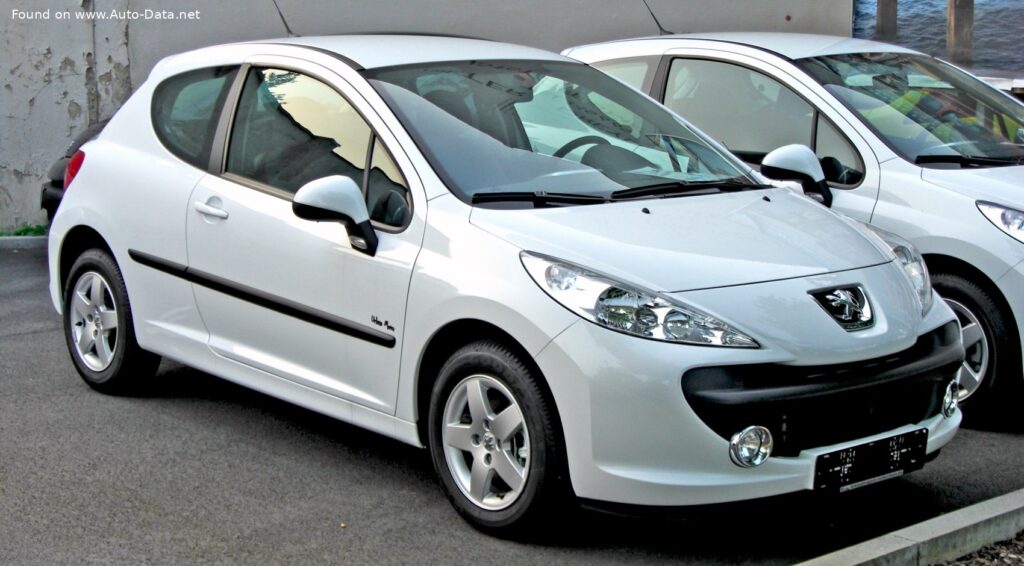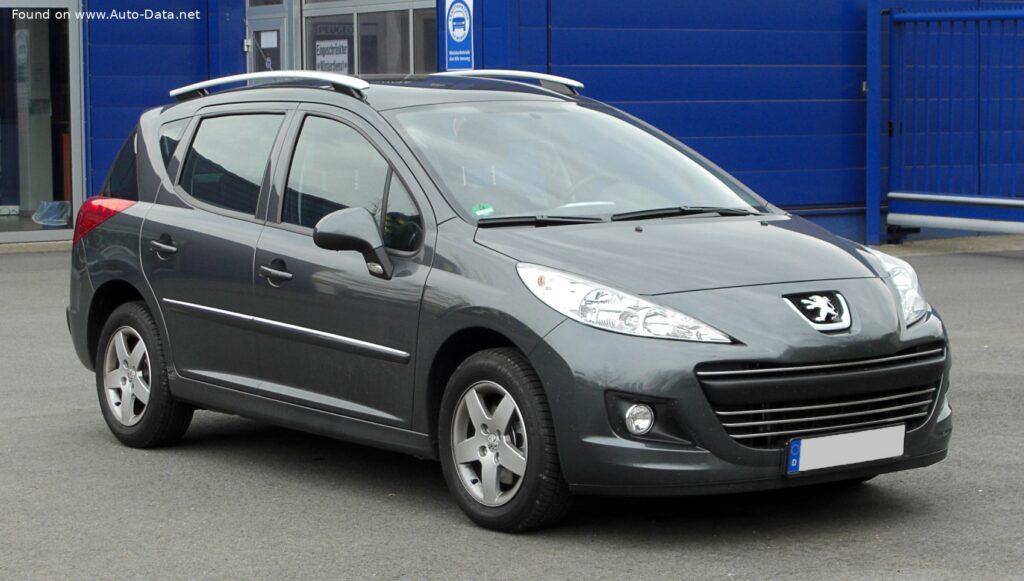
The Peugeot 207 SW (facelift 2009) 1.6 HDi (112 Hp) represents a significant offering in the highly competitive European B-segment, specifically catering to the demand for a practical and fuel-efficient compact station wagon. Produced by Peugeot, this particular iteration, introduced in 2009 as part of a mid-cycle refresh for the 207 generation, aimed to refine its predecessor’s successful formula. While Peugeot models like the 207 were not officially imported and sold in the United States, they played a crucial role in Europe, providing a compelling blend of compact dimensions, versatile cargo capacity, and economical diesel powertrains. This 1.6 HDi variant, with its 112 horsepower engine, was particularly notable for its strong emphasis on efficiency and low running costs, making it a popular choice for families and businesses across the continent. The 207 SW is built on the PF2 platform, also known as the 1HX0/A3 platform, shared with Citroën C3 and other models.
Powertrain & Engine Architecture
At the heart of the Peugeot 207 SW (facelift 2009) 1.6 HDi (112 Hp) lies a sophisticated 1.6-liter (1560 cm3) HDi (High-Pressure Direct Injection) turbodiesel engine. This four-cylinder, inline powerplant, designated by the engine code 9HR DV6C, was a cornerstone of Peugeot’s powertrain strategy for its compact and mid-size vehicles. Featuring a Single Overhead Camshaft (SOHC) valvetrain with two valves per cylinder, the engine benefits from a turbocharger and intercooler, which significantly enhance its power delivery and efficiency.
The engine produces a respectable 112 horsepower at 3600 rpm, a healthy output for its displacement and segment. More impressive, however, is its torque figure: 270 Nm (199.14 lb.-ft.) available from a low 1750 rpm. This characteristic low-end torque, typical of modern diesel engines, provides excellent pulling power, making the 207 SW feel robust and responsive in city driving and capable on the highway, even when loaded. Power is sent to the front wheels via a smooth-shifting 6-speed manual transmission, offering a good balance between acceleration and highway cruising economy.
The 9HR engine utilizes a common rail direct injection system, delivering fuel directly into the combustion chamber at extremely high pressure. This system, coupled with the turbocharger, allows for precise control over the combustion process, maximizing efficiency and minimizing emissions. The engine also incorporates a diesel particulate filter (DPF) to further reduce harmful emissions, ensuring compliance with stringent European emission standards. The engine’s design prioritizes durability and longevity, with robust internal components designed to withstand the stresses of high-pressure operation.
Driving Characteristics
The 207 SW 1.6 HDi (112 Hp) offers a driving experience geared towards practicality and efficiency rather than outright performance. The low-end torque of the diesel engine provides strong acceleration from a standstill and makes overtaking at highway speeds relatively effortless. While not a particularly sporty vehicle, the 207 SW feels adequately powered for everyday driving situations. The 6-speed manual transmission is well-matched to the engine’s characteristics, allowing drivers to keep the engine in its optimal torque band for maximum efficiency and responsiveness.
Compared to other variants of the 207, such as the 1.4-liter gasoline engine, the 1.6 HDi offers significantly more torque, resulting in better acceleration and a more relaxed driving experience, especially when carrying passengers or cargo. While a gasoline engine might offer slightly quicker acceleration in certain scenarios, the diesel engine’s superior fuel economy and lower running costs make it a more attractive option for many drivers. Compared to higher-output diesel versions, the 112 hp variant provides a good balance between performance and economy, avoiding the higher running costs associated with more powerful engines.
Equipment & Trim Levels
The Peugeot 207 SW (facelift 2009) 1.6 HDi (112 Hp) was typically offered in several trim levels, varying depending on the specific market. Standard equipment generally included power windows, central locking, air conditioning, and a basic audio system with CD player. Higher trim levels added features such as alloy wheels, fog lights, a multi-function steering wheel, and an upgraded audio system with Bluetooth connectivity. Interior upholstery typically consisted of cloth seats, with options for upgraded materials and designs on higher trim levels.
Optional extras available for this trim included a panoramic sunroof, parking sensors, automatic headlights and wipers, and a navigation system. Safety features were also enhanced on higher trim levels, with the addition of side airbags and stability control. The dashboard configuration was relatively simple and functional, with a clear instrument cluster and easy-to-use controls. The overall interior design prioritized practicality and durability, with hard-wearing materials used throughout the cabin.
Chassis & Braking
The 207 SW utilizes independent McPherson struts at the front, providing a comfortable and controlled ride. The rear suspension employs a semi-independent, coil spring system, which is a cost-effective solution that still offers reasonable ride quality. The suspension setup is tuned to prioritize comfort and stability, rather than sporty handling. The electric power steering system provides light and precise steering, making it easy to maneuver in urban environments.
Braking duties are handled by ventilated disc brakes at the front and solid discs at the rear. An Anti-lock Braking System (ABS) is standard, ensuring confident stopping power in a variety of conditions. The braking system is generally considered adequate for the vehicle’s weight and performance, providing sufficient stopping power for everyday driving. Stabilizer bars are fitted to both the front and rear axles to reduce body roll during cornering.
Market Reception & Comparison
Critics generally praised the Peugeot 207 SW 1.6 HDi (112 Hp) for its fuel efficiency, practicality, and comfortable ride. The diesel engine was widely regarded as a strong performer, offering a good balance of power and economy. However, some critics noted that the interior design was somewhat dated and lacked the visual appeal of some of its competitors. The 207 SW was often compared to other compact station wagons such as the Renault Clio Estate and Skoda Fabia Combi.
In terms of fuel economy, the 207 SW 1.6 HDi consistently outperformed its gasoline-powered counterparts, achieving impressive figures of around 51.1 US mpg on the combined cycle. Reliability was generally considered good, with the 1.6 HDi engine proving to be a durable and dependable unit. However, like many diesel engines, the 207 SW’s DPF could require occasional maintenance or replacement, particularly if the vehicle is primarily used for short trips. Overall, the 207 SW 1.6 HDi was a well-regarded vehicle that offered a compelling package of practicality, efficiency, and affordability.
Technical Specifications
| Category | Specification |
| Brand | Peugeot |
| Model | 207 SW (facelift 2009) |
| Engine Type | 1.6 HDi (112 Hp) |
| Production Years | 2009 – 2013 |
| Body Type | Station wagon (estate), 5 Doors, 5 Seats |
| Powertrain Architecture | Internal Combustion engine, Front-wheel drive |
| Fuel Type | Diesel |
| Engine Displacement | 1560 cm3 (1.6 Liters / 95.2 cu. in.) |
| Number of Cylinders | 4, Inline |
| Power | 112 Hp @ 3600 rpm |
| Torque | 270 Nm (199.14 lb.-ft.) @ 1750 rpm |
| Acceleration 0-60 mph | 10.5 seconds |
| Maximum Speed | 192 km/h (119.3 mph) |
| Fuel Consumption (Combined) | 4.6 l/100 km (51.1 US mpg) |
| Fuel Consumption (Urban) | 5.7 l/100 km (41.3 US mpg) |
| Fuel Consumption (Extra Urban) | 4 l/100 km (58.8 US mpg) |
| CO2 Emissions | 119 g/km |
| Emission Standard | Euro 5 |
| Kerb Weight | 1261 kg (2780.03 lbs.) |
| Max. Weight | 1793 kg (3952.89 lbs.) |
| Max Load | 532 kg (1172.86 lbs.) |
| Trunk Space (Min/Max) | 337 l (11.9 cu. ft.) / 1258 l (44.43 cu. ft.) |
| Fuel Tank Capacity | 50 l (13.21 US gal) |
| Length | 4164 mm (163.94 in.) |
| Width | 1748 mm (68.82 in.) |
| Height | 1527 mm (60.12 in.) |
| Wheelbase | 2540 mm (100 in.) |
| Front Track | 1467 mm (57.76 in.) |
| Rear Track | 1461 mm (57.52 in.) |
| Minimum Turning Circle | 10.6 m (34.78 ft.) |
| Gearbox Type | 6 gears, manual transmission |
| Front Suspension | Independent type McPherson |
| Rear Suspension | Semi-independent, coil spring |
| Front Brakes | Ventilated discs |
| Rear Brakes | Disc |
| Assisting Systems | ABS (Anti-lock braking system) |
| Steering Type | Steering rack and pinion, Electric Steering |
| Tire Size | 195/55 R16 |
| Wheel Rims Size | 16 inches |
| Compression Ratio | 17.6:1 |
| Engine Aspiration | Turbocharger, Intercooler |
| Valvetrain | SOHC |
Legacy
The Peugeot 207 SW 1.6 HDi (112 Hp) has proven to be a relatively reliable vehicle in the long term, with the 9HR engine generally considered durable and capable of high mileage. However, as with any diesel engine, regular maintenance is crucial, particularly regarding the DPF and fuel system. In the used car market, the 207 SW 1.6 HDi remains a popular choice for buyers seeking an affordable and fuel-efficient station wagon. Its practicality, combined with its low running costs, makes it an attractive option for families and individuals alike. While newer models offer more advanced features and technology, the 207 SW continues to represent a sensible and well-rounded package for those seeking a dependable and economical vehicle.