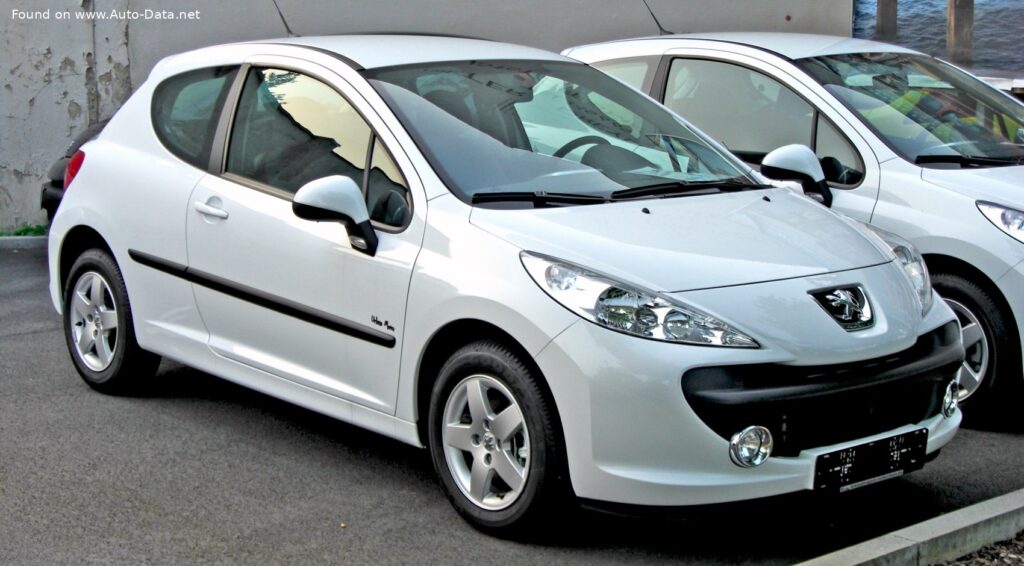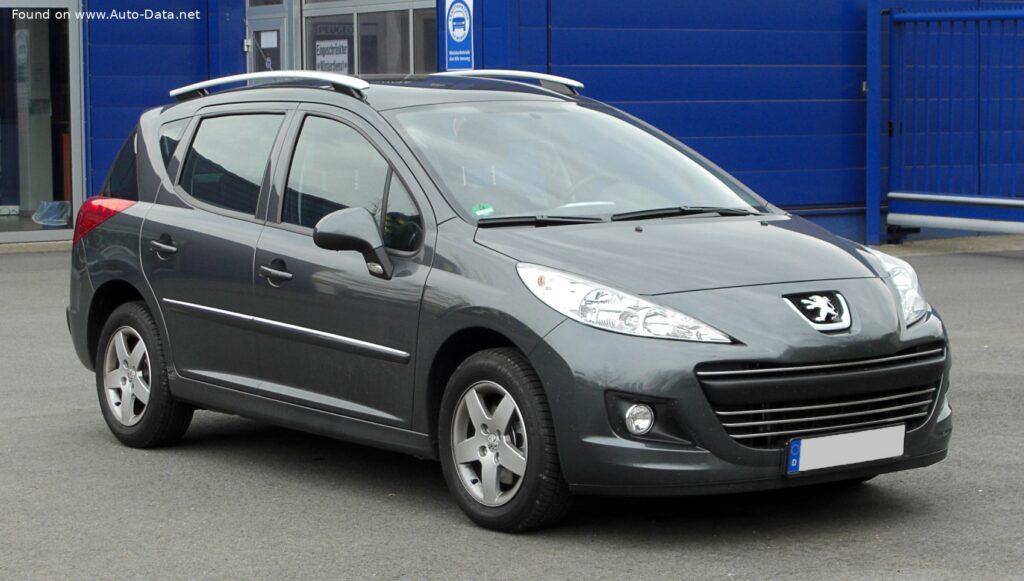
The Peugeot 207 SW (facelift 2009) 1.6 HDi (90 Hp) represents a key offering in the European compact segment, specifically designed to blend the agility of a small car with the enhanced practicality of a station wagon body style. Introduced in 2009 as a refreshed version of the popular 207 generation, this model targeted families and individuals seeking a versatile, fuel-efficient vehicle for urban and highway driving. While never officially sold in the United States, the 207 SW played a significant role in Peugeot’s strategy to capture market share in Europe, where compact station wagons, often referred to as “estates,” are highly valued for their utility and modest footprint. The 2009 facelift brought subtle enhancements, keeping the 207 SW competitive until its production concluded in 2013. This particular variant, powered by the 1.6-liter HDi diesel engine, exemplified the European preference for economical and torquey diesel powertrains.
Powertrain & Engine Architecture
At the heart of the Peugeot 207 SW (facelift 2009) lies the 1.6 HDi diesel engine, a powerplant renowned in Europe for its balance of efficiency and usable performance. This inline four-cylinder, 1.6-liter (1560 cm³ or 95.2 cu. in.) unit utilizes a DOHC valvetrain with four valves per cylinder, ensuring efficient air intake and exhaust. It’s part of the PSA Group’s (Peugeot Société Anonyme) HDi engine family, known for its robust design and fuel efficiency. The engine code for this specific version is typically DV6ATED4, though variations exist depending on the exact production date and market. Its high-pressure common rail fuel injection system, supplied by Bosch, combined with a turbocharger and intercooler, delivers a robust 90 horsepower at 4000 rpm. More importantly for daily driving, the engine produces a substantial 158.58 lb.-ft. (215 Nm) of torque, available at a low 1750 rpm. This characteristic low-end torque is a hallmark of modern diesel engines, providing strong acceleration from a standstill and effortless cruising, even when the vehicle is loaded.
The 207 SW 1.6 HDi was almost exclusively paired with a 5-speed manual transmission. While a 4-speed automatic transmission was available on some 207 models, it was rarely, if ever, offered with the 90 hp 1.6 HDi engine due to the automatic’s limitations in handling the diesel’s torque output and the target market’s preference for manual gearboxes. The manual transmission is a conventional design, prioritizing durability and ease of maintenance over sporty performance. The gear ratios are optimized for fuel economy and everyday drivability, with a relatively tall fifth gear for efficient highway cruising.
Driving Characteristics
The 1.6 HDi engine in the 207 SW provides a distinctly different driving experience compared to the gasoline-powered versions of the 207. While not particularly quick, the 90 hp output and 158.58 lb-ft of torque deliver adequate performance for most driving situations. Acceleration from 0 to 60 mph takes around 11.2 seconds, and the top speed is approximately 113 mph. The real strength of this powertrain lies in its mid-range punch and excellent fuel economy. The low-end torque makes overtaking at highway speeds relatively effortless, and the engine feels responsive even when fully loaded. Compared to the more powerful 1.6 VTi gasoline engine, the HDi offers significantly more torque but less peak horsepower. The manual transmission allows for precise control over the engine’s power delivery, and the gear ratios are well-suited to the engine’s characteristics. The driving experience is generally comfortable and refined, with a focus on practicality and efficiency rather than outright sportiness.
Equipment & Trim Levels
The 207 SW 1.6 HDi typically came in several trim levels, varying by country. Base models generally included features like air conditioning, power steering, electric front windows, and a basic audio system with CD player. Higher trim levels, such as ‘Sport’ or ‘Active’, added features like alloy wheels, rear parking sensors, automatic headlights and rain sensors, a multi-function steering wheel, and upgraded interior trim. Interior upholstery was typically cloth, with options for more premium materials on higher trims. The dashboard layout was functional and user-friendly, with a clear instrument cluster and logically placed controls. Optional extras included a panoramic sunroof, satellite navigation system, and Bluetooth connectivity. Safety features included ABS, electronic brake-force distribution (EBD), and front airbags as standard. Side and curtain airbags were often available as optional extras or included in higher trim levels.
Chassis & Braking
The 207 SW 1.6 HDi utilizes a McPherson strut front suspension and a torsion beam rear suspension. This setup provides a good balance between ride comfort and handling. The torsion beam rear suspension is a cost-effective and space-saving solution commonly found in compact cars. The front suspension features coil springs and dampers, providing a comfortable and controlled ride. Braking is handled by ventilated discs at the front and solid discs at the rear, augmented by an Anti-lock Braking System (ABS) for enhanced stopping power and control. The steering is electric power-assisted, offering light and responsive handling, particularly beneficial in urban environments. The 207 SW typically rode on 195/55 R16 tires mounted on 16-inch wheel rims, striking a good balance between ride comfort and road holding. Stabilizer bars were fitted to both the front and rear axles to reduce body roll during cornering.
Market Reception & Comparison
The Peugeot 207 SW 1.6 HDi was generally well-received by European automotive critics. It was praised for its fuel efficiency, practicality, and comfortable ride. However, some critics noted that the engine could be somewhat noisy and that the interior materials were not as premium as those found in some competitors. Compared to other trims in the 207 lineup, the 1.6 HDi offered the best fuel economy and torque, making it ideal for long-distance driving and carrying heavy loads. The gasoline-powered versions of the 207 offered more horsepower but lacked the low-end grunt of the HDi engine. The 207 SW competed with other compact station wagons such as the Renault Mégane Estate, Ford Focus Estate, and Volkswagen Golf Estate. The Peugeot offered a compelling combination of practicality, fuel efficiency, and affordability, making it a popular choice for families and individuals seeking a versatile and economical vehicle.
Technical Specifications
| Brand | Peugeot |
| Model | 207 SW (facelift 2009) |
| Engine Type | 1.6 HDi (90 Hp) |
| Production Start | 2009 year |
| Production End | 2013 year |
| Body Type | Station wagon (estate) |
| Seats / Doors | 5 / 5 |
| Fuel Consumption (Urban) | 41.3 US mpg (5.7 l/100 km) |
| Fuel Consumption (Extra Urban) | 60.3 US mpg (3.9 l/100 km) |
| Fuel Consumption (Combined) | 52.3 US mpg (4.5 l/100 km) |
| CO2 Emissions | 119 g/km |
| Fuel Type | Diesel |
| Acceleration 0-60 mph | 11.2 sec |
| Maximum Speed | 113.09 mph (182 km/h) |
| Emission Standard | Euro 4 |
| Weight-to-Power Ratio | 14 kg/Hp, 71.2 Hp/tonne |
| Power | 90 Hp @ 4000 rpm |
| Torque | 158.58 lb.-ft. (215 Nm) @ 1750 rpm |
| Engine Layout | Front, Transverse |
| Engine Displacement | 1.6 Liters (1560 cm³ / 95.2 cu. in.) |
| Number of Cylinders | 4, Inline |
| Cylinder Bore | 2.95 in. (75 mm) |
| Piston Stroke | 3.48 in. (88.3 mm) |
| Compression Ratio | 17.6:1 |
| Valves per Cylinder | 4 |
| Fuel Injection System | Diesel Commonrail |
| Engine Aspiration | Turbocharger, Intercooler |
| Valvetrain | DOHC |
| Engine Oil Capacity | 3.96 US qt (3.75 l) |
| Coolant Capacity | 5.92 US qt (5.6 l) |
| Length | 163.94 in. (4164 mm) |
| Width | 68.82 in. (1748 mm) |
| Height | 60.12 in. (1527 mm) |
| Wheelbase | 100 in. (2540 mm) |
| Front Track | 57.76 in. (1467 mm) |
| Rear Track | 57.52 in. (1461 mm) |
| Kerb Weight | 2786.64 lbs. (1264 kg) |
| Maximum Weight | 3814 lbs. (1730 kg) |
| Maximum Load | 1027.35 lbs. (466 kg) |
| Trunk Space (Min/Max) | 11.9 – 44.43 cu. ft. (337 – 1258 l) |
| Fuel Tank Capacity | 13.21 US gal (50 l) |
| Permitted Trailer Load (with/without brakes) | 2535.32 lbs. (1150 kg) / 1322.77 lbs. (600 kg) |
| Drag Coefficient (Cd) | 0.3 |
| Minimum Turning Circle | 34.78 ft. (10.6 m) |
Legacy
The Peugeot 207 SW 1.6 HDi, while not known for any groundbreaking innovations, proved to be a reliable and economical vehicle. The 1.6 HDi engine, in particular, is generally considered to be a durable powerplant, capable of high mileage with proper maintenance. Common issues include diesel particulate filter (DPF) clogging, particularly on vehicles used primarily for short trips, and occasional injector problems. However, these issues are relatively well-understood and can be addressed with preventative maintenance and timely repairs. On the used car market today, the 207 SW 1.6 HDi represents a budget-friendly option for those seeking a practical and fuel-efficient station wagon. Its affordability and low running costs make it an attractive choice for first-time car buyers or those on a tight budget. While it may lack the modern features and refinement of newer vehicles, its simplicity and reliability continue to appeal to a wide range of buyers.