
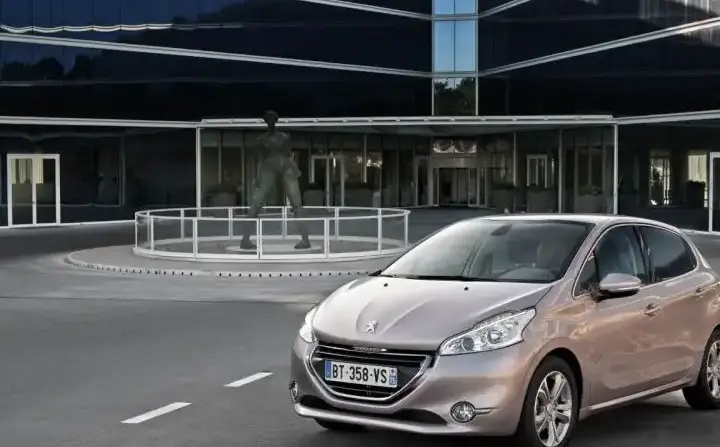
The Peugeot 208 1.4 HDi 68 hp, produced between 2012 and 2015, represents the entry-level diesel offering within the first generation (T1) 208 range. Positioned as a fuel-efficient and economical option, this variant was primarily aimed at buyers prioritizing low running costs over outright performance. It played a significant role in the European market, where small, diesel-powered hatchbacks were highly popular due to favorable taxation and fuel prices. This model falls within the Phase I production run of the 208, characterized by specific styling cues and interior features.
Technical Specifications
| Brand | Peugeot |
| Model | 208 |
| Generation | 208 I (Phase I, 2012) |
| Type (Engine) | 1.4 HDi (68 Hp) FAP |
| Start of production | 2012 |
| End of production | 2015 |
| Powertrain Architecture | Internal Combustion engine |
| Body type | Hatchback |
| Seats | 5 |
| Doors | 3-5 |
| Fuel consumption (urban) | 4.4 l/100 km (53.5 US mpg, 64.2 UK mpg, 22.7 km/l) |
| Fuel consumption (extra urban) | 3.4 l/100 km (69.2 US mpg, 83.1 UK mpg, 29.4 km/l) |
| Fuel consumption (combined) | 3.8 l/100 km (61.9 US mpg, 74.3 UK mpg, 26.3 km/l) |
| Fuel Type | Diesel |
| Acceleration 0 – 100 km/h | 13.5 sec |
| Acceleration 0 – 62 mph | 13.5 sec |
| Acceleration 0 – 60 mph | 12.8 sec |
| Maximum speed | 163 km/h (101.28 mph) |
| Emission standard | Euro 5 |
| Weight-to-power ratio | 15.4 kg/Hp, 64.8 Hp/tonne |
| Weight-to-torque ratio | 6.6 kg/Nm, 152.4 Nm/tonne |
| Power | 68 Hp @ 4000 rpm |
| Power per litre | 48.7 Hp/l |
| Torque | 160 Nm @ 1750 rpm (118.01 lb.-ft. @ 1750 rpm) |
| Engine layout | Front, Transverse |
| Engine Model/Code | 8HR DV4C |
| Engine displacement | 1397 cm3 (85.25 cu. in.) |
| Number of cylinders | 4 |
| Engine configuration | Inline |
| Number of valves per cylinder | 2 |
| Fuel injection system | Diesel Commonrail |
| Engine aspiration | Turbocharger, Intercooler |
| Engine oil capacity | 3.75 l (3.96 US qt | 3.3 UK qt) |
| Coolant capacity | 6 l (6.34 US qt | 5.28 UK qt) |
| Kerb Weight | 1050 kg (2314.85 lbs.) |
| Max. weight | 1580 kg (3483.3 lbs.) |
| Max load | 530 kg (1168.45 lbs.) |
| Trunk (boot) space – minimum | 285 l (10.06 cu. ft.) |
| Trunk (boot) space – maximum | 1076 l (38 cu. ft.) |
| Fuel tank capacity | 50 l (13.21 US gal | 11 UK gal) |
| Length | 3962 mm (155.98 in.) |
| Width | 1829 mm (72.01 in.) |
| Height | 1460 mm (57.48 in.) |
| Wheelbase | 2538 mm (99.92 in.) |
| Minimum turning circle | 10.4 m (34.12 ft.) |
| Drivetrain Architecture | Front wheel drive |
| Number of gears | 5 |
| Gearbox type | Manual transmission |
| Front suspension | Independent type McPherson |
| Rear suspension | Semi-independent, coil spring |
| Front brakes | Ventilated discs |
| Rear brakes | Drum |
| Assisting systems | ABS (Anti-lock braking system) |
| Steering type | Steering rack and pinion |
| Tires size | 185/65 R15; 195/55 R16 |
| Wheel rims size | 15; 16 |
INTRODUCTION
The Peugeot 208, launched in 2012, represented a significant redesign of Peugeot’s supermini offering, replacing the 207. The 1.4 HDi 68 hp variant was a key component of the initial lineup, designed to appeal to cost-conscious buyers. Built on the PF1 platform (also known as 1HX0/A3), the 208 aimed to provide a more modern and refined driving experience than its predecessor. This particular engine and transmission combination was a staple in the European market, offering a balance between fuel efficiency and acceptable performance for urban and short-distance driving.
Powertrain & Engine Architecture
The heart of this 208 variant is the 8HR DV4C 1.4-liter four-cylinder diesel engine. This engine is part of the DV4 family, known for its robust design and fuel efficiency. It utilizes a common rail direct injection system, delivering fuel at high pressure for optimized combustion. The engine features a single overhead camshaft (SOHC) operating two valves per cylinder. A turbocharger with an intercooler is employed to boost power and torque, despite the relatively small displacement. The 68 horsepower output is achieved at 4000 rpm, while the peak torque of 160 Nm (118 lb-ft) is available from just 1750 rpm, providing good low-end responsiveness. The engine is paired with a five-speed manual transmission, chosen for its simplicity and cost-effectiveness. This transmission features a conventional gear layout, prioritizing fuel economy over sporty driving dynamics.
Driving Characteristics
The 1.4 HDi 68 hp 208 is not a performance-oriented vehicle. Acceleration is modest, taking around 13.5 seconds to reach 62 mph (100 km/h). However, the engine’s strong low-end torque makes it feel reasonably lively around town. The five-speed gearbox is well-matched to the engine’s characteristics, with relatively short gearing to keep the engine in its optimal power band. Compared to higher-output versions of the 208, such as the 1.6 THP petrol variants, this diesel feels significantly slower. However, it offers a more relaxed driving experience, particularly on longer journeys, thanks to its quiet operation and excellent fuel economy. The manual transmission provides a more engaging driving experience than the optional four-speed automatic available on some 208 models, but it lacks the refinement of more modern automatic gearboxes.
Equipment & Trim Levels
The 1.4 HDi 68 hp typically came in base or mid-range trim levels, such as “Access” or “Active” depending on the market. Standard equipment generally included central locking, power steering, electric front windows, and an ABS anti-lock braking system. Air conditioning was often an optional extra. Interior upholstery was typically cloth, with a functional but basic dashboard layout. Higher trim levels added features like alloy wheels, a touchscreen infotainment system, and additional safety equipment. The overall interior ambiance was focused on practicality and durability rather than luxury.
Chassis & Braking
The 208’s chassis features a McPherson strut front suspension and a semi-independent coil spring rear suspension. This setup provides a comfortable ride quality, well-suited for everyday driving. The front brakes are ventilated discs, offering adequate stopping power, while the rear brakes are drums, a cost-saving measure common in this segment. The steering is a rack and pinion system, providing precise and responsive handling. The relatively lightweight nature of the 208 (around 1050 kg or 2315 lbs) contributes to its nimble handling characteristics. Stabilizer bars were typically fitted to the front axle to reduce body roll during cornering.
Market Reception & Comparison
The Peugeot 208 1.4 HDi 68 hp was generally well-received by critics for its fuel efficiency and low running costs. However, its performance was often criticized as being underwhelming. Compared to other small diesel hatchbacks of the time, such as the Volkswagen Polo 1.6 TDI and the Ford Fiesta 1.6 TDCi, the 208 offered a competitive fuel economy but lacked the refinement and performance of some rivals. Its reliability was generally considered good, although some owners reported issues with the diesel particulate filter (DPF), a common problem with modern diesel engines. The 1.4 HDi was significantly more economical than the petrol-powered 1.0 or 1.2-liter versions of the 208, making it a popular choice for high-mileage drivers.
Legacy
The 1.4 HDi engine proved to be a durable and reliable unit, and many examples are still on the road today. While not particularly exciting to drive, the 208 1.4 HDi 68 hp remains a practical and economical choice for those seeking a low-cost-to-own supermini. On the used car market, these models are typically priced affordably, making them an attractive option for first-time buyers or those on a tight budget. The engine’s relatively simple design makes it relatively easy and inexpensive to maintain, although regular servicing is essential to ensure its longevity. The DPF remains a potential weak point, and it’s important to ensure that the vehicle has been properly maintained and that the DPF has been regenerated regularly.
