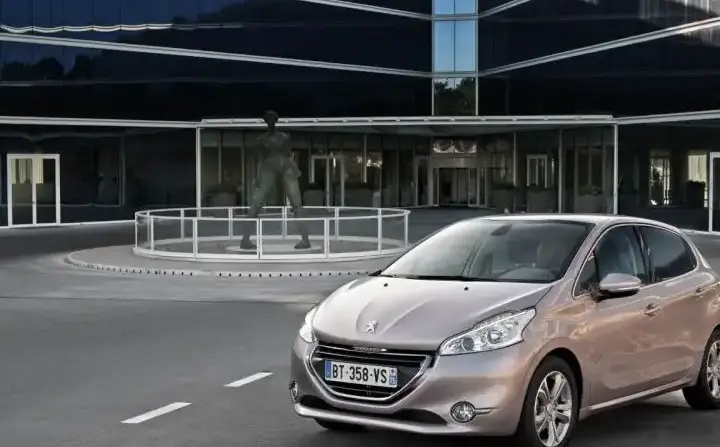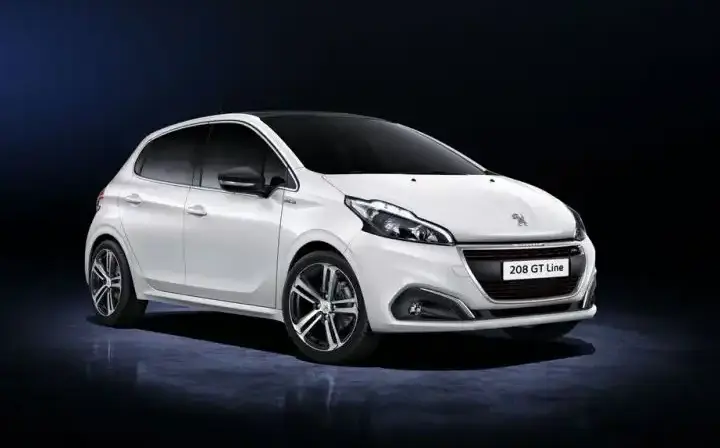
The Peugeot 208 I (Phase II, 2015) 1.5 BlueHDi 102 hp represents a significant iteration within the first generation of the popular Peugeot 208 subcompact hatchback. Introduced in 2018 and continuing through 2019, this variant was positioned as a fuel-efficient and practical option within the 208 lineup, appealing to buyers prioritizing economy and lower running costs. It falls within the broader context of the B-segment in Europe, competing with vehicles like the Renault Clio, Volkswagen Polo, and Ford Fiesta. This model year benefitted from a mid-life facelift (Phase II) bringing styling updates and technological enhancements to the original 208 design. The 1.5 BlueHDi 102 hp model was a key offering in Peugeot’s diesel range, leveraging advancements in diesel technology to meet increasingly stringent emissions standards.
Technical Specifications
| Brand | Peugeot |
| Model | 208 |
| Generation | 208 I (Phase II, 2015) |
| Type (Engine) | 1.5 BlueHDi (102 Hp) |
| Start of production | 2018 |
| End of production | 2019 |
| Powertrain Architecture | Internal Combustion engine |
| Body type | Hatchback |
| Seats | 5 |
| Doors | 5 |
| Fuel consumption (combined) | 4.2-4.8 l/100 km (56 – 49 US mpg, 67.3 – 58.9 UK mpg, 23.8 – 20.8 km/l) |
| CO2 emissions | 95-97 g/km |
| Fuel Type | Diesel |
| Acceleration 0 – 100 km/h | 10.5 sec |
| Acceleration 0 – 62 mph | 10.5 sec |
| Acceleration 0 – 60 mph | 10 sec |
| Maximum speed | 188 km/h (116.82 mph) |
| Emission standard | Euro 6d-TEMP |
| Weight-to-power ratio | 10.6 kg/Hp, 94.4 Hp/tonne |
| Weight-to-torque ratio | 4.3 kg/Nm, 231.5 Nm/tonne |
| Power | 102 Hp @ 3500 rpm |
| Power per litre | 68 Hp/l |
| Torque | 250 Nm @ 1750 rpm (184.39 lb.-ft. @ 1750 rpm) |
| Engine layout | Front, Transverse |
| Engine Model/Code | YHY DV5RD |
| Engine displacement | 1499 cm3 (91.47 cu. in.) |
| Number of cylinders | 4 |
| Engine configuration | Inline |
| Number of valves per cylinder | 4 |
| Fuel injection system | Diesel Commonrail |
| Engine aspiration | Turbocharger, Intercooler |
| Engine oil capacity | 4 l (4.23 US qt | 3.52 UK qt) |
| Kerb Weight | 1080 kg (2380.99 lbs.) |
| Max. weight | 1655 kg (3648.65 lbs.) |
| Max load | 575 kg (1267.66 lbs.) |
| Permitted trailer load with brakes (12%) | 1150 kg (2535.32 lbs.) |
| Permitted towbar download | 46 kg (101.41 lbs.) |
| Length | 3973 mm (156.42 in.) |
| Width | 1739 mm (68.46 in.) |
| Width including mirrors | 2004 mm (78.9 in.) |
| Height | 1460 mm (57.48 in.) |
| Wheelbase | 2538 mm (99.92 in.) |
| Front track | 1470 mm (57.87 in.) |
| Rear track | 1472 mm (57.95 in.) |
| Front overhang | 783 mm (30.83 in.) |
| Rear overhang | 652 mm (25.67 in.) |
| Drivetrain Architecture | Front wheel drive |
| Number of gears and type of gearbox | 6 gears, manual transmission |
| Front suspension | Independent type McPherson |
| Rear suspension | Elastic beam |
| Front brakes | Disc |
| Rear brakes | Disc |
| Assisting systems | ABS (Anti-lock braking system) |
| Steering type | Steering rack and pinion |
| Tires size | 195/55 R16; 205/45 R17 |
| Wheel rims size | 16; 17 |
Introduction
The Peugeot 208 I (Phase II) 1.5 BlueHDi 102 hp, produced from 2018 to 2019, represents a key variant within the first generation of the 208 model. This version was designed to appeal to European drivers seeking a balance between fuel efficiency, practicality, and affordability. The 208, launched in 2012, was Peugeot’s replacement for the 207, built on the PF1 platform (also known as the 1HX0/A3 platform shared with Citroën and Opel/Vauxhall models). The Phase II facelift brought revised styling, including a more prominent grille and updated headlight design, along with interior enhancements and the integration of updated safety technologies. The 1.5 BlueHDi engine was central to Peugeot’s strategy of offering a modern, low-emission diesel option.
Powertrain & Engine Architecture
The heart of this 208 variant is the 1.5-liter, four-cylinder diesel engine, designated YHY DV5RD. This engine is part of Peugeot’s BlueHDi range, incorporating advanced technologies to reduce emissions and improve fuel economy. The engine utilizes a common rail direct injection system, delivering fuel directly into the combustion chamber at extremely high pressure. This, combined with a turbocharger and intercooler, allows for a good balance of power and efficiency. The engine features four valves per cylinder and a variable geometry turbocharger (VGT) to optimize performance across the rev range. The 250 Nm (184 lb-ft) of torque, available from just 1750 rpm, provides strong low-end pulling power. This particular model was exclusively offered with a 6-speed manual transmission, chosen for its efficiency and driver engagement. The transmission’s gear ratios are tuned to maximize fuel economy and provide smooth acceleration.
Driving Characteristics
The 1.5 BlueHDi 102 hp 208 offers a comfortable and refined driving experience, particularly suited for urban and long-distance commuting. While not a performance-oriented model, the engine provides adequate power for everyday driving situations. Acceleration from 0-100 km/h (0-62 mph) takes around 10.5 seconds. The engine’s strong low-end torque makes it easy to navigate city traffic, and the 6-speed manual transmission allows drivers to maintain optimal engine speed for efficiency. Compared to the more powerful petrol variants (like the 1.2 PureTech 130 hp), the BlueHDi 102 hp prioritizes fuel economy over outright performance. Compared to other diesel options in the range, such as the 1.6 BlueHDi, the 1.5 offered a more modern and refined driving experience with lower emissions.
Equipment & Trim Levels
The 1.5 BlueHDi 102 hp variant was typically offered in mid-range trim levels, such as Active or Allure, depending on the specific market. Standard equipment generally included air conditioning, power windows, central locking, a touchscreen infotainment system with Bluetooth connectivity, and basic safety features like ABS, ESP (Electronic Stability Program), and multiple airbags. Higher trim levels added features like alloy wheels, rear parking sensors, a reversing camera, automatic headlights and wipers, and more advanced infotainment options. Interior upholstery was typically cloth, with options for upgraded materials on higher trims. The dashboard layout was consistent across the 208 range, featuring a compact steering wheel and a raised instrument cluster.
Chassis & Braking
The 208 I utilizes a McPherson strut front suspension and an elastic beam rear suspension. This setup provides a good balance between ride comfort and handling. The front suspension incorporates anti-roll bar to reduce body roll during cornering. The braking system consists of disc brakes on all four wheels, providing adequate stopping power for the vehicle’s weight and performance. ABS (Anti-lock Braking System) and ESP (Electronic Stability Program) are standard features, enhancing safety and stability. The steering is a rack and pinion system, offering precise and responsive steering feel.
Market Reception & Comparison
The Peugeot 208 I 1.5 BlueHDi 102 hp was well-received by critics for its fuel efficiency and low running costs. It consistently achieved impressive fuel economy figures in independent tests, making it an attractive option for drivers covering high mileages. Compared to the petrol-powered 208 variants, the BlueHDi offered significantly better fuel economy, although it came with a slightly higher purchase price. Reliability reports suggest that the 1.5 BlueHDi engine is generally robust, although diesel particulate filter (DPF) issues can occur if the vehicle is primarily used for short journeys. Against competitors like the Renault Clio dCi and Volkswagen Polo TDI, the 208 offered a stylish design and a comfortable interior.
Legacy
The 1.5 BlueHDi engine has proven to be a reliable and durable powertrain, and examples of the 208 I 1.5 BlueHDi 102 hp continue to be found on the used car market today. While diesel car values have fluctuated in recent years due to changing emissions regulations, well-maintained examples of this 208 variant remain a practical and economical choice for buyers seeking a fuel-efficient subcompact hatchback. The engine’s longevity and relatively low maintenance costs contribute to its continued appeal. The 208, in general, helped solidify Peugeot’s reputation for stylish and well-engineered small cars.