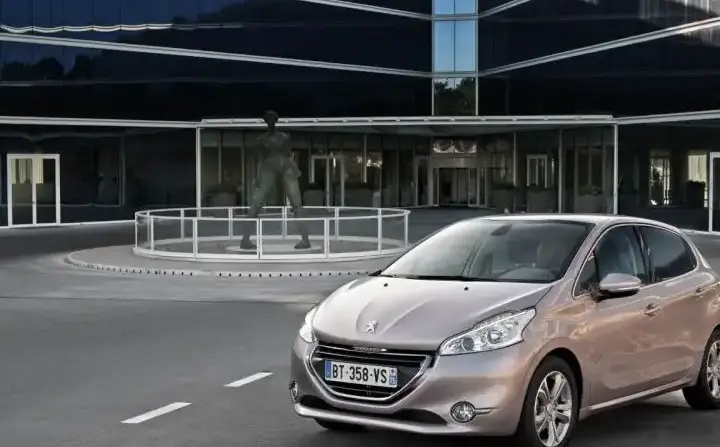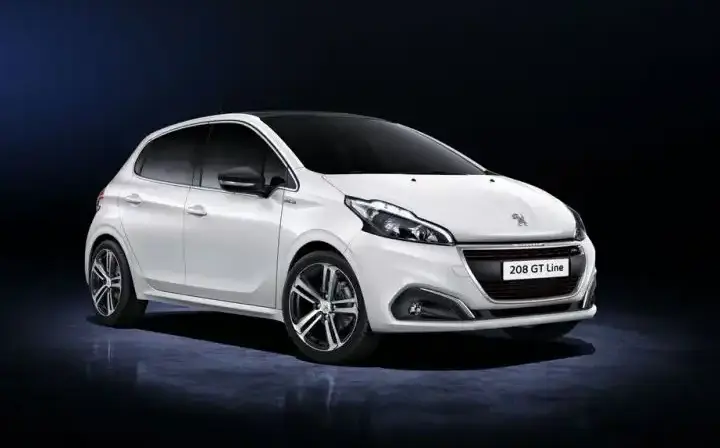
The Peugeot 208 I (Phase II), specifically the 1.6 BlueHDi variant producing 120 horsepower, was a key model in Peugeot’s lineup from 2015 to 2018. This iteration of the 208, built on the B9 platform, represented a mid-cycle refresh of the first-generation 208, aiming to enhance its appeal with updated styling, improved technology, and more efficient engine options. The 1.6 BlueHDi 120 hp model occupied a middle ground within the 208 range, offering a balance between fuel economy, performance, and equipment levels, targeting buyers seeking a practical and efficient hatchback for daily use. It was primarily sold in the European market, where diesel engines remained popular due to favorable taxation and fuel efficiency.
Technical Specifications
| Brand | Peugeot |
| Model | 208 |
| Generation | 208 I (Phase II, 2015) |
| Type (Engine) | 1.6 BlueHDi (120 Hp) |
| Start of production | 2015 |
| End of production | 2018 |
| Powertrain Architecture | Internal Combustion engine |
| Body type | Hatchback |
| Seats | 5 |
| Doors | 3-5 |
| Fuel consumption (urban) | 4.4 l/100 km (53.5 US mpg, 64.2 UK mpg, 22.7 km/l) |
| Fuel consumption (extra urban) | 3.2 l/100 km (73.5 US mpg, 88.3 UK mpg, 31.3 km/l) |
| Fuel consumption (combined) | 3.6 l/100 km (65.3 US mpg, 78.5 UK mpg, 27.8 km/l) |
| CO2 emissions | 94 g/km |
| Fuel Type | Diesel |
| Acceleration 0 – 100 km/h | 9.4 sec |
| Acceleration 0 – 62 mph | 9.4 sec |
| Acceleration 0 – 60 mph | 8.9 sec |
| Maximum speed | 190 km/h (118.06 mph) |
| Emission standard | Euro 6 |
| Weight-to-power ratio | 9.3 kg/Hp, 107.6 Hp/tonne |
| Weight-to-torque ratio | 3.9 kg/Nm, 255.6 Nm/tonne |
| Power | 120 Hp @ 3500 rpm |
| Power per litre | 76.9 Hp/l |
| Torque | 285 Nm @ 1750 rpm (210.21 lb.-ft. @ 1750 rpm) |
| Engine layout | Front, Transverse |
| Engine Model/Code | BHZ DV6FC |
| Engine displacement | 1560 cm3 (95.2 cu. in.) |
| Number of cylinders | 4 |
| Engine configuration | Inline |
| Number of valves per cylinder | 2 |
| Fuel injection system | Diesel Commonrail |
| Engine aspiration | Turbocharger, Intercooler |
| Engine oil capacity | 3.75 l (3.96 US qt | 3.3 UK qt) |
| Coolant capacity | 6 l (6.34 US qt | 5.28 UK qt) |
| Kerb Weight | 1115 kg (2458.15 lbs.) |
| Max. weight | 1672 kg (3686.13 lbs.) |
| Max load | 557 kg (1227.97 lbs.) |
| Trunk (boot) space – minimum | 285 l (10.06 cu. ft.) |
| Trunk (boot) space – maximum | 1076 l (38 cu. ft.) |
| Fuel tank capacity | 50 l (13.21 US gal | 11 UK gal) |
| Permitted trailer load with brakes (12%) | 980 kg (2160.53 lbs.) |
| Length | 3973 mm (156.42 in.) |
| Width | 1829 mm (72.01 in.) |
| Width including mirrors | 2004 mm (78.9 in.) |
| Height | 1460 mm (57.48 in.) |
| Wheelbase | 2538 mm (99.92 in.) |
| Front track | 1475-1470 mm (58.07 – 57.87 in.) |
| Rear (Back) track | 1471-1467 mm (57.91 – 57.76 in.) |
| Ride height (ground clearance) | 123-129 mm (4.84 – 5.08 in.) |
| Minimum turning circle (turning diameter) | 10.6 m (34.78 ft.) |
| Drivetrain Architecture | The Internal combustion engine (ICE) drives the front wheels of the vehicle. |
| Drive wheel | Front wheel drive |
| Number of gears and type of gearbox | 6 gears, manual transmission |
| Front suspension | Independent type McPherson |
| Rear suspension | Elastic beam |
| Front brakes | Ventilated discs |
| Rear brakes | Disc |
| Assisting systems | ABS (Anti-lock braking system) |
| Steering type | Steering rack and pinion |
Powertrain & Engine Architecture
The heart of the 208 1.6 BlueHDi 120 was the DV6FC engine, a 1.6-liter inline-four cylinder diesel engine. This engine, identified by the code BHZ, was part of Peugeot Citroën’s (PSA) BlueHDi range, designed to meet stringent Euro 6 emissions standards. It featured a common-rail direct injection system, delivering fuel at extremely high pressure for optimized combustion. A turbocharger with an intercooler was employed to boost power output and improve torque across a wider rev range. The engine utilized a two-valve per cylinder configuration. The 120 hp output was achieved through careful calibration of the engine management system, balancing performance with fuel efficiency. The engine was transversely mounted at the front of the vehicle, driving the front wheels. The 6-speed manual transmission was the standard offering, providing a good spread of gears for both urban and highway driving.
Driving Characteristics
The 1.6 BlueHDi 120 hp variant of the 208 offered a respectable driving experience, prioritizing fuel economy and usability over outright performance. Acceleration from 0-60 mph took around 8.9 seconds, making it adequate for everyday driving situations. The 285 Nm (210 lb-ft) of torque, available from 1750 rpm, provided good low-end grunt, making it easy to navigate city streets and overtake slower traffic. Compared to the more powerful petrol variants, the diesel offered superior fuel economy, but lacked the same level of responsiveness. The 6-speed manual transmission was well-matched to the engine, allowing drivers to keep the engine in its optimal power band. The gear ratios were tuned for efficiency, rather than outright acceleration. The ride quality was generally comfortable, although the rear torsion beam suspension could feel slightly less refined than the independent suspension found on some higher-spec models.
Equipment & Trim Levels
The 1.6 BlueHDi 120 hp model typically came equipped with a reasonable level of standard features. These included air conditioning, power windows, central locking, a basic audio system with USB connectivity, and ABS brakes. Higher trim levels, such as Active, Allure, and GT Line, added features like alloy wheels, a touchscreen infotainment system, Bluetooth connectivity, cruise control, and automatic headlights and wipers. Interior upholstery was typically cloth, with options for upgraded materials on higher trims. The dashboard layout was functional and modern, with a focus on ergonomics. Optional extras included a panoramic sunroof, parking sensors, and a navigation system.
Chassis & Braking
The 208’s chassis featured a McPherson strut front suspension and an elastic beam rear suspension. This setup provided a good balance between ride comfort and handling. The front brakes were ventilated discs, while the rear brakes were solid discs. ABS (Anti-lock Braking System) was standard, providing enhanced braking performance and stability. The steering was a rack and pinion system, offering precise and responsive control. The 1.6 BlueHDi 120 hp model’s weight of around 1115 kg (2458 lbs) contributed to its relatively nimble handling characteristics.
Market Reception & Comparison
The Peugeot 208 1.6 BlueHDi 120 hp was generally well-received by automotive critics. It was praised for its fuel efficiency, comfortable ride, and refined engine. However, some critics noted that the engine could be slightly noisy compared to petrol alternatives. Compared to the 1.2 PureTech petrol variants, the diesel offered superior fuel economy but less outright performance. Against other diesel hatchbacks in its class, such as the Volkswagen Polo and Ford Fiesta, the 208 offered a competitive package in terms of price, equipment, and running costs. Its fuel economy figures of around 3.6 l/100 km (65.3 US mpg) were particularly impressive.
Legacy
The 1.6 BlueHDi engine proved to be a reliable and durable powertrain, although, like all diesel engines, it was susceptible to issues related to the diesel particulate filter (DPF) if not properly maintained. Regular servicing and the use of high-quality diesel fuel were essential to prevent DPF blockages. In the used car market, the 208 1.6 BlueHDi 120 hp remains a popular choice for buyers seeking an economical and practical hatchback. Its reputation for fuel efficiency and reliability has helped it maintain a strong resale value. While newer, more advanced diesel engines have since emerged, the 1.6 BlueHDi continues to be a viable option for those looking for a cost-effective and dependable vehicle.