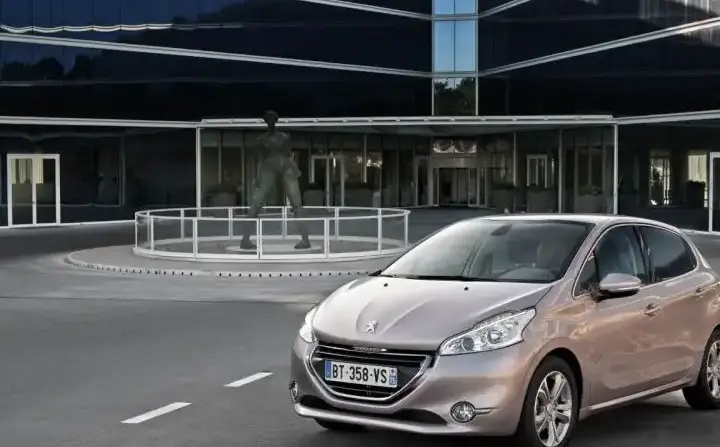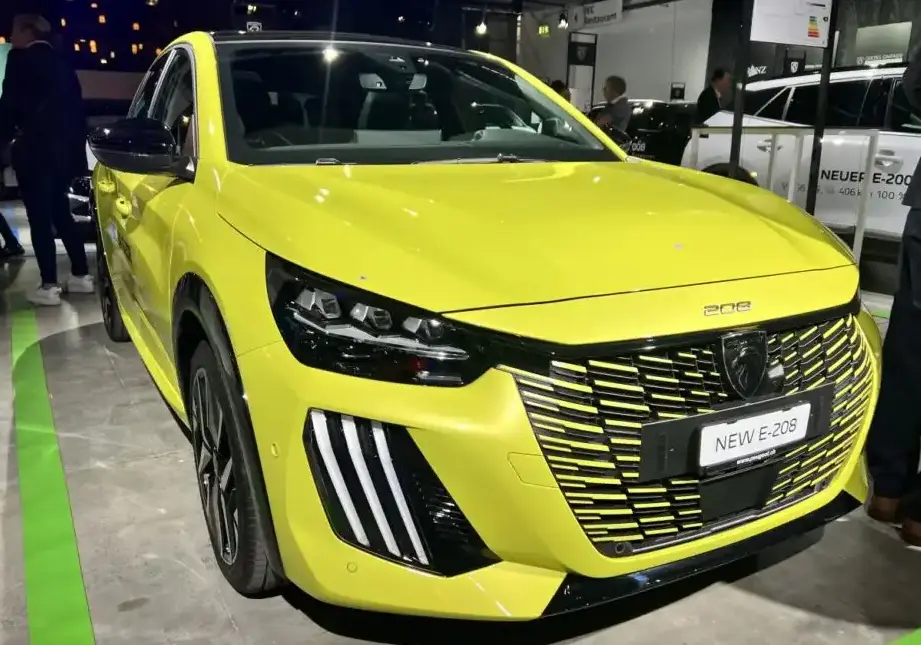
The Peugeot 208 II, specifically the Phase II e-208 with the 46.3 kWh battery pack introduced in September 2023, represents Peugeot’s continued commitment to electric vehicle technology within the subcompact hatchback segment. This variant, producing 136 horsepower, is positioned as a mainstream offering within the e-208 lineup, aiming to balance range, performance, and affordability. It builds upon the foundation of the second-generation 208 (launched in 2019), which itself was a significant redesign of Peugeot’s popular supermini. The Phase II update brought styling revisions and, crucially, improvements to the electric powertrain, increasing range and efficiency.
Technical Specifications
| Brand | Peugeot |
| Model | 208 |
| Generation | 208 II (Phase II, 2023) |
| Type (Engine) | e-208 46.3 kWh (136 Hp) |
| Start of production | September, 2023 |
| Powertrain Architecture | BEV (Electric Vehicle) |
| Body type | Hatchback |
| Seats | 5 |
| Doors | 5 |
| Fuel Type | Electricity |
| Acceleration 0 – 100 km/h | 9 sec |
| Acceleration 0 – 62 mph | 9 sec |
| Acceleration 0 – 60 mph | 8.6 sec |
| Maximum speed | 150 km/h (93.21 mph) |
| Weight-to-power ratio | 10.7 kg/Hp, 93.5 Hp/tonne |
| Weight-to-torque ratio | 5.6 kg/Nm, 178.7 Nm/tonne |
| Gross battery capacity | 46.3 kWh |
| Battery voltage | 400 V |
| Battery technology | Lithium-ion (Li-Ion) |
| Battery weight | 345 kg (760.59 lbs) |
| Battery location | Below the floor, under the rear seats / Below the floor, under the front seats |
| All-electric range (WLTP) | 362 km (224.94 mi) |
| Average Energy consumption (WLTP) | 15.4 kWh/100 km (24.78 kWh/100 mi) |
| MPGe | 136 |
| km/kWh | 6.5 |
| mi/kWh | 4 |
| Electric motor power | 136 Hp @ 5500 rpm |
| Electric motor Torque | 260 Nm @ 3674 rpm (191.77 lb.-ft. @ 3674 rpm) |
| Electric motor location | Front axle, Transverse |
| Electric motor type | Synchronous |
| System power | 136 Hp @ 5500 rpm |
| System torque | 260 Nm @ 3674 rpm (191.77 lb.-ft. @ 3674 rpm) |
| Kerb Weight | 1455 kg (3207.73 lbs) |
| Max. weight | 1910 kg (4210.83 lbs) |
| Max load | 455 kg (1003.1 lbs) |
| Trunk (boot) space – minimum | 342 l (12.08 cu. ft) |
| Trunk (boot) space – maximum | 1118 l (39.48 cu. ft) |
| Length | 4055 mm (159.65 in) |
| Width | 1745 mm (68.7 in) |
| Width with mirrors folded | 1765 mm (69.49 in) |
| Width including mirrors | 1960 mm (77.17 in) |
| Height | 1430 mm (56.3 in) |
| Wheelbase | 2540 mm (100 in) |
| Front track | 1500 mm (59.06 in) |
| Rear (Back) track | 1500 mm (59.06 in) |
| Front overhang | 825 mm (32.48 in) |
| Rear overhang | 690 mm (27.17 in) |
| Drivetrain Architecture | One electric motor drives the front wheels |
| Drive wheel | Front wheel drive |
| Number of gears and type of gearbox | 1 gears, automatic transmission |
| Front suspension | Independent type McPherson |
| Rear suspension | Torsion |
| Front brakes | Disc, 302×26 mm |
| Rear brakes | Disc, 268×12 mm |
| Assisting systems | ABS (Anti-lock braking system) |
| Steering type | Steering rack and pinion |
| Power steering | Electric Steering |
| Tires size | 195/55 R16 H |
| Wheel rims size | 16 |
Powertrain & Engine Architecture
The e-208 Phase II utilizes a single electric motor driving the front wheels. This motor, producing 136 horsepower and 260 Nm (191.77 lb-ft) of torque, is a synchronous motor known for its efficiency and smooth power delivery. The 46.3 kWh lithium-ion battery pack is positioned under the floor, contributing to a low center of gravity and maximizing interior space. The battery operates at 400V. The single-speed automatic transmission is inherent to electric vehicle design, providing seamless acceleration. The Phase II update included refinements to the motor and battery management system, resulting in improved energy efficiency and a longer WLTP-rated range of 362 km (224.94 miles).
Driving Characteristics
The 136 hp e-208 offers brisk acceleration, achieving 0-60 mph in approximately 8.6 seconds. While not a performance-oriented variant, it provides ample power for everyday driving situations. The instant torque characteristic of electric motors delivers responsive acceleration, particularly at lower speeds. The single-speed transmission ensures smooth, linear power delivery. Compared to earlier versions of the e-208, the Phase II benefits from improved regenerative braking, allowing for greater energy recapture and a more natural driving feel. It offers a more refined driving experience than the lower-powered electric variants, and while not as sporty as a gasoline-powered 208 with a manual transmission, it excels in urban environments and commutes.
Equipment & Trim Levels
The e-208 Phase II typically comes standard with features such as a touchscreen infotainment system with Apple CarPlay and Android Auto compatibility, a digital instrument cluster, automatic climate control, and a suite of advanced driver-assistance systems (ADAS) including lane keeping assist and automatic emergency braking. Trim levels vary by market, but generally include options for upgraded upholstery, larger alloy wheels, a panoramic sunroof, and a premium audio system. The interior design emphasizes a minimalist aesthetic with a focus on user-friendly controls.
Chassis & Braking
The e-208 utilizes a McPherson strut front suspension and a torsion beam rear suspension. This setup provides a good balance between ride comfort and handling. The low-mounted battery pack contributes to a lower center of gravity, enhancing stability. The braking system features disc brakes on all four wheels, with ABS (Anti-lock Braking System) as standard. The e-208’s regenerative braking system works in conjunction with the friction brakes to slow the vehicle and recapture energy, further improving efficiency.
Market Reception & Comparison
The Peugeot e-208 has been well-received by critics and consumers alike, praised for its stylish design, comfortable interior, and enjoyable driving experience. The 136 hp variant strikes a good balance between performance and range, making it a popular choice for those seeking a practical and efficient electric vehicle. Compared to other trims in the e-208 lineup, the 136 hp version offers a noticeable performance advantage over the lower-powered options. It competes with other electric superminis such as the Renault Zoe, Fiat 500e, and MINI Electric. Fuel economy, expressed as energy consumption, is rated at 15.4 kWh/100 km (24.78 kWh/100 mi), translating to approximately 136 MPGe.
Legacy
The Peugeot e-208, and specifically the 46.3 kWh 136 hp variant, represents a significant step forward in Peugeot’s electrification strategy. The powertrain has proven to be relatively reliable, with few widespread issues reported. As the electric vehicle market matures, the e-208 is likely to hold its value well, particularly as demand for used EVs increases. The Phase II updates, including the improved battery and motor management system, further enhance the long-term appeal of this variant. It serves as a benchmark for other manufacturers developing electric superminis, demonstrating that electric vehicles can be both practical and enjoyable to drive.