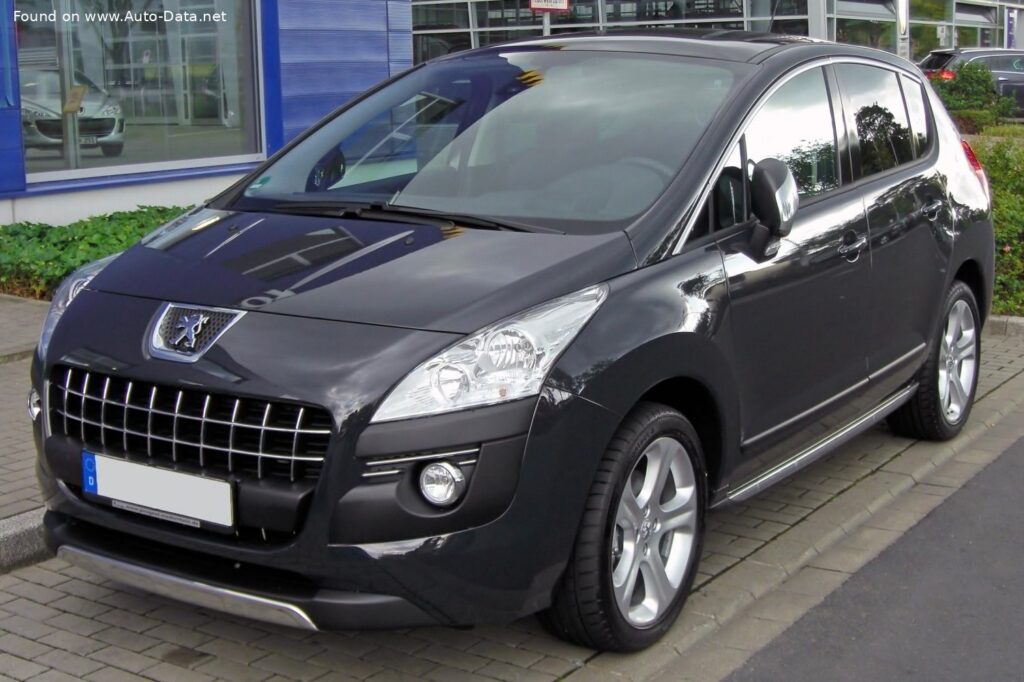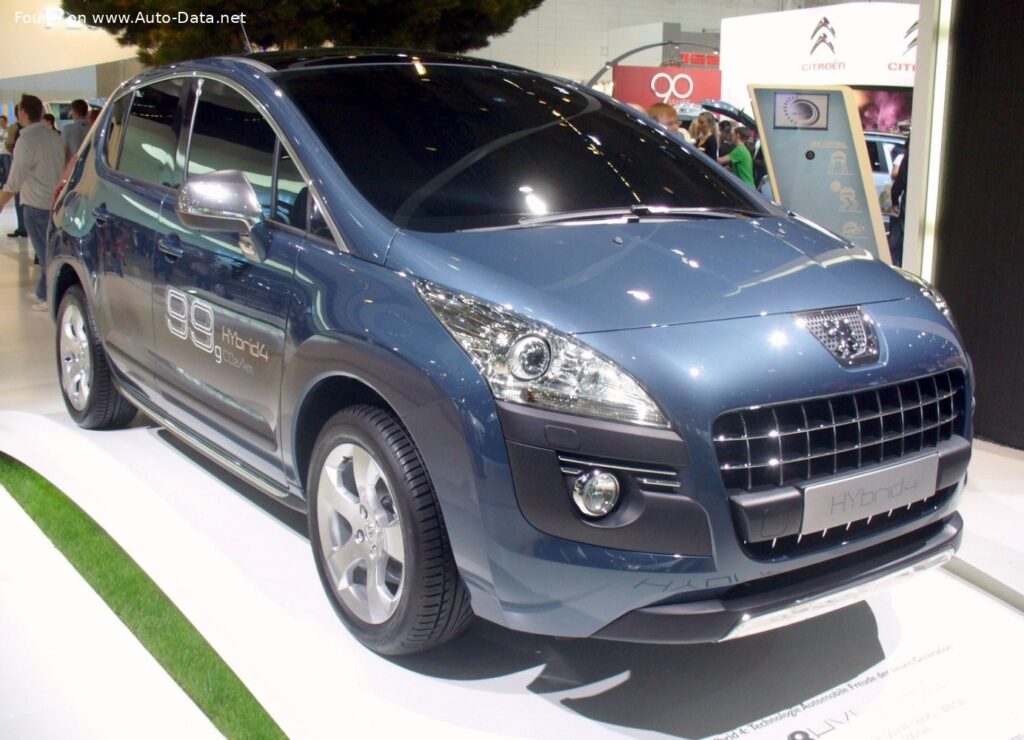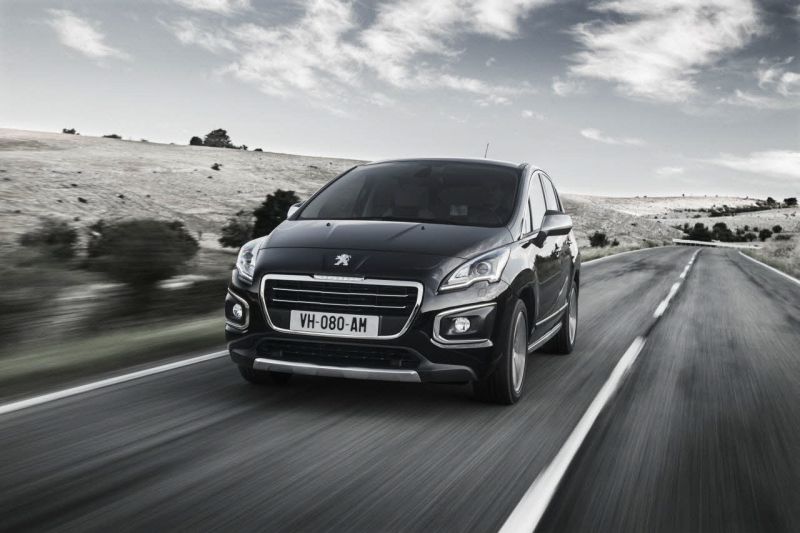
The Peugeot 3008 I (Phase II, 2013) 1.6 BlueHDI (120 Hp) FAP represents a significant iteration of Peugeot’s initial foray into the compact crossover segment, blending the practicality of a multi-purpose vehicle (MPV) with the rugged aesthetics and higher driving position of an SUV. Launched in 2009, the first-generation 3008 received a substantial facelift in 2013, referred to as Phase II, which updated its styling and introduced more advanced powertrain options. The specific variant under discussion, produced between 2015 and 2016, features the highly efficient 1.6 BlueHDI diesel engine, a cornerstone of Peugeot’s European powertrain strategy. This model was a crucial player in the highly competitive European compact SUV market, offering a compelling package of fuel economy, interior versatility, and modern diesel technology, albeit not being formally imported into the United States market.
Engine & Performance of the Peugeot 3008 I (Phase II, 2013) 1.6 BlueHDI (120 Hp) FAP
At the heart of this particular Peugeot 3008 I (Phase II, 2013) 1.6 BlueHDI (120 Hp) FAP model lies the 1.6-liter BlueHDI diesel engine, designated with the model code BHZ DV6FC. This inline four-cylinder engine, with a displacement of 1560 cm³ (95.2 cu. in.), is a testament to Peugeot’s engineering prowess in developing efficient and environmentally conscious diesel powerplants. Utilizing a common rail direct fuel injection system, combined with a turbocharger and intercooler, it delivers a respectable 120 horsepower at 3500 rpm. More impressively for a vehicle of its class, the engine generates a robust 221.27 lb.-ft. of torque at a low 1750 rpm, providing excellent low-end pulling power crucial for both city driving and highway cruising.
The “BlueHDI” designation signifies Peugeot’s advanced selective catalytic reduction (SCR) system, which, in conjunction with a Diesel Particulate Filter (FAP), drastically reduces nitrogen oxide (NOx) emissions and particulate matter. This technology allowed the 3008 to meet the stringent Euro 6 emission standards, a critical requirement for vehicles sold in Europe during its production years. Power is delivered to the front wheels via a precise 6-speed manual transmission, offering an engaging driving experience and optimizing fuel efficiency across various speeds.
Performance figures for the 1.6 BlueHDI are competitive for its segment, with an acceleration from 0 to 60 mph achieved in a calculated 11.4 seconds and a top speed of 112.47 mph. However, where this powertrain truly shines is in its fuel economy. The combined fuel consumption is rated at an impressive 57.4 US mpg, with extra-urban driving yielding up to 61.9 US mpg. This exceptional efficiency, coupled with a 15.85 US gallon fuel tank, provides a substantial driving range, making it an economical choice for long-distance travel in its primary markets.
Design & Features
The Peugeot 3008 I (Phase II, 2013) maintained its distinctive crossover silhouette, a design that aimed to merge SUV ruggedness with MPV practicality. Measuring 171.85 inches in length, 72.32 inches in width (excluding mirrors), and 64.53 inches in height, the 3008 offered a commanding road presence without being overly cumbersome for urban environments. The Phase II facelift introduced a refreshed front fascia, including a redesigned grille, updated headlights, and revised bumper, aligning its aesthetics more closely with Peugeot’s contemporary design language.
Inside, the 3008 was designed as a highly versatile 5-door, 5-seat SUV. The interior prioritized comfort and adaptability, featuring a well-appointed cabin with quality materials. A key highlight was its flexible cargo space. With the rear seats in place, the trunk offered a generous 18.08 cu. ft. of storage. Folding down the rear seats expanded this capacity significantly to a cavernous 56.64 cu. ft., making it highly practical for families and those needing ample cargo room. The split tailgate design, a unique feature for the segment, further enhanced loading convenience.
Safety features were standard for its era, including an Anti-lock Braking System (ABS) and ventilated disc brakes at the front, complemented by disc brakes at the rear, ensuring confident stopping power. The suspension system comprised an independent McPherson strut setup with coil springs and an anti-roll bar at the front, paired with a semi-independent coil spring rear suspension, providing a comfortable ride quality and stable handling. Electric power steering made maneuvering easy, particularly in tight parking situations, with a minimum turning circle of 38.58 feet. The vehicle also came with various tire size options, from 215/60 R16 to 235/45 R18, allowing for customization based on driving preferences and aesthetic considerations.
Technical Specifications
| Category | Specification |
| Brand | Peugeot |
| Model | 3008 |
| Generation | 3008 I (Phase II, 2013) |
| Engine Type | 1.6 BlueHDI (120 Hp) FAP |
| Production Start | 2015 year |
| Production End | 2016 year |
| Powertrain Architecture | Internal Combustion engine |
| Body Type | SUV |
| Seats | 5 |
| Doors | 5 |
| Performance Specs | |
| Fuel Consumption (Urban) | 4.7 l/100 km (50 US mpg) |
| Fuel Consumption (Extra Urban) | 3.8 l/100 km (61.9 US mpg) |
| Fuel Consumption (Combined) | 4.1 l/100 km (57.4 US mpg) |
| CO2 Emissions | 108 g/km |
| Fuel Type | Diesel |
| Acceleration 0-60 mph | 11.4 sec |
| Maximum Speed | 181 km/h (112.47 mph) |
| Emission Standard | Euro 6 |
| Weight-to-Power Ratio | 11.8 kg/Hp (84.5 Hp/tonne) |
| Weight-to-Torque Ratio | 4.7 kg/Nm (211.3 Nm/tonne) |
| Engine Specs | |
| Power | 120 Hp @ 3500 rpm |
| Power per liter | 76.9 Hp/l |
| Torque | 300 Nm @ 1750 rpm (221.27 lb.-ft. @ 1750 rpm) |
| Engine Layout | Front, Transverse |
| Engine Model/Code | BHZ DV6FC |
| Engine Displacement | 1560 cm³ (1.6 l / 95.2 cu. in.) |
| Number of Cylinders | 4 |
| Engine Configuration | Inline |
| Fuel Injection System | Diesel Commonrail |
| Engine Aspiration | Turbocharger, Intercooler |
| Engine Oil Capacity | 3.8 l (4.02 US qt) |
| Coolant Capacity | 6 l (6.34 US qt) |
| Engine Systems | Particulate filter |
| Space, Volume and Weights | |
| Kerb Weight | 1420-1552 kg (3130.56 – 3421.57 lbs.) |
| Max. Weight | 2020 kg (4453.34 lbs.) |
| Max Load | 468-600 kg (1031.76 – 1322.77 lbs.) |
| Trunk Space (Minimum) | 512 l (18.08 cu. ft.) |
| Trunk Space (Maximum) | 1604 l (56.64 cu. ft.) |
| Fuel Tank Capacity | 60 l (15.85 US gal) |
| Max. Roof Load | 75 kg (165.35 lbs.) |
| Permitted Trailer Load with Brakes (12%) | 1300 kg (2866.01 lbs.) |
| Permitted Trailer Load without Brakes | 740 kg (1631.42 lbs.) |
| Permitted Towbar Download | 70 kg (154.32 lbs.) |
| Dimensions | |
| Length | 4365 mm (171.85 in.) |
| Width | 1837 mm (72.32 in.) |
| Width with Mirrors Folded | 1910 mm (75.2 in.) |
| Width Including Mirrors | 2113 mm (83.19 in.) |
| Height | 1639 mm (64.53 in.) |
| Wheelbase | 2613 mm (102.87 in.) |
| Front Track | 1532 mm (60.31 in.) |
| Rear Track | 1527 mm (60.12 in.) |
| Front Overhang | 916 mm (36.06 in.) |
| Rear Overhang | 836 mm (32.91 in.) |
| Minimum Turning Circle | 11.76 m (38.58 ft.) |
| Drivetrain, Brakes and Suspension | |
| Drivetrain Architecture | Internal combustion engine drives the front wheels. |
| Drive Wheel | Front wheel drive |
| Number of Gears and Type of Gearbox | 6 gears, manual transmission |
| Front Suspension | Independent, McPherson with coil spring and anti-roll bar |
| Rear Suspension | Semi-independent, coil spring |
| Front Brakes | Ventilated discs |
| Rear Brakes | Disc |
| Assisting Systems | ABS (Anti-lock braking system) |
| Steering Type | Steering rack and pinion |
| Power Steering | Electric Steering |
| Tires Size | 215/60 R16; 225/50 R17; 235/45 R18 |
| Wheel Rims Size | 16; 17; 18 |
Legacy and Market Impact
The Peugeot 3008 I (Phase II, 2013), particularly with its 1.6 BlueHDI (120 Hp) FAP engine, carved out a significant niche in the European compact crossover market. It was recognized for its intelligent packaging, offering a compelling blend of SUV styling, MPV practicality, and hatchback-like driving dynamics. While its initial design, often described as quirky or unconventional, might have divided opinions, the Phase II facelift helped to modernize its appeal, particularly with the more contemporary front-end styling.
In Europe, the 3008 competed fiercely against established rivals such as the Nissan Qashqai, Renault Kadjar, Volkswagen Tiguan, and Ford Kuga. Its strength lay in its robust and highly efficient diesel powertrains, which were critical for European buyers facing high fuel prices and stringent emissions regulations. The 1.6 BlueHDI variant, with its excellent fuel economy and Euro 6 compliance, was a popular choice for both private buyers and fleet operators seeking low running costs and a reduced environmental footprint. Its relatively high seating position and versatile interior also appealed to families looking for a practical and comfortable daily driver.
The 3008 I’s reputation was built on its comfort, refinement, and the versatility of its interior, which included features like a flat-folding passenger seat and the innovative split tailgate. It set the stage for Peugeot’s subsequent, more radical design shift with the second-generation 3008, which transformed into a full-fledged SUV and garnered widespread critical acclaim, including the European Car of the Year award. The first generation, therefore, served as an important transitional model, demonstrating Peugeot’s ability to innovate in the crossover segment and laying the groundwork for future success. Its legacy is one of an understated but highly capable vehicle that perfectly met the demands of its target market, proving that efficiency and practicality could coexist with distinctive French design. While never officially sold in the U.S., its impact on European automotive trends and Peugeot’s brand evolution was undeniable.