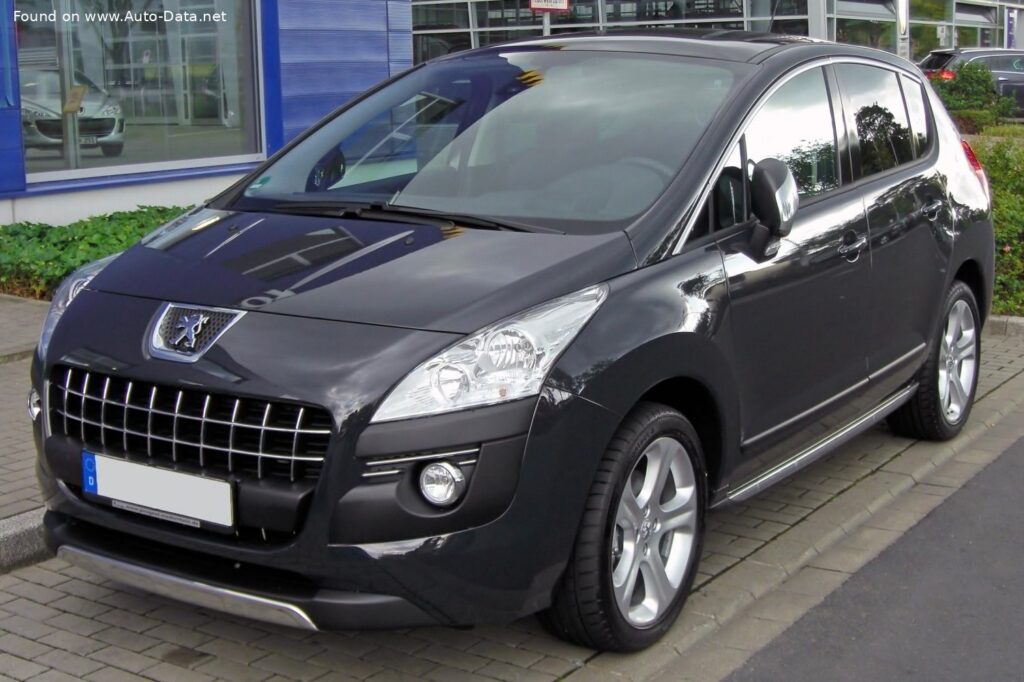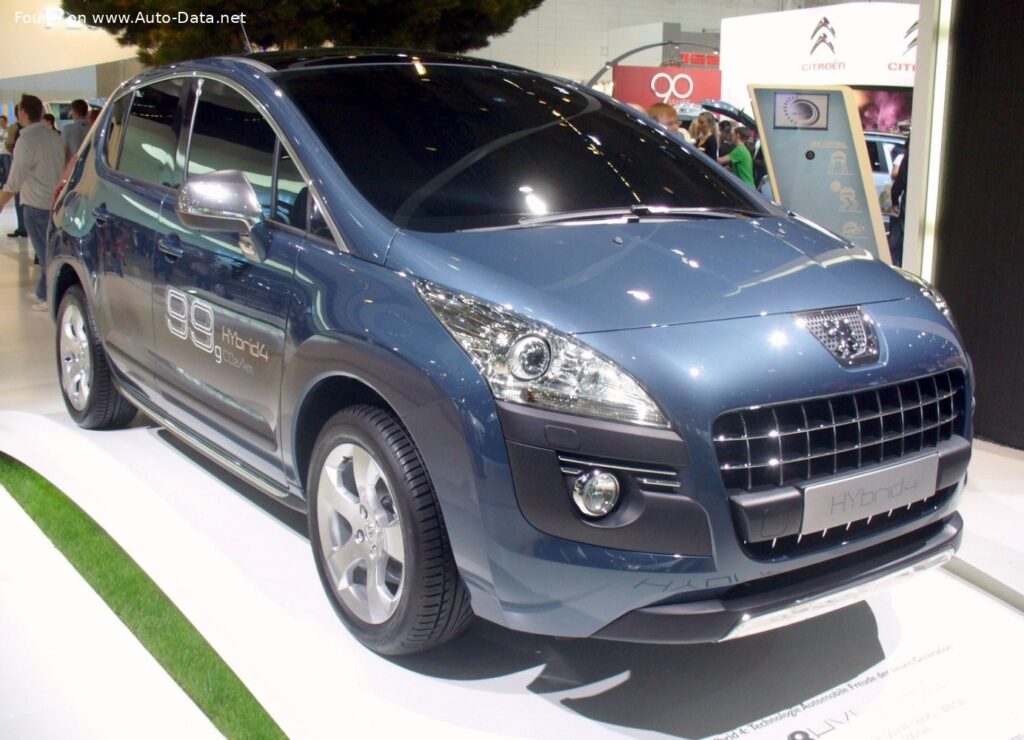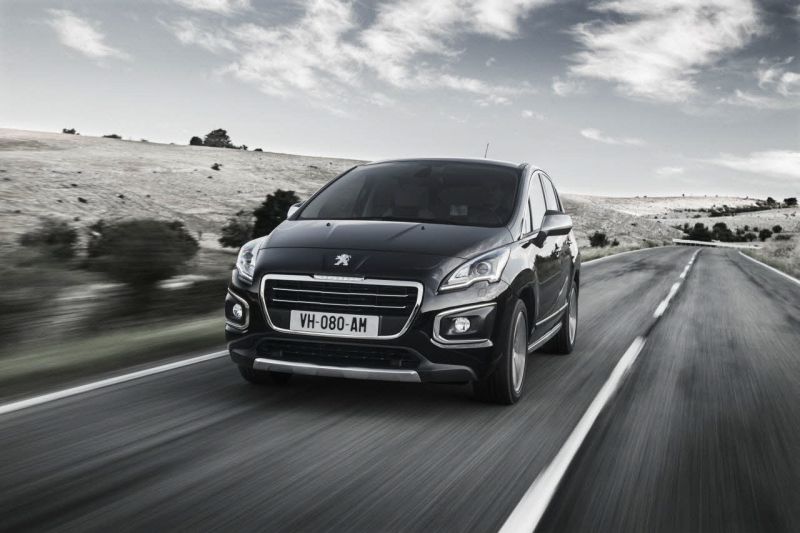
The Peugeot 3008 I (Phase II, 2013) 2.0 HDi (200 Hp) HYbrid4 4×4 Automatic represents a significant chapter in the evolution of compact crossovers, particularly within the European market. This five-door, five-seat SUV distinguished itself not only through its styling but also its innovative powertrain. The focus keyword, Peugeot 3008 I (Phase II, 2013), refers to the updated version of the first-generation model, which brought refreshed aesthetics and enhanced technology. While never officially sold in the United States, the 3008 played a crucial role in Peugeot’s strategy to offer practical, efficient, and technologically advanced vehicles to European consumers. Among its most compelling configurations was the 2.0 HDi (200 Hp) HYbrid4 4×4 Automatic, a full-hybrid diesel-electric variant that showcased Peugeot’s commitment to fuel efficiency and reduced emissions.
Peugeot 3008 I (Phase II, 2013): A Pioneering Crossover
Launched for the 2013 model year and produced through 2015, this 3008 variant was a testament to automotive engineering innovation. It seamlessly integrated a diesel engine with an electric motor, providing both impressive fuel economy and a unique all-wheel-drive system. This hybrid setup was a bold move for a mainstream manufacturer in the compact SUV segment at the time, positioning the 3008 as a forward-thinking option for buyers seeking a blend of performance, environmental consciousness, and versatility.
Engine & Performance: The Innovative HYbrid4 System
At the heart of the Peugeot 3008 I (Phase II, 2013) HYbrid4 lies a sophisticated Full Hybrid Electric Vehicle (FHEV) powertrain. This system combined a conventional internal combustion engine (ICE) with an electric motor to deliver a balance of power and efficiency. The primary power source was a 2.0-liter (1997 cm³, or 121.86 cu. in.) HDi (High-Pressure Direct Injection) four-cylinder inline diesel engine. This unit, designated DW10CTED4, featured a turbocharger, intercooler, and common rail fuel injection, producing 163 horsepower at 3850 rpm and 221.27 lb.-ft. (300 Nm) of torque at 1750 rpm. It was also equipped with a particulate filter to meet Euro 5 emission standards.
Complementing the diesel engine was a synchronous electric motor, transversely mounted on the rear axle. This motor contributed an additional 37 horsepower at 2500 rpm and 147.51 lb.-ft. (200 Nm) of torque at 1250 rpm. The electric motor was powered by a Nickel-metal hydride (NiMH) battery with a gross capacity of 1.1 kWh, operating at 200 volts, located under the trunk floor. The combined system output was an impressive 200 horsepower and 331.9 lb.-ft. (450 Nm) of torque, available from 1750 rpm.
The HYbrid4 system’s “through-the-road” all-wheel-drive (4×4) architecture was unique. The diesel engine drove the front wheels, while the electric motor exclusively powered the rear wheels. This allowed for various driving modes: full electric mode for short distances (up to 1.24 miles or 2 km), ICE-only mode, or a mixed mode where both power sources worked in concert. This approach provided on-demand all-wheel drive without a mechanical connection between the axles, enhancing traction and stability.
Performance figures were competitive for a vehicle of its class and era. The 3008 HYbrid4 could accelerate from 0 to 60 mph in 8.7 seconds, with a top speed of 118.68 mph (191 km/h). However, the highlight was its fuel economy. With a combined fuel consumption rating of 71.3 US mpg (3.3 liters per 100 km) and CO2 emissions as low as 85 g/km, it was one of the most efficient SUVs on the market.
Design & Features: Practicality and Innovation
The Peugeot 3008 I (Phase II, 2013) retained the distinctive crossover styling that blended elements of an SUV, hatchback, and MPV, but with updated design cues. Its five-door SUV body type offered a practical and versatile package for families. The exterior featured a refreshed front fascia with new headlights, a revised grille, and updated bumper designs. Its dimensions – 171.85 inches (4365 mm) long, 72.32 inches (1837 mm) wide, and between 63.15 and 63.98 inches (1604-1625 mm) tall – positioned it within the compact SUV segment, making it maneuverable while offering a commanding view of the road.
Inside, the 3008 offered a spacious and comfortable cabin for five occupants. The interior design was ergonomic and driver-focused, featuring quality materials and storage solutions. Despite the battery’s placement, the trunk space remained practical, offering a minimum of 14.83 cubic feet (420 liters) and expanding to 19.6 cubic feet (555 liters) with the rear seats folded. The design prioritized functionality and user-friendliness.
The 3008 HYbrid4 featured a robust chassis designed for comfort and handling. It utilized an independent McPherson strut front suspension with coil springs and an anti-roll bar, paired with an independent multi-link rear suspension. This contributed to a smooth ride and predictable handling. Braking duties were handled by ventilated discs at the front and solid discs at the rear, supported by an Anti-lock Braking System (ABS). The electric power steering provided light and precise control. The vehicle rode on 16-inch wheels fitted with 215/60 R16 tires, offering a balance of grip and ride comfort.
Technical Specifications
| Category | Specification |
| Brand | Peugeot |
| Model | 3008 I (Phase II, 2013) |
| Type | 2.0 HDi (200 Hp) HYbrid4 4×4 Automatic |
| Production Years | 2013 – 2015 |
| Powertrain Architecture | FHEV (Full Hybrid Electric Vehicle) |
| Body Type | SUV |
| Seats / Doors | 5 / 5 |
| System Power | 200 Hp |
| System Torque | 331.9 lb.-ft. (450 Nm) @ 1750 rpm |
| ICE Power | 163 Hp @ 3850 rpm |
| ICE Torque | 221.27 lb.-ft. (300 Nm) @ 1750 rpm |
| Engine Displacement | 2.0 L (1997 cm³ / 121.86 cu. in.) |
| Electric Motor Power | 37 Hp @ 2500 rpm |
| Electric Motor Torque | 147.51 lb.-ft. (200 Nm) @ 1250 rpm |
| Gross Battery Capacity | 1.1 kWh |
| Battery Technology | Nickel-metal hydride (NiMH) |
| All-Electric Range | 1.24 miles (2 km) |
| Fuel Type | Diesel |
| Fuel Consumption (Combined) | 71.3 US mpg (3.3 l/100 km) |
| CO2 Emissions | 85 g/km |
| Emission Standard | Euro 5 |
| Acceleration 0-60 mph | 8.7 sec |
| Maximum Speed | 118.68 mph (191 km/h) |
| Kerb Weight | 3659.67 lbs. (1660 kg) |
| Max. Weight | 4949.38 lbs. (2245 kg) |
| Trunk Space (Min/Max) | 14.83 – 19.6 cu. ft. (420 – 555 l) |
| Fuel Tank Capacity | 15.06 US gal (57 l) |
| Length | 171.85 in. (4365 mm) |
| Width | 72.32 in. (1837 mm) |
| Height | 63.15 – 63.98 in. (1604 – 1625 mm) |
| Wheelbase | 102.87 in. (2613 mm) |
| Drive Wheel | All-wheel drive (4×4) |
| Gearbox | 6-speed automatic transmission |
| Front Suspension | Independent, McPherson with coil spring and anti-roll bar |
| Rear Suspension | Independent multi-link suspension |
| Front Brakes | Ventilated discs |
| Rear Brakes | Disc |
| Tire Size | 215/60 R16 |
Legacy & Market Impact
The Peugeot 3008 I (Phase II, 2013) 2.0 HDi (200 Hp) HYbrid4 4×4 Automatic carved out a distinctive niche in the European compact SUV market. Its reputation was built on innovation, fuel efficiency, and versatility. As one of the first mass-produced diesel-electric hybrids in the segment, it showcased Peugeot’s engineering prowess and commitment to sustainable mobility. While its initial sales might not have rivaled conventional models due to the higher price point associated with hybrid technology, it garnered attention for its advanced powertrain and low emissions.
In Europe, the 3008 HYbrid4 competed against the Nissan Qashqai, Volkswagen Tiguan, and Ford Kuga. Other competitors included the Renault Kadjar and Skoda Yeti. What set the 3008 HYbrid4 apart was its combination of a diesel engine, hybrid efficiency, and an electric all-wheel-drive system. Most competitors offered conventional gasoline or diesel engines, and AWD systems were typically mechanically linked. The HYbrid4’s “through-the-road” system offered a lighter, more efficient alternative.
Historically, the Peugeot 3008 I (Phase II, 2013) HYbrid4 is significant for being a trailblazer. It demonstrated that a mainstream manufacturer could successfully integrate complex hybrid technology with a diesel engine, achieving remarkable fuel economy and CO2 figures. This model helped to legitimize hybrid technology in a growing segment. It paved the way for future electrification efforts within Peugeot and Stellantis, proving that practical vehicles could also be at the forefront of environmental responsibility. Its existence underscored a period of intense innovation in powertrain development, pushing boundaries beyond traditional internal combustion engines.