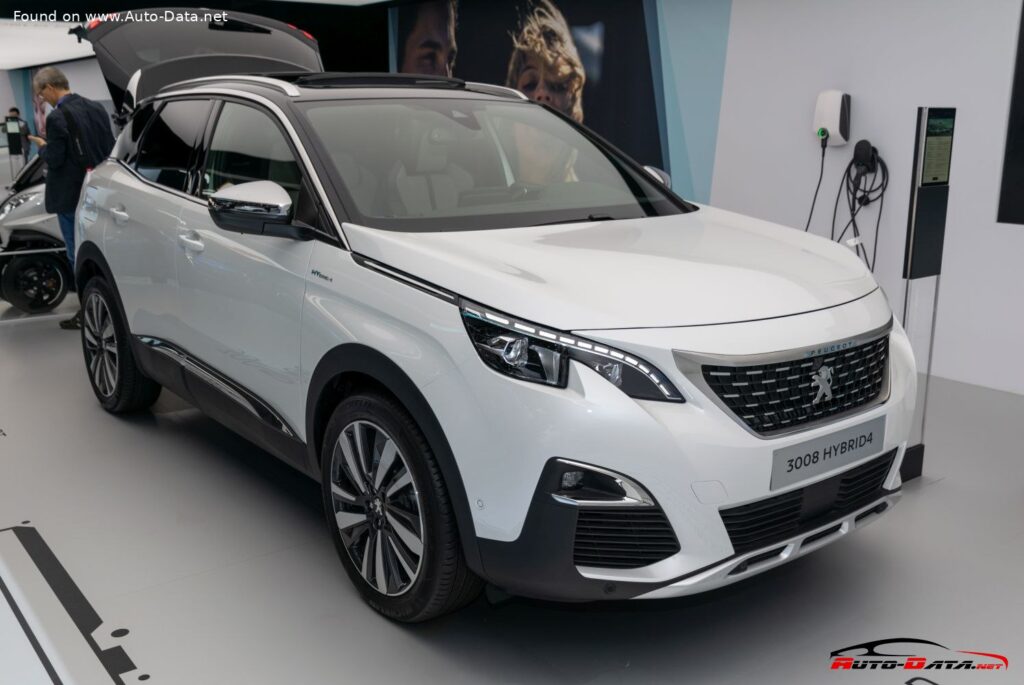
The Peugeot 3008 II (Phase I, 2016) represents a pivotal moment for the French automaker, marking a successful entry into the highly competitive European compact SUV market. Launched in 2016 as a 2017 model, this second-generation 3008 abandoned the more minivan-inspired design of its predecessor in favor of a distinctly SUV-focused aesthetic. Characterized by sharp lines, a commanding road presence, and a generally adventurous style, the 3008 II quickly became a popular choice for European buyers. The 1.5 BlueHDi (130 Hp) Automatic S&S variant, detailed here, offered a compelling blend of fuel efficiency, performance, and modern diesel technology. While Peugeot does not officially sell vehicles in the United States, the 3008 II achieved significant critical acclaim and commercial success in Europe, establishing a new benchmark for design, interior quality, and overall refinement within its segment.
The Peugeot 3008 II: A European Success Story
The 3008’s success is rooted in its ability to appeal to a broad range of buyers seeking a stylish, practical, and efficient vehicle. In a market increasingly dominated by SUVs, Peugeot successfully differentiated the 3008 through its innovative design and focus on driver experience. The vehicle’s interior, in particular, received widespread praise for its high-quality materials, ergonomic layout, and the unique i-Cockpit design, featuring a smaller steering wheel and a raised instrument cluster. This design philosophy aimed to provide a more engaging and intuitive driving experience. The 3008 II wasn’t simply a competitor; it became a trendsetter, influencing design cues in other vehicles within the compact SUV class.
Engine & Performance: The Efficient Heart
The Peugeot 3008 II (Phase I, 2016) 1.5 BlueHDi (130 Hp) Automatic S&S is powered by a 1.5-liter inline four-cylinder diesel engine, designated YHZ DV5RC. This engine is a testament to Peugeot’s commitment to efficient powertrain technology. Producing 130 horsepower at 3750 rpm, the engine delivers adequate power for everyday driving and longer journeys. However, its true strength lies in its torque output. The engine generates a substantial 221.27 pound-feet (300 Nm) of torque, readily available from as low as 1750 rpm. This low-end torque provides strong acceleration and effortless overtaking capability, particularly when coupled with the eight-speed automatic transmission.
The 0 to 60 mph acceleration time is a respectable 10.9 seconds, with a top speed of 119.3 mph (192 km/h). Peugeot’s BlueHDi technology plays a crucial role in the engine’s performance and environmental credentials. This system incorporates a Selective Catalytic Reduction (SCR) system and a Diesel Particulate Filter (DPF) to minimize harmful emissions, ensuring compliance with the stringent Euro 6 d-TEMP emission standard. The inclusion of a Start & Stop system further enhances fuel efficiency by automatically shutting off the engine when the vehicle is stationary. Combined fuel economy is an impressive 58.8 US mpg (4 liters per 100 km), demonstrating the efficiency of the diesel powertrain.
Design & Features: A Bold Statement
The exterior design of the Peugeot 3008 II (Phase I, 2016) is a significant departure from its predecessor. Measuring 175.08 inches in length, 72.48 inches in width, and 61.61 inches in height, the 3008 II presents a more assertive and modern SUV profile. Key design elements include a bold front grille, sculpted headlights, and a distinctive side profile with a black arch over the rear wheel. The vehicle’s raised ride height and muscular wheel arches contribute to its SUV aesthetic.
Inside, the 3008 II boasts a high-quality interior with a focus on ergonomics and technology. The i-Cockpit design, featuring a compact steering wheel and a raised instrument cluster, is a defining feature. This configuration aims to provide a more engaging driving experience by positioning the instruments within the driver’s line of sight. The interior also incorporates a large touchscreen infotainment system, providing access to navigation, entertainment, and vehicle settings. Safety features include automatic emergency braking, lane departure warning, and speed limit recognition, reflecting Peugeot’s commitment to driver assistance technology. The 3008 II offers a practical and spacious interior, with ample room for passengers and luggage, making it a versatile choice for families and individuals alike.
Technical Specifications
| Engine Type | 1.5L Inline-4 Diesel (Turbocharged) |
| Engine Code | YHZ DV5RC |
| Displacement | 1499 cm³ (91.4 cu in) |
| Horsepower | 130 hp @ 3750 rpm |
| Torque | 221.27 lb-ft (300 Nm) @ 1750 rpm |
| Transmission | 8-Speed Automatic |
| Drive Type | Front-Wheel Drive |
| 0-60 mph | 10.9 seconds |
| Top Speed | 119.3 mph (192 km/h) |
| Fuel Economy (Combined) | 58.8 US mpg (4 liters/100km) |
| Length | 175.08 inches (4446 mm) |
| Width | 72.48 inches (1841 mm) |
| Height | 61.61 inches (1565 mm) |
| Emission Standard | Euro 6 d-TEMP |
The Peugeot 3008 II (Phase I, 2016) stands as a testament to Peugeot’s ability to create a compelling and competitive vehicle in the crowded compact SUV segment. Its combination of stylish design, efficient powertrain, and innovative features earned it widespread acclaim and cemented its position as a benchmark in the European market. While not available in the United States, the 3008 II represents a significant achievement in automotive engineering and design, showcasing Peugeot’s commitment to innovation and driver satisfaction.