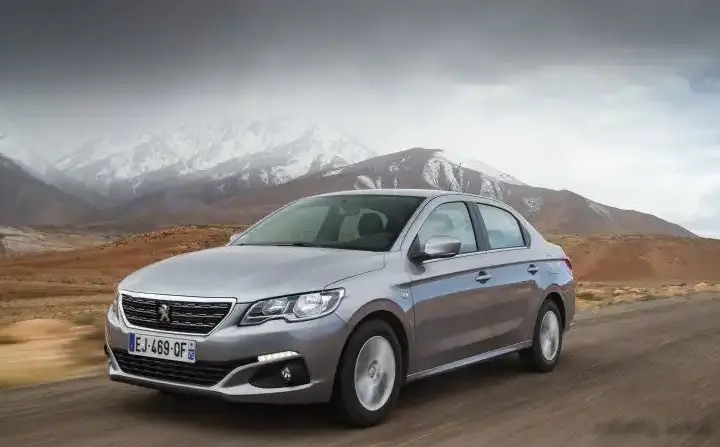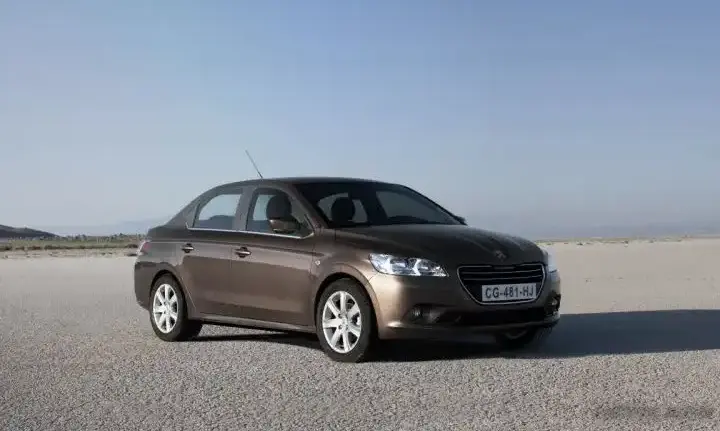
The Peugeot 301 1.2 VTi, producing 72 horsepower, was a key variant of the 301 model range manufactured between 2012 and 2017. Positioned as the entry-level engine option, it primarily served markets outside of Europe, particularly in North Africa, the Middle East, and Latin America, where Peugeot sought to offer an affordable and practical sedan. The 301 itself was designed as a replacement for the aging 206 and 307 models in these regions, offering a modern, albeit basic, package. This specific 1.2L engine and five-speed manual transmission combination aimed to balance fuel efficiency with acceptable performance for everyday driving needs.
Technical Specifications
| Brand | Peugeot |
| Model | 301 |
| Generation | 301 |
| Type (Engine) | 1.2 VTi (72 Hp) |
| Start of production | 2012 |
| End of production | 2017 |
| Powertrain Architecture | Internal Combustion engine |
| Body type | Sedan |
| Seats | 5 |
| Doors | 4 |
| Fuel consumption (urban) | 7 l/100 km (33.6 US mpg, 40.4 UK mpg, 14.3 km/l) |
| Fuel consumption (extra urban) | 4.3 l/100 km (54.7 US mpg, 65.7 UK mpg, 23.3 km/l) |
| Fuel consumption (combined) | 5.3 l/100 km (44.4 US mpg, 53.3 UK mpg, 18.9 km/l) |
| Fuel Type | Petrol (Gasoline) |
| Acceleration 0 – 100 km/h | 15.9 sec |
| Acceleration 0 – 62 mph | 15.9 sec |
| Acceleration 0 – 60 mph | 15.1 sec |
| Maximum speed | 160 km/h (99.42 mph) |
| Emission standard | Euro 5 |
| Weight-to-power ratio | 13.6 kg/Hp, 73.5 Hp/tonne |
| Weight-to-torque ratio | 8.9 kg/Nm, 112.2 Nm/tonne |
| Power | 72 Hp @ 5500 rpm |
| Power per litre | 60.1 Hp/l |
| Torque | 110 Nm @ 3000 rpm (81.13 lb.-ft. @ 3000 rpm) |
| Engine layout | Front, Transverse |
| Engine Model/Code | HMY EB2M |
| Engine displacement | 1199 cm3 (73.17 cu. in.) |
| Number of cylinders | 3 |
| Engine configuration | Inline |
| Number of valves per cylinder | 4 |
| Fuel injection system | Multi-port manifold injection |
| Engine aspiration | Naturally aspirated engine |
| Engine oil capacity | 3.25 l (3.43 US qt | 2.86 UK qt) |
| Kerb Weight | 980 kg (2160.53 lbs.) |
| Max. weight | 1459 kg (3216.54 lbs.) |
| Max load | 479 kg (1056.01 lbs.) |
| Trunk (boot) space – minimum | 506 l (17.87 cu. ft.) |
| Trunk (boot) space – maximum | 1332 l (47.04 cu. ft.) |
| Fuel tank capacity | 50 l (13.21 US gal | 11 UK gal) |
| Length | 4442 mm (174.88 in.) |
| Width | 1748 mm (68.82 in.) |
| Height | 1466 mm (57.72 in.) |
| Wheelbase | 2652 mm (104.41 in.) |
| Drivetrain Architecture | The Internal combustion engine (ICE) drives the front wheels of the vehicle. |
| Drive wheel | Front wheel drive |
| Number of gears and type of gearbox | 5 gears, manual transmission |
| Assisting systems | ABS (Anti-lock braking system) |
| Steering type | Steering rack and pinion |
Powertrain & Engine Architecture
The Peugeot 301 1.2 VTi utilizes the EB2M engine family, a three-cylinder, naturally aspirated petrol engine developed by PSA Peugeot Citroën (now Stellantis). The HMY engine code specifically denotes this particular iteration. This engine features a cast iron block and aluminum cylinder head, a configuration chosen for cost-effectiveness and durability. Fuel delivery is managed by a multi-point fuel injection system, providing adequate atomization for efficient combustion. The engine employs a single overhead camshaft (SOHC) operating four valves per cylinder, a relatively simple valvetrain design contributing to lower manufacturing costs. The 1.2L engine produces 72 horsepower at 5500 rpm and 110 Nm (81 lb-ft) of torque at 3000 rpm. The engine is paired with a five-speed manual transmission, chosen for its simplicity and affordability in target markets. This transmission lacks advanced features like close-ratio gearing or overdrive, prioritizing durability and ease of maintenance over outright performance.
Driving Characteristics
The 1.2 VTi engine in the 301 delivers modest performance. Acceleration from 0-60 mph takes approximately 15.1 seconds, and top speed is limited to 99 mph. The engine feels strained when pushed hard, particularly when fully loaded or climbing hills. The five-speed manual transmission’s gear ratios are spaced to prioritize fuel economy rather than spirited driving. Shifting is light and easy, but the lack of a sixth gear means engine speeds are relatively high at highway cruising speeds. Compared to the more powerful 1.6L engine option available in some markets, the 1.2 VTi feels significantly underpowered. However, for urban driving and moderate speeds, it provides sufficient power for most everyday tasks. The focus is clearly on economy and practicality rather than driving enjoyment.
Equipment & Trim Levels
The 301 1.2 VTi typically came with a basic level of equipment. Standard features generally included power steering, central locking, electric front windows, and an ABS anti-lock braking system. Air conditioning was often an optional extra, as were features like a radio/CD player and alloy wheels. Interior upholstery was typically cloth, and the dashboard featured a simple, functional design. Higher trim levels, when available, added features like rear electric windows, a more sophisticated audio system, and upgraded interior trim. The overall interior ambiance was functional and durable, prioritizing practicality over luxury.
Chassis & Braking
The Peugeot 301 utilizes a conventional front-wheel-drive chassis with MacPherson strut suspension at the front and a torsion beam axle at the rear. The torsion beam setup is a cost-effective solution that provides adequate ride comfort for everyday driving. Braking is typically accomplished with disc brakes at the front and drum brakes at the rear. The braking system is adequate for the vehicle’s weight and performance, but lacks the stopping power of more advanced braking systems. Steering is provided by a rack-and-pinion system, offering light and easy steering feel.
Market Reception & Comparison
The Peugeot 301 1.2 VTi was generally well-received in its target markets as an affordable and reliable sedan. Critics praised its fuel efficiency and practicality, but noted its lack of performance and refinement. Compared to other entry-level sedans in the same segment, such as the Renault Symbol or Dacia Logan, the 301 offered a slightly more modern design and a more comfortable interior, but at a slightly higher price point. The 1.6L engine option offered significantly better performance, but came at a higher cost. The 1.2L engine’s fuel economy was a key selling point, particularly in regions where fuel prices are high.
Legacy
The Peugeot 301 1.2 VTi has proven to be a relatively reliable powertrain. The EB2M engine, while not known for its performance, is generally durable and relatively inexpensive to maintain. Common issues include occasional problems with the fuel injectors and the cooling system. In the used car market, the 301 1.2 VTi remains an affordable option for buyers seeking a basic and practical sedan. Its low running costs and relatively simple mechanical design make it an attractive choice for those on a budget. While it may not offer the excitement of more powerful or refined vehicles, it provides a dependable and economical means of transportation.