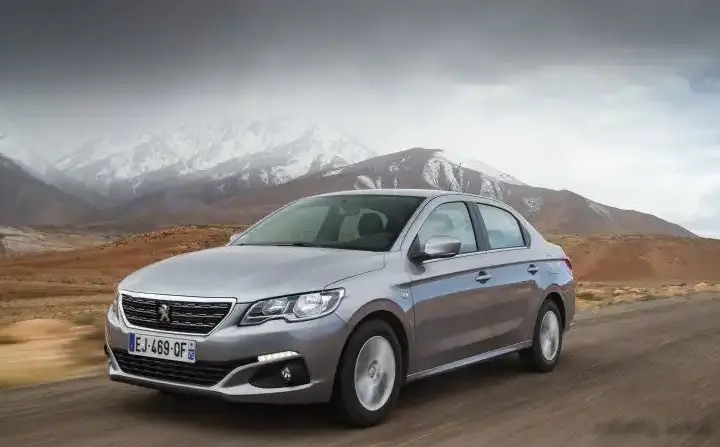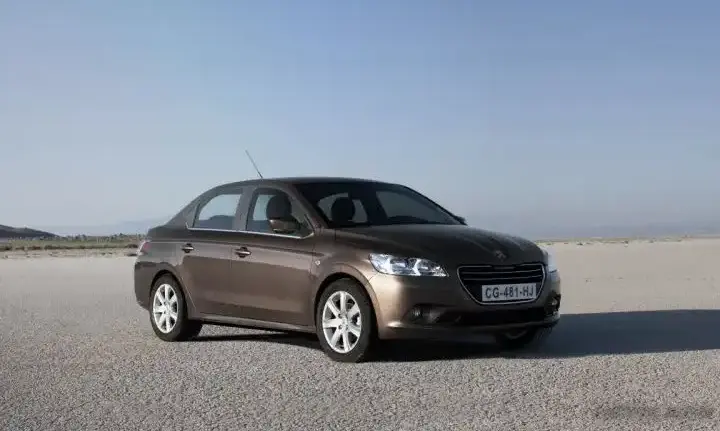
The Peugeot 301 1.6 HDI (92 hp) was a subcompact sedan produced by the French automaker Peugeot between 2012 and 2017. Designed primarily for emerging markets, particularly in North Africa, the Middle East, and South America, the 301 represented Peugeot’s entry into the affordable, practical sedan segment. It was built on the PF1 platform, shared with the Citroën C-Elysée. The 1.6 HDI variant, powered by Peugeot’s diesel engine, aimed to balance fuel efficiency with acceptable performance for everyday driving. This model occupied a mid-range position within the 301 lineup, offering a more economical alternative to the gasoline-powered versions while providing a step up in refinement compared to the base models.
Technical Specifications
| Brand | Peugeot |
| Model | 301 |
| Generation | 301 |
| Type (Engine) | 1.6 HDI (92 Hp) |
| Start of production | 2012 |
| End of production | 2017 |
| Powertrain Architecture | Internal Combustion engine |
| Body type | Sedan |
| Seats | 5 |
| Doors | 4 |
| Fuel consumption (urban) | 4.9 l/100 km (48 US mpg, 57.6 UK mpg, 20.4 km/l) |
| Fuel consumption (extra urban) | 3.7 l/100 km (63.6 US mpg, 76.3 UK mpg, 27 km/l) |
| Fuel consumption (combined) | 4.1 l/100 km (57.4 US mpg, 68.9 UK mpg, 24.4 km/l) |
| Fuel Type | Diesel |
| Acceleration 0 – 100 km/h | 12.4 sec |
| Acceleration 0 – 62 mph | 12.4 sec |
| Acceleration 0 – 60 mph | 11.8 sec |
| Maximum speed | 180 km/h (111.85 mph) |
| Emission standard | Euro 5 |
| Weight-to-power ratio | 11.8 kg/Hp, 84.4 Hp/tonne |
| Weight-to-torque ratio | 4.7 kg/Nm, 211 Nm/tonne |
| Power | 92 Hp @ 4000 rpm |
| Power per litre | 59 Hp/l |
| Torque | 230 Nm @ 1750 rpm (169.64 lb.-ft. @ 1750 rpm) |
| Engine layout | Front, Transverse |
| Engine Model/Code | 9HF DV6DTED |
| Engine displacement | 1560 cm3 (95.2 cu. in.) |
| Number of cylinders | 4 |
| Engine configuration | Inline |
| Number of valves per cylinder | 2 |
| Fuel injection system | Diesel Commonrail |
| Engine aspiration | Turbocharger, Intercooler |
| Engine oil capacity | 3.75 l (3.96 US qt | 3.3 UK qt) |
| Coolant capacity | 6 l (6.34 US qt | 5.28 UK qt) |
| Kerb Weight | 1090 kg (2403.04 lbs) |
| Max. weight | 1549 kg (3414.96 lbs) |
| Max load | 459 kg (1011.92 lbs) |
| Trunk (boot) space – minimum | 506 l (17.87 cu. ft.) |
| Trunk (boot) space – maximum | 1332 l (47.04 cu. ft.) |
| Fuel tank capacity | 50 l (13.21 US gal | 11 UK gal) |
| Length | 4442 mm (174.88 in) |
| Width | 1748 mm (68.82 in) |
| Height | 1466 mm (57.72 in) |
| Wheelbase | 2652 mm (104.41 in) |
| Drivetrain Architecture | The Internal combustion engine (ICE) drives the front wheels of the vehicle. |
| Drive wheel | Front wheel drive |
| Number of gears | 5 gears, manual transmission |
| Assisting systems | ABS (Anti-lock braking system) |
| Steering type | Steering rack and pinion |
Powertrain & Engine Architecture
The heart of the Peugeot 301 1.6 HDI was the DV6DTED engine, a 1.6-liter inline-four cylinder diesel engine. This engine, designated with the code 9HF, was a member of Peugeot/Citroën’s DV (Diesel Variable) engine family. It featured a common rail direct injection system, delivering fuel at high pressure directly into the combustion chamber for improved efficiency and reduced emissions. A turbocharger with an intercooler was employed to boost power output and enhance torque across a wider rev range. The engine utilized a single overhead camshaft (SOHC) design with two valves per cylinder. The 5-speed manual transmission was the standard offering, chosen for its simplicity and cost-effectiveness. The engine’s design prioritized fuel economy and low-end torque, making it well-suited for the demands of urban driving and long-distance journeys on less-than-ideal road surfaces.
Driving Characteristics
The 92 hp output of the 1.6 HDI engine, coupled with the 5-speed manual transmission, provided adequate, though not exhilarating, performance. Acceleration from 0 to 60 mph took approximately 11.8 seconds, and the top speed was around 112 mph. The engine’s strength lay in its readily available torque of 230 Nm (169.64 lb-ft) at a low 1750 rpm. This made it easy to pull away from a standstill and provided sufficient power for overtaking maneuvers, even with a full load of passengers and luggage. The gear ratios were tuned for economy, with taller gearing in the upper gears to minimize engine speed at cruising speeds. Compared to the 1.2-liter gasoline engine offered in the 301, the 1.6 HDI provided significantly more torque and better fuel economy, but at the expense of some refinement and a slightly heavier engine weight. The manual transmission offered a more engaging driving experience than an automatic would have, allowing drivers to fully utilize the engine’s torque band.
Equipment & Trim Levels
The Peugeot 301 1.6 HDI typically came equipped with a reasonable level of standard features, reflecting its position as a mid-range offering. These included power steering, central locking, electric front windows, and an audio system with USB connectivity. Safety features such as ABS (Anti-lock Braking System) were standard. Interior upholstery was typically cloth, with a functional and durable design. Optional extras included air conditioning, alloy wheels, rear parking sensors, and a more advanced audio system. Trim levels varied depending on the market, but generally offered progressively more features and cosmetic enhancements as you moved up the range. The dashboard layout was straightforward and user-friendly, prioritizing practicality over stylistic flair.
Chassis & Braking
The Peugeot 301 utilized a conventional front-wheel-drive chassis with MacPherson strut suspension at the front and a torsion beam axle at the rear. This setup provided a comfortable ride quality, particularly on uneven road surfaces. The torsion beam rear suspension was a cost-effective solution that minimized complexity and weight. Braking was typically accomplished with disc brakes at the front and drum brakes at the rear. ABS was standard, providing enhanced braking control in emergency situations. The steering was a rack and pinion system, offering reasonable precision and feedback. Stabilizer bars were included to reduce body roll during cornering, though the 301 was not designed for sporty handling.
Market Reception & Comparison
The Peugeot 301 1.6 HDI was generally well-received in its target markets, praised for its fuel efficiency, practicality, and affordability. Critics noted that the engine provided a good balance of performance and economy, making it suitable for everyday use. However, some reviewers found the interior to be somewhat basic and lacking in refinement compared to competitors from European brands. Compared to the gasoline-powered 301 variants, the 1.6 HDI offered significantly better fuel economy and more torque, but came at a slightly higher purchase price. Against rivals like the Renault Symbol and the Dacia Logan, the 301 offered a more stylish design and a slightly more refined driving experience, but was often priced higher.
Legacy
The Peugeot 301 1.6 HDI, while not a groundbreaking vehicle, proved to be a reliable and economical option for buyers in emerging markets. The DV6 engine family, in particular, has a reputation for durability and longevity, provided it is properly maintained. On the used car market, the 301 1.6 HDI remains a popular choice for those seeking an affordable and fuel-efficient sedan. Its simple mechanical design and readily available parts make it relatively easy and inexpensive to repair. While it may not offer the latest technology or the most luxurious interior, the 301 1.6 HDI continues to provide a practical and dependable transportation solution.