The Peugeot 304 Coupe represents a stylish and practical offering from the French automaker during the early to mid-1970s. Introduced in 1972, this particular variant, the 1.3 (CO2) with 75 horsepower, was a key player in Peugeot’s strategy to provide a more sporting and elegant alternative within the compact family car segment. Derived from the successful 304 sedan, which itself was an evolution of the 204, the Peugeot 304 Coupe carved out its niche as an accessible and engaging two-door model, primarily catering to European markets. While not widely known or officially imported into the United States, it exemplified European design sensibilities and engineering prowess of its era, offering a blend of comfort, efficiency, and a touch of continental panache.
The 304 series, including its coupe sibling, was instrumental in solidifying Peugeot’s reputation for building robust, comfortable, and well-handling front-wheel-drive vehicles. The Coupe, with its distinctive styling and more focused performance, provided a compelling option for those seeking something beyond the typical sedan, without the expense or complexity of a dedicated sports car. Its production run from 1972 to 1975 saw it compete in a lively European market, showcasing Peugeot’s commitment to diverse body styles and powertrain options for its discerning clientele.
Peugeot 304 Coupe: A French Icon
The Peugeot 304 Coupe occupied a unique space in the European automotive landscape of the early 1970s. It wasn’t a high-performance sports car, but rather a refined and stylish coupe designed for drivers who appreciated a blend of comfort, practicality, and a touch of French flair. Its appeal lay in its ability to offer a more engaging driving experience than a standard sedan, while remaining affordable and easy to live with. The car’s success contributed to Peugeot’s growing reputation as a manufacturer capable of producing well-engineered and aesthetically pleasing vehicles.
Engine & Performance
At the heart of the 1972-1975 Peugeot 304 Coupe 1.3 (CO2) was a naturally aspirated 1.3-liter (1288 cubic centimeters) inline-four gasoline engine, internally designated as the XL3S. This robust powerplant was designed for a balance of reliability, economy, and adequate performance for its segment. Delivering a respectable 75 horsepower, the engine provided the compact coupe with sufficient motivation for daily driving and spirited excursions on European roads.
The XL3S engine, a hallmark of Peugeot’s engineering at the time, featured an overhead camshaft design, which was fairly advanced for a mass-market compact vehicle in the early 1970s. This configuration contributed to smoother operation and better power delivery compared to pushrod designs prevalent in some competing models. As a naturally aspirated unit, it relied solely on atmospheric pressure for air intake, resulting in a linear and predictable power band, making it easy to drive for a wide range of motorists. The powertrain architecture of the Peugeot 304 Coupe was a front-engine, front-wheel-drive (FWD) layout. This was a progressive choice for the era, a design philosophy that Peugeot had embraced with its smaller models. FWD offered several advantages, including improved traction, better packaging efficiency (allowing for a more spacious interior given the car’s compact footprint), and predictable handling characteristics, especially in adverse weather conditions. While specific torque figures are not widely available, the 75 horsepower from the 1.3-liter engine would have been sufficient to propel the lightweight coupe with a decent turn of pace, making it an enjoyable car on winding secondary roads and capable of maintaining highway speeds of the day. The engine’s modest power output also translated to reasonable fuel economy, an important consideration for European buyers facing rising fuel costs. With an engine oil capacity of 4 liters (4.23 US quarts) and a coolant capacity of 5.8 liters (6.13 US quarts), maintenance was straightforward and typical for vehicles of this period, emphasizing reliability and ease of service.
Design & Features
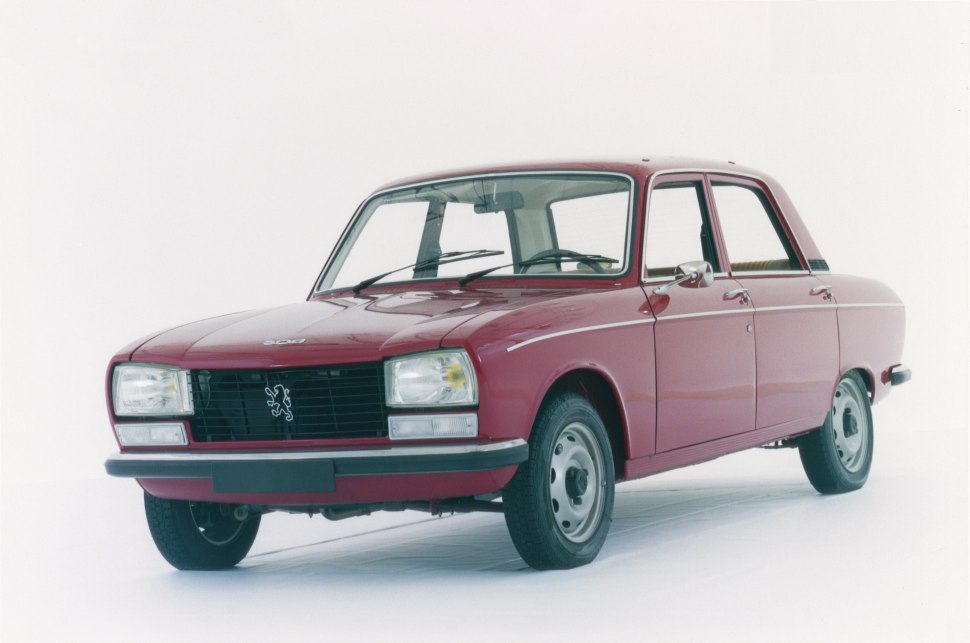
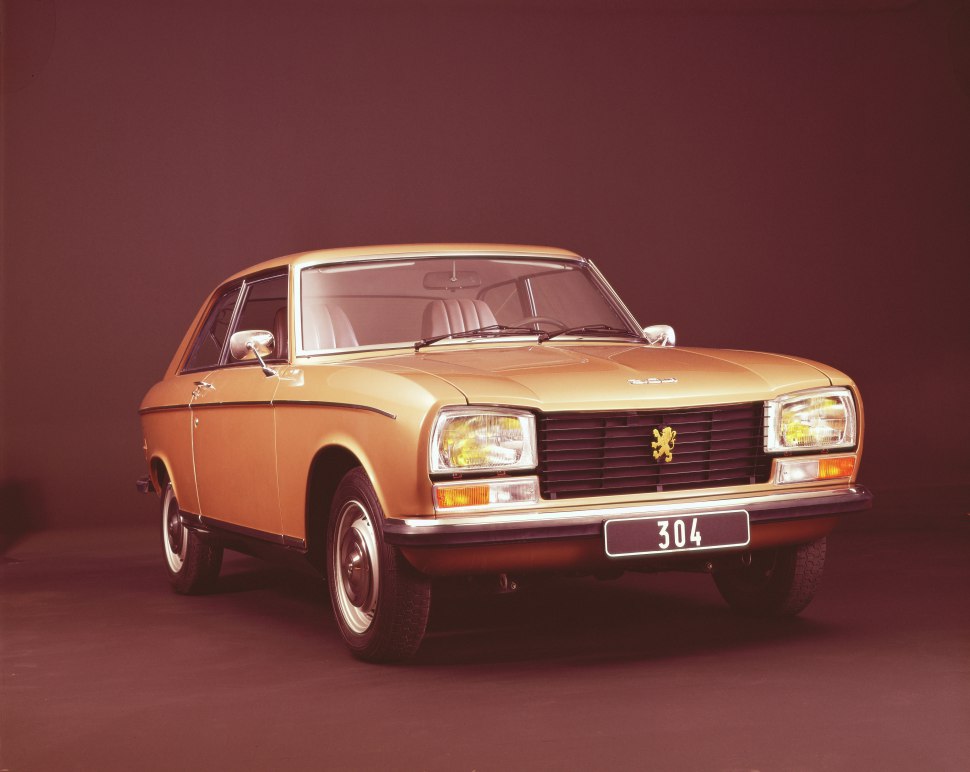
The design of the Peugeot 304 Coupe was one of its most compelling attributes. While sharing its underpinnings with the 304 sedan, the coupe received a distinctly different and more elegant body, often attributed to Peugeot’s in-house design team, though heavily influenced by the contemporary design language of Pininfarina, with whom Peugeot had a long-standing relationship. The result was a sleek, two-door silhouette characterized by clean lines, a lower roofline, and a more raked rear window compared to its four-door sibling.
The body type, a classic coupe, exuded a sense of sportiness and sophistication without being overtly aggressive. Its compact dimensions made it agile in urban environments and easy to park, while still offering a comfortable cabin for two adults, with occasional space for smaller passengers in the rear. The styling was understated yet distinctive, featuring Peugeot’s signature trapezoidal headlights and a subtle grille that integrated seamlessly into the front fascia. Large glass areas ensured excellent visibility, a common trait in European cars of the period, contributing to a light and airy cabin feel. Inside, the Peugeot 304 Coupe offered an interior that prioritized functionality and comfort, hallmarks of Peugeot design. The dashboard layout was logical, with easily accessible controls and clear instrumentation. While features would be considered basic by modern standards, they were well-executed for the 1970s. Expect comfortable, cloth-upholstered seats, a simple heating and ventilation system, and perhaps a basic AM/FM radio. The emphasis was on ergonomic efficiency and a pleasant driving environment, rather than an abundance of luxury features. Safety features for the era included a robust body structure and good all-around visibility. While advanced safety systems like airbags or anti-lock brakes were decades away, Peugeot built its cars with a reputation for solid construction and predictable handling, which contributed to overall driver confidence.
Technical Specifications
| Attribute | Detail |
| Brand | Peugeot |
| Model | 304 |
| Generation | 304 Coupe |
| Type (Engine) | 1.3 (CO2) (75 Hp) |
| Start of Production | 1972 |
| End of Production | 1975 |
| Powertrain Architecture | Internal Combustion engine |
| Body Type | Coupe |
| Fuel Type | Petrol (Gasoline) |
| Power | 75 Hp |
| Engine Model/Code | XL3S |
| Engine Aspiration | Naturally aspirated engine |
| Engine Oil Capacity | 4 liters (4.23 US quarts) |
| Coolant Capacity | 5.8 liters (6.13 US quarts) |
| Drivetrain | Front-wheel drive |
The Peugeot 304 Coupe, particularly the 1.3 (CO2) (75 Hp) variant, played a significant role in Peugeot’s mid-range offerings during the early 1970s. While it never achieved widespread recognition in the United States due to its primary focus on the European market and the lack of official large-scale imports, its impact in Europe was considerable. It solidified Peugeot’s reputation as a manufacturer capable of producing stylish, comfortable, and mechanically sound vehicles across various segments.
In its home market and across Europe, the 304 Coupe was generally well-regarded for its comfortable ride quality, a hallmark of Peugeot engineering, and its surprisingly agile handling for a front-wheel-drive compact car of the era. Its robust build quality and the reliability of its XL3S engine contributed to a positive ownership experience. The car projected an image of understated elegance and practical sportiness, appealing to buyers who desired something more distinctive than a standard sedan without sacrificing everyday usability. Competitors for the Peugeot 304 Coupe in the European market were diverse, ranging from other compact coupes like the Fiat 128 Coupe, Opel Kadett Coupe, and Ford Escort Coupe, to more upscale, smaller offerings from brands like Alfa Romeo or BMW. The 304 Coupe differentiated itself with its distinctive French styling, comfortable interior, and a ride quality that often surpassed its rivals. It was seen as a more refined and mature choice compared to some of its sportier, but perhaps harsher, competitors.
Historically, the 304 series, including the coupe, represents a crucial period for Peugeot as it transitioned into more modern front-wheel-drive platforms. It bridged the gap between the smaller 204 and the larger, more luxurious 504, offering a perfectly sized package for many European families and individuals. The Coupe, with its specific styling and slightly more engaging driving dynamics, added a layer of emotional appeal to the practical 304 lineup. Today, the Peugeot 304 Coupe is appreciated by classic car enthusiasts in Europe for its elegant design, comfortable ride, and its representation of a charming era in French automotive history. It stands as a testament to Peugeot’s ability to blend practicality with style, even in its more compact offerings.