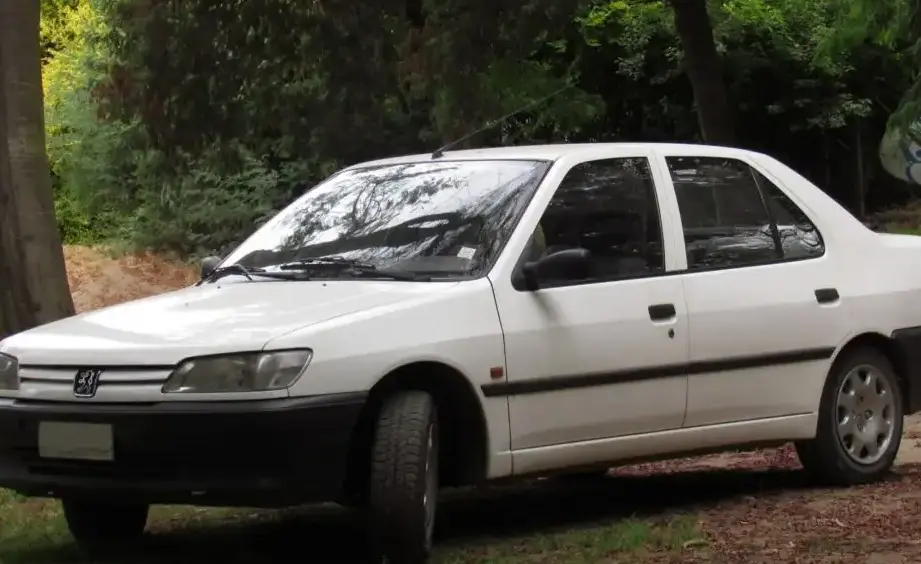
The Peugeot 306 Sedan (7B) 1.9 SLD, produced between 1994 and 1997, represented an entry-level diesel offering within the broader 306 sedan range. Positioned as a fuel-efficient and practical option, it catered to buyers prioritizing economy over outright performance. The 306 sedan itself was a significant model for Peugeot, expanding their presence in the compact family car segment, particularly in European markets. This variant utilized the XUD9A engine family, known for its durability, though offering modest power output. It was a key part of Peugeot’s strategy to offer a diverse range of engines and trim levels to appeal to a wider customer base.
Technical Specifications
| Brand | Peugeot |
| Model | 306 |
| Generation | 306 Sedan (7B) |
| Type (Engine) | 1.9 SLD (68 Hp) |
| Start of production | 1994 |
| End of production | 1997 |
| Powertrain Architecture | Internal Combustion engine |
| Body type | Sedan |
| Seats | 5 |
| Doors | 4 |
| Fuel consumption (combined) | 6 l/100 km (39.2 US mpg, 47.1 UK mpg, 16.7 km/l) |
| Fuel Type | Diesel |
| Acceleration 0 – 100 km/h | 17.5 sec |
| Acceleration 0 – 62 mph | 17.5 sec |
| Acceleration 0 – 60 mph | 16.6 sec |
| Maximum speed | 158 km/h (98.18 mph) |
| Weight-to-power ratio | 16.2 kg/Hp, 61.8 Hp/tonne |
| Weight-to-torque ratio | 9.2 kg/Nm, 109.1 Nm/tonne |
| Power | 68 Hp @ 4600 rpm |
| Power per litre | 35.7 Hp/l |
| Torque | 120 Nm @ 2000 rpm (88.51 lb.-ft. @ 2000 rpm) |
| Engine layout | Front, Transverse |
| Engine Model/Code | DJY XUD9A |
| Engine displacement | 1905 cm3 (116.25 cu. in.) |
| Number of cylinders | 4 |
| Engine configuration | Inline |
| Cylinder Bore | 83 mm (3.27 in.) |
| Piston Stroke | 88 mm (3.46 in.) |
| Compression ratio | 23:1 |
| Number of valves per cylinder | 2 |
| Fuel injection system | Precombustion chamber injection |
| Engine aspiration | Naturally aspirated engine |
| Valvetrain | OHC |
| Engine oil capacity | 4 l (4.23 US qt | 3.52 UK qt) |
| Coolant | 9 l (9.51 US qt | 7.92 UK qt) |
| Kerb Weight | 1100 kg (2425.08 lbs.) |
| Max. weight | 1625 kg (3582.51 lbs.) |
| Max load | 525 kg (1157.43 lbs.) |
| Trunk (boot) space – minimum | 463 l (16.35 cu. ft.) |
| Fuel tank capacity | 60 l (15.85 US gal | 13.2 UK gal) |
| Length | 4232 mm (166.61 in.) |
| Width | 1689 mm (66.5 in.) |
| Height | 1386 mm (54.57 in.) |
| Wheelbase | 2580 mm (101.57 in.) |
| Front track | 1462 mm (57.56 in.) |
| Rear (Back) track | 1435 mm (56.5 in.) |
| Drivetrain Architecture | The Internal combustion engine (ICE) drives the front wheels of the vehicle. |
| Drive wheel | Front wheel drive |
| Number of gears and type of gearbox | 5 gears, manual transmission |
| Front suspension | Wishbone |
| Rear suspension | Trailing arm |
| Front brakes | Ventilated discs |
| Rear brakes | Drum |
| Assisting systems | ABS (Anti-lock braking system) |
| Steering type | Steering rack and pinion |
| Power steering | Hydraulic Steering |
| Tires size | 175/70 R13 |
Powertrain & Engine Architecture
The heart of the 306 Sedan 1.9 SLD is the XUD9A diesel engine, a 1.9-liter inline-four cylinder unit. This engine, designated with engine code DJY, was a mainstay of Peugeot and Citroën vehicles throughout the 1990s. It employed precombustion chamber injection, a system where fuel is injected into a small pre-chamber connected to the main combustion chamber, promoting more complete combustion and reducing noise. The engine features a single overhead camshaft (OHC) operating two valves per cylinder. The XUD9A is known for its robust construction and relative simplicity, contributing to its longevity. The 5-speed manual transmission was the only gearbox option available with this engine, prioritizing fuel efficiency over sporty driving dynamics. The transmission’s gear ratios were geared towards maximizing fuel economy and providing adequate, though not exhilarating, acceleration.
Driving Characteristics
The 1.9 SLD variant of the 306 Sedan offered a decidedly utilitarian driving experience. With only 68 horsepower, acceleration was slow, taking approximately 17.5 seconds to reach 62 mph. The engine’s torque peak of 120 Nm (88.51 lb-ft) at 2000 rpm provided reasonable pulling power for everyday driving, but overtaking required careful planning. The manual transmission, while not particularly sporty, was precise and easy to use. Compared to the more powerful petrol versions of the 306, the 1.9 SLD prioritized fuel economy and low-speed drivability. The suspension, tuned for comfort, provided a reasonably smooth ride, although it could feel somewhat wallowy when pushed hard. The unassisted steering offered a direct feel, but required more effort at low speeds.
Equipment & Trim Levels
The 1.9 SLD trim level was typically the base model in the 306 Sedan range. Standard equipment included basic cloth upholstery, a simple dashboard layout, and manual windows and door locks. Power steering was included, a welcome feature for urban driving. ABS (Anti-lock Braking System) was also a standard safety feature. Optional extras were limited, typically including a radio/cassette player and upgraded interior trim. The interior was functional and durable, prioritizing practicality over luxury. The exterior styling was consistent with other 306 Sedan models, featuring a clean and understated design.
Chassis & Braking
The 306 Sedan 1.9 SLD utilized a front-wheel-drive chassis with a wishbone front suspension and a trailing arm rear suspension. This setup provided a good balance between ride comfort and handling. The front brakes were ventilated discs, offering adequate stopping power, while the rear brakes were drums, a cost-saving measure common in entry-level models. The relatively light weight of the vehicle (approximately 1100 kg or 2425 lbs) helped to offset the engine’s modest power output. Stabilizer bars were fitted to both the front and rear axles to reduce body roll during cornering.
Market Reception & Comparison
The Peugeot 306 Sedan 1.9 SLD was generally well-received as a practical and economical family car. Critics praised its fuel efficiency and durability, but noted its lack of performance. Compared to other engines in the 306 lineup, such as the 1.6-liter petrol engine or the more powerful 2.0-liter petrol variants, the 1.9 SLD offered significantly lower running costs but a less engaging driving experience. Against competitors like the Renault 19 and Citroën ZX, the 306 Sedan 1.9 SLD held its own in terms of fuel economy and reliability. Its relatively low purchase price made it an attractive option for budget-conscious buyers.
Legacy
The XUD9A engine, found in the 306 Sedan 1.9 SLD, has a reputation for exceptional longevity and reliability. Many examples of this engine are still in service today, testament to its robust construction. The 306 Sedan itself remains a popular choice among classic car enthusiasts and those seeking an affordable and practical vehicle. While not a performance icon, the 1.9 SLD variant represents a sensible and dependable option within the 306 range, offering a blend of fuel efficiency, durability, and affordability. In the used car market, these models are typically valued for their simplicity and low running costs, making them a good choice for first-time car owners or those seeking a reliable workhorse.