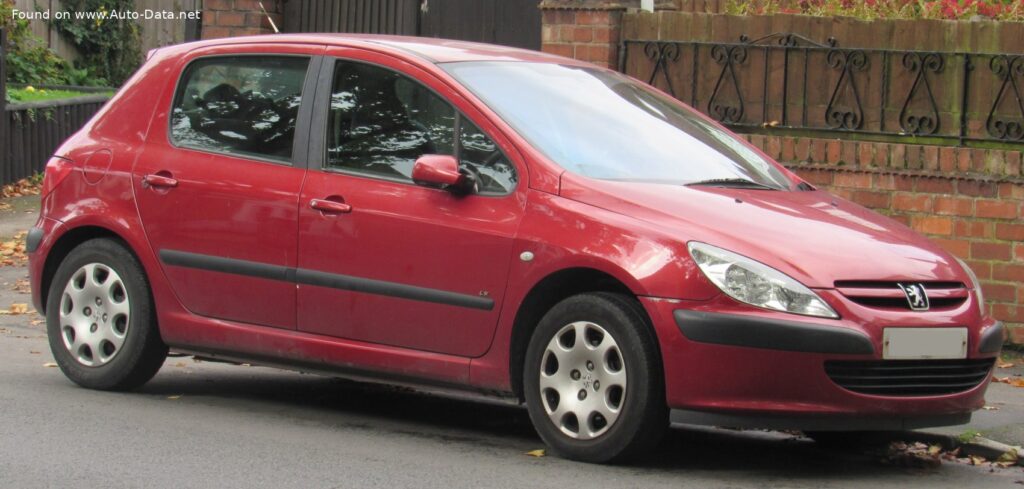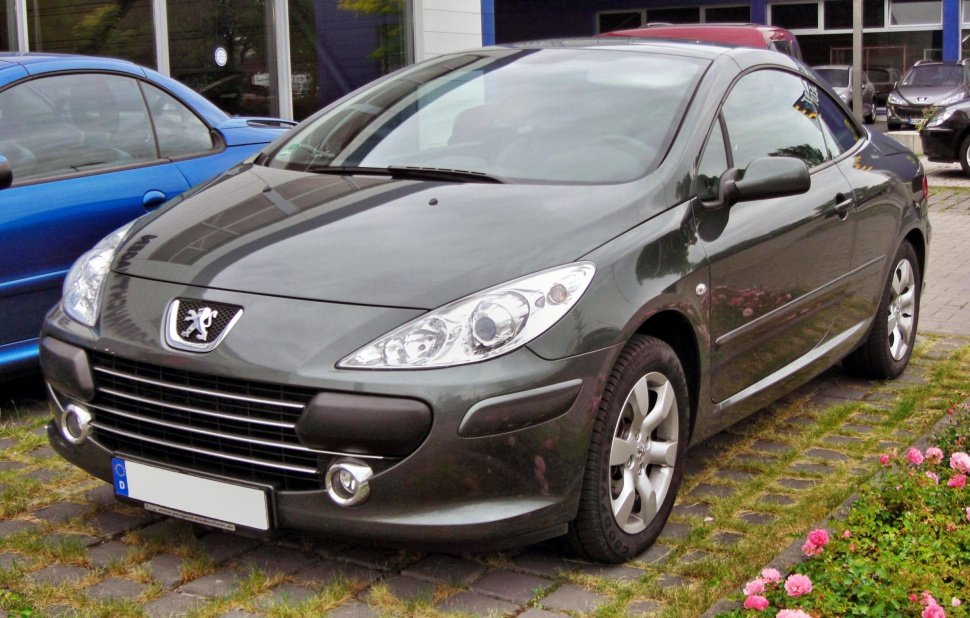
The Peugeot 307 CC (Coupé Cabriolet) represented a significant stride in the European automotive market, popularizing the concept of an affordable, four-seat vehicle with a retractable hardtop. Introduced as part of the broader 307 range, the CC variant carved out its niche by offering the versatility of a secure coupe and the exhilaration of an open-top convertible in one package. The model under scrutiny, the Peugeot 307 CC (facelift 2005) 2.0 HDi (136 Hp), emerged during a crucial refresh for the 307 lineup, enhancing its appeal with updated styling, improved features, and refined powertrain options.
The Peugeot 307 CC (facelift 2005): A Detailed Overview
Produced from 2005 to 2009, this particular iteration with the 2.0 HDi diesel engine was a prime example of Peugeot’s commitment to efficient yet capable powertrains, especially pertinent in the European context where diesel technology held a strong market share due to its fuel economy and torque characteristics. While never officially sold in the United States, the 307 CC exemplified a trend prevalent across the Atlantic, where manufacturers sought to democratize the convertible experience beyond luxury segments. This article will delve into the specifics of this distinctive French offering, exploring its engineering, design, and market impact.
Engine & Performance: The 2.0 HDi Powertrain
At the core of the Peugeot 307 CC (facelift 2005) 2.0 HDi (136 Hp) is a robust and efficient diesel powertrain, specifically the RHR DW10BTED4 engine model. This 2.0-liter (1997 cm3 or 121.86 cu. in.) inline four-cylinder unit is a testament to Peugeot’s expertise in diesel engine development. It features a DOHC (Double Overhead Camshaft) valvetrain with four valves per cylinder, ensuring optimal airflow and combustion efficiency. The engine’s advanced common rail fuel injection system, coupled with a turbocharger and intercooler, allows it to produce a respectable 136 horsepower at 4000 rpm. More impressively for a diesel, it generates a substantial 236.02 lb.-ft. (320 Nm) of torque at a low 2000 rpm, providing strong pulling power and effortless cruising capabilities.
Power is delivered to the front wheels via a precise 6-speed manual transmission, offering engaging control for the driver. This combination allows the 307 CC to accelerate from 0 to 60 mph in a brisk 9.8 seconds, with a top speed of 129.25 mph (208 km/h). These performance figures, while not in the realm of sports cars, are more than adequate for daily driving and highway cruising, especially considering the vehicle’s dual-purpose nature. The diesel engine’s inherent efficiency is a major highlight, with a combined fuel economy rating of 39.2 US mpg (6.0 l/100 km), and an impressive 46.1 US mpg (5.1 l/100 km) on the extra-urban cycle. With CO2 emissions of 159 g/km, the 307 CC met the Euro 4 emission standard, reflecting its relatively clean operation for its era. The engine oil capacity is 5.55 US quarts (5.25 l), and the cooling system holds 8.56 US quarts (8.1 l) of coolant, ensuring proper thermal management for sustained performance.
Design & Features: Style and Versatility
The defining characteristic of the Peugeot 307 CC (facelift 2005) is its innovative Coupe-Cabriolet body style. This 2-door, 4-seat configuration seamlessly transitions between a stylish coupe with a solid roof and an open-air convertible, thanks to its sophisticated retractable hardtop mechanism. The facelift in 2005 brought a refreshed front fascia, including a more aggressive grille and redesigned headlights, aligning it with Peugeot’s evolving design language. Its overall dimensions are compact yet substantial for its segment: 171.65 inches (4360 mm) in length, 69.25 inches (1759 mm) in width, and 56.06 inches (1424 mm) in height. The wheelbase measures 102.68 inches (2608 mm), contributing to a stable ride and reasonable interior space.
Inside, the 307 CC offers seating for four, though the rear seats are more suited for shorter journeys or children. The trunk space is variable, a direct consequence of the retractable hardtop. With the roof up, it offers a respectable 12.36 cu. ft. (350 l) of cargo volume. However, when the roof is stowed, this reduces significantly to 7.2 cu. ft. (204 l). Despite this, the ability to transform from a secure coupe to an open-air cruiser in a matter of seconds was a major draw for consumers.
The chassis of the Peugeot 307 CC features a front, transverse engine layout, driving the front wheels. The suspension setup was tuned for a balance of comfort and handling. Braking is handled by ventilated discs at the front and solid discs at the rear, complemented by an Anti-lock Braking System (ABS) to ensure controlled stopping power. Steering is a rack and pinion system, providing direct and responsive feedback. The vehicle rides on 205/55 R16 V tires, mounted on 16-inch wheel rims, offering a good blend of grip and ride comfort. With a drag coefficient (Cd) of 0.31, the 307 CC was designed to cut through the air efficiently, contributing to both fuel economy and reduced wind noise.
Technical Specifications
| Category | Specification |
| Brand | Peugeot |
| Model | 307 CC (facelift 2005) |
| Engine Type | 2.0 HDi (136 Hp) |
| Production Start | 2005 year |
| Production End | 2009 year |
| Body Type | Coupe – Cabriolet, 2 Doors, 4 Seats |
| Powertrain Architecture | Internal Combustion engine, Front Wheel Drive |
| Fuel Consumption – Urban | 7.7 l/100 km / 30.5 US mpg |
| Fuel Consumption – Extra Urban | 5.1 l/100 km / 46.1 US mpg |
| Fuel Consumption – Combined | 6.0 l/100 km / 39.2 US mpg |
| CO2 Emissions | 159 g/km |
| Fuel Type | Diesel |
| Acceleration 0-60 mph | 9.8 sec |
| Acceleration 0-100 km/h | 10.3 sec |
| Maximum Speed | 208 km/h / 129.25 mph |
| Emission Standard | Euro 4 |
| Weight-to-Power Ratio | 11.6 kg/Hp / 86.2 Hp/tonne |
| Weight-to-Torque Ratio | 4.9 kg/Nm / 202.8 Nm/tonne |
| Power | 136 Hp @ 4000 rpm |
| Power per liter | 68.1 Hp/l |
| Torque | 320 Nm @ 2000 rpm / 236.02 lb.-ft. @ 2000 rpm |
| Engine Layout | Front, Transverse |
| Engine Model/Code | RHR DW10BTED4 |
| Engine Displacement | 1997 cm3 / 121.86 cu. in. |
| Number of Cylinders | 4, Inline |
| Cylinder Bore | 85 mm / 3.35 in. |
| Piston Stroke | 88 mm / 3.46 in. |
| Compression Ratio | 17.6:1 |
| Valves per Cylinder | 4 |
| Fuel Injection System | Diesel Commonrail |
| Engine Aspiration | Turbocharger, Intercooler |
| Valvetrain | DOHC |
| Engine Oil Capacity | 5.25 l / 5.55 US qt |
| Coolant Capacity | 8.1 l / 8.56 US qt |
| Kerb Weight | 1578 kg / 3478.89 lbs. |
| Trunk Space – Minimum | 204 l / 7.2 cu. ft. |
| Trunk Space – Maximum | 350 l / 12.36 cu. ft. |
| Length | 4360 mm / 171.65 in. |
| Width | 1759 mm / 69.25 in. |
| Height | 1424 mm / 56.06 in. |
Legacy & Market Impact
The Peugeot 307 CC played a pivotal role in shaping the European compact car market, particularly in the burgeoning coupe-cabriolet segment. Before its arrival, retractable hardtops were largely the domain of premium and luxury vehicles. Peugeot, along with rivals like Renault, democratized this technology, making the dream of a secure, all-weather convertible accessible to a broader audience. The Peugeot 307 CC (facelift 2005), with its refreshed styling and efficient diesel engine, solidified its position as a highly desirable option in this segment.
Its reputation was built on a combination of stylish design, the practicality of a hardtop, and the economic benefits of its HDi diesel engine. In an era where fuel prices in Europe were consistently higher than in the US, the 2.0 HDi’s impressive fuel economy was a significant selling point. This made the 307 CC an appealing choice for those who desired open-air motoring without sacrificing daily usability or incurring high running costs. While it wasn’t known for razor-sharp handling, its strengths lay in its versatility and comfort, making it a popular choice for touring and leisurely drives. Though it never crossed the Atlantic to US dealerships, the Peugeot 307 CC (facelift 2005) 2.0 HDi (136 Hp) remains a quintessential example of European automotive design and engineering, combining style, practicality, and diesel efficiency in a compelling package for its time.