The Peugeot 307 (facelift 2005) 2.0 HDi (136 Hp) represented a significant chapter in the French automaker’s strategy for the highly competitive European C-segment, or compact car market. While never officially sold in the United States, the 307 was a ubiquitous sight across Europe, known for its practical design, comfortable ride, and a strong lineup of efficient engines, especially its highly regarded HDi diesel variants. The Peugeot 307 (facelift 2005) with the 2.0 HDi (136 Hp) engine was a particularly compelling offering, blending robust performance with impressive fuel economy, making it a popular choice for both private buyers and fleets in its primary markets from 2005 to 2008. This generation of the 307 aimed to build upon the success of the original model, which had won the prestigious European Car of the Year award in 2002, by refining its aesthetics, improving its interior quality, and updating its powertrain options to meet evolving market demands and emission standards.
Peugeot 307 (facelift 2005): A European Compact Car
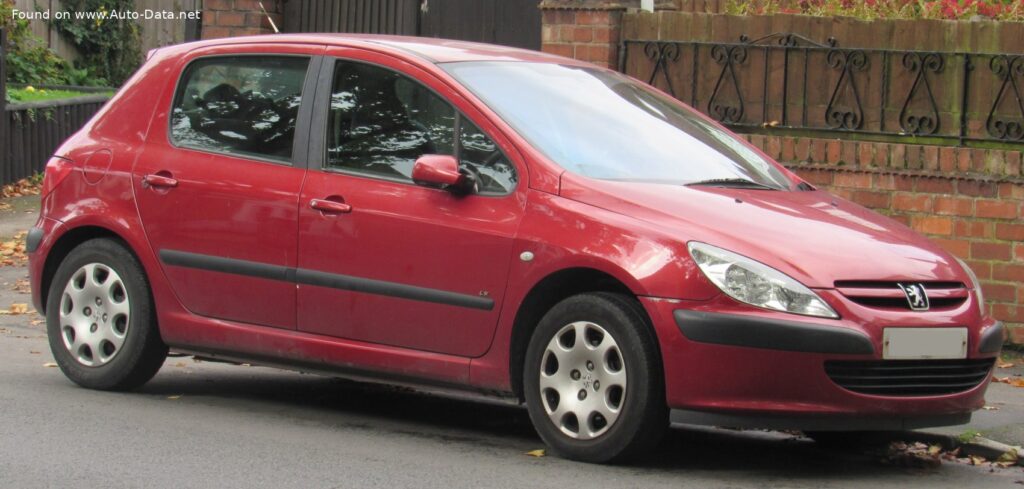
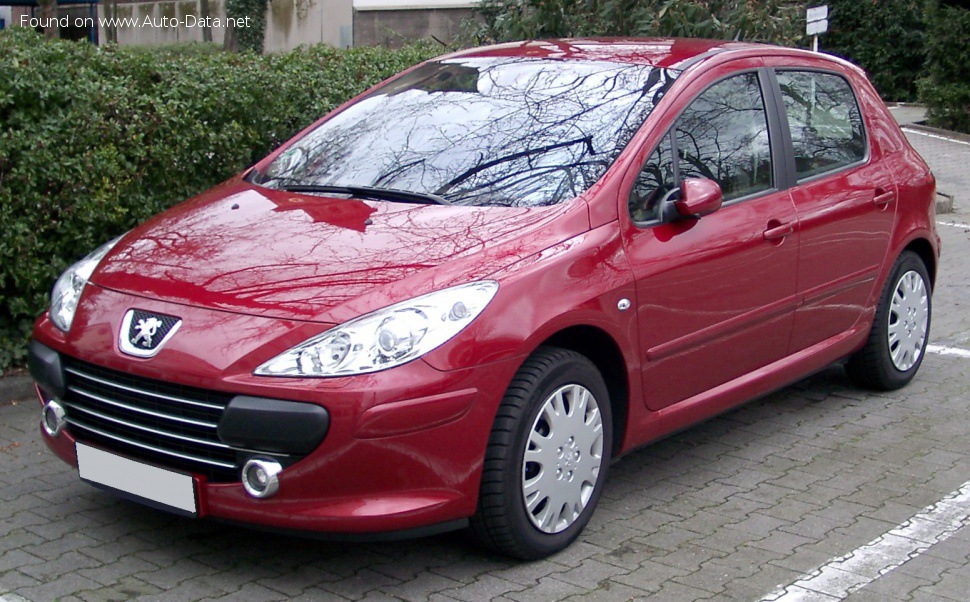
The 2005 facelift brought a refreshed front fascia, including redesigned headlights and a larger grille that aligned with Peugeot’s contemporary design language. Subtle changes to the rear lights and interior trim were also part of the update, aiming to keep the 307 competitive against formidable rivals such as the Volkswagen Golf, Ford Focus, and Opel Astra. The focus keyword, Peugeot 307 (facelift 2005), specifically refers to this updated iteration, highlighting the enhancements made to a model that was already a strong contender in its class. The 2.0 HDi (136 Hp) variant stood out as a performance-oriented yet economical choice, embodying Peugeot’s expertise in diesel engine technology.
Engine & Performance: The Robust 2.0 HDi Powertrain
At the heart of the Peugeot 307 (facelift 2005) 2.0 HDi (136 Hp) lies a sophisticated direct-injection common rail diesel engine, code-named RHR DW10BTED4. This 2.0-liter (1997 cm³ or 121.86 cu. in.) inline-four cylinder engine was a testament to Peugeot’s commitment to advanced diesel technology, offering a potent blend of power and efficiency. It produced a respectable 136 horsepower at 4000 rpm, translating to a specific output of 68.1 horsepower per liter, which was competitive for a diesel engine of its era. More significantly for real-world driving, the engine delivered a substantial 236.02 lb.-ft. (320 Nm) of torque at a low 2000 rpm. This ample torque available at low engine speeds provided excellent drivability, making the 307 feel responsive and effortless in daily commuting and highway cruising.
The engine’s configuration included 4 valves per cylinder with a DOHC (Double Overhead Camshaft) valvetrain, ensuring efficient gas flow. A critical component of its performance and efficiency was the turbocharger with an intercooler, which boosted air intake and optimized combustion. The high compression ratio of 17.6:1 further enhanced the engine’s thermal efficiency. Mated to a precise 6-speed manual transmission, this powertrain channeled its output to the front wheels, a typical layout for compact cars. The performance figures were noteworthy for a diesel hatchback: the 307 2.0 HDi could accelerate from 0 to 60 mph in a brisk 9.3 seconds, and reach a maximum speed of 125.52 mph (202 km/h).
Beyond performance, fuel economy was a major highlight. The 2.0 HDi (136 Hp) achieved an impressive combined fuel consumption of 43.6 US mpg (5.4 l/100 km), with even better figures on the highway at 52.3 US mpg (4.5 l/100 km). Urban consumption stood at 33.1 US mpg (7.1 l/100 km). These figures, combined with CO2 emissions of 142 g/km, allowed the vehicle to meet the Euro 4 emission standard, demonstrating its environmental responsibility for the mid-2000s. The 60-liter (15.85 US gallon) fuel tank provided a substantial cruising range, a crucial factor for European drivers who often covered long distances.
Design & Features: Practicality and European Style
The Peugeot 307 (facelift 2005) retained the “tall boy” design philosophy of its predecessor, characterized by its relatively high roofline and generous glass area. This design choice, while perhaps less overtly sporty than some rivals, paid dividends in terms of interior space and outward visibility. The vehicle was offered in both 3-door and 5-door hatchback configurations, providing flexibility for different buyer preferences. With a length of 165.83 inches (4212 mm), a width of 68.74 inches (1746 mm), and a height of 59.45 inches (1510 mm), the 307 occupied a compact footprint, ideal for navigating congested European city streets, yet offered a surprisingly spacious cabin. The 102.68-inch (2608 mm) wheelbase contributed to a stable ride and good interior room for five occupants.
Inside, the facelift brought subtle upgrades to material quality and trim, aiming for a more premium feel. The elevated driving position, a characteristic of the “tall boy” design, offered a commanding view of the road. Practicality was a strong suit, with a minimum trunk (boot) space of 12.04 cu. ft. (341 liters), which could be expanded significantly to 46.9 cu. ft. (1328 liters) by folding down the rear seats, making it highly versatile for carrying cargo.
In terms of safety, the 307 facelift came equipped with standard features like ABS (Anti-lock Braking System), which was crucial for maintaining control under hard braking. The braking system itself consisted of ventilated discs at the front and solid discs at the rear, providing reliable stopping power. The steering system utilized a rack and pinion setup, offering a direct and predictable feel. The car rode on 205/55 R16 V tires, mounted on 16-inch wheel rims, providing a good balance of grip and ride comfort. The overall design was understated yet modern for its time, prioritizing functionality and everyday usability, which resonated well with its target audience in Europe.
Technical Specifications: Peugeot 307 (facelift 2005) 2.0 HDi (136 Hp)
| Category | Specification |
| General Information | |
| Brand | Peugeot |
| Model | 307 |
| Generation | 307 (facelift 2005) |
| Type (Engine) | 2.0 HDi (136 Hp) |
| Start of Production | 2005 year |
| End of Production | 2008 year |
| Powertrain Architecture | Internal Combustion Engine |
| Body Type | Hatchback |
| Seats | 5 |
| Doors | 3-5 |
| Performance Specifications | |
| Fuel Consumption (Urban) | 7.1 l/100 km / 33.1 US mpg |
| Fuel Consumption (Extra Urban) | 4.5 l/100 km / 52.3 US mpg |
| Fuel Consumption (Combined) | 5.4 l/100 km / 43.6 US mpg |
| CO2 Emissions | 142 g/km |
| Fuel Type | Diesel |
| Acceleration 0 – 60 mph | 9.3 sec |
| Acceleration 0 – 100 km/h | 9.8 sec |
| Maximum Speed | 202 km/h / 125.52 mph |
| Emission Standard | Euro 4 |
| Weight-to-Power Ratio | 9.9 kg/Hp / 100.6 Hp/tonne |
| Weight-to-Torque Ratio | 4.2 kg/Nm / 236.7 Nm/tonne |
| Engine Specifications | |
| Power | 136 Hp @ 4000 rpm |
| Power per Liter | 68.1 Hp/l |
| Torque | 320 Nm @ 2000 rpm / 236.02 lb.-ft. @ 2000 rpm |
| Engine Layout | Front, Transverse |
| Engine Model/Code | RHR DW10BTED4 |
| Engine Displacement | 1997 cm³ / 121.86 cu. in. |
| Number of Cylinders | 4 |
| Engine Configuration | Inline |
| Cylinder Bore | 85 mm / 3.35 in. |
| Piston Stroke | 88 mm / 3.46 in. |
| Compression Ratio | 17.6:1 |
| Valves per Cylinder | 4 |
| Fuel Injection System | Diesel Commonrail |
| Engine Aspiration | Turbocharger, Intercooler |
| Valvetrain | DOHC |
| Engine Oil Capacity | 5.25 l / 5.55 US qt |
| Coolant Capacity | 8.1 l / 8.56 US qt |
| Space, Volume and Weights | |
| Kerb Weight | 1352 kg / 2980.65 lbs. |
| Max. Weight | 1850 kg / 4078.55 lbs. |
| Max Load | 498 kg / 1097.9 lbs. |
| Trunk (boot) Space – Minimum | 341 l / 12.04 cu. ft. |
| Trunk (boot) Space – Maximum | 1328 l / 46.9 cu. ft. |
| Fuel Tank Capacity | 60 l / 15.85 US gal |
| Permitted Trailer Load with Brakes (12%) | 1600 kg / 3527.4 lbs. |
| Permitted Trailer Load without Brakes | 710 kg / 1565.28 lbs. |
| Dimensions | |
| Length | 4212 mm / 165.83 in. |
| Width | 1746 mm / 68.74 in. |
| Height | 1510 mm / 59.45 in. |
| Wheelbase | 2608 mm / 102.68 in. |
| Front Track | 1505 mm / 59.25 in. |
| Rear (Back) Track | 1500 mm / 59.06 in. |
| Ride Height (Ground Clearance) | 120 mm / 4.72 in. |
| Drag Coefficient (Cd) | 0.31 |
| Minimum Turning Circle (Diameter) | 11.13 m / 36.52 ft. |
| Drivetrain, Brakes and Suspension | |
| Drivetrain Architecture | The Internal combustion engine (ICE) drives the front wheels of the vehicle. |
| Drive Wheel | Front Wheel Drive |
| Number of Gears and Type of Gearbox | 6 gears, Manual Transmission |
| Front Brakes | Ventilated Discs |
| Rear Brakes | Disc |
| Assisting Systems | ABS (Anti-lock Braking System) |
| Steering Type | Steering Rack and Pinion |
| Tires Size | 205/55 R16 V |
| Wheel Rims Size | 16 inch |
Legacy & Market Impact: The Peugeot 307 in its European Context
The Peugeot 307, especially in its facelifted 2005 iteration with the potent 2.0 HDi engine, carved out a significant niche in the highly competitive European compact car market. While not a global model like some of its Japanese or German rivals, its success in Europe was undeniable. The original 307 had already set a high bar by winning the European Car of the Year in 2002, a testament to its innovative design and strong value proposition. The facelift aimed to maintain this momentum, addressing some early criticisms and refining the package.
In its primary markets, the 307 competed fiercely against segment leaders such as the Volkswagen Golf, Ford Focus, Opel Astra (Vauxhall Astra in the UK), Renault Mégane, and Citroën C4 (its platform-mate). The Peugeot 307 (facelift 2005) distinguished itself through its distinctive “tall boy” architecture, which offered superior interior space and visibility compared to many of its rivals, appealing to families and those prioritizing practicality. Its comfortable ride quality, a hallmark of French cars, also contributed to its appeal, making it an excellent choice for long-distance cruising on European highways.
The 2.0 HDi (136 Hp) engine was a critical factor in its market success. At a time when diesel engines were gaining immense popularity in Europe due to their superior fuel economy and torque characteristics, this particular powertrain offered a compelling blend of performance and efficiency. It allowed the 307 to offer spirited acceleration while keeping running costs low, a major consideration for European consumers facing high fuel prices. The compliance with Euro 4 emissions standards also ensured its relevance in an increasingly environmentally conscious market.
The 307’s legacy is one of a successful, practical, and comfortable compact car that effectively utilized Peugeot’s strengths in diesel engine technology and distinctive design. While it faced stiff competition, its unique combination of attributes ensured its popularity throughout its production run. It laid the groundwork for its successor, the Peugeot 308, carrying forward many of the lessons learned regarding design, powertrain, and market positioning. Today, the 307 remains a common sight on European roads, a testament to its durability and the enduring appeal of its practical design and efficient diesel powertrains. For automotive enthusiasts and experts, it represents a key moment in Peugeot’s modern history, showcasing their ability to deliver a strong contender in one of the world’s most demanding automotive segments.