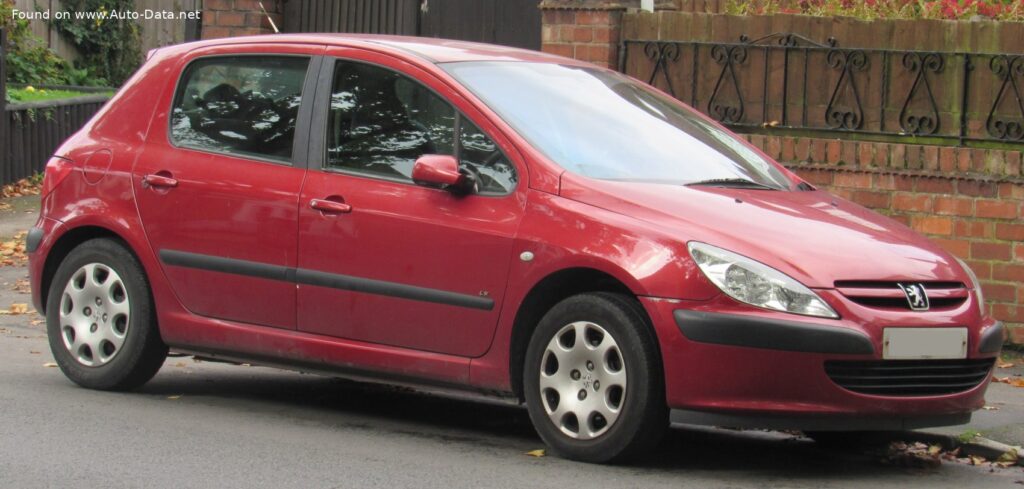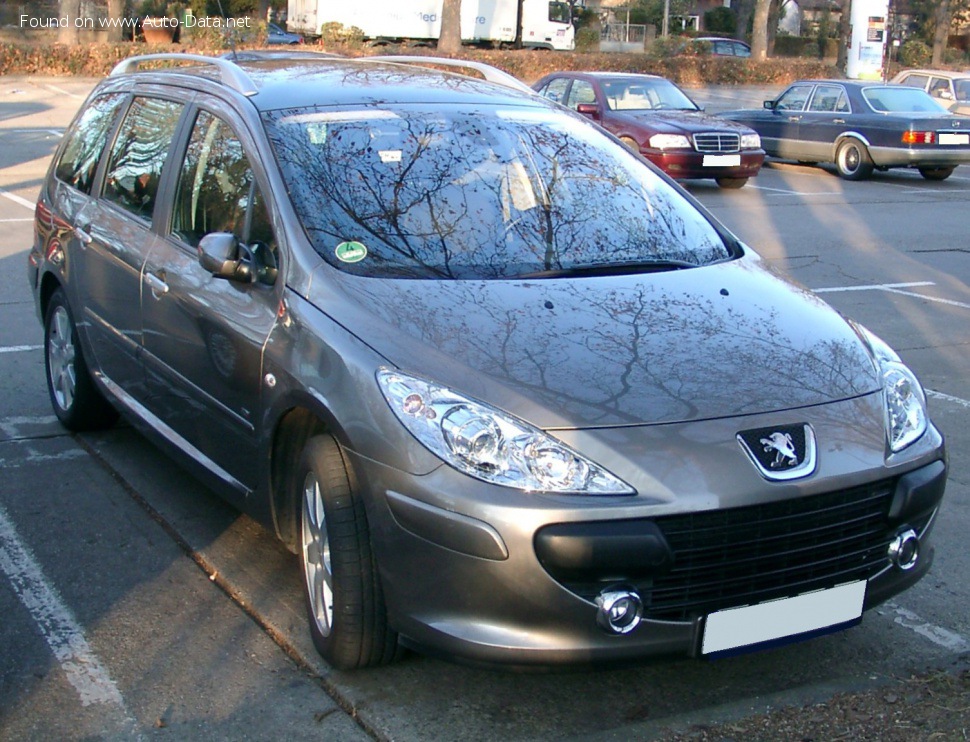
The Peugeot 307 Station Wagon (facelift 2005) represents a significant offering from the French automaker, designed to cater to the demands of the European family car market. This iteration of the 307, equipped with the efficient 1.6 HDi (90 Hp) diesel engine, was a refreshed version of a highly successful model, aiming to enhance its appeal in the competitive C-segment. While never officially sold in the United States, the 307 Station Wagon played a vital role in Peugeot’s European lineup, providing a versatile and economical vehicle with ample cargo space. It exemplifies Peugeot’s commitment to diesel technology and functional design during a period of strong market presence.
The Peugeot 307: A European Family Vehicle
Introduced in 2001, the 307 generation quickly gained recognition for its spacious cabin and distinctive styling, often described as a blend between a hatchback and a minivan. The 2005 facelift brought a more assertive front fascia, revised lighting, and subtle interior improvements, aligning the model with Peugeot’s evolving design language. The station wagon variant, known as an “estate” in Europe, was particularly popular due to its extended wheelbase and generous load capacity, making it a staple for families and those requiring a practical vehicle for long-distance travel.
Engine & Performance: The 1.6 HDi Powertrain
The heart of this Peugeot 307 Station Wagon (facelift 2005) is the 1.6-liter HDi (High-pressure Direct injection) diesel engine, showcasing Peugeot’s expertise in diesel technology. Designated as the 9HX DV6ATED4, this inline four-cylinder engine boasts a displacement of 1560 cubic centimeters (95.2 cubic inches), producing 90 horsepower at 4000 revolutions per minute. However, its defining characteristic is its torque output of 215 Newton meters (158.58 lb.-ft.) available from a low 1750 rpm. This provides responsive performance in everyday driving, particularly in urban environments and when fully loaded.
The engine incorporates a common rail fuel injection system, a turbocharger, and an intercooler, optimizing combustion and power delivery. With a compression ratio of 17.6:1 and four valves per cylinder, the 1.6 HDi balances performance and fuel economy. Paired with a 5-speed manual transmission and front-wheel drive, the 307 Station Wagon achieves a combined fuel economy of 5.1 liters per 100 kilometers (46.1 US miles per gallon). Urban driving yields 37.3 US mpg, while extra-urban cycles reach 52.3 US mpg. These figures, combined with CO2 emissions of 134 g/km and Euro 4 compliance, made it an environmentally conscious and cost-effective choice for European consumers.
Performance figures align with its family-oriented purpose. Acceleration from 0 to 60 mph takes 12.6 seconds, with a maximum speed of 108.12 mph. The weight-to-power ratio of 15.5 kg/Hp (64.6 Hp/tonne) and weight-to-torque ratio of 6.5 kg/Nm (154.2 Nm/tonne) indicate a well-balanced setup. The engine requires 3.8 liters of oil and 6.5 liters of coolant, highlighting its practical and maintainable design.
Design & Features: Practicality and European Aesthetics
The Peugeot 307 Station Wagon (facelift 2005) prioritizes maximizing interior space and functionality within a compact footprint. As a 5-door station wagon (estate), it seats five occupants and offers a versatile cargo area. The facelift introduced a more contemporary aesthetic, featuring a larger grille with the updated Peugeot lion badge, redesigned headlamps, and a smoother front end.
Measuring 174.33 inches in length, 69.37 inches in width, and between 61.42 and 62.2 inches in height, the 307 Station Wagon provides substantial interior volume. The 106.61-inch wheelbase enhances rear passenger legroom and ride comfort. The vehicle’s practicality is further emphasized by its generous cargo capacity, accessible through a wide rear hatch. The front and rear tracks measure 59.25 and 59.45 inches respectively, contributing to a stable ride.
The 2005 307 Station Wagon, while not luxurious, offers a comfortable and safe environment. Standard safety features included an Anti-lock Braking System (ABS) for maintaining steering control during emergency braking. The braking system utilizes ventilated discs at the front and solid discs at the rear. The suspension features a spring strut front and a torsion beam rear, balancing comfort and handling. Steering is rack and pinion, and the car rides on 195/65 R15 tires mounted on 15-inch wheels.
Technical Specifications: Peugeot 307 Station Wagon (facelift 2005) 1.6 HDi (90 Hp)
| Category | Specification |
| Brand | Peugeot |
| Model | 307 |
| Generation | 307 Station Wagon (facelift 2005) |
| Engine Type | 1.6 HDi (90 Hp) |
| Production Start | 2005 |
| Production End | 2008 |
| Powertrain Architecture | Internal Combustion Engine |
| Body Type | Station Wagon (Estate) |
| Seats | 5 |
| Doors | 5 |
| Fuel Consumption (Urban) | 6.3 l/100 km (37.3 US mpg) |
| Fuel Consumption (Extra Urban) | 4.5 l/100 km (52.3 US mpg) |
| Fuel Consumption (Combined) | 5.1 l/100 km (46.1 US mpg) |
| CO2 Emissions | 134 g/km |
| Fuel Type | Diesel |
| Acceleration 0-60 mph | 12.6 sec |
| Maximum Speed | 174 km/h (108.12 mph) |
| Emission Standard | Euro 4 |
| Weight-to-Power Ratio | 15.5 kg/Hp (64.6 Hp/tonne) |
| Weight-to-Torque Ratio | 6.5 kg/Nm (154.2 Nm/tonne) |
| Power | 90 Hp @ 4000 rpm |
| Torque | 215 Nm @ 1750 rpm (158.58 lb.-ft. @ 1750 rpm) |
| Engine Displacement | 1560 cm³ (95.2 cu. in.) |
| Kerb Weight | 1394 kg (3073.24 lbs.) |
| Length | 4428 mm (174.33 in.) |
Legacy and Market Impact in Europe
The Peugeot 307 Station Wagon (facelift 2005), particularly with the 1.6 HDi engine, established a strong presence in the European market. Its reputation was built on practicality, fuel efficiency, and a comfortable ride, making it a popular choice for families and businesses. Peugeot’s HDi technology was highly regarded for its refinement and economy. The 307 competed with models like the Volkswagen Golf Variant, Ford Focus Wagon, Opel Astra Caravan, and Renault Mégane Estate, distinguishing itself with its spacious interior and blend of hatchback and MPV characteristics.
The 307 range was a commercial success for Peugeot, contributing significantly to its European sales. The 2005 facelift helped maintain its competitiveness until its replacement by the 308. The 1.6 HDi engine became a cornerstone of Peugeot’s powertrain offerings, proving its reliability and efficiency. While it wasn’t sold in the US, its legacy in Europe remains as a dependable and efficient family vehicle.