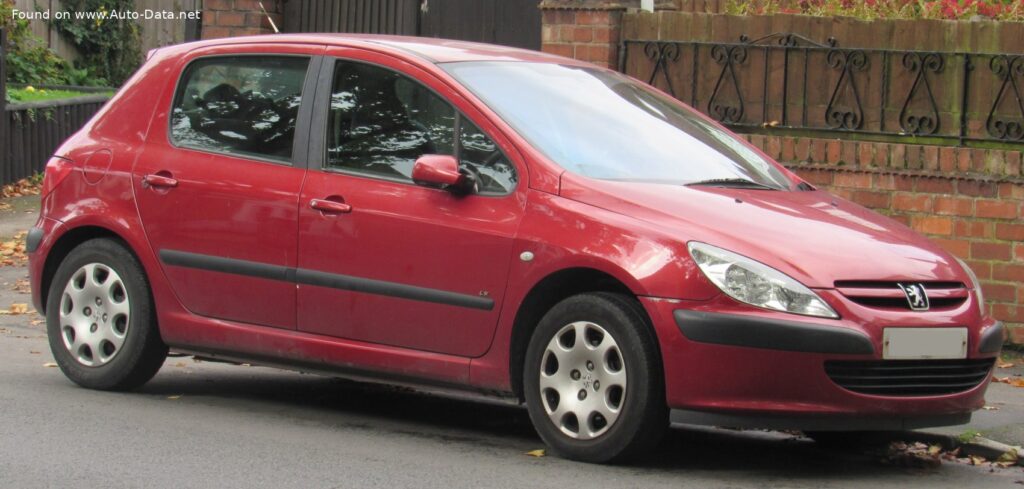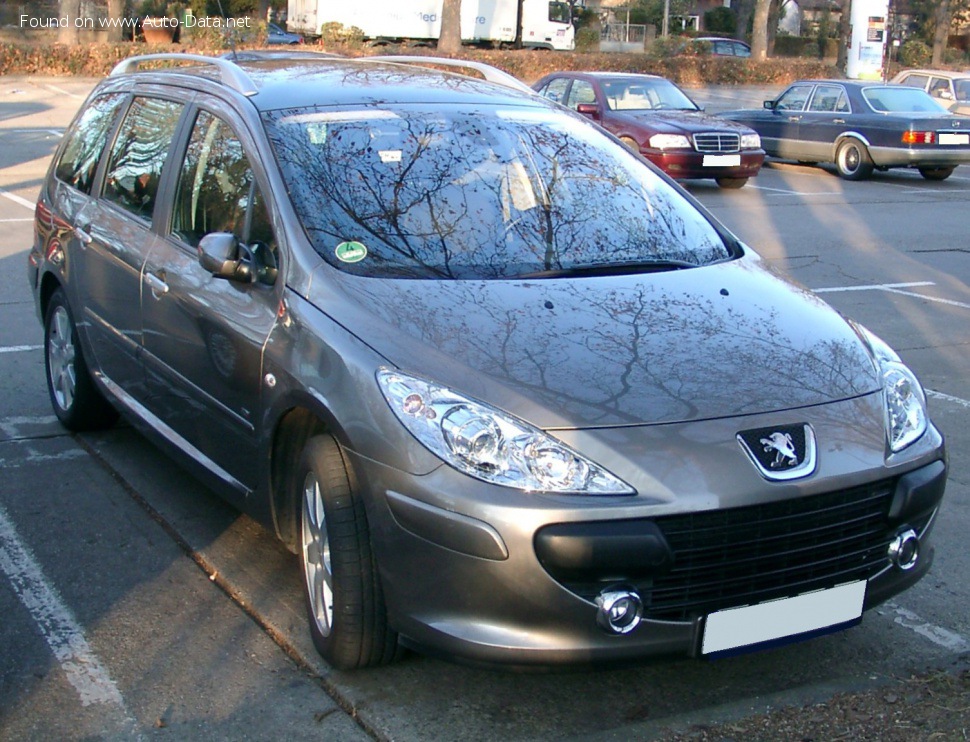
The Peugeot 307 Station Wagon (facelift 2005) 2.0 HDi (136 Hp) Automatic represents a significant offering from Peugeot within the highly competitive European C-segment. While never officially sold in the United States, this versatile vehicle carved a substantial niche for itself in Europe, particularly as a practical and stylish option for families and businesses. This article details the 2005 facelifted version of the 307 Station Wagon, equipped with the 2.0 HDi (136 Hp) diesel engine and an automatic transmission, highlighting its features, performance, and impact on the European automotive market.
Peugeot 307 Station Wagon: A European Family Vehicle
The Peugeot 307, launched in 2001, was designed to offer a compelling alternative to established rivals like the Ford Focus and Volkswagen Golf. The station wagon variant, known as an “estate” in Europe, expanded upon the 307’s appeal by adding increased cargo capacity and versatility. The 2005 facelift aimed to refresh the model, enhancing its aesthetics and refining its powertrain options to maintain competitiveness. The 2.0 HDi engine, coupled with an automatic transmission, proved to be a popular choice, offering a balance of power, efficiency, and driving comfort for European consumers.
Engine & Performance: The HDi Diesel
The Peugeot 307 Station Wagon (facelift 2005) 2.0 HDi Automatic is powered by a 2.0-liter (121.86 cu. in.) inline four-cylinder diesel engine, designated the RHR DW10BTED4. This engine utilizes common rail direct injection, a turbocharger, and an intercooler to optimize performance and fuel economy. It produces 136 horsepower at 4000 rpm and a substantial 236.02 lb.-ft. of torque at 2000 rpm. This torque output is particularly beneficial for hauling loads and providing responsive acceleration, especially when paired with the automatic transmission.
The engine is mated to a 6-speed automatic transmission, delivering smooth gear changes and enhancing driving convenience. Fuel economy figures are impressive for its class and era, achieving approximately 24.8 US mpg in urban driving, 43.6 US mpg on extra-urban cycles, and a combined average of 34.1 US mpg. The engine meets Euro 4 emission standards, with CO2 emissions rated at 183 g/km. The engine’s bore measures 3.35 inches, and its stroke is 3.46 inches, with four valves per cylinder, contributing to efficient combustion. It requires 5.55 US quarts of engine oil and 8.56 US quarts of coolant. The vehicle’s weight-to-power ratio is 11.8 kg/Hp (84.7 Hp/tonne), and the weight-to-torque ratio is 5 kg/Nm (199.3 Nm/tonne).
Design & Features: Practicality and Style
The 307 Station Wagon features a distinctive “tall” body design, maximizing interior space and visibility. The 2005 facelift included subtle styling updates, such as a redesigned front bumper, a larger grille, and updated headlamps, aligning the vehicle with Peugeot’s contemporary design language. The five-door, five-seat configuration provides ample passenger space and a generous cargo area.
The vehicle measures 174.33 inches in length, 69.37 inches in width, and between 61.42 and 62.2 inches in height. Its 106.61-inch wheelbase contributes to a comfortable ride. The curb weight is 3540.62 lbs. A key feature is the flexible cargo area, offering 18.36 cu. ft. of space with the rear seats up and expanding to 78.08 cu. ft. with the seats folded down. This versatility makes it suitable for a wide range of cargo needs. The 15.85 US gallon fuel tank, combined with the engine’s efficiency, provides a substantial driving range. Safety features include ventilated disc brakes at the front, disc brakes at the rear, and an Anti-lock Braking System (ABS). The rack and pinion steering system delivers responsive handling.
Technical Specifications
| Category | Specification |
| Brand | Peugeot |
| Model | 307 |
| Generation | 307 Station Wagon (facelift 2005) |
| Type (Engine) | 2.0 HDi (136 Hp) Automatic |
| Start of Production | 2005 |
| End of Production | 2008 |
| Powertrain Architecture | Internal Combustion engine |
| Body type | Station wagon (estate) |
| Seats | 5 |
| Doors | 5 |
| Fuel Consumption (Urban) | 24.8 US mpg (9.5 l/100 km) |
| Fuel Consumption (Extra Urban) | 43.6 US mpg (5.4 l/100 km) |
| Fuel Consumption (Combined) | 34.1 US mpg (6.9 l/100 km) |
| CO2 Emissions | 183 g/km |
| Fuel Type | Diesel |
| Emission Standard | Euro 4 |
| Weight-to-Power Ratio | 11.8 kg/Hp (84.7 Hp/tonne) |
| Weight-to-Torque Ratio | 5 kg/Nm (199.3 Nm/tonne) |
| Power | 136 Hp @ 4000 rpm |
| Power per liter | 68.1 Hp/l |
| Torque | 236.02 lb.-ft. @ 2000 rpm (320 Nm @ 2000 rpm) |
| Engine Layout | Front, Transverse |
| Engine Model/Code | RHR DW10BTED4 |
| Engine Displacement | 2.0 Liters (121.86 cu. in.) |
| Number of Cylinders | 4 |
| Engine Configuration | Inline |
| Cylinder Bore | 3.35 in. (85 mm) |
| Piston Stroke | 3.46 in. (88 mm) |
| Number of Valves per Cylinder | 4 |
| Fuel Injection System | Diesel Commonrail |
| Engine Aspiration | Turbocharger, Intercooler |
| Engine Oil Capacity | 5.55 US qt (5.25 l) |
| Coolant Capacity | 8.56 US qt (8.1 l) |
| Kerb Weight | 3540.62 lbs. (1606 kg) |
| Max. Weight | 4662.78 lbs. (2115 kg) |
| Max Load | 1122.15 lbs. (509 kg) |
| Trunk (boot) Space – Minimum | 18.36 cu. ft. (520 l) |
| Trunk (boot) Space – Maximum | 78.08 cu. ft. (2211 l) |
| Fuel Tank Capacity | 15.85 US gal (60 l) |
| Permitted Trailer Load with Brakes (12%) | 3306.93 lbs. (1500 kg) |
| Permitted Trailer Load without Brakes | 1653.47 lbs. (750 kg) |
| Length | 174.33 in. (4428 mm) |
| Width | 69.37 in. (1762 mm) |
| Height | 61.42 – 62.2 in. (1560-1580 mm) |
| Wheelbase | 106.61 in. (2708 mm) |
| Front Track | 59.25 in. (1505 mm) |
| Rear (Back) Track | 59.45 in. (1510 mm) |
| Front Overhang | 34.96 in. (888 mm) |
| Rear Overhang | 32.76 in. (832 mm) |
| Drivetrain Architecture | The Internal combustion engine (ICE) drives the front wheels of the vehicle. |
| Drive Wheel | Front wheel drive |
| Number of Gears and Type of Gearbox | 6 gears, automatic transmission |
| Front Brakes | Ventilated discs |
| Rear Brakes | Disc |
| Assisting Systems | ABS (Anti-lock braking system) |
| Steering Type | Steering rack and pinion |
Legacy and Market Impact in Europe
The Peugeot 307 Station Wagon (facelift 2005) 2.0 HDi Automatic was a successful vehicle in the European market, building on the original 307’s success, which won the European Car of the Year award in 2002. The station wagon variant appealed to families and businesses seeking practicality, versatility, and fuel efficiency. It competed with models like the Ford Focus Wagon, Opel Astra Caravan, Renault Mégane Estate, and Volkswagen Golf Variant. The 307’s distinctive design, spacious interior, and efficient diesel engine contributed to its popularity. While not available in the US, it remains a testament to European automotive engineering focused on meeting the specific needs of its target market.