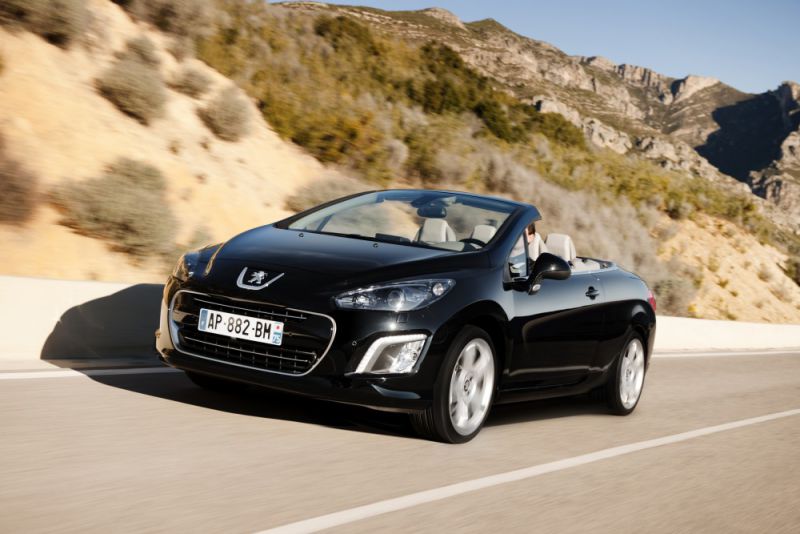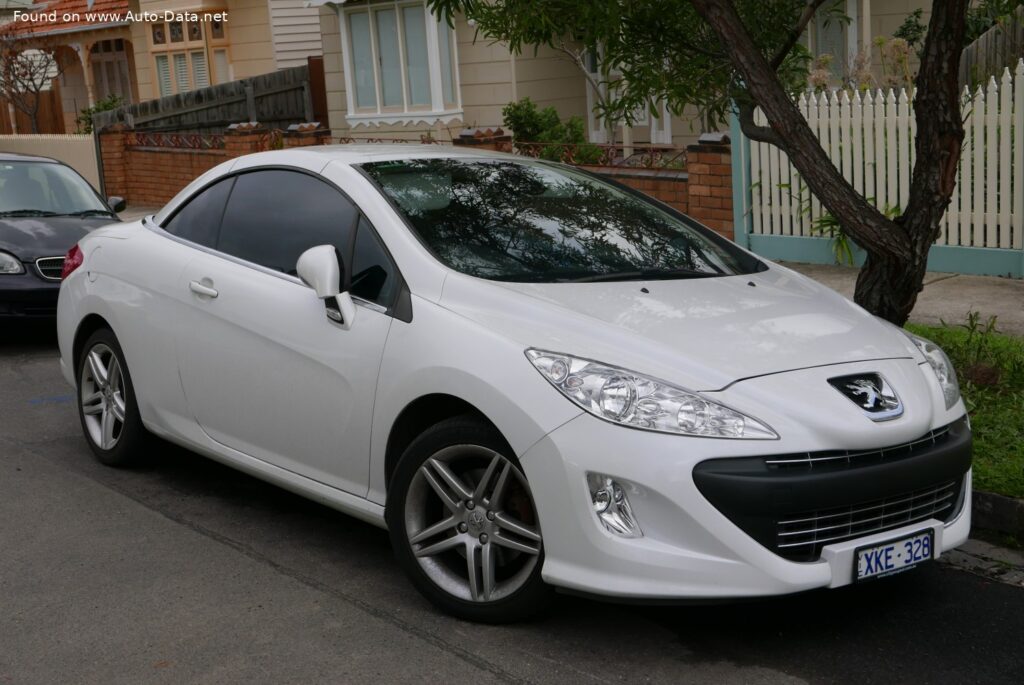
The Peugeot 308 CC I (Phase I), produced from 2010 to 2011, represents a compelling blend of style and practicality within the compact coupe-cabriolet segment. As a derivative of the broader 308 range, the CC – standing for Coupé Cabriolet – offered Peugeot customers an open-air driving experience with the added security and convenience of a retractable hardtop. While the 308 itself was a popular model in Europe, designed to compete with vehicles like the Volkswagen Golf and Ford Focus, the CC variant carved out a niche for itself appealing to drivers seeking a more emotive and versatile vehicle. This generation of the 308 CC was not officially sold in the United States, but it exemplifies Peugeot’s engineering prowess and design philosophy prevalent in the European market during that period.
Peugeot 308 CC I: A Detailed Overview
The 308 CC Phase I was the initial iteration of the first-generation 308 Coupé Cabriolet. It aimed to provide a sophisticated and enjoyable driving experience, combining the practicality of a hatchback with the allure of a convertible. The vehicle’s design prioritized a sleek profile, both with the roof up and down, and a comfortable interior for four passengers. The CC distinguished itself from the standard 308 hatchback through its unique body style and focus on open-top motoring. It was positioned as a premium offering within the Peugeot lineup, targeting buyers who desired a stylish and adaptable vehicle for both everyday use and weekend adventures.
Engine & Performance
The 308 CC I (Phase I) was primarily equipped with a 1.6-liter 16V THP (Turbo High Pressure) inline-four cylinder gasoline engine. This engine, designated 5FV EP6CDT, produced 155 horsepower at 6000 rpm and 240 Nm (177.01 lb.-ft.) of torque at 1400 rpm. The THP engine was a key technological feature, utilizing direct fuel injection and a turbocharger with an intercooler to deliver a balance of performance and fuel efficiency. This configuration resulted in a power-to-liter ratio of 97 hp/l. Power was delivered to the front wheels via a six-speed manual transmission. Performance figures included a 0-100 km/h (0-62 mph) acceleration time of 9.6 seconds and a maximum speed of 215 km/h (133.59 mph). The 0-60 mph acceleration was calculated at 9.1 seconds. The engine met Euro 5 emission standards, reflecting Peugeot’s commitment to environmental responsibility. The weight-to-power ratio was 9.8 kg/Hp, and the weight-to-torque ratio was 6.3 kg/Nm.
Design & Features
The Peugeot 308 CC I (Phase I) is a two-door, four-seater coupe-cabriolet. Its defining feature is its retractable hardtop, which allowed the vehicle to transform from a closed coupe to an open-air convertible in a matter of seconds. The hardtop design offered improved security and weather protection compared to traditional soft-top convertibles. The exterior styling was characterized by flowing lines, a sporty stance, and Peugeot’s signature design cues. Inside, the 308 CC offered a comfortable and well-appointed cabin with seating for four adults, although rear passenger space was somewhat limited. Standard features included ABS (Anti-lock Braking System), ventilated front disc brakes, and disc brakes on the rear. The suspension comprised an independent McPherson strut setup at the front with a coil spring and anti-roll bar, and a torsion beam arrangement at the rear. The steering system utilized a rack and pinion setup. The vehicle rode on 225/45 R17 or 225/40 R18 tires, depending on the trim level.
Technical Specifications
| Brand | Peugeot |
| Model | 308 |
| Generation | 308 CC I (Phase I, 2008) |
| Type (Engine) | 1.6 16V THP (155 Hp) |
| Start of production | 2010 |
| End of production | 2011 |
| Powertrain Architecture | Internal Combustion engine |
| Body type | Coupe – Cabriolet |
| Seats | 4 |
| Doors | 2 |
| Fuel consumption (urban) | 10 l/100 km (23.5 US mpg, 28.2 UK mpg, 10 km/l) |
| Fuel consumption (extra urban) | 5.5 l/100 km (42.8 US mpg, 51.4 UK mpg, 18.2 km/l) |
| Fuel consumption (combined) | 7.2 l/100 km (32.7 US mpg, 39.2 UK mpg, 13.9 km/l) |
| Fuel Type | Petrol (Gasoline) |
| Acceleration 0 – 100 km/h | 9.6 sec |
| Acceleration 0 – 62 mph | 9.6 sec |
| Acceleration 0 – 60 mph | 9.1 sec |
| Maximum speed | 215 km/h (133.59 mph) |
| Emission standard | Euro 5 |
| Weight-to-power ratio | 9.8 kg/Hp |
| Weight-to-torque ratio | 6.3 kg/Nm |
| Power | 155 Hp @ 6000 rpm |
| Torque | 240 Nm @ 1400 rpm (177.01 lb.-ft. @ 1400 rpm) |
| Engine layout | Front, Transverse |
| Engine Model/Code | 5FV EP6CDT |
| Engine displacement | 1598 cm3 (97.52 cu. in.) |
| Number of cylinders | 4 |
| Engine configuration | Inline |
| Number of valves per cylinder | 4 |
| Fuel injection system | Direct injection |
| Engine aspiration | Turbocharger, Intercooler |
| Engine oil capacity | 4.25 l (4.49 US qt | 3.74 UK qt) |
| Coolant capacity | 6.4 l (6.76 US qt | 5.63 UK qt) |
| Kerb Weight | 1515 kg (3340 lbs.) |
| Max. weight | 1940 kg (4276.97 lbs.) |
| Max load | 425 kg (936.96 lbs.) |
| Trunk (boot) space – minimum | 226 l (7.98 cu. ft.) |
| Trunk (boot) space – maximum | 403 l (14.23 cu. ft.) |
| Fuel tank capacity | 60 l (15.85 US gal | 13.2 UK gal) |
| Length | 4440 mm (174.8 in.) |
| Width | 1872 mm (73.7 in.) |
| Height | 1426 mm (56.14 in.) |
| Wheelbase | 2605 mm (102.56 in.) |
| Drivetrain | Front wheel drive |
| Number of gears | 6 gears, manual transmission |
The Peugeot 308 CC I (Phase I) offered a compelling package for drivers seeking a stylish and versatile convertible. Its combination of a turbocharged engine, retractable hardtop, and comfortable interior made it a popular choice in the European market. While not sold in the US, it represents a significant example of Peugeot’s design and engineering capabilities during the late 2000s and early 2010s.