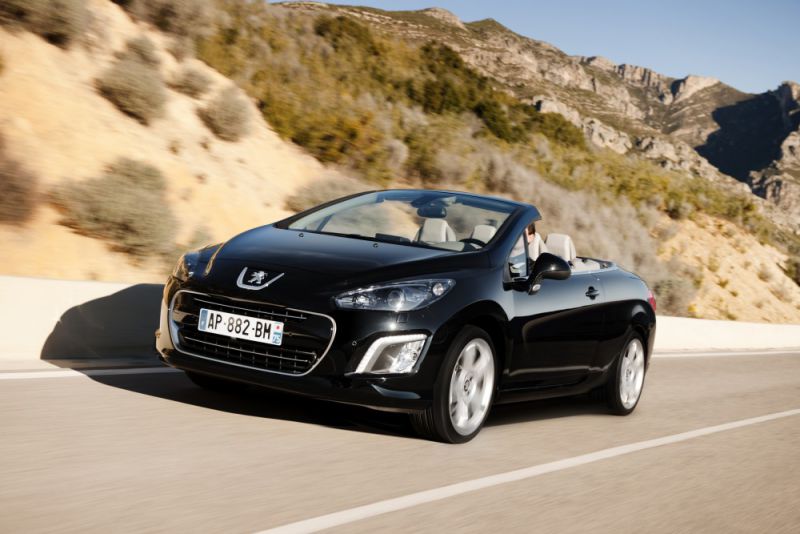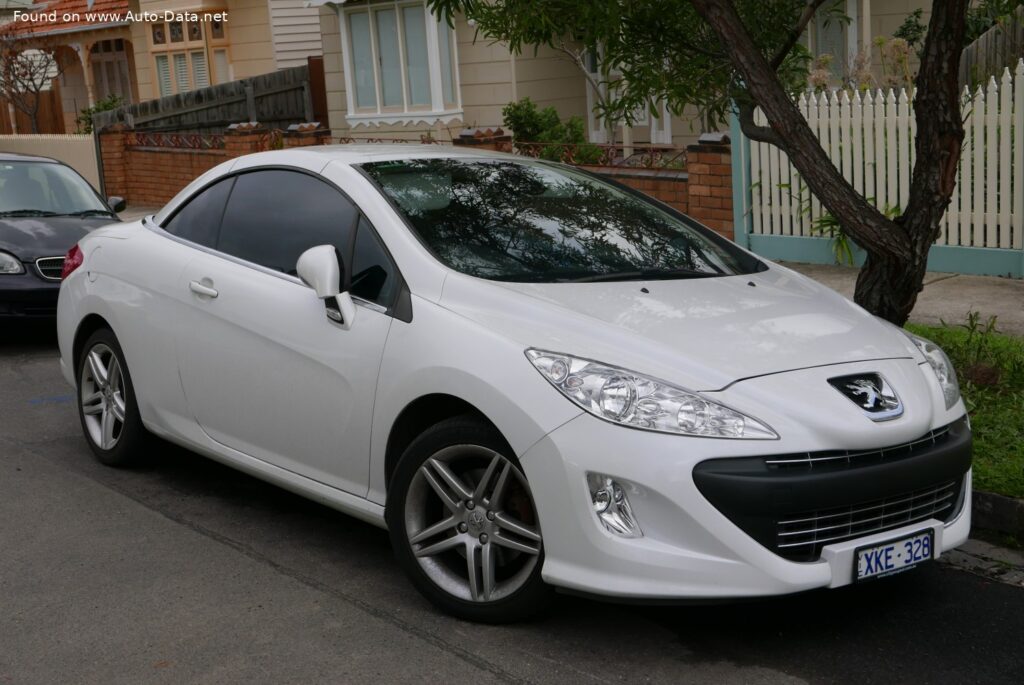
The Peugeot 308 CC I (Phase I), produced from 2010 to 2011, represents a compelling entry in the compact coupe-cabriolet segment. This model, a derivative of the broader 308 range, was primarily marketed in Europe as an affordable and stylish open-top motoring option. While not officially sold in the United States, it showcases Peugeot’s engineering prowess and design flair popular in the European market. The “CC” designation stands for “Coupé Cabriolet,” highlighting its retractable hardtop functionality, a feature increasingly sought after in this class of vehicle.
Peugeot 308 CC I (Phase I): Overview
The 308 CC I Phase I aimed to provide a blend of practicality and driving enjoyment. It offered seating for four passengers, though rear space was limited, typical for vehicles in this category. The retractable hardtop allowed for open-air driving in favorable conditions, while providing the security and weather protection of a conventional coupe when closed. The Phase I model was characterized by its distinctive styling and a focus on providing a relatively refined driving experience for its price point.
Engine & Performance
The 308 CC I Phase I was primarily equipped with a 1.6-liter 16V THP (Turbo High Pressure) inline-four cylinder gasoline engine. This engine, designated EP6CDTX, produced 200 horsepower at 5800 rpm and 275 Nm (202.83 lb.-ft.) of torque at 1700 rpm. The direct injection and turbocharging technologies contributed to a good balance of performance and fuel efficiency. Power per liter was a respectable 125.2 hp/l. The engine was coupled with a six-speed manual transmission, driving the front wheels.
Performance figures included a 0-100 km/h (0-62 mph) acceleration time of 8.3 seconds, and a 0-60 mph time of 7.9 seconds. The vehicle had a maximum speed of 237 km/h (147.26 mph). The weight-to-power ratio of 7.9 kg/Hp and weight-to-torque ratio of 5.7 kg/Nm indicated a reasonably responsive driving experience. Fuel economy, as measured by the NEDC standard, was rated at 7.0 l/100 km (33.6 US mpg) combined, with 9.3 l/100 km (25.3 US mpg) in urban conditions and 5.6 l/100 km (42 US mpg) on the extra-urban cycle. CO2 emissions were rated at 162 g/km, placing it within Euro 5 emission standards.
Design & Features
The Peugeot 308 CC I Phase I featured a sleek, coupe-like profile when the hardtop was in place. The retractable hardtop mechanism was a key design element, allowing the vehicle to transform from a closed coupe to an open-air cabriolet in approximately 13 seconds. The exterior styling incorporated Peugeot’s design language of the time, with a prominent front grille and sculpted body lines.
Inside, the 308 CC offered a driver-focused cockpit with comfortable seating for four. Standard features included air conditioning, power windows, and a basic audio system. Safety features, while not as comprehensive as modern vehicles, included ABS (Anti-lock Braking System). The trunk space varied depending on whether the hardtop was up or down, offering 226 liters (7.98 cu. ft.) with the top up and 403 liters (14.23 cu. ft.) with the top down. The vehicle’s dimensions included a length of 4440 mm (174.8 in), a width of 1817 mm (71.54 in), and a height of 1426 mm (56.14 in). The wheelbase measured 2605 mm (102.56 in).
Technical Specifications
| Brand | Peugeot |
| Model | 308 |
| Generation | 308 CC I (Phase I, 2008) |
| Type (Engine) | 1.6 16V THP (200 Hp) |
| Start of production | 2010 |
| End of production | 2011 |
| Powertrain Architecture | Internal Combustion engine |
| Body type | Coupe – Cabriolet |
| Seats | 4 |
| Doors | 2 |
| Fuel consumption (economy) – urban (NEDC) | 9.3 l/100 km (25.3 US mpg) |
| Fuel consumption (economy) – extra urban (NEDC) | 5.6 l/100 km (42 US mpg) |
| Fuel consumption (economy) – combined (NEDC) | 7 l/100 km (33.6 US mpg) |
| CO2 emissions (NEDC) | 162 g/km |
| Fuel Type | Petrol (Gasoline) |
| Acceleration 0 – 100 km/h | 8.3 sec |
| Acceleration 0 – 62 mph | 8.3 sec |
| Acceleration 0 – 60 mph | 7.9 sec |
| Maximum speed | 237 km/h (147.26 mph) |
| Emission standard | Euro 5 |
| Weight-to-power ratio | 7.9 kg/Hp |
| Weight-to-torque ratio | 5.7 kg/Nm |
| Power | 200 Hp @ 5800 rpm |
| Torque | 275 Nm @ 1700 rpm (202.83 lb.-ft. @ 1700 rpm) |
| Engine layout | Front, Transverse |
| Engine Model/Code | EP6CDTX |
| Engine displacement | 1598 cm3 (97.52 cu. in.) |
| Number of cylinders | 4 |
| Engine configuration | Inline |
| Cylinder Bore | 77 mm (3.03 in.) |
| Piston Stroke | 85.8 mm (3.38 in.) |
| Number of valves per cylinder | 4 |
| Fuel injection system | Direct injection |
| Engine aspiration | Turbocharger, Intercooler |
| Valvetrain | DOHC |
| Engine oil capacity | 4.25 l (4.49 US qt | 3.74 UK qt) |
| Coolant | 6.4 l (6.76 US qt | 5.63 UK qt) |
| Kerb Weight | 1580 kg (3483.3 lbs.) |
| Max. weight | 1984 kg (4373.97 lbs.) |
| Max load | 404 kg (890.67 lbs.) |
| Trunk (boot) space – minimum | 226 l (7.98 cu. ft.) |
| Trunk (boot) space – maximum | 403 l (14.23 cu. ft.) |
| Fuel tank capacity | 60 l (15.85 US gal | 13.2 UK gal) |
| Permitted trailer load with brakes (12%) | 800 kg (1763.7 lbs.) |
| Permitted trailer load without brakes | 750 kg (1653.47 lbs.) |
| Permitted towbar download | 64 kg (141.1 lbs.) |
| Length | 4440 mm (174.8 in.) |
| Width | 1817 mm (71.54 in.) |
| Width including mirrors | 2039 mm (80.28 in.) |
| Height | 1426 mm (56.14 in.) |
| Wheelbase | 2605 mm (102.56 in.) |
| Front track | 1526 mm (60.08 in.) |
| Rear (Back) track | 1521 mm (59.88 in.) |
| Front overhang | 929 mm (36.57 in.) |
| Rear overhang | 906 mm (35.67 in.) |
| Minimum turning circle (turning diameter) | 10.74 m (35.24 ft.) |
| Drivetrain Architecture | Front wheel drive |
| Drive wheel | Front wheel drive |
| Number of gears and type of gearbox | 6 gears, manual transmission |
| Front suspension | Independent, type McPherson with coil spring and anti-roll bar |
| Rear suspension | Coil spring, Torsion |
| Front brakes | Ventilated discs |
| Rear brakes | Disc |
| Assisting systems | ABS (Anti-lock braking system) |
| Steering type | Steering rack and pinion |
| Power steering | Electric Steering |
| Tires size | 225/40 R18 |
| Wheel rims size | 8J x 18 |