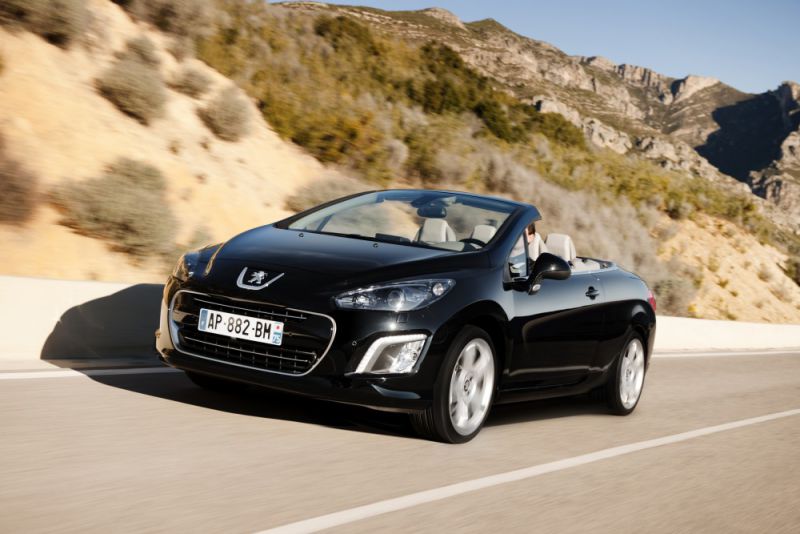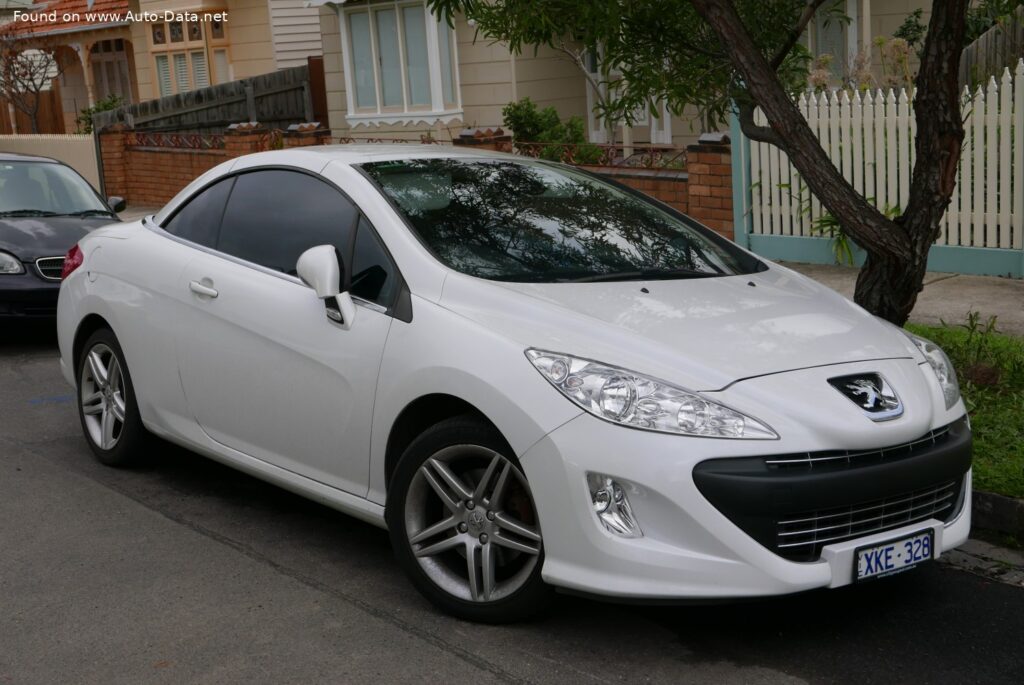
The Peugeot 308 CC I (Phase I), produced from 2009 to 2011, represents a compelling entry in the compact coupe-convertible segment. This model, primarily marketed in Europe, offered an attractive blend of stylish design, practical usability, and efficient diesel power. The “CC” designation stands for “Coupé Cabriolet,” highlighting its retractable hardtop functionality. While not officially sold in the United States, the 308 CC offered European drivers a sophisticated and versatile open-air driving experience, competing with models like the Renault Mégane Coupé Cabriolet and Ford Focus CC.
Peugeot 308 CC I: Overview and Market Position
The 308 CC was based on the standard Peugeot 308 hatchback, but distinguished itself with its folding hardtop roof, transforming the vehicle from a sleek coupe into an open-top convertible at the touch of a button. This feature provided the security and weather protection of a coupe with the enjoyment of a convertible. The Phase I model, detailed here, represents the initial iteration of the 308 CC, setting the stage for subsequent refinements. Its target audience was drivers seeking a fashionable and relatively affordable convertible option, prioritizing style and convenience over outright performance.
Engine & Performance
The 308 CC I (Phase I) was primarily equipped with a range of efficient engines, with the 2.0 HDi (140 hp) diesel being a popular choice. This engine, designated RHR DW10BTED4, is a 1997 cc inline-four cylinder unit featuring a turbocharger and intercooler. It produces a maximum power output of 140 horsepower at 4000 rpm and a substantial 320 Nm (236.02 lb.-ft.) of torque at 2000 rpm. This torque delivery provides strong mid-range acceleration, making it well-suited for everyday driving and overtaking maneuvers. The engine utilizes a Diesel Commonrail fuel injection system and boasts a compression ratio of 17.6:1. The powertrain is coupled with a 6-speed manual transmission, driving the front wheels. Performance figures include a 0-100 km/h (0-62 mph) acceleration time of 10.8 seconds and a top speed of 208 km/h (129.25 mph). The 0-60 mph time is calculated at 10.3 seconds. Fuel economy is a strong point, with combined cycle consumption rated at 5.9 l/100 km (39.9 US mpg, 47.9 UK mpg).
Design & Features
The Peugeot 308 CC I (Phase I) showcases a contemporary design language typical of the late 2000s. Its coupe profile is characterized by flowing lines, a sloping roofline, and a sporty stance. The retractable hardtop, a key feature, neatly folds away into the trunk, transforming the car’s appearance. Inside, the cabin offers seating for four passengers, although rear space is somewhat limited, typical of vehicles in this class. The interior design emphasizes comfort and practicality, with a focus on user-friendly controls and a modern aesthetic. Safety features included ABS (Anti-lock Braking System) as standard. The car’s kerb weight is 1674 kg (3690.54 lbs), with a maximum weight of 2020 kg (4453.34 lbs). Trunk space ranges from 226 liters (7.98 cu. ft.) with the roof up to 403 liters (14.23 cu. ft.) with the roof down. The steering is hydraulic rack and pinion, and the vehicle rides on 225/40 R18 tires with 8J 18-inch wheel rims.
Technical Specifications
| Brand | Peugeot |
| Model | 308 |
| Generation | 308 CC I (Phase I, 2008) |
| Type (Engine) | 2.0 HDi (140 Hp) FAP |
| Start of production | 2009 |
| End of production | 2011 |
| Powertrain Architecture | Internal Combustion engine |
| Body type | Coupe – Cabriolet |
| Seats | 4 |
| Doors | 2 |
| Fuel consumption (urban) | 7.8 l/100 km (30.2 US mpg, 36.2 UK mpg) |
| Fuel consumption (extra urban) | 4.8 l/100 km (49 US mpg, 58.9 UK mpg) |
| Fuel consumption (combined) | 5.9 l/100 km (39.9 US mpg, 47.9 UK mpg) |
| Fuel Type | Diesel |
| Acceleration 0 – 100 km/h | 10.8 sec |
| Acceleration 0 – 62 mph | 10.8 sec |
| Acceleration 0 – 60 mph | 10.3 sec |
| Maximum speed | 208 km/h (129.25 mph) |
| Emission standard | Euro 4 |
| Weight-to-power ratio | 12 kg/Hp |
| Weight-to-torque ratio | 5.2 kg/Nm |
| Power | 140 Hp @ 4000 rpm |
| Torque | 320 Nm @ 2000 rpm (236.02 lb.-ft. @ 2000 rpm) |
| Engine layout | Front, Transverse |
| Engine Model/Code | RHR DW10BTED4 |
| Engine displacement | 1997 cm3 (121.86 cu. in.) |
| Number of cylinders | 4 |
| Engine configuration | Inline |
| Cylinder Bore | 85 mm (3.35 in.) |
| Piston Stroke | 88 mm (3.46 in.) |
| Compression ratio | 17.6:1 |
| Number of valves per cylinder | 4 |
| Fuel injection system | Diesel Commonrail |
| Engine aspiration | Turbocharger, Intercooler |
| Valvetrain | DOHC |
| Engine oil capacity | 5.25 l (5.55 US qt | 4.62 UK qt) |
| Coolant | 7.8 l (8.24 US qt | 6.86 UK qt) |
| Kerb Weight | 1674 kg (3690.54 lbs.) |
| Max. weight | 2020 kg (4453.34 lbs.) |
| Max load | 346 kg (762.8 lbs.) |
| Trunk (boot) space – minimum | 226 l (7.98 cu. ft.) |
| Trunk (boot) space – maximum | 403 l (14.23 cu. ft.) |
| Fuel tank capacity | 60 l (15.85 US gal | 13.2 UK gal) |
| Length | 4440 mm (174.8 in.) |
| Width | 1817 mm (71.54 in.) |
| Height | 1427 mm (56.18 in.) |
| Wheelbase | 2608 mm (102.68 in.) |
| Front track | 1526 mm (60.08 in.) |
| Rear (Back) track | 1521 mm (59.88 in.) |
| Minimum turning circle | 11.8 m (38.71 ft.) |
| Drive wheel | Front wheel drive |
| Number of gears | 6 gears, manual transmission |
The Peugeot 308 CC I (Phase I) 2.0 HDi (140 Hp) FAP offered a compelling package for European buyers seeking a stylish and practical convertible. Its efficient diesel engine, comfortable interior, and retractable hardtop roof made it a popular choice in its segment.