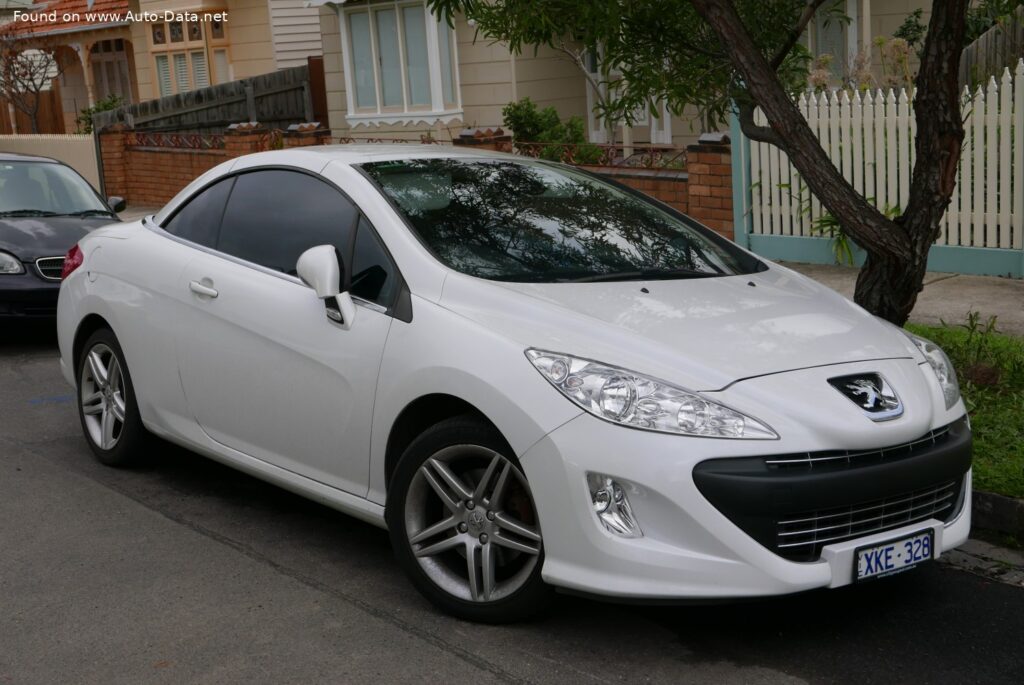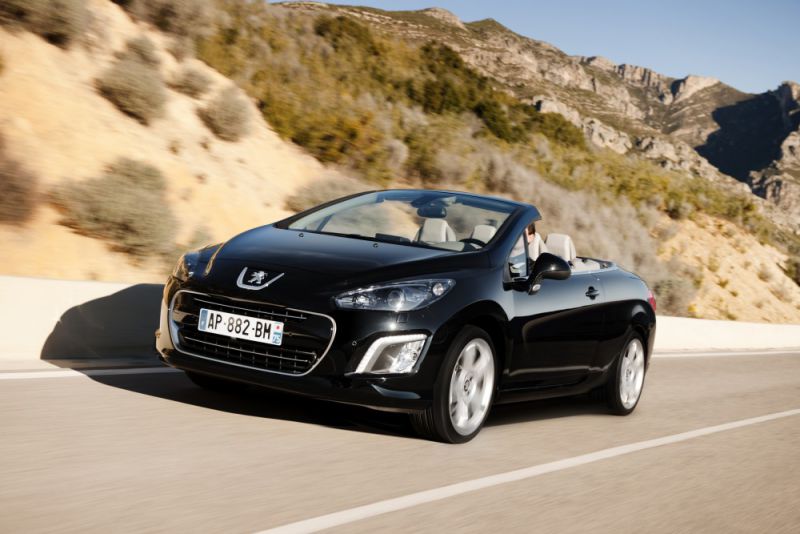
The Peugeot 308 CC I (Phase II, 2011) 2.0 HDI (165 Hp) FAP represents a refinement of Peugeot’s popular compact coupe-convertible. Introduced as a mid-life update to the first generation 308 CC, this model aimed to enhance the vehicle’s appeal with improved efficiency and features. The 308 CC occupied a niche market in Europe, offering an affordable and stylish open-top driving experience. While not officially sold in the United States, it exemplifies the European preference for versatile, fuel-efficient vehicles that blend practicality with a touch of sporting flair. This particular variant, powered by a 2.0-liter turbodiesel engine, was designed to balance performance with low running costs, catering to drivers seeking a refined and economical grand tourer.
Peugeot 308 CC I (Phase II): A Refined Convertible
The 308 CC, meaning “coupé cabriolet,” was Peugeot’s entry into the competitive compact convertible segment. The Phase II update, released in 2011, brought subtle styling revisions, improved interior materials, and crucially, enhancements to the engine lineup. The 2.0 HDI (165 Hp) FAP model was a key offering, providing a diesel-powered option for those prioritizing fuel economy and torque. The “FAP” designation indicates the inclusion of a particulate filter, a common feature in European diesel vehicles designed to reduce harmful emissions and meet stringent Euro 5 standards. This model was primarily marketed in Europe, where diesel engines enjoy significant popularity due to their efficiency and lower fuel costs.
Engine & Performance
The heart of the 308 CC I (Phase II) 2.0 HDI (165 Hp) FAP is a 2.0-liter inline-four cylinder diesel engine, designated RHH DW10CTED4. This engine produces 165 horsepower at 3750 rpm and a substantial 340 Nm (250.77 lb.-ft.) of torque at 2000 rpm. The high torque output, characteristic of diesel engines, provides strong acceleration and effortless cruising. The engine utilizes a turbocharger and intercooler to enhance performance, while a common rail direct fuel injection system ensures efficient combustion. Acceleration from 0 to 100 km/h (0-62 mph) takes 8.9 seconds, and 0 to 60 mph is achieved in approximately 8.5 seconds. The vehicle boasts a maximum speed of 209 km/h (129.87 mph). Fuel economy is a strong point, with combined cycle consumption rated at 5.7 l/100 km (41.3 US mpg, 49.6 UK mpg), making it an economical choice for long-distance travel. The engine’s power-to-weight ratio is 9.6 kg/Hp, and the torque-to-weight ratio is 4.6 kg/Nm.
Design & Features
The Peugeot 308 CC I (Phase II) is a two-door, four-seat coupe-convertible. Its retractable hardtop roof allows it to transform from a stylish coupe to an open-air convertible in approximately 13 seconds. The design emphasizes flowing lines and a sporty stance. The Phase II update included minor cosmetic tweaks to the front and rear fascias, as well as revised interior trim. Inside, the cabin offers a comfortable and well-equipped environment, although rear seat space is limited, typical for a vehicle of this type. Key features include ABS (Anti-lock Braking System) for enhanced safety, a six-speed manual transmission, and McPherson strut front suspension paired with a torsion beam rear suspension. The vehicle rides on either 17-inch (225/45 R17) or 18-inch (225/40 R18) tires. Trunk space varies depending on whether the roof is up or down, offering 226 liters (7.98 cu. ft.) with the roof up and 403 liters (14.23 cu. ft.) with the roof down.
Technical Specifications
| Brand | Peugeot |
| Model | 308 |
| Generation | 308 CC I (Phase II, 2011) |
| Type (Engine) | 2.0 HDI (165 Hp) FAP |
| Start of production | 2011 |
| End of production | 2012 |
| Powertrain Architecture | Internal Combustion engine |
| Body type | Coupe – Cabriolet |
| Seats | 4 |
| Doors | 2 |
| Fuel consumption (urban) | 7.5 l/100 km (31.4 US mpg, 37.7 UK mpg) |
| Fuel consumption (extra urban) | 4.7 l/100 km (50 US mpg, 60.1 UK mpg) |
| Fuel consumption (combined) | 5.7 l/100 km (41.3 US mpg, 49.6 UK mpg) |
| Fuel Type | Diesel |
| Acceleration 0 – 100 km/h | 8.9 sec |
| Acceleration 0 – 62 mph | 8.9 sec |
| Acceleration 0 – 60 mph | 8.5 sec |
| Maximum speed | 209 km/h (129.87 mph) |
| Emission standard | Euro 5 |
| Weight-to-power ratio | 9.6 kg/Hp |
| Weight-to-torque ratio | 4.6 kg/Nm |
| Power | 165 Hp @ 3750 rpm |
| Torque | 340 Nm @ 2000 rpm (250.77 lb.-ft. @ 2000 rpm) |
| Engine layout | Front, Transverse |
| Engine Model/Code | RHH DW10CTED4 |
| Engine displacement | 1997 cm3 (121.86 cu. in.) |
| Number of cylinders | 4 |
| Engine configuration | Inline |
| Number of valves per cylinder | 4 |
| Fuel injection system | Diesel Commonrail |
| Engine aspiration | Turbocharger, Intercooler |
| Engine oil capacity | 5 l (5.28 US qt | 4.4 UK qt) |
| Coolant | 8.05 l (8.51 US qt | 7.08 UK qt) |
| Kerb Weight | 1577 kg (3476.69 lbs.) |
| Max. weight | 2025 kg (4464.36 lbs.) |
| Max load | 448 kg (987.67 lbs.) |
| Trunk (boot) space – minimum | 226 l (7.98 cu. ft.) |
| Trunk (boot) space – maximum | 403 l (14.23 cu. ft.) |
| Fuel tank capacity | 60 l (15.85 US gal | 13.2 UK gal) |
| Length | 4440 mm (174.8 in.) |
| Width | 1872 mm (73.7 in.) |
| Height | 1426 mm (56.14 in.) |
| Wheelbase | 2605 mm (102.56 in.) |
| Drivetrain Architecture | The Internal combustion engine (ICE) drives the front wheels of the vehicle. |
| Drive wheel | Front wheel drive |
| Number of gears and type of gearbox | 6 gears, manual transmission |
| Front suspension | Independent, type McPherson with coil spring and anti-roll bar |
| Rear suspension | Torsion |
| Front brakes | Ventilated discs |
| Rear brakes | Disc |
| Assisting systems | ABS (Anti-lock braking system) |
| Steering type | Steering rack and pinion |
| Tires size | 225/45 R17; 225/40 R18 |