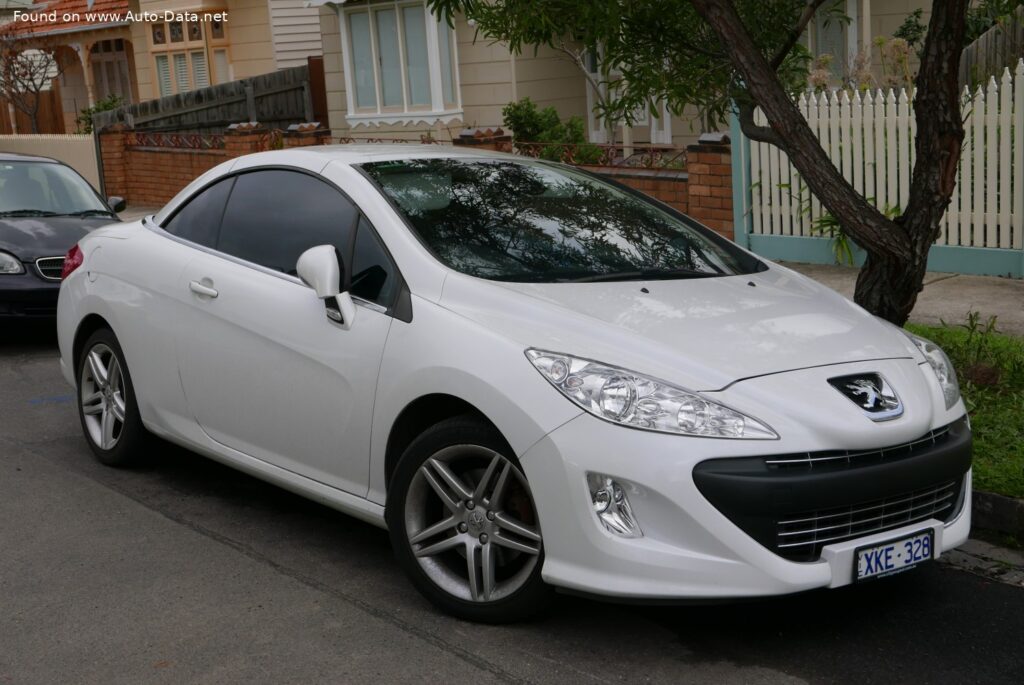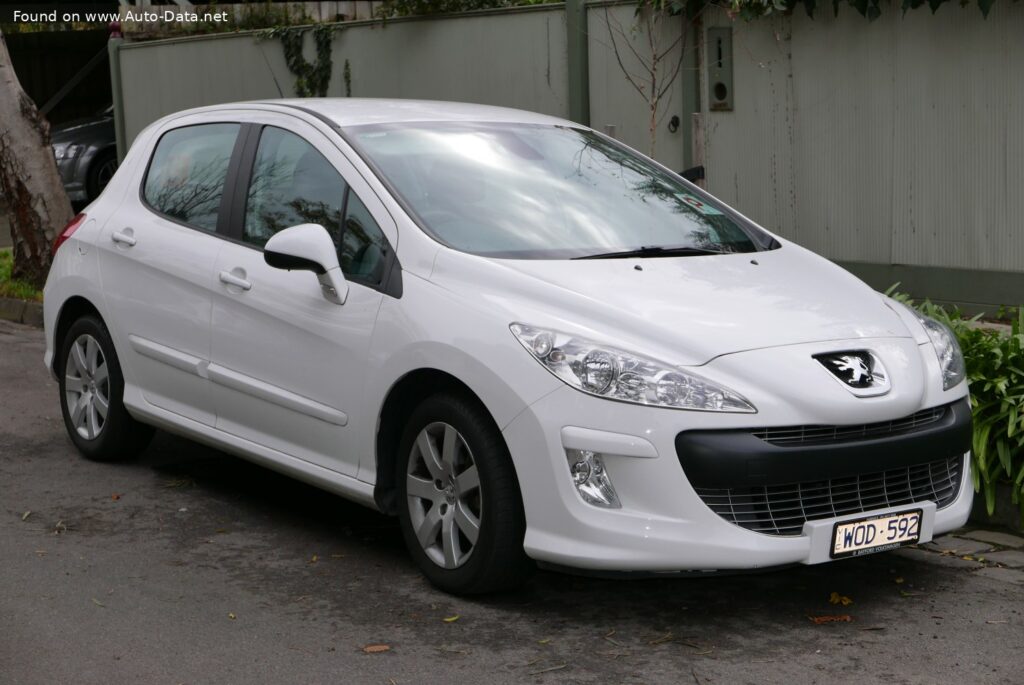
The Peugeot 308 I (Phase I), launched in 2007, represents Peugeot’s entry into the competitive compact family hatchback segment. Replacing the 307, the 308 aimed to offer a more refined and modern driving experience, with a focus on build quality and interior design. This first generation of the 308 was produced from 2007 to 2013, undergoing several revisions during its lifespan. The 1.6 16V THP (175 Hp) variant, produced between 2008 and 2010, was a key offering, particularly in European markets, showcasing Peugeot’s advancements in turbocharged petrol engine technology. While not officially sold in the United States, the 308 was a significant model for Peugeot, contributing to its sales volume and brand image in Europe.
Peugeot 308 I (Phase I): A Detailed Overview
The 308 Phase I marked a departure for Peugeot, emphasizing a more sophisticated and quality-focused approach. It was designed to appeal to buyers seeking a practical, comfortable, and stylish hatchback. The vehicle’s design incorporated a more upright front end and a distinctive rear light cluster, setting it apart from its predecessor. The 1.6 THP engine, a core component of this model, was lauded for its balance of performance and fuel efficiency, making it a popular choice among European drivers.
Engine & Performance
The heart of the Peugeot 308 I 1.6 16V THP (175 Hp) is its 1.6-liter, inline-four cylinder engine, designated the 5FY EP6DTS. This engine utilizes direct fuel injection and is equipped with a turbocharger and intercooler, enabling it to produce 175 horsepower at 6000 rpm and 240 Nm (177.01 lb.-ft.) of torque at 1600 rpm. This configuration delivers a power-to-liter ratio of 109.5 hp/l. The engine is transversely mounted at the front of the vehicle and is paired with a six-speed manual transmission, driving the front wheels. Performance figures include a 0-100 km/h (0-62 mph) acceleration time of 8.3 seconds and a top speed of 225 km/h (139.81 mph). The engine’s responsiveness and relatively low fuel consumption made it a standout feature of this 308 variant.
Design & Features
The Peugeot 308 I Phase I is a five-door hatchback, offering seating for five passengers. Its body style is characterized by clean lines and a relatively compact footprint, measuring 4276 mm (168.35 in) in length, 1815 mm (71.46 in) in width, and 1498 mm (58.98 in) in height. The interior prioritizes practicality and comfort, with a focus on ergonomics and build quality. Standard features included ABS (Anti-lock Braking System), hydraulic power steering, and a transverse stabilizer for improved handling. The trunk offers a versatile space, ranging from 430 liters (15.19 cu. ft.) with the rear seats up to 1398 liters (49.37 cu. ft.) with the seats folded down. The vehicle’s kerb weight is 1396 kg (3077.65 lbs), contributing to its agile handling characteristics.
Technical Specifications
| Brand | Peugeot |
| Model | 308 |
| Generation | 308 I (Phase I, 2007) |
| Type (Engine) | 1.6 16V THP (175 Hp) |
| Start of production | 2008 |
| End of production | 2010 |
| Powertrain Architecture | Internal Combustion engine |
| Body type | Hatchback |
| Seats | 5 |
| Doors | 5 |
| Fuel consumption (urban) | 10.7 l/100 km (22 US mpg, 26.4 UK mpg, 9.3 km/l) |
| Fuel consumption (extra urban) | 5.7 l/100 km (41.3 US mpg, 49.6 UK mpg, 17.5 km/l) |
| Fuel consumption (combined) | 7.6 l/100 km (30.9 US mpg, 37.2 UK mpg, 13.2 km/l) |
| CO2 emissions | 180 g/km |
| Fuel Type | Petrol (Gasoline) |
| Acceleration 0 – 100 km/h | 8.3 sec |
| Acceleration 0 – 62 mph | 8.3 sec |
| Acceleration 0 – 60 mph | 7.9 sec |
| Maximum speed | 225 km/h (139.81 mph) |
| Emission standard | Euro 4 |
| Weight-to-power ratio | 8 kg/Hp, 125.4 Hp/tonne |
| Weight-to-torque ratio | 5.8 kg/Nm, 171.9 Nm/tonne |
| Power | 175 Hp @ 6000 rpm |
| Power per litre | 109.5 Hp/l |
| Torque | 240 Nm @ 1600 rpm (177.01 lb.-ft. @ 1600 rpm) |
| Engine layout | Front, Transverse |
| Engine Model/Code | 5FY EP6DTS |
| Engine displacement | 1598 cm3 (97.52 cu. in.) |
| Number of cylinders | 4 |
| Engine configuration | Inline |
| Cylinder Bore | 77 mm (3.03 in.) |
| Piston Stroke | 85.8 mm (3.38 in.) |
| Compression ratio | 10.5:1 |
| Number of valves per cylinder | 4 |
| Fuel injection system | Direct injection |
| Engine aspiration | Turbocharger, Intercooler |
| Valvetrain | DOHC, VVT |
| Engine oil capacity | 4.3 l (4.54 US qt | 3.78 UK qt) |
| Coolant | 6.2 l (6.55 US qt | 5.46 UK qt) |
| Kerb Weight | 1396 kg (3077.65 lbs.) |
| Max. weight | 1855 kg (4089.57 lbs.) |
| Max load | 459 kg (1011.92 lbs.) |
| Trunk (boot) space – minimum | 430 l (15.19 cu. ft.) |
| Trunk (boot) space – maximum | 1398 l (49.37 cu. ft.) |
| Fuel tank capacity | 60 l (15.85 US gal | 13.2 UK gal) |
| Max. roof load | 75 kg (165.35 lbs.) |
| Permitted trailer load with brakes (12%) | 1650 kg (3637.63 lbs.) |
| Permitted trailer load without brakes | 735 kg (1620.4 lbs.) |
| Permitted towbar download | 66 kg (145.51 lbs.) |
| Length | 4276 mm (168.35 in.) |
| Width | 1815 mm (71.46 in.) |
| Width including mirrors | 2038 mm (80.24 in.) |
| Height | 1498 mm (58.98 in.) |
| Wheelbase | 2608 mm (102.68 in.) |
| Front track | 1526 mm (60.08 in.) |
| Minimum turning circle | 10.7 m (35.1 ft.) |
| Drive wheel | Front wheel drive |
| Number of gears | 6 gears, manual transmission |
The Peugeot 308 I (Phase I) 1.6 16V THP (175 Hp) offered a compelling package for buyers in the compact hatchback segment. Its combination of stylish design, efficient engine, and practical features made it a popular choice in Europe, solidifying Peugeot’s position as a key player in the automotive market.