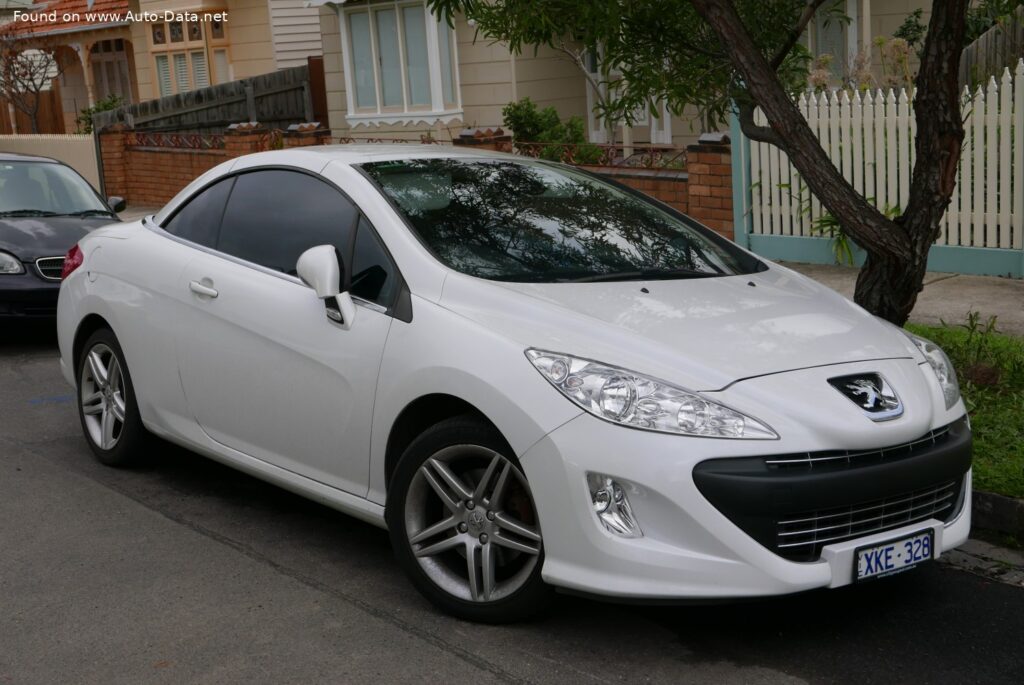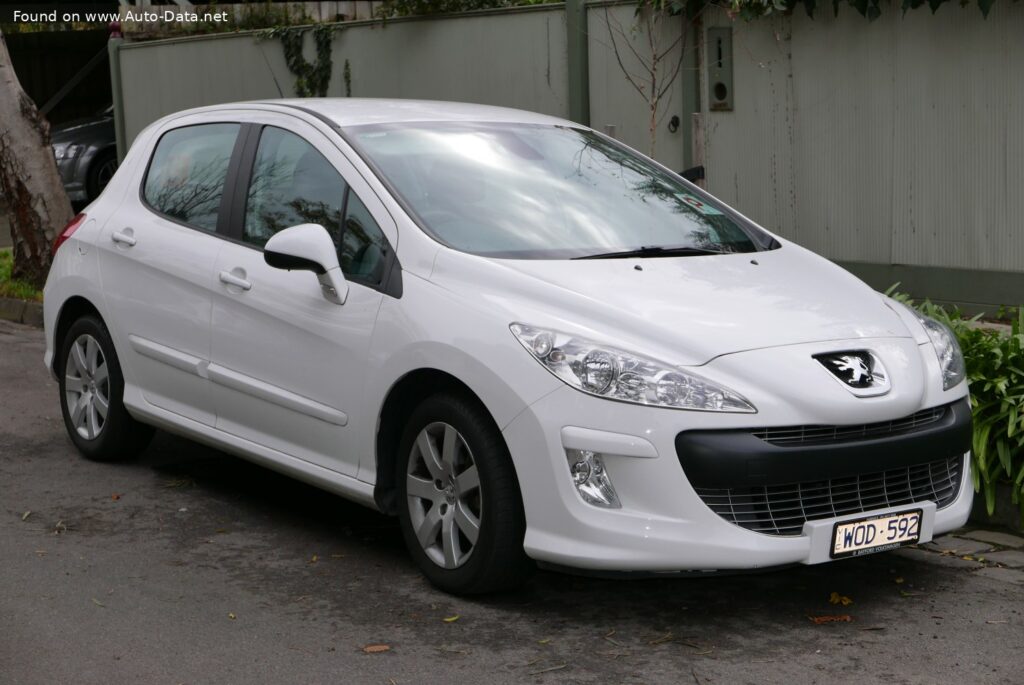
The Peugeot 308 I (Phase I), launched in 2007, represented a significant step forward for the French automaker, replacing the aging 307. Positioned as a compact family hatchback, the 308 aimed to compete with established rivals like the Volkswagen Golf, Ford Focus, and Opel/Vauxhall Astra. This first generation of the 308, produced through 2010, offered a blend of practicality, comfort, and a relatively modern design. The 1.6 HDi (90 hp) FAP 3-door variant, detailed here, was a popular choice in European markets, emphasizing fuel efficiency and lower emissions thanks to its diesel powertrain and particulate filter.
Peugeot 308 I (Phase I): A Detailed Overview
The 308 Phase I marked a departure from Peugeot’s previous design language, adopting a more refined and contemporary aesthetic. It was available in both 3-door and 5-door hatchback configurations, as well as a station wagon (SW) body style. The 3-door model, like the one described, catered to buyers seeking a sportier look and feel, though it sacrificed some practicality compared to the 5-door version. The “HDi” designation signifies a high-pressure diesel injection engine, a technology Peugeot pioneered and became known for. The “FAP” indicates the inclusion of a particulate filter, designed to reduce harmful emissions and meet increasingly stringent European environmental standards.
Engine & Performance
The heart of the 308 1.6 HDi (90 hp) is a 1.6-liter inline-four cylinder diesel engine, identified by the code 9HV DV6TED4BU. This engine produces 90 horsepower at 4000 rpm and 215 Nm (158.58 lb-ft) of torque at 1750 rpm. The engine features a turbocharger and intercooler, enhancing performance and efficiency. While not a performance-oriented vehicle, the 1.6 HDi provided adequate power for everyday driving and highway cruising. Acceleration from 0 to 100 km/h (0-62 mph) takes approximately 13 seconds, with a top speed of 180 km/h (111.85 mph). A five-speed manual transmission is the standard gearbox, delivering power to the front wheels. The engine’s relatively high compression ratio of 17.6:1 is typical for diesel engines, contributing to their fuel efficiency. The power-to-weight ratio is 15.4 kg/Hp, and the torque-to-weight ratio is 6.5 kg/Nm.
Design & Features
The Peugeot 308 I Phase I is a front-engine, front-wheel-drive hatchback. Its 3-door configuration offers a more dynamic profile, appealing to drivers prioritizing style. The interior comfortably seats five passengers, although rear passenger space can be limited in the 3-door model. Key features included ABS (Anti-lock Braking System) as standard, reflecting growing safety concerns at the time. The steering utilizes a hydraulic power steering system, providing a responsive and connected feel. The suspension consists of wishbones at the front and a trailing arm setup at the rear, balancing ride comfort and handling. The 308’s trunk (boot) space offers 348 liters (12.29 cu. ft.) with the rear seats up, expanding to 1201 liters (42.41 cu. ft.) when folded down, providing ample cargo capacity for everyday needs. The vehicle’s dimensions are 4276 mm (168.35 in) in length, 1815 mm (71.46 in) in width, and 1498 mm (58.98 in) in height.
Technical Specifications
| Brand | Peugeot |
| Model | 308 |
| Generation | 308 I (Phase I) |
| Type (Engine) | 1.6 HDi (90 Hp) FAP 3d |
| Start of production | 2007 |
| End of production | 2010 |
| Powertrain Architecture | Internal Combustion engine |
| Body type | Hatchback |
| Seats | 5 |
| Doors | 3 |
| Fuel consumption (urban) | 6 l/100 km (39.2 US mpg, 47.1 UK mpg, 16.7 km/l) |
| Fuel consumption (extra urban) | 3.9 l/100 km (60.3 US mpg, 72.4 UK mpg, 25.6 km/l) |
| Fuel consumption (combined) | 4.7 l/100 km (50 US mpg, 60.1 UK mpg, 21.3 km/l) |
| Fuel Type | Diesel |
| Acceleration 0 – 100 km/h | 13 sec |
| Acceleration 0 – 62 mph | 13 sec |
| Acceleration 0 – 60 mph | 12.4 sec |
| Maximum speed | 180 km/h (111.85 mph) |
| Emission standard | Euro 4 |
| Weight-to-power ratio | 15.4 kg/Hp |
| Weight-to-torque ratio | 6.5 kg/Nm |
| Power | 90 Hp @ 4000 rpm |
| Power per litre | 57.7 Hp/l |
| Torque | 215 Nm @ 1750 rpm (158.58 lb.-ft. @ 1750 rpm) |
| Engine layout | Front, Transverse |
| Engine Model/Code | 9HV DV6TED4BU |
| Engine displacement | 1560 cm3 (95.2 cu. in.) |
| Number of cylinders | 4 |
| Engine configuration | Inline |
| Cylinder Bore | 75 mm (2.95 in.) |
| Piston Stroke | 88.3 mm (3.48 in.) |
| Compression ratio | 17.6:1 |
| Number of valves per cylinder | 4 |
| Fuel injection system | Diesel Commonrail |
| Engine aspiration | Turbocharger, Intercooler |
| Valvetrain | OHC |
| Engine oil capacity | 3.75 l (3.96 US qt | 3.3 UK qt) |
| Coolant | 6 l (6.34 US qt | 5.28 UK qt) |
| Kerb Weight | 1387 kg (3057.81 lbs.) |
| Max. weight | 1840 kg (4056.51 lbs.) |
| Max load | 453 kg (998.69 lbs.) |
| Trunk (boot) space – minimum | 348 l (12.29 cu. ft.) |
| Trunk (boot) space – maximum | 1201 l (42.41 cu. ft.) |
| Fuel tank capacity | 60 l (15.85 US gal | 13.2 UK gal) |
| Length | 4276 mm (168.35 in.) |
| Width | 1815 mm (71.46 in.) |
| Height | 1498 mm (58.98 in.) |
| Wheelbase | 2608 mm (102.68 in.) |
| Front track | 1526 mm (60.08 in.) |
| Rear (Back) track | 1521 mm (59.88 in.) |
| Drivetrain Architecture | Front wheel drive |
| Number of gears and type of gearbox | 5 gears, manual transmission |
| Front suspension | Wishbone |
| Rear suspension | Trailing arm |
| Front brakes | Ventilated discs |
| Rear brakes | Disc |
| Tires size | 195/65R15 91T; 205/55R16 91T |
| Wheel rims size | 6.5Jx15; 7Jx16 |