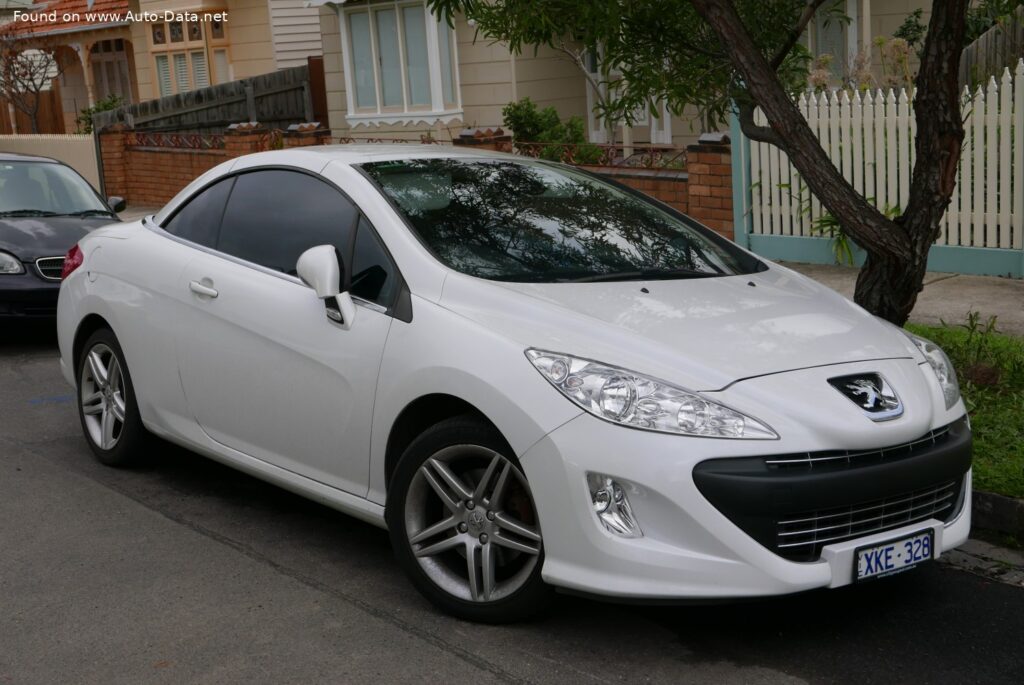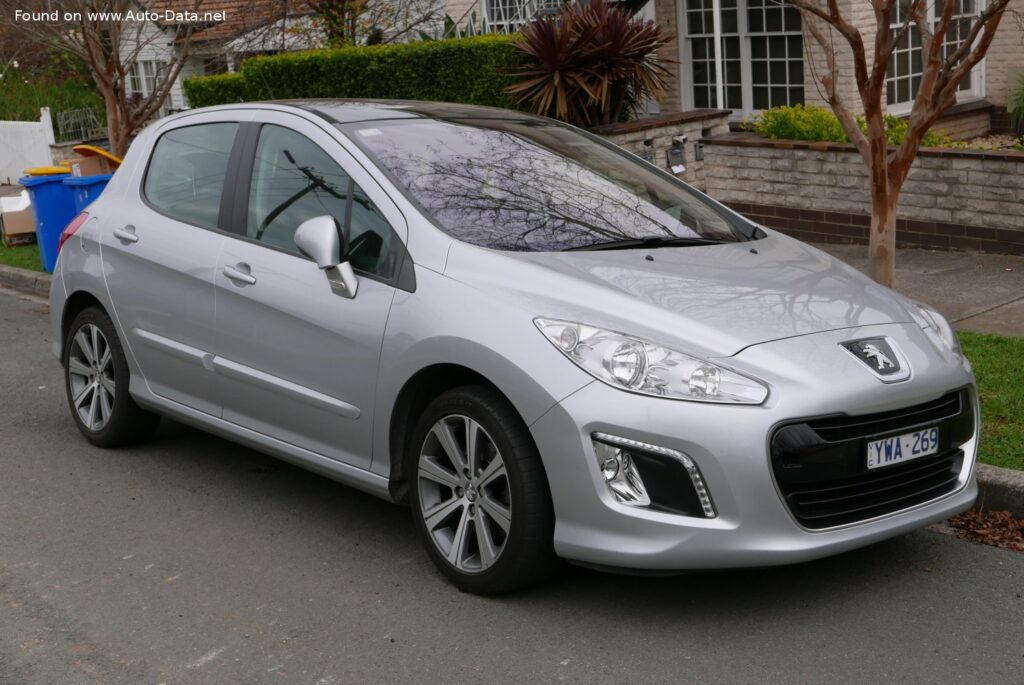
The Peugeot 308 I (Phase II, 2011) 1.6 e-HDi represents a mid-cycle refresh of the first generation 308, a compact hatchback designed to compete in the highly competitive European C-segment. Introduced in 2007, the 308 aimed to replace the aging 307, offering improved refinement, safety, and build quality. The Phase II update, launched in 2011, brought styling revisions, enhanced interior materials, and crucially, the introduction of Peugeot’s e-HDi diesel technology, focusing on fuel efficiency and reduced emissions. While not officially sold in the United States, the 308 was a significant model for Peugeot, consistently ranking among Europe’s best-selling cars and establishing a reputation for practicality and value.
Peugeot 308 I (Phase II) 1.6 e-HDi: Overview
The 308 Phase II continued Peugeot’s design language, characterized by a sporty and modern aesthetic. The 1.6 e-HDi variant specifically targeted buyers seeking economical motoring without sacrificing performance. This model combined a 1.6-liter diesel engine with Stop & Start technology and a particulate filter, aligning with increasingly stringent European emission standards. The Phase II updates included a revised front grille, headlights, and bumper, along with interior enhancements designed to elevate the perceived quality of the cabin. The 308’s success stemmed from its blend of practicality, comfort, and relatively affordable pricing.
Engine & Performance
The heart of the 308 1.6 e-HDi is a 1.6-liter inline-four cylinder diesel engine, designated 9HR DV6C. This engine produces 112 horsepower at 3600 rpm and 270 Nm (199.14 lb.-ft.) of torque at 1750 rpm. The engine features a turbocharger with an intercooler, enhancing both power and efficiency. The e-HDi system incorporates a Diesel Commonrail fuel injection system and Stop & Start technology, which automatically shuts off the engine when the vehicle is stationary to conserve fuel. Power is delivered to the front wheels via a six-speed manual transmission. Performance figures include a 0-100 km/h (0-62 mph) acceleration time of 11.4 seconds and a maximum speed of 192 km/h (119.3 mph). The engine’s power-to-weight ratio is 12.7 kg/Hp, and the torque-to-weight ratio is 5.3 kg/Nm.
Design & Features
The Peugeot 308 Phase II is a five-door hatchback, offering seating for five passengers. Its dimensions are 4276 mm (168.35 in) in length, 1815 mm (71.46 in) in width, and 1498 mm (58.98 in) in height. The wheelbase measures 2608 mm (102.68 in). The car’s design prioritizes practicality and space efficiency. The trunk offers a minimum capacity of 348 liters (12.29 cu. ft.), expanding to 1201 liters (42.41 cu. ft.) with the rear seats folded down. Safety features included ABS (Anti-lock Braking System) as standard. The interior, updated in the Phase II, featured improved materials and a more modern dashboard layout. Standard equipment typically included power steering, air conditioning, and a radio/CD player. Optional extras could include alloy wheels, parking sensors, and a navigation system. The 308’s focus was on providing a comfortable and well-equipped package for everyday use.
Technical Specifications
| Brand | Peugeot |
| Model | 308 |
| Generation | 308 I (Phase II, 2011) |
| Type (Engine) | 1.6 e-HDi (112 Hp) |
| Start of production | 2011 |
| End of production | 2013 |
| Powertrain Architecture | Internal Combustion engine |
| Body type | Hatchback |
| Seats | 5 |
| Doors | 5 |
| Fuel consumption (urban) | 5-5.4 l/100 km (47 – 43.6 US mpg) |
| Fuel consumption (extra urban) | 3.9-4 l/100 km (60.3 – 58.8 US mpg) |
| Fuel consumption (combined) | 4.3-4.5 l/100 km (54.7 – 52.3 US mpg) |
| CO2 emissions | 113-118 g/km |
| Fuel Type | Diesel |
| Acceleration 0 – 100 km/h | 11.4 sec |
| Acceleration 0 – 62 mph | 11.4 sec |
| Acceleration 0 – 60 mph | 10.8 sec |
| Maximum speed | 192 km/h (119.3 mph) |
| Emission standard | Euro 5 |
| Weight-to-power ratio | 12.7 kg/Hp |
| Weight-to-torque ratio | 5.3 kg/Nm |
| Power | 112 Hp @ 3600 rpm |
| Torque | 270 Nm @ 1750 rpm (199.14 lb.-ft. @ 1750 rpm) |
| Engine layout | Front, Transverse |
| Engine Model/Code | 9HR DV6C |
| Engine displacement | 1560 cm3 (95.2 cu. in.) |
| Number of cylinders | 4 |
| Engine configuration | Inline |
| Cylinder Bore | 75 mm (2.95 in.) |
| Piston Stroke | 88.3 mm (3.48 in.) |
| Compression ratio | 18:1 |
| Number of valves per cylinder | 2 |
| Fuel injection system | Diesel Commonrail |
| Engine aspiration | Turbocharger, Intercooler |
| Valvetrain | SOHC |
| Engine oil capacity | 3.75 l (3.96 US qt | 3.3 UK qt) |
| Coolant | 6 l (6.34 US qt | 5.28 UK qt) |
| Kerb Weight | 1418 kg (3126.15 lbs.) |
| Max. weight | 1860 kg (4100.6 lbs.) |
| Max load | 442 kg (974.44 lbs.) |
| Trunk (boot) space – minimum | 348 l (12.29 cu. ft.) |
| Trunk (boot) space – maximum | 1201 l (42.41 cu. ft.) |
| Fuel tank capacity | 60 l (15.85 US gal | 13.2 UK gal) |
| Max. roof load | 75 kg (165.35 lbs.) |
| Permitted trailer load with brakes (12%) | 1500 kg (3306.93 lbs.) |
| Permitted trailer load without brakes | 695 kg (1532.21 lbs.) |
| Permitted towbar download | 60 kg (132.28 lbs.) |
| Length | 4276 mm (168.35 in.) |
| Width | 1815 mm (71.46 in.) |
| Width including mirrors | 2038 mm (80.24 in.) |
| Height | 1498 mm (58.98 in.) |
| Wheelbase | 2608 mm (102.68 in.) |
| Front track | 1526-1536 mm (60.08 – 60.47 in.) |
| Rear track | 1521-1531 mm (59.88 – 60.28 in.) |
| Front overhang | 926 mm (36.46 in.) |
| Rear overhang | 742 mm (29.21 in.) |
| Minimum turning circle | 10.7 m (35.1 ft.) |
| Drivetrain | Front wheel drive |
| Number of gears | 6 gears, manual transmission |
| Front suspension | Independent, type McPherson with coil spring and anti-roll bar |
| Rear suspension | Coil spring, Torsion |
| Front brakes | Ventilated discs |
| Rear brakes | Disc |
| Tires size | 195/65 R15; 205/55 R16; 225/45 R17 |
| Wheel rims size | 6.5J x 15; 7J x 16; 7.5J x 17 |