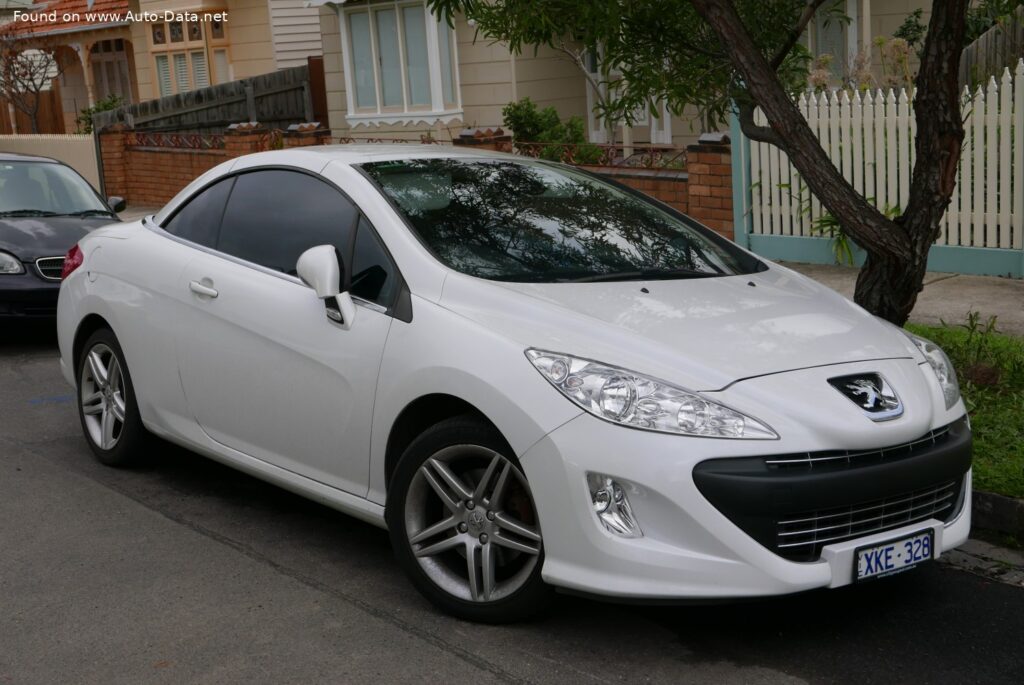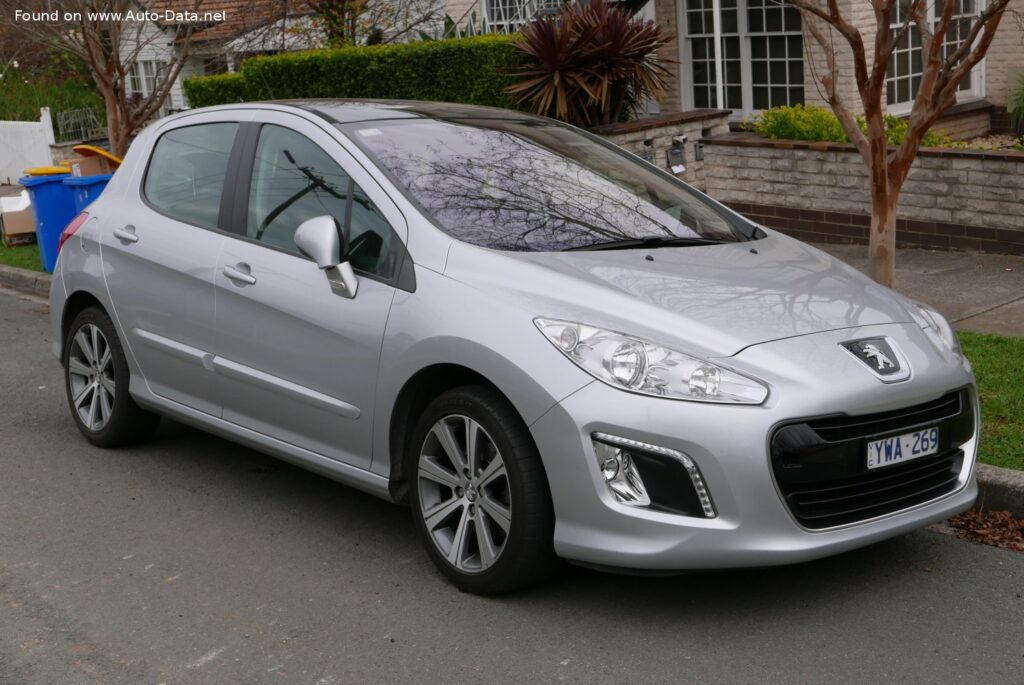
The Peugeot 308 I (Phase II, 2011) 1.6 HDi (92 Hp) represents a mid-cycle refresh of the first generation 308, a compact hatchback designed by the French automaker Peugeot. Introduced in 2007, the 308 was intended as a replacement for the 307, offering a more refined and modern package. The Phase II update, launched in 2011, brought styling revisions, improved interior materials, and enhanced efficiency, particularly within the diesel engine range. While not officially sold in the United States, the 308 was a significant competitor in the European C-segment, battling rivals like the Volkswagen Golf, Ford Focus, and Opel Astra. This model focused on providing a balance of practicality, fuel economy, and a relatively comfortable driving experience.
Peugeot 308 I (Phase II): A Focus on Efficiency
The 308 Phase II aimed to solidify Peugeot’s position in the competitive European hatchback market. The updates weren’t radical, but focused on refining the existing platform. The exterior received subtle changes to the front fascia, including a revised grille and headlights, while the interior benefited from improved material quality and updated technology. The 1.6 HDi engine variant, producing 92 horsepower, was particularly popular due to its excellent fuel economy and suitability for both urban and long-distance driving. This version of the 308 catered to buyers prioritizing cost-effectiveness and environmental consciousness.
Engine & Performance
The heart of the 308 I (Phase II) 1.6 HDi is a 1.6-liter inline-four cylinder diesel engine, designated 9HJ DV6ATED4. This engine produces 92 horsepower at 4000 rpm and 230 Nm (169.64 lb.-ft.) of torque at 1750 rpm. The engine utilizes a turbocharger with an intercooler to enhance performance and efficiency. A diesel commonrail fuel injection system ensures precise fuel delivery, contributing to both power output and reduced emissions. The engine’s 16:1 compression ratio is typical for a diesel engine, maximizing combustion efficiency. Power is delivered to the front wheels via a five-speed manual transmission. Acceleration from 0 to 100 km/h (0-62 mph) takes 12.4 seconds, while 0 to 60 mph is achieved in approximately 11.8 seconds. The vehicle has a maximum speed of 181 km/h (112.47 mph). The engine’s design prioritizes fuel economy, achieving combined fuel consumption of 4.1 l/100 km (57.4 US mpg or 68.9 UK mpg) and CO2 emissions of 107 g/km, meeting Euro 5 emission standards.
Design & Features
The Peugeot 308 I (Phase II) is a five-door hatchback, offering a practical and versatile body style. It seats five passengers and provides a reasonable amount of cargo space. The Phase II update brought minor cosmetic changes, including a redesigned front grille, headlights, and bumpers. Inside, the cabin was updated with improved materials and a more modern dashboard layout. Standard features typically included air conditioning, power windows, central locking, and an audio system. Safety features, crucial for this segment, included ABS (Anti-lock Braking System) and front airbags. The 308’s trunk space offers 348 liters (12.29 cu. ft.) with the rear seats up, expanding to 1201 liters (42.41 cu. ft.) when the rear seats are folded down. The vehicle’s drag coefficient of 0.28 contributes to its aerodynamic efficiency, further aiding fuel economy. The suspension utilizes an independent McPherson strut setup at the front and an elastic beam arrangement at the rear, providing a balance between comfort and handling.
Technical Specifications
| Brand | Peugeot |
| Model | 308 |
| Generation | 308 I (Phase II, 2011) |
| Type (Engine) | 1.6 HDi (92 Hp) |
| Start of production | 2011 |
| End of production | 2013 |
| Powertrain Architecture | Internal Combustion engine |
| Body type | Hatchback |
| Seats | 5 |
| Doors | 5 |
| Fuel consumption (urban) | 5 l/100 km (47 US mpg, 56.5 UK mpg, 20 km/l) |
| Fuel consumption (extra urban) | 3.6 l/100 km (65.3 US mpg, 78.5 UK mpg, 27.8 km/l) |
| Fuel consumption (combined) | 4.1 l/100 km (57.4 US mpg, 68.9 UK mpg, 24.4 km/l) |
| CO2 emissions | 107 g/km |
| Fuel Type | Diesel |
| Acceleration 0 – 100 km/h | 12.4 sec |
| Acceleration 0 – 62 mph | 12.4 sec |
| Acceleration 0 – 60 mph | 11.8 sec |
| Maximum speed | 181 km/h (112.47 mph) |
| Emission standard | Euro 5 |
| Weight-to-power ratio | 13.9 kg/Hp |
| Weight-to-torque ratio | 5.5 kg/Nm |
| Power | 92 Hp @ 4000 rpm |
| Torque | 230 Nm @ 1750 rpm (169.64 lb.-ft. @ 1750 rpm) |
| Engine layout | Front, Transverse |
| Engine Model/Code | 9HJ DV6ATED4 |
| Engine displacement | 1560 cm3 (95.2 cu. in.) |
| Number of cylinders | 4 |
| Engine configuration | Inline |
| Cylinder Bore | 75 mm (2.95 in.) |
| Piston Stroke | 88.3 mm (3.48 in.) |
| Compression ratio | 16:1 |
| Number of valves per cylinder | 2 |
| Fuel injection system | Diesel Commonrail |
| Engine aspiration | Turbocharger, Intercooler |
| Valvetrain | SOHC |
| Engine oil capacity | 3.75 l (3.96 US qt | 3.3 UK qt) |
| Coolant capacity | 6 l (6.34 US qt | 5.28 UK qt) |
| Kerb Weight | 1275 kg (2810.89 lbs.) |
| Max. weight | 1800 kg (3968.32 lbs.) |
| Max load | 525 kg (1157.43 lbs.) |
| Trunk (boot) space (min) | 348 l (12.29 cu. ft.) |
| Trunk (boot) space (max) | 1201 l (42.41 cu. ft.) |
| Fuel tank capacity | 60 l (15.85 US gal | 13.2 UK gal) |
| Length | 4276 mm (168.35 in.) |
| Width | 1815 mm (71.46 in.) |
| Height | 1498 mm (58.98 in.) |
| Wheelbase | 2608 mm (102.68 in.) |
| Number of gears | 5 |
| Gearbox type | Manual transmission |
The Peugeot 308 I (Phase II) 1.6 HDi (92 Hp) remains a popular choice in the used car market, particularly for those seeking an economical and reliable hatchback. Its blend of practicality, fuel efficiency, and relatively low running costs make it a compelling option within its segment.