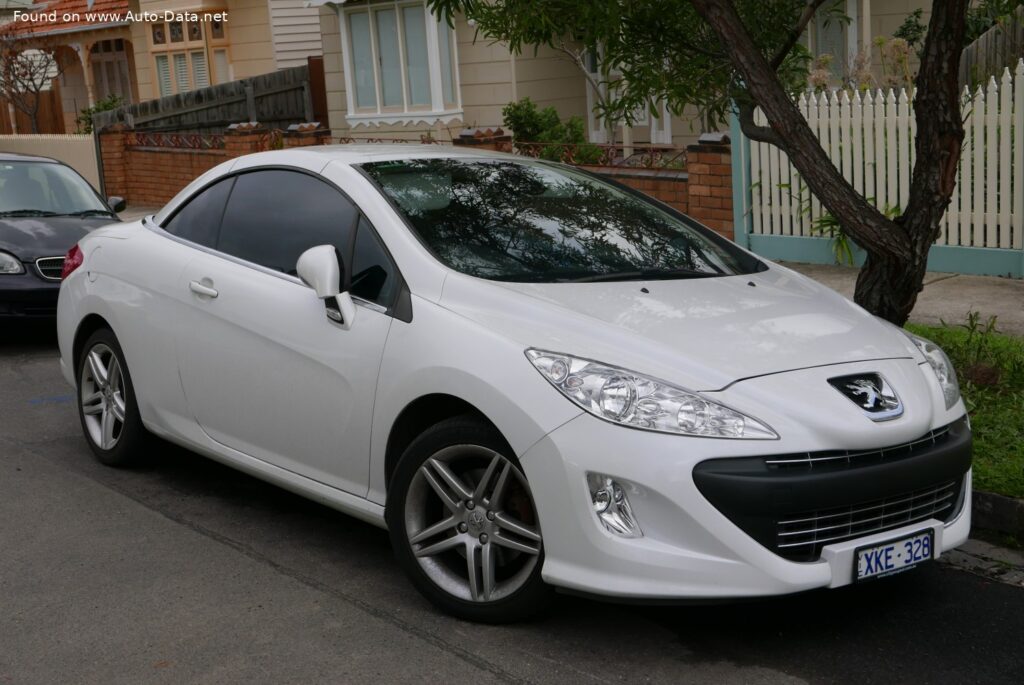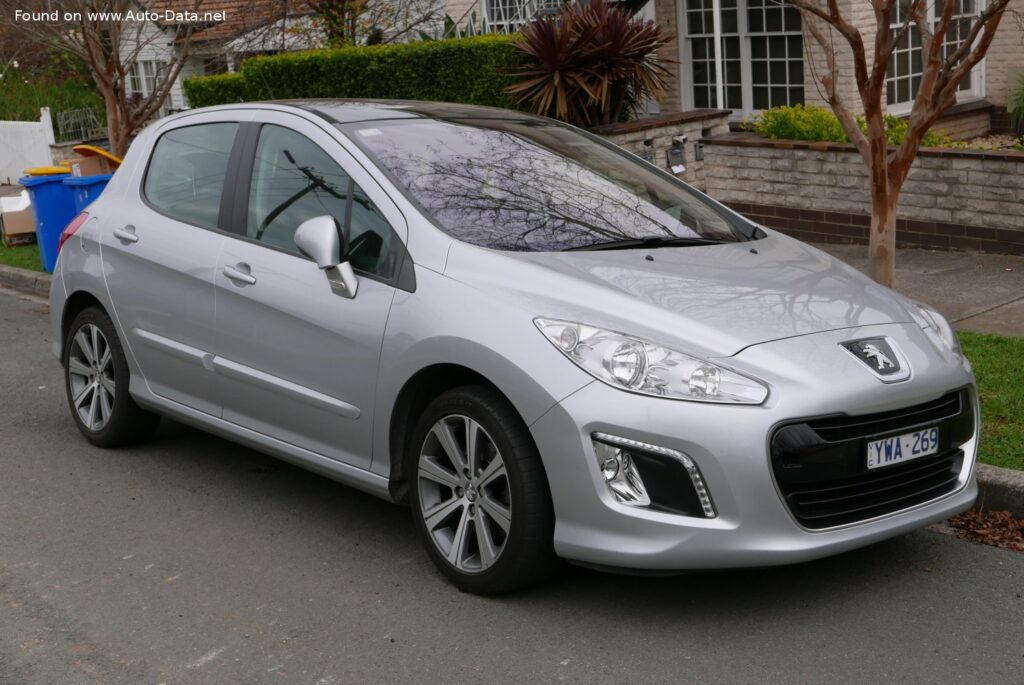
The Peugeot 308 I (Phase II, 2011) 2.0 HDi 163 Automatic is a compact hatchback produced by the French automaker Peugeot between 2011 and 2013. This iteration represents a mid-life refresh of the first-generation 308, introduced in 2007. Positioned as a competitor to vehicles like the Volkswagen Golf, Ford Focus, and Opel Astra, the 308 aimed to provide a blend of style, practicality, and fuel efficiency. The Phase II update brought styling revisions, interior enhancements, and improvements to the engine lineup, including this 2.0-liter HDi diesel variant paired with an automatic transmission. While not officially sold in the United States, the 308 was a popular choice in Europe and other international markets, known for its refined driving experience and competitive features.
Peugeot 308 I (Phase II): Overview and Market Position
The first generation Peugeot 308 was designed to replace the aging 307, offering a more modern and sophisticated package. The Phase II update, launched in 2011, focused on refining the existing platform rather than a complete redesign. Key changes included a revised front fascia with a more prominent Peugeot emblem, updated interior trim, and improved safety features. The 2.0 HDi 163 Automatic model specifically targeted buyers seeking a balance between performance and economy, offering a comfortable and efficient driving experience for daily commutes and longer journeys. In Europe, where diesel engines were – and continue to be – highly prevalent, this model was a significant contributor to the 308’s sales success.
Engine & Performance
The heart of the 308 I (Phase II) 2.0 HDi 163 Automatic is a 1.997-liter inline-four cylinder diesel engine, designated RHH DW10CTED4. This engine produces 163 horsepower at 3750 rpm and 340 Nm (250.77 lb.-ft.) of torque at 2000 rpm. The engine utilizes a turbocharger with an intercooler and a diesel common rail fuel injection system, contributing to its efficiency and responsiveness. Power is delivered to the front wheels via a six-speed automatic transmission. Performance figures include a 0-100 km/h (0-62 mph) acceleration time of 9.6 seconds and a top speed of 202 km/h (125.52 mph). The engine’s relatively high compression ratio of 16.7:1 is typical for diesel engines, maximizing combustion efficiency. The weight-to-power ratio is 9 kg/Hp, and the weight-to-torque ratio is 4.3 kg/Nm, indicating a reasonably efficient powertrain.
Design & Features
The Peugeot 308 I (Phase II) is a five-door hatchback, offering a practical and versatile body style. The Phase II facelift brought subtle but noticeable changes to the exterior, including a redesigned grille, headlights, and front bumper. Inside, the cabin features a driver-focused layout with a compact steering wheel and a user-friendly infotainment system for the time. The 308 offers seating for five passengers and provides 348 liters (12.29 cu. ft.) of trunk space with the rear seats up, expanding to 1201 liters (42.41 cu. ft.) when the rear seats are folded down. Safety features included ABS (Anti-lock Braking System) and were enhanced in the Phase II model. The car’s drag coefficient of 0.28 contributes to its aerodynamic efficiency. The suspension utilizes an independent McPherson strut setup at the front and an elastic beam arrangement at the rear, providing a comfortable ride and predictable handling.
Technical Specifications
| Brand | Peugeot |
| Model | 308 |
| Generation | 308 I (Phase II, 2011) |
| Type (Engine) | 2.0 HDi (163 Hp) Automatic |
| Start of production | 2011 |
| End of production | 2013 |
| Powertrain Architecture | Internal Combustion engine |
| Body type | Hatchback |
| Seats | 5 |
| Doors | 5 |
| Fuel consumption (urban) | 8.3 l/100 km (28.3 US mpg, 34 UK mpg, 12 km/l) |
| Fuel consumption (extra urban) | 5.2 l/100 km (45.2 US mpg, 54.3 UK mpg, 19.2 km/l) |
| Fuel consumption (combined) | 6.3 l/100 km (37.3 US mpg, 44.8 UK mpg, 15.9 km/l) |
| CO2 emissions | 164 g/km |
| Fuel Type | Diesel |
| Acceleration 0 – 100 km/h | 9.6 sec |
| Acceleration 0 – 62 mph | 9.6 sec |
| Acceleration 0 – 60 mph | 9.1 sec |
| Maximum speed | 202 km/h (125.52 mph) |
| Emission standard | Euro 5 |
| Weight-to-power ratio | 9 kg/Hp |
| Weight-to-torque ratio | 4.3 kg/Nm |
| Power | 163 Hp @ 3750 rpm |
| Torque | 340 Nm @ 2000 rpm (250.77 lb.-ft. @ 2000 rpm) |
| Maximum engine speed | 5000 rpm |
| Engine layout | Front, Transverse |
| Engine Model/Code | RHH DW10CTED4 |
| Engine displacement | 1997 cm3 (121.86 cu. in.) |
| Number of cylinders | 4 |
| Engine configuration | Inline |
| Cylinder Bore | 85 mm (3.35 in.) |
| Piston Stroke | 88 mm (3.46 in.) |
| Compression ratio | 16.7:1 |
| Number of valves per cylinder | 4 |
| Fuel injection system | Diesel Commonrail |
| Engine aspiration | Turbocharger, Intercooler |
| Valvetrain | DOHC |
| Engine oil capacity | 5 l (5.28 US qt | 4.4 UK qt) |
| Coolant capacity | 8.05 l (8.51 US qt | 7.08 UK qt) |
| Kerb Weight | 1468 kg (3236.39 lbs.) |
| Max. weight | 1960 kg (4321.06 lbs.) |
| Max load | 492 kg (1084.67 lbs.) |
| Trunk (boot) space – minimum | 348 l (12.29 cu. ft.) |
| Trunk (boot) space – maximum | 1201 l (42.41 cu. ft.) |
| Fuel tank capacity | 60 l (15.85 US gal | 13.2 UK gal) |
| Max. roof load | 75 kg (165.35 lbs.) |
| Permitted trailer load with brakes (12%) | 1500 kg (3306.93 lbs.) |
| Permitted trailer load without brakes | 750 kg (1653.47 lbs.) |
| Permitted towbar download | 66 kg (145.51 lbs.) |
| Length | 4276 mm (168.35 in.) |
| Width | 1815 mm (71.46 in.) |
| Width including mirrors | 2038 mm (80.24 in.) |
| Height | 1498 mm (58.98 in.) |
| Wheelbase | 2608 mm (102.68 in.) |
| Front track | 1526 mm (60.08 in.) |
| Rear track | 1521 mm (59.88 in.) |
| Front overhang | 926 mm (36.46 in.) |
| Rear overhang | 742 mm (29.21 in.) |
| Drag coefficient (Cd) | 0.28 |
| Minimum turning circle | 10.7 m (35.1 ft.) |
| Drive wheel | Front wheel drive |
| Number of gears | 6 gears, automatic transmission |
| Front suspension | Independent type McPherson |
| Rear suspension | Elastic beam |
| Front brakes | Ventilated discs |
| Rear brakes | Disc |
| Steering type | Steering rack and pinion |
| Power steering | Hydraulic Steering |
| Tires size | 225/45 R17; 225/40 R18 |
| Wheel rims size | 7.5J x 17; 8J x 18 |