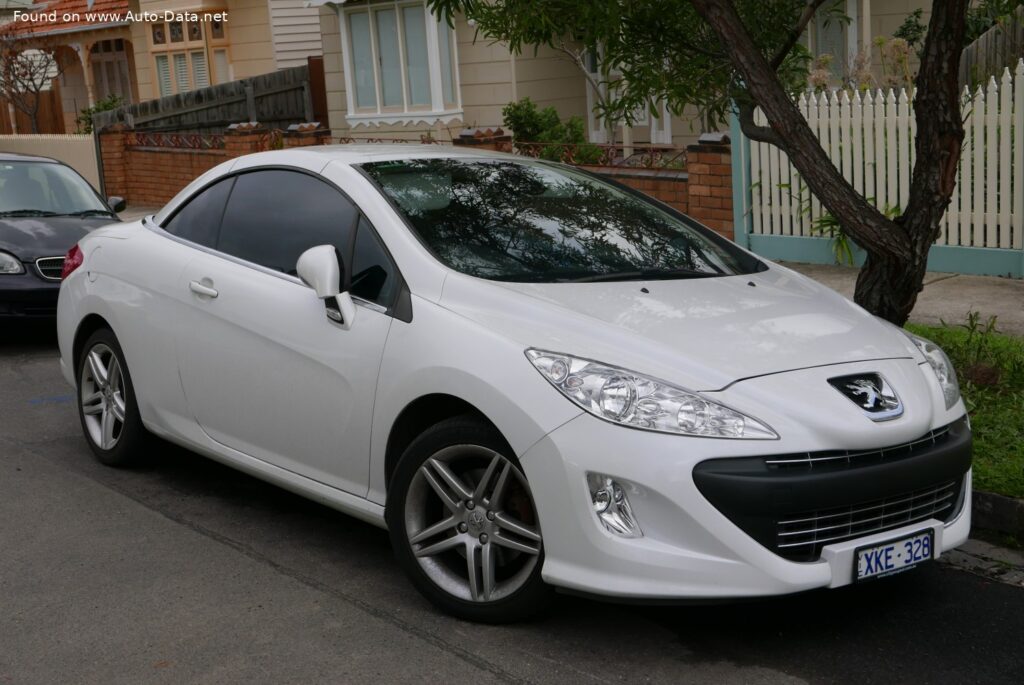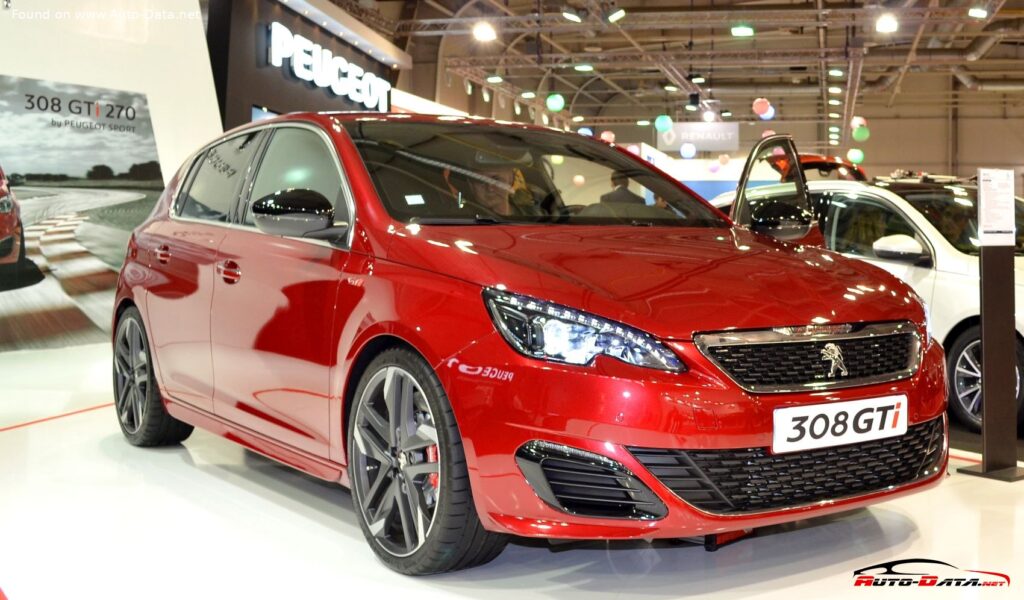
The Peugeot 308 II, launched in 2013, represented a significant step forward for the French automaker, aiming to compete more effectively in the highly competitive European C-segment hatchback market. This second generation of the 308 moved away from the somewhat quirky styling of its predecessor, adopting a more mature and refined aesthetic. The Phase I models, produced from 2014 to 2017, were particularly notable for introducing Peugeot’s new “BlueHDi” diesel and “PureTech” gasoline engine families. The 1.2 PureTech 130 Hp variant, detailed here, was a key offering, providing a balance of fuel efficiency and performance for European buyers. While not officially sold in the United States, the 308 II was a popular choice in Europe, known for its comfortable ride, well-appointed interior, and modern technology.
Peugeot 308 II (Phase I) 1.2 PureTech: An Overview
The 308 II Phase I, specifically the 1.2 PureTech 130 Hp model, is a five-door hatchback designed to appeal to drivers seeking a practical and efficient vehicle. It falls into the compact class, competing with models like the Volkswagen Golf, Ford Focus, and Opel Astra. The “PureTech” designation refers to Peugeot’s three-cylinder, turbocharged gasoline engine, which was lauded for its responsiveness and fuel economy. This model year marked a shift towards smaller displacement, forced-induction engines as manufacturers sought to meet increasingly stringent emissions regulations. The 308 II aimed to provide a more premium feel than some of its rivals, with a focus on interior quality and technology.
Engine & Performance
The heart of the 308 II 1.2 PureTech 130 Hp is the HNY EB2DTS engine, a 1.2-liter (73.17 cubic inches) inline three-cylinder gasoline engine. Despite its small displacement, the engine produces 130 horsepower at 5500 rpm and 230 Nm (169.64 lb-ft) of torque at 1750 rpm. This torque output, available relatively low in the rev range, contributes to the car’s responsive feel in everyday driving. The engine utilizes direct fuel injection and a turbocharger with an intercooler to maximize efficiency and power. The power-to-weight ratio is a respectable 8.4 kg/Hp, and the power per liter is an impressive 108.4 Hp/l. Acceleration from 0 to 100 km/h (0-62 mph) takes 9.6 seconds, while 0-60 mph is achieved in approximately 9.1 seconds. The vehicle boasts a maximum speed of 207 km/h (128.62 mph). The engine is paired with a six-speed manual transmission, driving the front wheels.
Design & Features
The 308 II Phase I features a modern hatchback design, characterized by a sleek profile and a relatively compact footprint. It measures 4253 mm (167.44 inches) in length, 1804 mm (71.02 inches) in width, and 1457 mm (57.36 inches) in height. The interior is designed with a focus on ergonomics and quality materials. Key features include a comfortable cabin for five passengers, a 420-liter (14.83 cubic feet) trunk that expands to 855 liters (30.19 cubic feet) with the rear seats folded down, and a user-friendly infotainment system. Safety features, standard for the time, included ABS (Anti-lock Braking System) and a comprehensive airbag system. The Phase I models also benefited from Peugeot’s i-Cockpit design, featuring a smaller steering wheel and a raised instrument cluster, intended to provide a more engaging driving experience. The vehicle’s kerb weight is 1090 kg (2403.04 lbs), with a maximum permissible weight of 1750 kg (3858.09 lbs).
Technical Specifications
| Brand | Peugeot |
| Model | 308 |
| Generation | 308 II (Phase I, 2013) |
| Type (Engine) | 1.2 PureTech (130 Hp) |
| Start of production | 2014 |
| End of production | 2017 |
| Powertrain Architecture | Internal Combustion engine |
| Body type | Hatchback |
| Seats | 5 |
| Doors | 5 |
| Fuel consumption (urban) | 5.8 l/100 km (40.6 US mpg, 48.7 UK mpg, 17.2 km/l) |
| Fuel consumption (extra urban) | 3.9 l/100 km (60.3 US mpg, 72.4 UK mpg, 25.6 km/l) |
| Fuel consumption (combined) | 4.6 l/100 km (51.1 US mpg, 61.4 UK mpg, 21.7 km/l) |
| CO2 emissions | 107 g/km |
| Fuel Type | Petrol (Gasoline) |
| Acceleration 0 – 100 km/h | 9.6 sec |
| Acceleration 0 – 62 mph | 9.6 sec |
| Acceleration 0 – 60 mph | 9.1 sec |
| Maximum speed | 207 km/h (128.62 mph) |
| Emission standard | Euro 6 |
| Weight-to-power ratio | 8.4 kg/Hp |
| Weight-to-torque ratio | 4.7 kg/Nm |
| Power | 130 Hp @ 5500 rpm |
| Torque | 230 Nm @ 1750 rpm (169.64 lb.-ft. @ 1750 rpm) |
| Engine layout | Front, Transverse |
| Engine Model/Code | HNY EB2DTS |
| Engine displacement | 1199 cm3 (73.17 cu. in.) |
| Number of cylinders | 3 |
| Engine configuration | Inline |
| Number of valves per cylinder | 4 |
| Fuel injection system | Direct injection |
| Engine aspiration | Turbocharger, Intercooler |
| Engine oil capacity | 3.5 l (3.7 US qt | 3.08 UK qt) |
| Coolant capacity | 6 l (6.34 US qt | 5.28 UK qt) |
| Kerb Weight | 1090 kg (2403.04 lbs) |
| Max. weight | 1750 kg (3858.09 lbs) |
| Max load | 660 kg (1455.05 lbs) |
| Trunk (boot) space – minimum | 420 l (14.83 cu. ft.) |
| Trunk (boot) space – maximum | 855 l (30.19 cu. ft.) |
| Fuel tank capacity | 53 l (14 US gal | 11.66 UK gal) |
| Permitted trailer load with brakes (12%) | 1300 kg (2866.01 lbs) |
| Permitted towbar download | 75 kg (165.35 lbs) |
| Length | 4253 mm (167.44 in) |
| Width | 1804 mm (71.02 in) |
| Width including mirrors | 2043 mm (80.43 in) |
| Height | 1457 mm (57.36 in) |
| Wheelbase | 2620 mm (103.15 in) |
| Front track | 1559 mm (61.38 in) |
| Rear track | 1553 mm (61.14 in) |
| Front overhang | 863 mm (33.98 in) |
| Rear overhang | 770 mm (30.31 in) |
| Minimum turning circle | 10.4 m (34.12 ft) |
| Drivetrain | Front wheel drive |
| Number of gears | 6 gears, manual transmission |
| Front suspension | Independent, type McPherson with coil spring and anti-roll bar |
| Rear suspension | Semi-independent, coil spring |
| Front brakes | Ventilated discs |
| Rear brakes | Disc |
| Tires size | 205/55 R16 V |
| Wheel rims size | 16 |