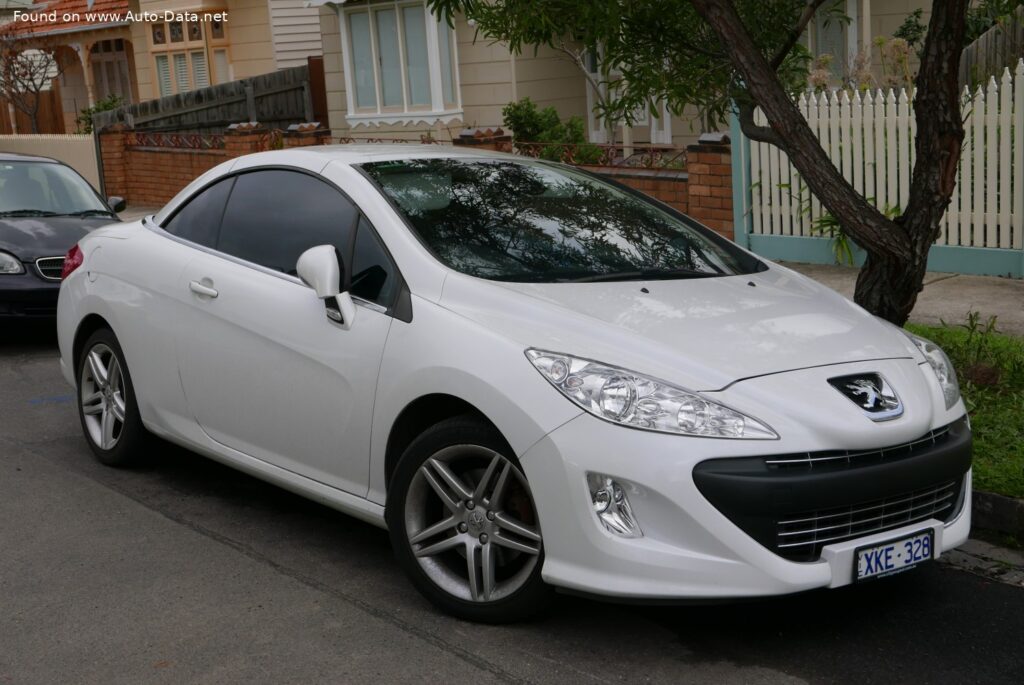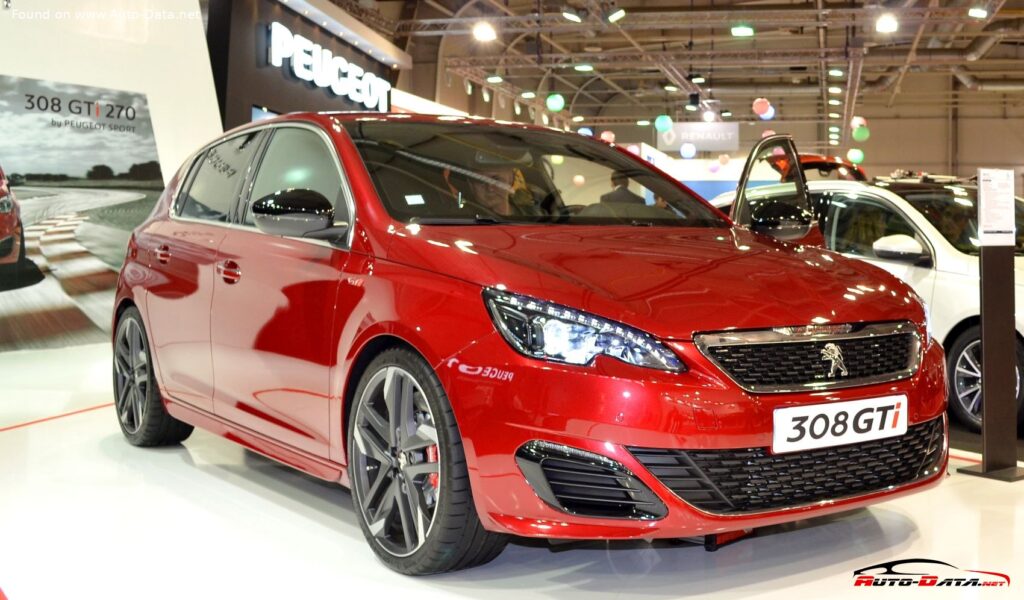
The Peugeot 308 II, specifically the Phase I model produced from 2013 to 2017, represents a significant step forward for Peugeot in the competitive compact hatchback segment. This generation 308 aimed to address criticisms of its predecessor by offering a more refined driving experience, improved interior quality, and a focus on fuel efficiency. The 1.6 BlueHDi variant, powered by a turbocharged diesel engine producing 120 horsepower, was a particularly popular choice in European markets, where diesel engines held a substantial market share due to favorable taxation and fuel economy. While not officially sold in the United States, the 308 II was a key model for Peugeot, competing with vehicles like the Volkswagen Golf, Ford Focus, and Opel Astra.
Peugeot 308 II (Phase I): A Detailed Overview
The 308 II marked a departure from previous Peugeot designs, adopting a more mature and sophisticated aesthetic. It was built on Peugeot’s Efficient Modular Platform 2 (EMP2), which contributed to a reduction in weight and improved structural rigidity. This platform allowed for greater flexibility in design and engineering, enabling Peugeot to offer a range of engine options and trim levels. The Phase I models, produced between 2013 and 2017, established the foundation for the 308 II’s success, setting the stage for subsequent updates and enhancements.
Engine & Performance
The heart of the 308 II 1.6 BlueHDi is its 1.6-liter, four-cylinder diesel engine, designated BHZ DV6FC. This engine utilizes a turbocharger and intercooler to deliver a balance of power and efficiency. It produces 120 horsepower at 3500 rpm and a substantial 300 Nm (221.27 lb.-ft.) of torque at 1750 rpm. This torque output provides strong acceleration and effortless cruising, particularly beneficial for highway driving. The engine is paired with a six-speed manual transmission, offering precise gear changes and driver engagement. Acceleration from 0 to 100 km/h (0-62 mph) takes 9.7 seconds, while 0 to 60 mph is achieved in a calculated 9.2 seconds. The 308 II 1.6 BlueHDi boasts a top speed of 196 km/h (121.79 mph). A key feature of the BlueHDi engine is its advanced aftertreatment system, including a particulate filter, designed to significantly reduce emissions and meet stringent Euro 6 standards. Fuel economy is a standout characteristic, with combined fuel consumption rated at 3.1 l/100 km (75.9 US mpg or 91.1 UK mpg), and CO2 emissions of just 82 g/km.
Design & Features
The Peugeot 308 II Phase I is a five-door hatchback, offering a practical and versatile body style. Its exterior design is characterized by a sleek silhouette, sculpted lines, and a distinctive front grille. The interior of the 308 II represents a significant improvement over its predecessor, with higher-quality materials and a more ergonomic layout. The dashboard features a compact steering wheel and a centrally-mounted touchscreen display, controlling infotainment and vehicle settings. The 308 II prioritizes passenger comfort and safety. Standard safety features include ABS (Anti-lock Braking System), electronic stability control, and multiple airbags. The vehicle offers a spacious cabin for five occupants, with ample headroom and legroom. The trunk provides 420 liters (14.83 cu. ft.) of cargo space, which can be expanded to 855 liters (30.19 cu. ft.) by folding down the rear seats. The 308 II also offers a range of convenience features, including air conditioning, power windows, and a sound system.
Technical Specifications
| Brand | Peugeot |
| Model | 308 |
| Generation | 308 II (Phase I, 2013) |
| Type (Engine) | 1.6 BlueHDi (120 Hp) |
| Start of production | 2014 |
| End of production | 2017 |
| Powertrain Architecture | Internal Combustion engine |
| Body type | Hatchback |
| Seats | 5 |
| Doors | 5 |
| Fuel consumption (urban) | 3.5 l/100 km (67.2 US mpg, 80.7 UK mpg, 28.6 km/l) |
| Fuel consumption (extra urban) | 2.9 l/100 km (81.1 US mpg, 97.4 UK mpg, 34.5 km/l) |
| Fuel consumption (combined) | 3.1 l/100 km (75.9 US mpg, 91.1 UK mpg, 32.3 km/l) |
| CO2 emissions | 82 g/km |
| Fuel Type | Diesel |
| Acceleration 0 – 100 km/h | 9.7 sec |
| Acceleration 0 – 62 mph | 9.7 sec |
| Acceleration 0 – 60 mph | 9.2 sec |
| Maximum speed | 196 km/h (121.79 mph) |
| Emission standard | Euro 6 |
| Weight-to-power ratio | 9.9 kg/Hp, 101.3 Hp/tonne |
| Weight-to-torque ratio | 4 kg/Nm, 253.2 Nm/tonne |
| Power | 120 Hp @ 3500 rpm |
| Power per litre | 76.9 Hp/l |
| Torque | 300 Nm @ 1750 rpm (221.27 lb.-ft. @ 1750 rpm) |
| Engine layout | Front, Transverse |
| Engine Model/Code | BHZ DV6FC |
| Engine displacement | 1560 cm3 (95.2 cu. in.) |
| Number of cylinders | 4 |
| Engine configuration | Inline |
| Number of valves per cylinder | 2 |
| Fuel injection system | Diesel Commonrail |
| Engine aspiration | Turbocharger, Intercooler |
| Engine oil capacity | 3.75 l (3.96 US qt | 3.3 UK qt) |
| Kerb Weight | 1185 kg (2612.48 lbs.) |
| Max. weight | 1810 kg (3990.37 lbs.) |
| Max load | 625 kg (1377.89 lbs.) |
| Trunk (boot) space – minimum | 420 l (14.83 cu. ft.) |
| Trunk (boot) space – maximum | 855 l (30.19 cu. ft.) |
| Fuel tank capacity | 53 l (14 US gal | 11.66 UK gal) |
| Permitted trailer load with brakes (12%) | 1400 kg (3086.47 lbs.) |
| Permitted towbar download | 75 kg (165.35 lbs.) |
| Length | 4253 mm (167.44 in.) |
| Width | 1804 mm (71.02 in.) |
| Width including mirrors | 2043 mm (80.43 in.) |
| Height | 1457 mm (57.36 in.) |
| Wheelbase | 2620 mm (103.15 in.) |
| Front track | 1559 mm (61.38 in.) |
| Rear track | 1553 mm (61.14 in.) |
| Front overhang | 863 mm (33.98 in.) |
| Rear overhang | 770 mm (30.31 in.) |
| Minimum turning circle | 10.4 m (34.12 ft.) |
| Drivetrain | Front wheel drive |
| Number of gears | 6 gears, manual transmission |
| Front suspension | Independent, type McPherson with coil spring and anti-roll bar |
| Rear suspension | Semi-independent, coil spring |
| Front brakes | Ventilated discs |
| Rear brakes | Disc |
| Tires size | 205/55 R16 V |
| Wheel rims size | 16 |