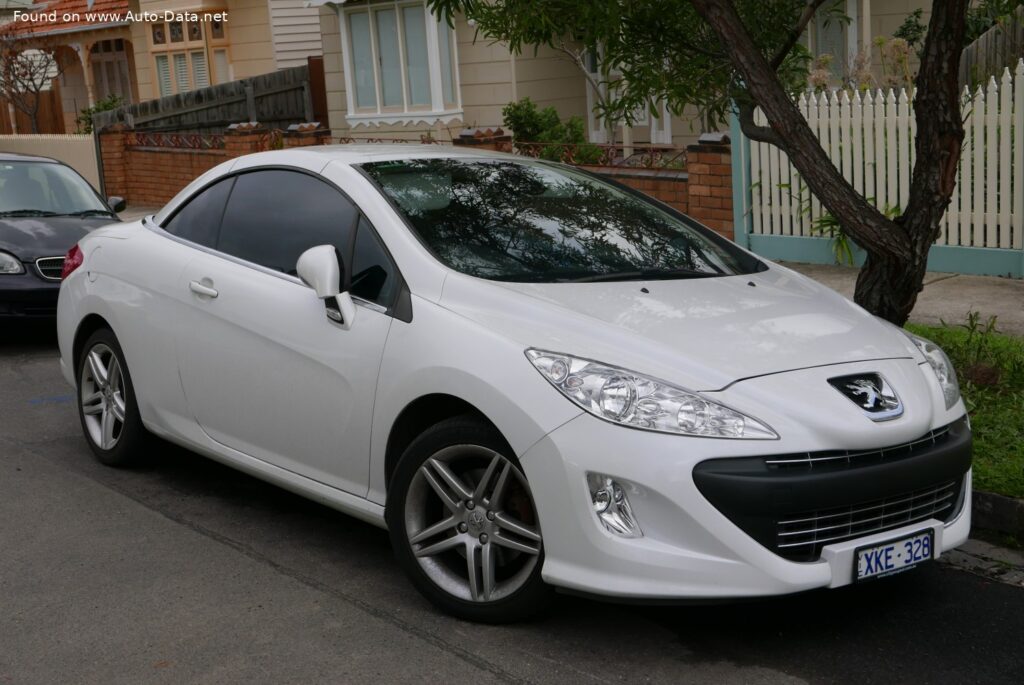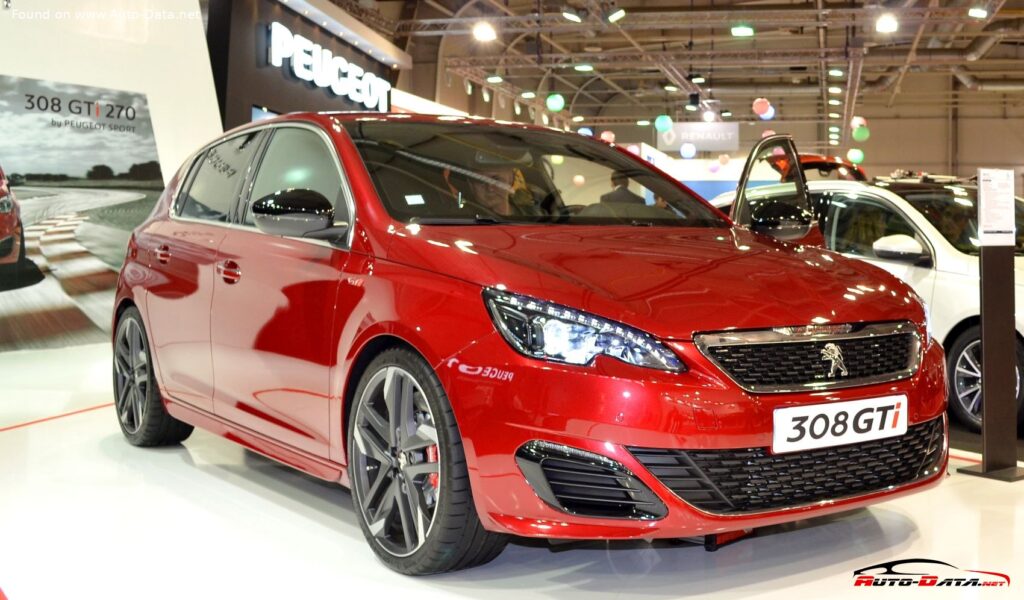
The Peugeot 308 II, specifically the Phase I model produced from 2013 to 2017, represents a significant step forward for Peugeot in the competitive C-segment hatchback market. This generation 308 aimed to address criticisms of its predecessor by offering a more refined driving experience, improved interior quality, and a focus on fuel efficiency. The 2.0 BlueHDi 150 variant, detailed here, was a key offering, particularly in European markets where diesel engines remained highly popular. While not officially sold in the United States, the 308 II was a crucial model for Peugeot, contributing to its sales volume and brand image in Europe.
Peugeot 308 II (Phase I): A Detailed Overview
The 308 II marked a departure from the previous generation, adopting a more sophisticated and modern design philosophy. It was built on Peugeot’s Efficient Modular Platform 2 (EMP2), which contributed to a reduction in weight and improved structural rigidity. This platform allowed for greater flexibility in design and engineering, enabling Peugeot to offer a wider range of powertrain options and features. The Phase I models, produced between 2013 and 2017, established the foundation for the 308 II’s success, setting the stage for subsequent updates and enhancements.
Engine & Performance
The heart of the 308 II 2.0 BlueHDi 150 is a 2.0-liter inline-four cylinder diesel engine, designated AHX DW10FD. This engine produces 150 horsepower at 3750 rpm and a substantial 370 Nm (272.9 lb.-ft.) of torque at 2000 rpm. The engine utilizes a turbocharger with an intercooler to enhance performance and efficiency. A diesel commonrail fuel injection system ensures precise fuel delivery, contributing to both power output and reduced emissions. The engine’s power-to-liter ratio is a respectable 75.1 hp/l. Coupled with a 6-speed manual transmission and front-wheel drive, the 308 II BlueHDi 150 achieves a 0-100 km/h (0-62 mph) acceleration time of 8.6 seconds, and a 0-60 mph time of 8.2 seconds. Its maximum speed is electronically limited to 218 km/h (135.46 mph). A key feature of the BlueHDi engines was their adherence to stringent Euro 6 emission standards, incorporating a particulate filter to minimize harmful emissions.
Design & Features
The Peugeot 308 II Phase I is a five-door hatchback, offering seating for five passengers. Its exterior design is characterized by a sleek profile, a distinctive front grille, and sharp lines. The vehicle measures 4253 mm (167.44 in) in length, 1804 mm (71.02 in) in width, and 1457 mm (57.36 in) in height. The interior of the 308 II represented a significant improvement over its predecessor, with higher-quality materials and a more ergonomic layout. A key feature was the “i-Cockpit,” a design philosophy incorporating a smaller steering wheel and a raised instrument cluster, intended to provide a more engaging driving experience. Standard features included ABS (Anti-lock Braking System), ventilated front disc brakes, and disc brakes on the rear axle. The trunk offers a practical 420 liters (14.83 cu. ft.) of space with the rear seats up, expanding to 855 liters (30.19 cu. ft.) when folded down. The 308 II prioritized practicality and comfort, making it a versatile choice for everyday use.
Technical Specifications
| Brand | Peugeot |
| Model | 308 |
| Generation | 308 II (Phase I, 2013) |
| Type (Engine) | 2.0 BlueHDi (150 Hp) |
| Start of production | 2014 |
| End of production | 2017 |
| Powertrain Architecture | Internal Combustion engine |
| Body type | Hatchback |
| Seats | 5 |
| Doors | 5 |
| Fuel consumption (urban) | 4.1 l/100 km (57.4 US mpg, 68.9 UK mpg, 24.4 km/l) |
| Fuel consumption (extra urban) | 3.3 l/100 km (71.3 US mpg, 85.6 UK mpg, 30.3 km/l) |
| Fuel consumption (combined) | 3.6 l/100 km (65.3 US mpg, 78.5 UK mpg, 27.8 km/l) |
| CO2 emissions | 93 g/km |
| Fuel Type | Diesel |
| Acceleration 0 – 100 km/h | 8.6 sec |
| Acceleration 0 – 62 mph | 8.6 sec |
| Acceleration 0 – 60 mph | 8.2 sec |
| Maximum speed | 218 km/h (135.46 mph) |
| Emission standard | Euro 6 |
| Weight-to-power ratio | 8.6 kg/Hp, 116.3 Hp/tonne |
| Weight-to-torque ratio | 3.5 kg/Nm, 286.8 Nm/tonne |
| Power | 150 Hp @ 3750 rpm |
| Torque | 370 Nm @ 2000 rpm (272.9 lb.-ft. @ 2000 rpm) |
| Engine layout | Front, Transverse |
| Engine Model/Code | AHX DW10FD |
| Engine displacement | 1997 cm3 (121.86 cu. in.) |
| Number of cylinders | 4 |
| Engine configuration | Inline |
| Number of valves per cylinder | 4 |
| Fuel injection system | Diesel Commonrail |
| Engine aspiration | Turbocharger, Intercooler |
| Engine oil capacity | 4.5 l (4.76 US qt | 3.96 UK qt) |
| Coolant | 9 l (9.51 US qt | 7.92 UK qt) |
| Kerb Weight | 1290 kg (2843.96 lbs.) |
| Max. weight | 1870 kg (4122.64 lbs.) |
| Max load | 580 kg (1278.68 lbs.) |
| Trunk (boot) space – minimum | 420 l (14.83 cu. ft.) |
| Trunk (boot) space – maximum | 855 l (30.19 cu. ft.) |
| Fuel tank capacity | 53 l (14 US gal | 11.66 UK gal) |
| Permitted trailer load with brakes (12%) | 1600 kg (3527.4 lbs.) |
| Permitted towbar download | 75 kg (165.35 lbs.) |
| Length | 4253 mm (167.44 in.) |
| Width | 1804 mm (71.02 in.) |
| Width including mirrors | 2043 mm (80.43 in.) |
| Height | 1457 mm (57.36 in.) |
| Wheelbase | 2620 mm (103.15 in.) |
| Front track | 1559 mm (61.38 in.) |
| Rear track | 1553 mm (61.14 in.) |
| Front overhang | 863 mm (33.98 in.) |
| Rear overhang | 770 mm (30.31 in.) |
| Minimum turning circle | 10.4 m (34.12 ft.) |
| Drivetrain | Front wheel drive |
| Number of gears | 6 gears, manual transmission |
| Front suspension | Independent, type McPherson with coil spring and anti-roll bar |
| Rear suspension | Semi-independent, coil spring |
| Front brakes | Ventilated discs |
| Rear brakes | Disc |
| Tires size | 205/55 R16 V |
| Wheel rims size | 16 |
The Peugeot 308 II 2.0 BlueHDi 150 successfully combined fuel efficiency, respectable performance, and a more refined driving experience. While not available in the US market, it was a popular and well-regarded vehicle in Europe, contributing to Peugeot’s resurgence in the C-segment.