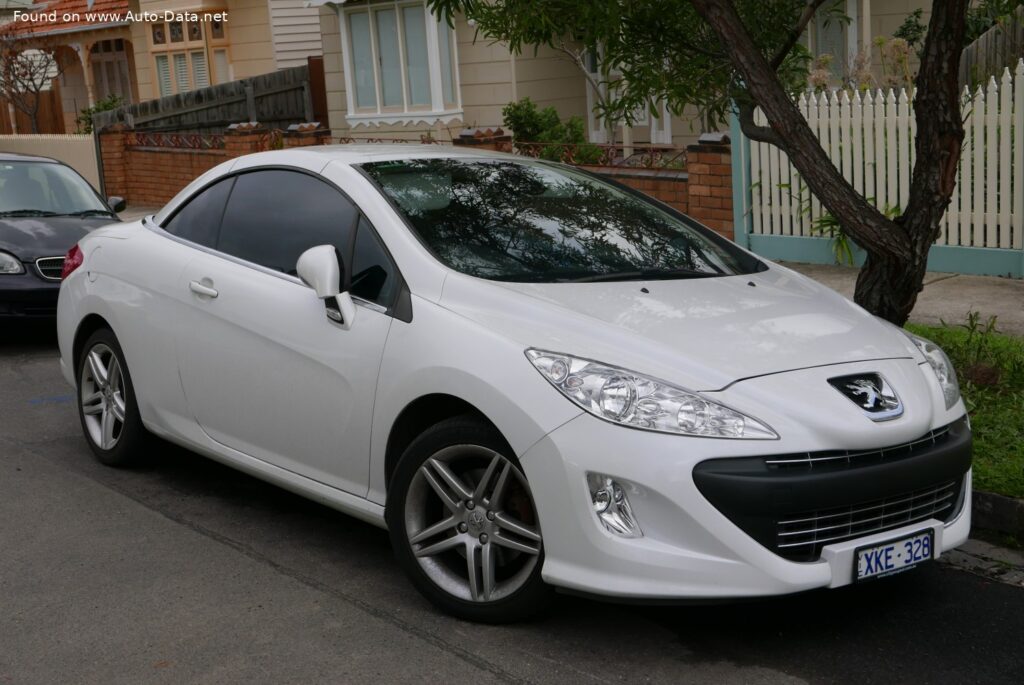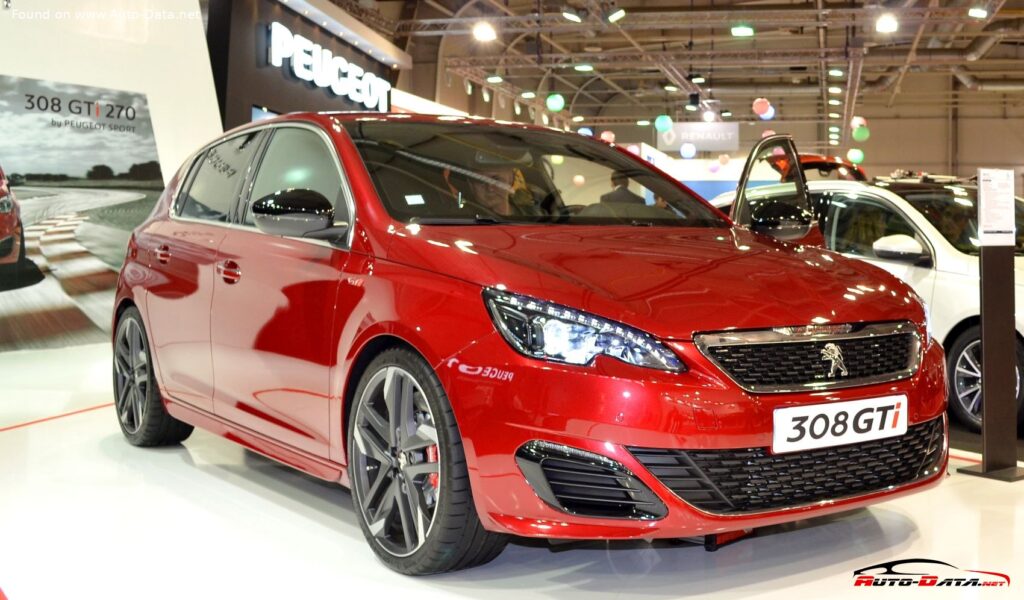
The Peugeot 308 II (Phase I), launched in 2013, represents a significant evolution in Peugeot’s compact family car lineup. This generation of the 308 aimed to address criticisms of its predecessor by offering a more refined driving experience, improved interior quality, and a contemporary design. The GT 1.6 THP variant, produced from 2015 to 2017, was positioned as the performance-oriented model within the range, offering a potent turbocharged engine and a sportier aesthetic. While primarily a European market vehicle, the 308 II showcased Peugeot’s commitment to innovation and design within the competitive C-segment hatchback class.
Peugeot 308 II GT 1.6 THP: An Overview
The 308 II marked a departure from previous iterations, adopting Peugeot’s new “Blue Lion” design language. The Phase I models, including the GT 1.6 THP, were characterized by a more sculpted exterior and a focus on lightweight construction. The GT trim level specifically added unique styling cues, such as a chrome exhaust pipe, sporty alloy wheels, and a distinctive front grille. The 308 II was never officially sold in the United States, but it was a popular choice in Europe, competing with vehicles like the Volkswagen Golf, Ford Focus, and Opel Astra. It distinguished itself through a combination of stylish design, efficient engines, and a relatively affordable price point.
Engine & Performance
The heart of the 308 II GT 1.6 THP is its 1.6-liter turbocharged four-cylinder gasoline engine, designated as the 5GT EP6FDTX. This engine produces 205 horsepower at 6000 rpm and 285 Nm (210.21 lb.-ft.) of torque at 1750 rpm. The high specific output of 128.3 horsepower per liter demonstrates the effectiveness of the turbocharging and direct injection technologies employed. Power is delivered to the front wheels via a six-speed manual transmission, contributing to a responsive and engaging driving experience. Acceleration from 0 to 100 km/h (0-62 mph) takes 7.5 seconds, while 0-60 mph is achieved in a calculated 7.1 seconds. The vehicle boasts a maximum speed of 235 km/h (146.02 mph). The engine’s efficiency is notable, with combined fuel consumption figures of 5.6 l/100 km (42 US mpg, 50.4 UK mpg), and CO2 emissions of 130 g/km, meeting Euro 6 emission standards.
Design & Features
The Peugeot 308 II GT 1.6 THP is a five-door hatchback, offering seating for five passengers. Its exterior design emphasizes a sleek and modern aesthetic, with flowing lines and a compact footprint. The GT trim adds sporty touches, including unique front and rear bumpers, side skirts, and a rear spoiler. Inside, the cabin features a driver-focused layout with Peugeot’s i-Cockpit design, characterized by a smaller steering wheel and a raised instrument cluster. Standard features included air conditioning, power windows, central locking, and an audio system. Safety features, crucial for a modern vehicle, included ABS (Anti-lock Braking System), electronic stability control, and multiple airbags. The trunk offers a practical 420 liters (14.83 cu. ft.) of space, expandable to 855 liters (30.19 cu. ft.) with the rear seats folded down. The vehicle’s dimensions are 4253 mm (167.44 in.) in length, 1804 mm (71.02 in.) in width, and 1457 mm (57.36 in.) in height.
Technical Specifications
| Brand | Peugeot |
| Model | 308 |
| Generation | 308 II (Phase I, 2013) |
| Type (Engine) | GT 1.6 THP (205 Hp) |
| Start of production | 2015 |
| End of production | 2017 |
| Powertrain Architecture | Internal Combustion engine |
| Body type | Hatchback |
| Seats | 5 |
| Doors | 5 |
| Fuel consumption (urban) | 7.4 l/100 km (31.8 US mpg, 38.2 UK mpg, 13.5 km/l) |
| Fuel consumption (extra urban) | 4.6 l/100 km (51.1 US mpg, 61.4 UK mpg, 21.7 km/l) |
| Fuel consumption (combined) | 5.6 l/100 km (42 US mpg, 50.4 UK mpg, 17.9 km/l) |
| CO2 emissions | 130 g/km |
| Fuel Type | Petrol (Gasoline) |
| Acceleration 0 – 100 km/h | 7.5 sec |
| Acceleration 0 – 62 mph | 7.5 sec |
| Acceleration 0 – 60 mph | 7.1 sec |
| Maximum speed | 235 km/h (146.02 mph) |
| Emission standard | Euro 6 |
| Weight-to-power ratio | 5.9 kg/Hp, 170.8 Hp/tonne |
| Weight-to-torque ratio | 4.2 kg/Nm, 237.5 Nm/tonne |
| Power | 205 Hp @ 6000 rpm |
| Power per litre | 128.3 Hp/l |
| Torque | 285 Nm @ 1750 rpm (210.21 lb.-ft. @ 1750 rpm) |
| Engine layout | Front, Transverse |
| Engine Model/Code | 5GT EP6FDTX |
| Engine displacement | 1598 cm3 (97.52 cu. in.) |
| Number of cylinders | 4 |
| Engine configuration | Inline |
| Number of valves per cylinder | 4 |
| Fuel injection system | Direct injection |
| Engine aspiration | Turbocharger, Intercooler |
| Engine oil capacity | 4.25 l (4.49 US qt | 3.74 UK qt) |
| Kerb Weight | 1200 kg (2645.55 lbs.) |
| Max. weight | 1790 kg (3946.27 lbs.) |
| Max load | 590 kg (1300.73 lbs.) |
| Trunk (boot) space – minimum | 420 l (14.83 cu. ft.) |
| Trunk (boot) space – maximum | 855 l (30.19 cu. ft.) |
| Fuel tank capacity | 53 l (14 US gal | 11.66 UK gal) |
| Permitted trailer load with brakes (12%) | 1400 kg (3086.47 lbs.) |
| Permitted towbar download | 75 kg (165.35 lbs.) |
| Length | 4253 mm (167.44 in.) |
| Width | 1804 mm (71.02 in.) |
| Width including mirrors | 2057 mm (80.98 in.) |
| Height | 1457 mm (57.36 in.) |
| Wheelbase | 2620 mm (103.15 in.) |
| Front track | 1559 mm (61.38 in.) |
| Rear track | 1553 mm (61.14 in.) |
| Front overhang | 863 mm (33.98 in.) |
| Rear overhang | 770 mm (30.31 in.) |
| Minimum turning circle | 10.4 m (34.12 ft.) |
| Drivetrain | Front wheel drive |
| Number of gears | 6 gears, manual transmission |
| Front suspension | Independent, type McPherson with coil spring and anti-roll bar |
| Rear suspension | Semi-independent, coil spring |
| Front brakes | Ventilated discs |
| Rear brakes | Disc |
| Tires size | 225/40 R18 W |
| Wheel rims size | 18 |
The Peugeot 308 II GT 1.6 THP represented a compelling offering in the European C-segment. Its combination of sporty performance, efficient engine technology, and stylish design made it a popular choice for drivers seeking a refined and engaging driving experience. While not available in the US market, it exemplifies Peugeot’s engineering prowess and design capabilities.