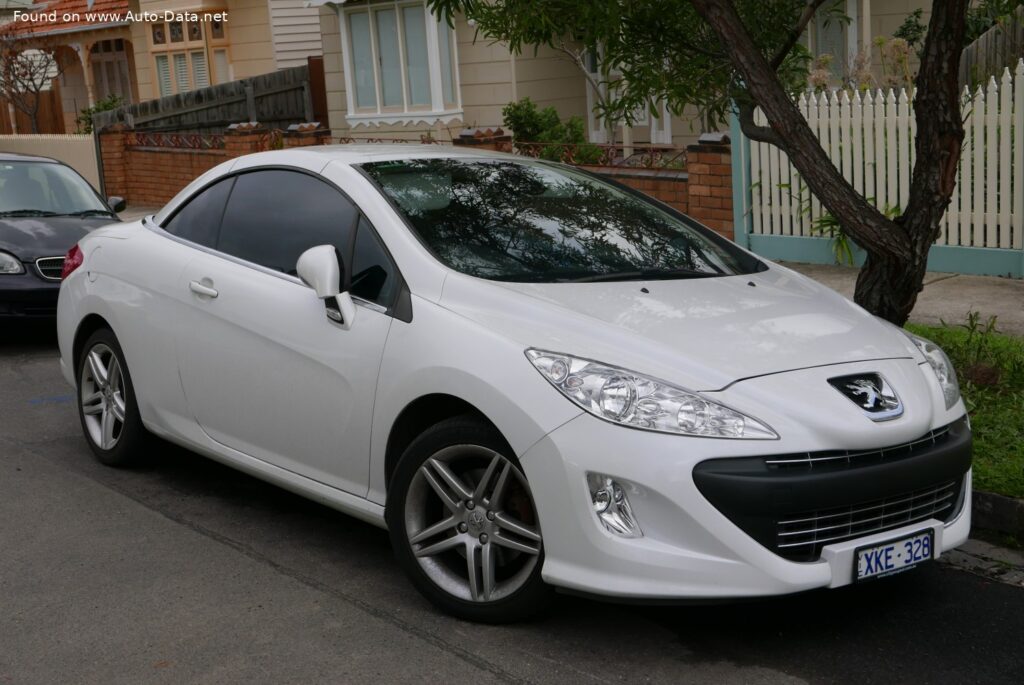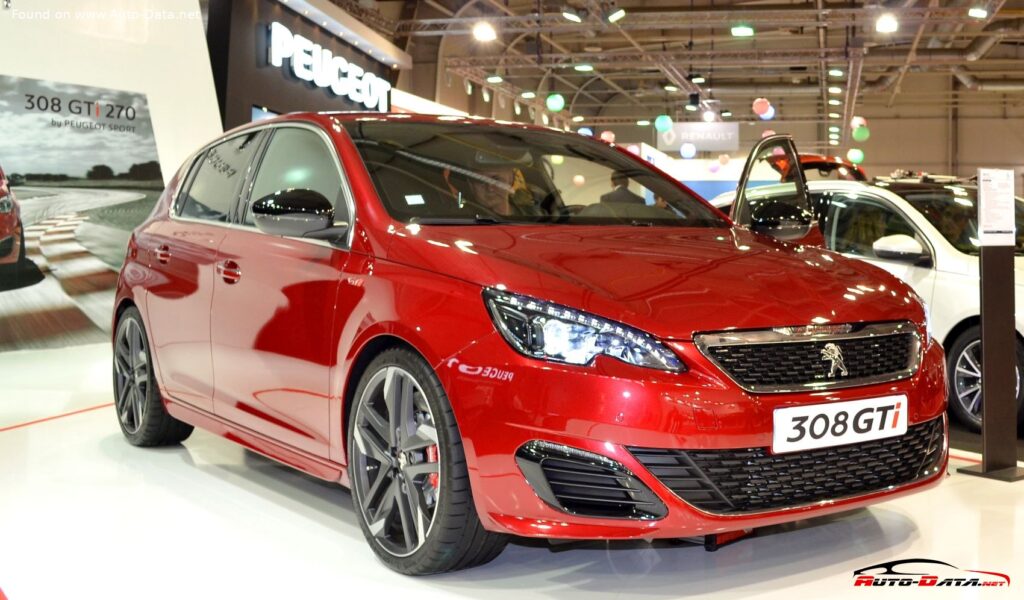
The Peugeot 308 II, specifically the Phase I model produced from 2013 to 2017, represents a significant evolution in Peugeot’s compact family car lineup. The GT 2.0 BlueHDi (180 Hp) Automatic variant, detailed here, was a premium offering aimed at providing a blend of performance, efficiency, and comfort. While the 308 series has a long history dating back to the original 308 in 1994, the second generation marked a departure with a new platform and a focus on reducing weight and improving fuel economy. This model was primarily sold in Europe and other international markets, competing with vehicles like the Volkswagen Golf, Ford Focus, and Opel Astra. It was not officially sold in the United States.
Peugeot 308 II GT 2.0 BlueHDi: A Detailed Overview
The 308 II aimed to elevate Peugeot’s standing in the competitive C-segment. The Phase I models, produced between 2013 and 2017, established the design language and technological foundation for the series. The GT trim level, coupled with the 2.0 BlueHDi engine and automatic transmission, represented the performance-oriented end of the spectrum, offering a more engaging driving experience than the standard models. The “BlueHDi” designation signifies Peugeot’s advanced diesel technology, focused on reducing emissions and improving fuel efficiency.
Engine & Performance
The heart of the 308 II GT 2.0 BlueHDi is a 2.0-liter inline-four cylinder diesel engine, designated DW10FC. This engine produces 180 horsepower at 3750 rpm and a substantial 400 Nm (295.02 lb.-ft.) of torque at 2000 rpm. The high torque output, characteristic of diesel engines, provides strong acceleration and effortless cruising. Power per liter is rated at 90.1 Hp/l. The engine utilizes a turbocharger and intercooler to enhance performance, and a diesel commonrail fuel injection system for precise fuel delivery. Paired with a six-speed automatic transmission, the 308 GT achieves a 0-100 km/h (0-62 mph) time of 8.4 seconds and a top speed of 220 km/h (136.7 mph). The weight-to-power ratio is a respectable 7.3 kg/Hp, and the weight-to-torque ratio is 3.3 kg/Nm. The engine meets Euro 6 emission standards, incorporating a particulate filter to minimize harmful emissions.
Design & Features
The Peugeot 308 II Phase I is a five-door hatchback, offering a practical and stylish body style. It seats five passengers and provides a generous 420 liters (14.83 cu. ft.) of trunk space, expandable to 855 liters (30.19 cu. ft.) with the rear seats folded down. The GT trim level includes distinctive styling cues, such as a sporty front grille, unique alloy wheels (18-inch in this case), and interior enhancements. The vehicle’s dimensions are 4253 mm (167.44 in.) in length, 1804 mm (71.02 in.) in width, and 1457 mm (57.36 in.) in height. The wheelbase measures 2620 mm (103.15 in.).
Safety features were a key consideration in the 308 II’s design. The vehicle is equipped with ABS (Anti-lock Braking System), ventilated front discs, and rear discs. The McPherson front suspension and semi-independent rear suspension contribute to a comfortable ride and stable handling. The steering system utilizes a rack and pinion setup for precise control. The 308 II also incorporates modern convenience features, though specifics vary depending on the exact specification.
Technical Specifications
| Brand | Peugeot |
| Model | 308 |
| Generation | 308 II (Phase I, 2013) |
| Type (Engine) | GT 2.0 BlueHDi (180 Hp) Automatic |
| Start of production | 2015 |
| End of production | 2017 |
| Powertrain Architecture | Internal Combustion engine |
| Body type | Hatchback |
| Seats | 5 |
| Doors | 5 |
| Fuel consumption (urban) | 4.7 l/100 km (50 US mpg, 60.1 UK mpg, 21.3 km/l) |
| Fuel consumption (extra urban) | 3.5 l/100 km (67.2 US mpg, 80.7 UK mpg, 28.6 km/l) |
| Fuel consumption (combined) | 4 l/100 km (58.8 US mpg, 70.6 UK mpg, 25 km/l) |
| CO2 emissions | 103 g/km |
| Fuel Type | Diesel |
| Acceleration 0 – 100 km/h | 8.4 sec |
| Acceleration 0 – 62 mph | 8.4 sec |
| Acceleration 0 – 60 mph | 8 sec |
| Maximum speed | 220 km/h (136.7 mph) |
| Emission standard | Euro 6 |
| Weight-to-power ratio | 7.3 kg/Hp |
| Weight-to-torque ratio | 3.3 kg/Nm |
| Power | 180 Hp @ 3750 rpm |
| Torque | 400 Nm @ 2000 rpm (295.02 lb.-ft. @ 2000 rpm) |
| Engine layout | Front, Transverse |
| Engine Model/Code | DW10FC |
| Engine displacement | 1997 cm3 (121.86 cu. in.) |
| Number of cylinders | 4 |
| Engine configuration | Inline |
| Number of valves per cylinder | 4 |
| Fuel injection system | Diesel Commonrail |
| Engine aspiration | Turbocharger, Intercooler |
| Engine oil capacity | 5.1 l (5.39 US qt | 4.49 UK qt) |
| Kerb Weight | 1320 kg (2910.1 lbs.) |
| Max. weight | 1920 kg (4232.88 lbs.) |
| Max load | 600 kg (1322.77 lbs.) |
| Trunk (boot) space – minimum | 420 l (14.83 cu. ft.) |
| Trunk (boot) space – maximum | 855 l (30.19 cu. ft.) |
| Fuel tank capacity | 53 l (14 US gal | 11.66 UK gal) |
| Permitted trailer load with brakes (12%) | 1500 kg (3306.93 lbs.) |
| Permitted towbar download | 75 kg (165.35 lbs.) |
| Length | 4253 mm (167.44 in.) |
| Width | 1804 mm (71.02 in.) |
| Width including mirrors | 2043 mm (80.43 in.) |
| Height | 1457 mm (57.36 in.) |
| Wheelbase | 2620 mm (103.15 in.) |
| Front track | 1559 mm (61.38 in.) |
| Rear track | 1553 mm (61.14 in.) |
| Front overhang | 863 mm (33.98 in.) |
| Rear overhang | 770 mm (30.31 in.) |
| Minimum turning circle | 10.4 m (34.12 ft.) |
| Drivetrain Architecture | Front wheel drive |
| Number of gears | 6 |
| Gearbox type | Automatic transmission |
| Front suspension | Independent, McPherson with coil spring and anti-roll bar |
| Rear suspension | Semi-independent, coil spring |
| Front brakes | Ventilated discs |
| Rear brakes | Disc |
| Tires size | 225/40 R18 W |
| Wheel rims size | 18 |