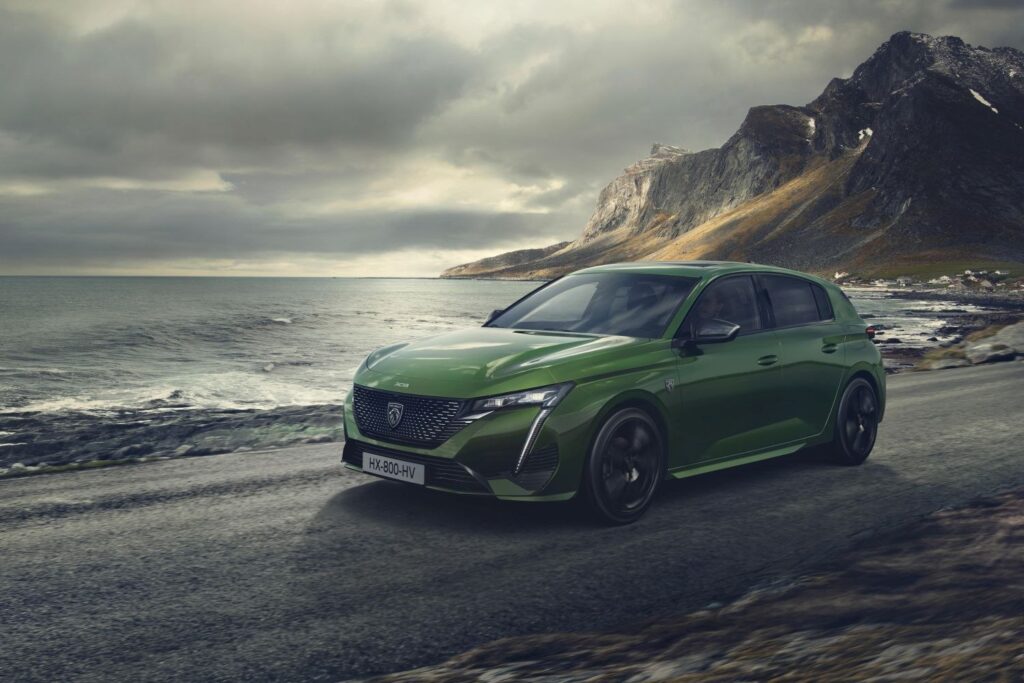
The Peugeot 308 III, launched in 2021 (Phase I), represents the third generation of Peugeot’s popular compact hatchback. Positioned as a competitor to vehicles like the Volkswagen Golf, Ford Focus, and Opel Astra, the 308 aims to blend stylish design with efficient technology. This generation marked a significant departure from its predecessors, featuring a completely redesigned interior and exterior, and a greater emphasis on digitalization. The 1.5 BlueHDi 130 Hp variant, detailed here, was a key offering in many European markets, focusing on fuel economy and reduced emissions with its modern diesel powertrain.
Peugeot 308 III: A Detailed Overview
The third-generation 308 builds upon the success of previous models, offering a more refined driving experience and a more technologically advanced cabin. While not officially sold in the United States, the 308 is a significant player in the European C-segment, known for its distinctive styling and comfortable ride. The Phase I models, produced from September 2021 to January 2024, established the foundation for the 308 III range, with subsequent updates and powertrain options introduced later in its lifecycle.
Engine & Performance
The 1.5 BlueHDi engine is a four-cylinder, inline diesel engine that delivers a balance of performance and fuel efficiency. Producing 130 horsepower (Hp) at 3750 rpm and 300 Newton-meters (221.27 lb.-ft.) of torque at 1750 rpm, this engine provides ample power for everyday driving. The engine’s specific output is 86.7 Hp per liter, demonstrating its efficiency. It features a turbocharger and intercooler to optimize performance, along with a diesel commonrail fuel injection system for precise fuel delivery. The engine is transversely mounted at the front of the vehicle and is paired with a 6-speed manual transmission, driving the front wheels. The weight-to-power ratio of 10.3 kg/Hp and a weight-to-torque ratio of 4.5 kg/Nm contribute to a responsive driving experience. The inclusion of a Start & Stop system and a particulate filter underscores Peugeot’s commitment to reducing emissions, meeting the stringent Euro 6.3 emission standard.
Design & Features
The Peugeot 308 III adopts a sleek, modern hatchback body style with five doors and seating for five passengers. Its exterior design is characterized by sharp lines, a prominent grille, and distinctive LED lighting signatures. The interior represents a significant upgrade over previous generations, featuring Peugeot’s i-Cockpit design, which includes a compact steering wheel and a raised instrument cluster. This design aims to provide a more engaging and intuitive driving experience. Key features of the 308 III include a touchscreen infotainment system, advanced driver-assistance systems (ADAS) such as ABS, and a spacious interior. The trunk offers a practical 412 liters of space with the rear seats up, expanding to 1323 liters when folded down, providing versatility for carrying luggage or cargo. The aerodynamic profile, with a drag coefficient of 0.28, contributes to improved fuel efficiency and reduced wind noise.
Technical Specifications
| Brand | Peugeot |
| Model | 308 |
| Generation | 308 III (Phase I, 2021) |
| Type (Engine) | 1.5 BlueHDi (130 Hp) |
| Start of production | September, 2021 |
| End of production | January, 2024 |
| Powertrain Architecture | Internal Combustion engine |
| Body type | Hatchback |
| Seats | 5 |
| Doors | 5 |
| Fuel Type | Diesel |
| Emission standard | Euro 6.3 |
| Weight-to-power ratio | 10.3 kg/Hp |
| Weight-to-torque ratio | 4.5 kg/Nm |
| Power | 130 Hp @ 3750 rpm |
| Power per litre | 86.7 Hp/l |
| Torque | 300 Nm @ 1750 rpm / 221.27 lb.-ft. @ 1750 rpm |
| Engine layout | Front, Transverse |
| Engine Model/Code | YHZ DV5RC |
| Engine displacement | 1499 cm3 / 91.47 cu. in. |
| Number of cylinders | 4 |
| Engine configuration | Inline |
| Cylinder Bore | 75 mm / 2.95 in. |
| Piston Stroke | 84.8 mm / 3.34 in. |
| Number of valves per cylinder | 4 |
| Fuel injection system | Diesel Commonrail |
| Engine aspiration | Turbocharger, Intercooler |
| Valvetrain | DOHC |
| Engine oil capacity | 4 l / 4.23 US qt | 3.52 UK qt |
| Kerb Weight | 1340 kg / 2954.19 lbs |
| Trunk (boot) space – minimum | 412 l / 14.55 cu. ft. |
| Trunk (boot) space – maximum | 1323 l / 46.72 cu. ft. |
| Fuel tank capacity | 52 l / 13.74 US gal | 11.44 UK gal |
| Length | 4367 mm / 171.93 in. |
| Width | 1852 mm / 72.91 in. |
| Width with mirrors folded | 1859 mm / 73.19 in. |
| Width including mirrors | 2062 mm / 81.18 in. |
| Height | 1444 mm / 56.85 in. |
| Wheelbase | 2675 mm / 105.31 in. |
| Front track | 1559 mm / 61.38 in. |
| Rear (Back) track | 1553 mm / 61.14 in. |
| Front overhang | 904 mm / 35.59 in. |
| Rear overhang | 788 mm / 31.02 in. |
| Ride height (ground clearance) | 140 mm / 5.51 in. |
| Drag coefficient (Cd) | 0.28 |
| Minimum turning circle (turning diameter) | 10.51 m / 34.48 ft |
| Drivetrain Architecture | Front wheel drive. ICE drives front wheels. |
| Drive wheel | Front wheel drive |
| Number of gears and type of gearbox | 6 gears, manual transmission |
| Assisting systems | ABS (Anti-lock braking system) |
| Steering type | Steering rack and pinion |
| Power steering | Electric Steering |
| Tires size | 205/55 R16; 225/45 R17; 225/40 R18 |