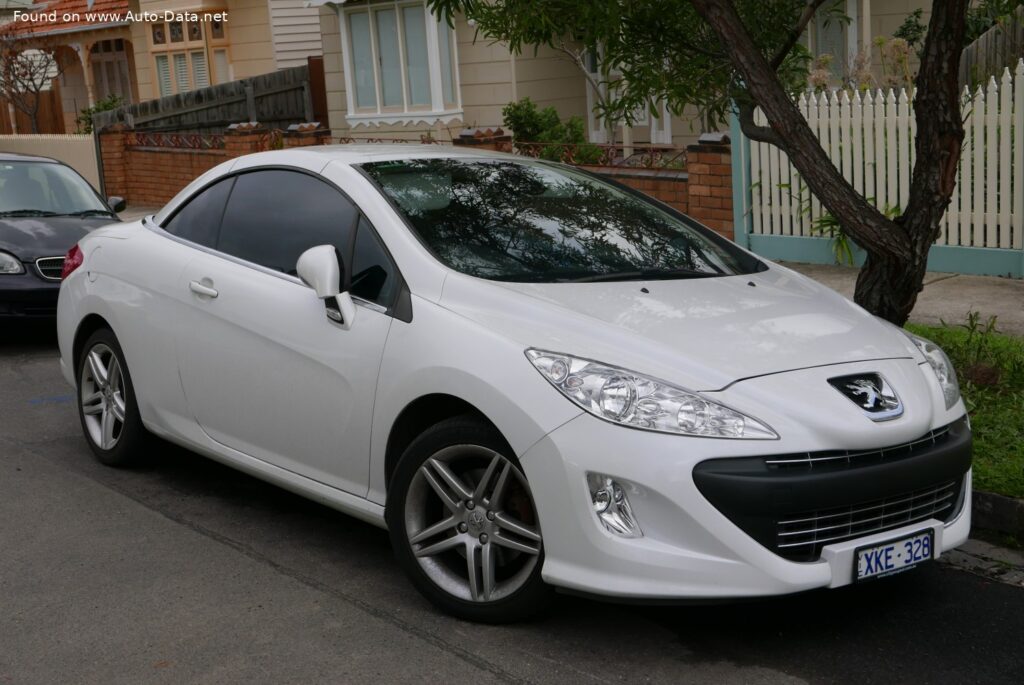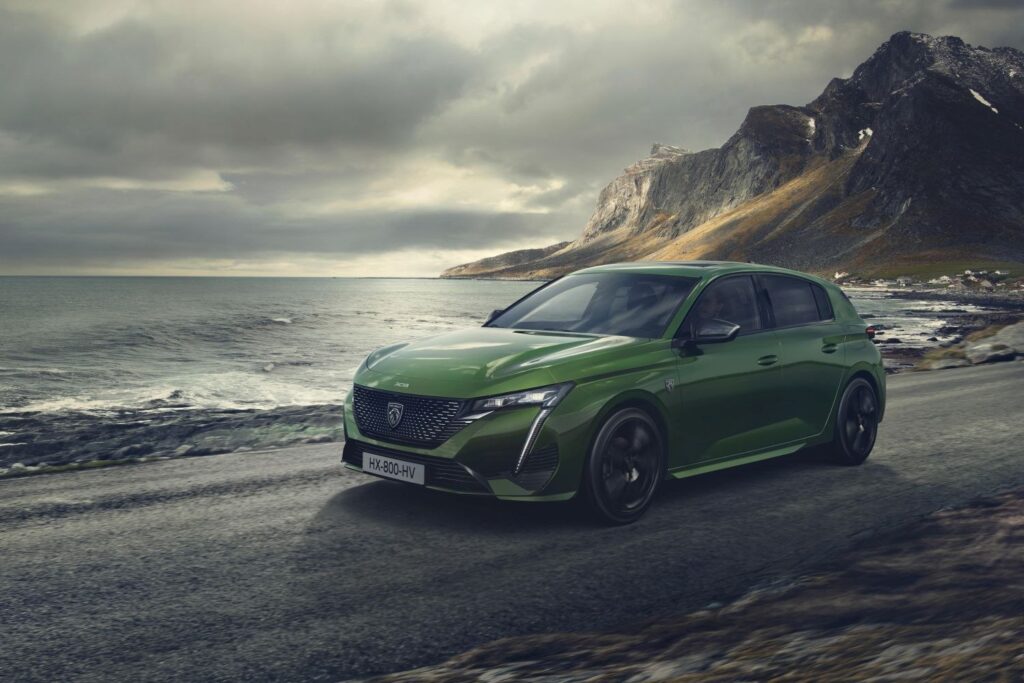
The Peugeot 308 III, launched in 2021 (Phase I), represents the third generation of Peugeot’s popular compact hatchback. Positioned within the highly competitive C-segment, the 308 aims to blend stylish design with efficient powertrain options, catering to a broad European audience. While not directly sold in the United States, the 308 is a significant model in Europe, competing with vehicles like the Volkswagen Golf, Ford Focus, and Opel Astra. This particular variant features a 1.6-liter plug-in hybrid (PHEV) powertrain, offering a balance of gasoline engine performance and electric-only driving capability.
Peugeot 308 III (Phase I): A Detailed Overview
The third-generation 308 marked a significant departure from its predecessors, adopting a more modern and sophisticated design language. It builds upon the success of previous models, offering improved technology, comfort, and efficiency. The Phase I models, produced from September 2021 to August 2025, established the foundation for the 308’s continued presence in the European market. The introduction of plug-in hybrid options underscores Peugeot’s commitment to electrification and meeting increasingly stringent emissions regulations.
Engine & Performance
The 308 III 1.6 (180 Hp) Plug-in Hybrid e-EAT8 combines a 1.6-liter turbocharged gasoline engine with an electric motor and a lithium-ion battery pack. The gasoline engine produces 150 horsepower at 4,250 rpm and 250 Nm (184.39 lb.-ft.) of torque at 1,750 rpm. The electric motor contributes an additional 110 horsepower at 2,500 rpm and 320 Nm (236.02 lb.-ft.) of torque, resulting in a combined system output of 180 horsepower and 360 Nm (265.52 lb.-ft.) of torque. Power is delivered to the front wheels via an eight-speed automatic transmission (e-EAT8). This powertrain configuration allows for a 0-100 km/h (0-62 mph) acceleration time of 7.6 seconds and a top speed of 225 km/h (139.81 mph). The vehicle offers a pure electric range of 64-69 km (39.77 – 42.87 mi) on the WLTP cycle, with an average energy consumption of 14.7-15.2 kWh/100 km (23.66 – 24.46 kWh/100 mi).
Design & Features
The Peugeot 308 III is a five-door hatchback with seating for five passengers. Its exterior design is characterized by a sharp, angular aesthetic, featuring a prominent grille, sleek LED headlights, and a dynamic silhouette. The interior boasts a modern and minimalist design, with a focus on ergonomics and technology. A key feature is the i-Cockpit, Peugeot’s signature interior layout, which includes a compact steering wheel and a raised instrument cluster. The 308 III incorporates advanced driver-assistance systems (ADAS) such as automatic emergency braking, lane-keeping assist, and adaptive cruise control, enhancing safety and convenience. The trunk offers a practical 361 liters (12.75 cu. ft.) of space with the rear seats up, expanding to 1271 liters (44.88 cu. ft.) when folded down. The battery is strategically located under the rear seats, minimizing intrusion into passenger or cargo space.
Technical Specifications
| Brand | Peugeot |
| Model | 308 |
| Generation | 308 III (Phase I, 2021) |
| Type (Engine) | 1.6 (180 Hp) Plug-in Hybrid e-EAT8 |
| Start of production | September, 2021 |
| End of production | August, 2025 |
| Powertrain Architecture | PHEV (Plug-in Hybrid Electric Vehicle) |
| Body type | Hatchback |
| Seats | 5 |
| Doors | 5 |
| Combined fuel consumption (WLTP) | 1.1-1.2 l/100 km (213.8 – 196 US mpg, 256.8 – 235.4 UK mpg, 90.9 – 83.3 km/l) |
| CO2 emissions (WLTP) | 24-27 g/km |
| Fuel consumption (economy) – combined (NEDC) | 1.4 l/100 km (168 US mpg, 201.8 UK mpg, 71.4 km/l) |
| CO2 emissions (NEDC) | 31 g/km |
| Fuel Type | Petrol / electricity |
| Acceleration 0 – 100 km/h | 7.6 sec |
| Acceleration 0 – 62 mph | 7.6 sec |
| Acceleration 0 – 60 mph | 7.2 sec |
| Maximum speed | 225 km/h (139.81 mph) |
| Emission standard | Euro 6d |
| Weight-to-power ratio | 8.9 kg/Hp, 112.3 Hp/tonne |
| Weight-to-torque ratio | 4.5 kg/Nm, 224.6 Nm/tonne |
| Gross battery capacity | 12.4 kWh |
| Battery technology | Lithium-ion (Li-Ion) |
| Battery location | Under the rear seats |
| All-electric range (WLTP) | 64-69 km (39.77 – 42.87 mi) |
| Average Energy consumption (WLTP) | 14.7-15.2 kWh/100 km (23.66 – 24.46 kWh/100 mi, 142 – 138 MPGe, 6.8 – 6.6 km/kWh, 4.2 – 4.1 mi/kWh) |
| Max speed (electric) | 135 km/h (83.89 mph) |
| Electric motor power | 110 Hp @ 2500 rpm (320 Nm @ 500-2500 rpm / 236.02 lb.-ft. @ 500-2500 rpm) |
| Electric motor location | Between the combustion engine and the transmission |
| System power | 180 Hp |
| System torque | 360 Nm (265.52 lb.-ft.) |
| Power | 150 Hp @ 4250 rpm |
| Torque | 250 Nm @ 1750 rpm (184.39 lb.-ft. @ 1750 rpm) |
| Engine layout | Front, Transverse |
| Engine Model/Code | DGX EP6FADTXHPE |
| Engine displacement | 1598 cm3 (97.52 cu. in.) |
| Number of cylinders | 4 |
| Engine configuration | Inline |
| Cylinder Bore | 77 mm (3.03 in.) |
| Piston Stroke | 85.8 mm (3.38 in.) |
| Number of valves per cylinder | 4 |
| Fuel injection system | Direct injection |
| Engine aspiration | Turbocharger, Intercooler |
| Valvetrain | DOHC |
| Engine oil capacity | 4.25 l (4.49 US qt | 3.74 UK qt) |
| Kerb Weight | 1603 kg (3534.01 lbs.) |
| Max. weight | 2120 kg (4673.8 lbs.) |
| Max load | 517 kg (1139.79 lbs.) |
| Trunk (boot) space – minimum | 361 l (12.75 cu. ft.) |
| Trunk (boot) space – maximum | 1271 l (44.88 cu. ft.) |
| Fuel tank capacity | 40 l (10.57 US gal | 8.8 UK gal) |
| Max. roof load | 85 kg (187.39 lbs.) |
| Permitted trailer load with brakes (12%) | 1500 kg (3306.93 lbs.) |
| Permitted trailer load without brakes | 750 kg (1653.47 lbs.) |
| Permitted towbar download | 70 kg (154.32 lbs.) |
| Length | 4367 mm (171.93 in.) |
| Width | 1852 mm (72.91 in.) |
| Width with mirrors folded | 1859 mm (73.19 in.) |
| Width including mirrors | 2062 mm (81.18 in.) |
| Height | 1441 mm (56.73 in.) |
| Wheelbase | 2675 mm (105.31 in.) |
| Front track | 1559 mm (61.38 in.) |
| Rear (Back) track | 1554 mm (61.18 in.) |
| Front overhang | 904 mm (35.59 in.) |
| Rear overhang | 788 mm (31.02 in.) |
| Ride height (ground clearance) | 140 mm (5.51 in.) |
| Drag coefficient (Cd) | 0.28 |
| Minimum turning circle (turning diameter) | 10.5 m (34.45 ft.) |
| Drivetrain Architecture | The Internal combustion engine (ICE) and electric motor drive the front wheels of the car with the ability to work in full electric or mixed mode. |
| Drive wheel | Front wheel drive |
| Number of gears and type of gearbox | 8 gears, automatic transmission e-EAT |
| Front suspension | Coil spring, Independent type McPherson |
| Rear suspension | Torsion |
| Front brakes | Ventilated discs |
| Rear brakes | Disc |
| Assisting systems | ABS (Anti-lock braking system) |
| Steering type | Steering rack and pinion |
| Power steering | Electric Steering |
| Tires size | 225/45 R17; 225/40 R18 |