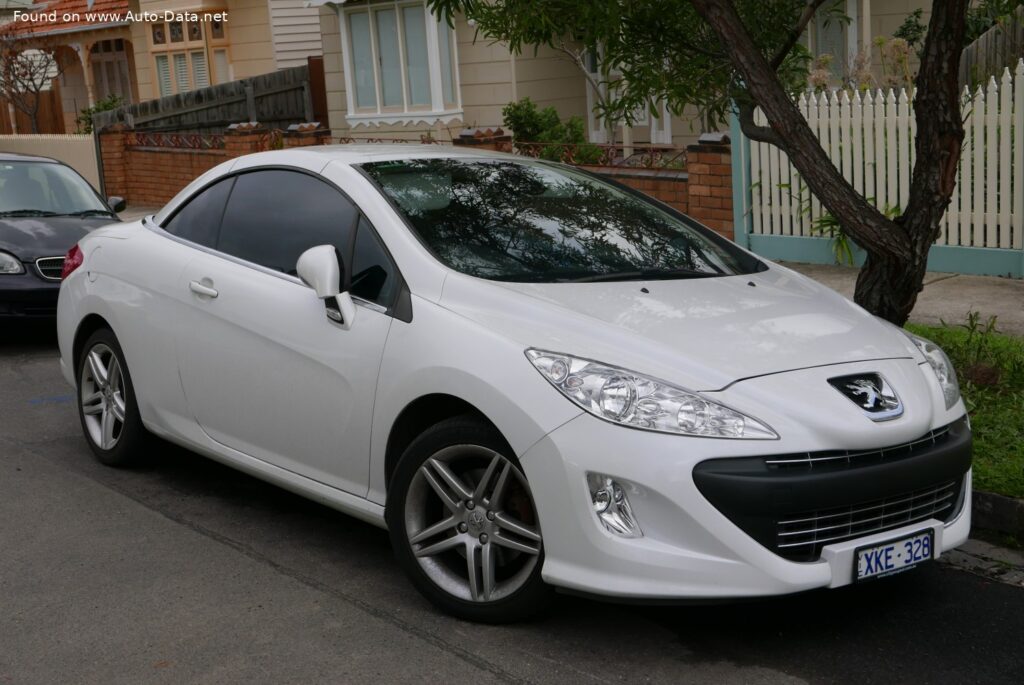
The Peugeot 308 SW I (Phase I), produced from 2008 to 2011, represents Peugeot’s entry into the competitive compact station wagon (estate) segment. As a practical and stylish vehicle, the 308 SW aimed to provide a versatile option for families and individuals needing increased cargo capacity without sacrificing driving pleasure. This first generation of the 308 SW was particularly significant in European markets, where station wagons maintain a strong following, offering a compelling alternative to hatchbacks and small SUVs. The 2.0 HDi variant, equipped with a 140 horsepower diesel engine, was a popular choice, balancing fuel efficiency with adequate performance.
Peugeot 308 SW I (Phase I): Overview
The 308 SW, derived from the standard 308 hatchback, extended the vehicle’s length to create a more spacious cargo area. Positioned as a family-oriented vehicle, it competed with models like the Ford Focus Estate, Volkswagen Golf Variant, and Renault Mégane Estate. While not officially sold in the United States, the 308 SW exemplifies the European preference for practical, fuel-efficient vehicles designed for everyday use. The Phase I designation refers to the initial iteration of the model, with subsequent phases introducing styling and technological updates.
Engine & Performance
The 2.0 HDi engine powering the 308 SW I (Phase I) is a four-cylinder, inline diesel engine utilizing common rail direct injection and a turbocharger with intercooler. This configuration delivers 140 horsepower at 4000 rpm and a substantial 320 Nm (236.02 lb.-ft.) of torque at 2000 rpm. The engine’s displacement of 1997 cm³ (121.86 cu. in.) provides a good balance between power and fuel economy. The engine code RHF DW10BTED4 identifies this specific engine variant. Performance figures include a 0-100 km/h (0-62 mph) acceleration time of 10.9 seconds and a maximum speed of 202 km/h (125.52 mph). The weight-to-power ratio of 11.3 kg/Hp and weight-to-torque ratio of 4.9 kg/Nm demonstrate a reasonable level of performance for a vehicle of its class and purpose. The 6-speed manual transmission allows for driver engagement and contributes to the vehicle’s fuel efficiency.
Design & Features
The Peugeot 308 SW I (Phase I) features a classic station wagon body style with a five-door configuration and seating for up to seven passengers, depending on the configuration. Its design prioritizes practicality, with a focus on maximizing cargo space. The exterior styling reflects Peugeot’s design language of the period, characterized by a flowing silhouette and a distinctive front grille. Key features include a spacious interior, a versatile cargo area with a minimum capacity of 570 liters (20.13 cu. ft.) expandable to 1736 liters (61.31 cu. ft.) with the rear seats folded, and a comfortable ride. Safety features for the time included ABS (Anti-lock Braking System) and driver/passenger airbags. The SW variant’s extended roofline and rear overhang contribute to its increased cargo capacity, making it a suitable choice for families and those requiring ample space for luggage or equipment. The vehicle’s dimensions – 4500 mm (177.17 in.) in length, 1815 mm (71.46 in.) in width, and 1564 mm (61.57 in.) in height – position it within the compact station wagon segment.
Technical Specifications
| Brand | Peugeot |
| Model | 308 |
| Generation | 308 SW I (Phase I, 2008) |
| Type (Engine) | 2.0 HDi (140 Hp) |
| Start of production | 2008 |
| End of production | 2011 |
| Powertrain Architecture | Internal Combustion engine |
| Body type | Station wagon (estate) |
| Seats | 5-7 |
| Doors | 5 |
| Fuel consumption (economy) – urban (NEDC) | 7.9 l/100 km (29.8 US mpg, 35.8 UK mpg, 12.7 km/l) |
| Fuel consumption (economy) – extra urban (NEDC) | 4.9 l/100 km (48 US mpg, 57.6 UK mpg, 20.4 km/l) |
| Fuel consumption (economy) – combined (NEDC) | 6 l/100 km (39.2 US mpg, 47.1 UK mpg, 16.7 km/l) |
| CO2 emissions (NEDC) | 157 g/km |
| Fuel Type | Diesel |
| Acceleration 0 – 100 km/h | 10.9 sec |
| Acceleration 0 – 62 mph | 10.9 sec |
| Acceleration 0 – 60 mph | 10.4 sec |
| Maximum speed | 202 km/h (125.52 mph) |
| Emission standard | Euro 5 |
| Weight-to-power ratio | 11.3 kg/Hp |
| Weight-to-torque ratio | 4.9 kg/Nm |
| Power | 140 Hp @ 4000 rpm |
| Torque | 320 Nm @ 2000 rpm (236.02 lb.-ft. @ 2000 rpm) |
| Engine layout | Front, Transverse |
| Engine Model/Code | RHF DW10BTED4 |
| Engine displacement | 1997 cm³ (121.86 cu. in.) |
| Number of cylinders | 4 |
| Engine configuration | Inline |
| Cylinder Bore | 85 mm (3.35 in.) |
| Piston Stroke | 88 mm (3.46 in.) |
| Number of valves per cylinder | 4 |
| Fuel injection system | Diesel Commonrail |
| Engine aspiration | Turbocharger, Intercooler |
| Valvetrain | DOHC |
| Engine oil capacity | 5.25 l (5.55 US qt | 4.62 UK qt) |
| Coolant | 7.8 l (8.24 US qt | 6.86 UK qt) |
| Kerb Weight | 1575 kg (3472.28 lbs.) |
| Max. weight | 2215 kg (4883.24 lbs.) |
| Max load | 640 kg (1410.96 lbs.) |
| Trunk (boot) space – minimum | 570 l (20.13 cu. ft.) |
| Trunk (boot) space – maximum | 1736 l (61.31 cu. ft.) |
| Fuel tank capacity | 60 l (15.85 US gal | 13.2 UK gal) |
| Max. roof load | 75 kg (165.35 lbs.) |
| Permitted trailer load with brakes (12%) | 1650 kg (3637.63 lbs.) |
| Permitted trailer load without brakes | 750 kg (1653.47 lbs.) |
| Permitted towbar download | 70 kg (154.32 lbs.) |
| Length | 4500 mm (177.17 in.) |
| Width | 1815 mm (71.46 in.) |
| Width including mirrors | 2038 mm (80.24 in.) |
| Height | 1564 mm (61.57 in.) |
| Wheelbase | 2708 mm (106.61 in.) |
| Drive wheel | Front wheel drive |
| Number of gears and type of gearbox | 6 gears, manual transmission |
The Peugeot 308 SW I (Phase I) 2.0 HDi (140 Hp) offered a compelling package for buyers seeking a practical, fuel-efficient, and stylish station wagon. Its blend of performance, space, and features made it a popular choice in its target markets, solidifying Peugeot’s reputation for producing well-rounded vehicles.