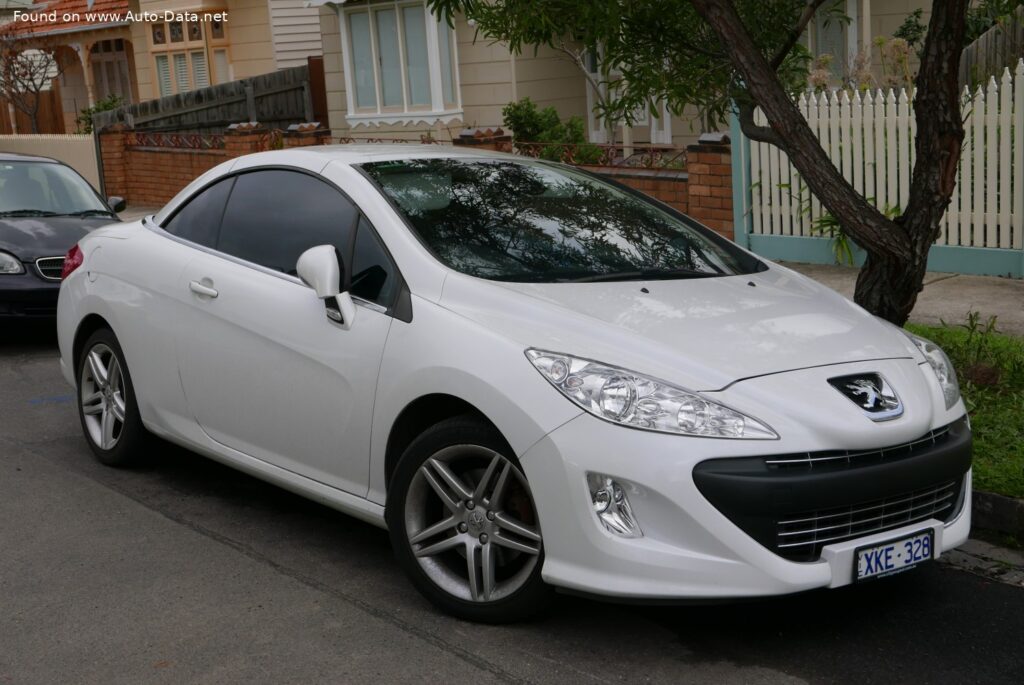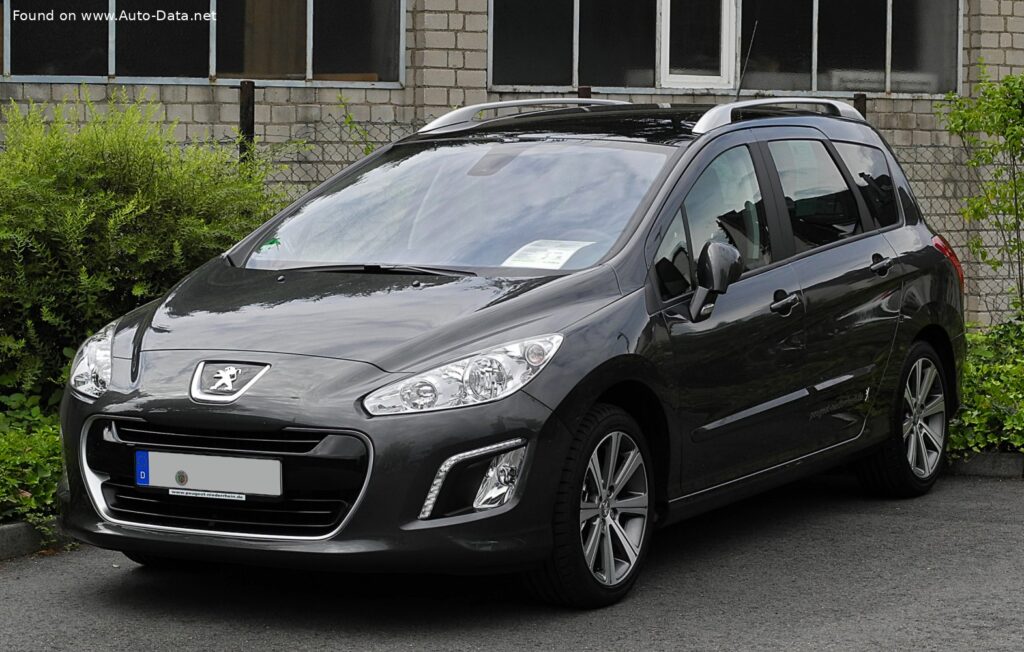
The Peugeot 308 SW I (Phase II), produced from 2011 to 2013, represents a significant iteration of Peugeot’s compact estate car. As part of the first generation 308 series, the SW – standing for “Station Wagon” – offered a practical and stylish alternative to traditional hatchbacks, particularly popular in the European market. While not officially sold in the United States, the 308 SW competed with vehicles like the Volkswagen Golf Estate and Ford Focus Wagon, emphasizing versatility and family-oriented features. The Phase II update brought refinements to the design, technology, and engine options, including the 1.4 16V VTi engine detailed here, producing 98 horsepower.
Peugeot 308 SW I (Phase II): A Detailed Overview
The 308 SW aimed to provide a compelling blend of practicality, comfort, and European driving dynamics. It served as a key model in Peugeot’s lineup, appealing to buyers seeking a vehicle capable of handling both daily commutes and longer journeys with ample cargo space. The Phase II revisions focused on enhancing the vehicle’s appeal through subtle styling changes, improved interior materials, and the introduction of updated safety features. The 1.4 16V VTi engine variant was positioned as an economical option, prioritizing fuel efficiency over outright performance.
Engine & Performance
The 2011-2013 Peugeot 308 SW I (Phase II) 1.4 16V VTi is powered by a 1.4-liter inline four-cylinder gasoline engine, designated the 8FR EP3C. This naturally aspirated engine produces 98 horsepower at 6000 rpm and 136 Nm (100.31 lb.-ft.) of torque at 4000 rpm. The engine utilizes multi-port fuel injection and boasts a power-to-liter ratio of 70.2 hp/l. Power is delivered to the front wheels via a five-speed manual transmission. Performance figures include a 0-100 km/h (0-62 mph) acceleration time of 15.2 seconds and a top speed of 178 km/h (110.6 mph). The 0-60 mph acceleration is calculated at 14.4 seconds. The engine’s focus is on providing adequate power for everyday driving while maintaining reasonable fuel economy. The weight-to-power ratio is 13.9 kg/Hp, and the weight-to-torque ratio is 10 kg/Nm.
Design & Features
The Peugeot 308 SW I (Phase II) is a five-door station wagon (estate) designed to maximize interior space and practicality. Its exterior styling features a sloping roofline and a relatively long wheelbase, contributing to its spacious interior. The Phase II update included minor cosmetic enhancements to the front and rear fascias, as well as revised interior trim. The vehicle offers seating for five passengers and boasts a generous trunk capacity of 520 liters (18.36 cu. ft.) with the rear seats up, expanding to 2149 liters (75.89 cu. ft.) when the rear seats are folded down.
Safety features included ABS (Anti-lock Braking System) as standard equipment. The vehicle’s suspension consists of an independent McPherson strut setup at the front and a semi-independent coil spring arrangement at the rear, providing a balance between ride comfort and handling. Steering is rack and pinion with electric power assistance. The 308 SW I (Phase II) was equipped with 15 or 16-inch wheel rims, fitted with tires sized 195/65 R15 H or 205/55 R16 V respectively. The vehicle’s dimensions are 4500 mm (177.17 in.) in length, 1815 mm (71.46 in.) in width, and 1564 mm (61.57 in.) in height, with a wheelbase of 2708 mm (106.61 in.).
Technical Specifications
| Brand | Peugeot |
| Model | 308 |
| Generation | 308 SW I (Phase II, 2011) |
| Type (Engine) | 1.4 16V VTi (98 Hp) |
| Start of production | 2011 |
| End of production | 2013 |
| Powertrain Architecture | Internal Combustion engine |
| Body type | Station wagon (estate) |
| Seats | 5 |
| Doors | 5 |
| Fuel consumption (urban) | 8.4 l/100 km (28 US mpg, 33.6 UK mpg, 11.9 km/l) |
| Fuel consumption (extra urban) | 5.1 l/100 km (46.1 US mpg, 55.4 UK mpg, 19.6 km/l) |
| Fuel consumption (combined) | 6.3 l/100 km (37.3 US mpg, 44.8 UK mpg, 15.9 km/l) |
| Fuel Type | Petrol (Gasoline) |
| Acceleration 0 – 100 km/h | 15.2 sec |
| Acceleration 0 – 62 mph | 15.2 sec |
| Acceleration 0 – 60 mph | 14.4 sec |
| Maximum speed | 178 km/h (110.6 mph) |
| Emission standard | Euro 5 |
| Weight-to-power ratio | 13.9 kg/Hp |
| Weight-to-torque ratio | 10 kg/Nm |
| Power | 98 Hp @ 6000 rpm |
| Power per litre | 70.2 Hp/l |
| Torque | 136 Nm @ 4000 rpm (100.31 lb.-ft. @ 4000 rpm) |
| Engine layout | Front, Transverse |
| Engine Model/Code | 8FR EP3C |
| Engine displacement | 1397 cm3 (85.25 cu. in.) |
| Number of cylinders | 4 |
| Engine configuration | Inline |
| Number of valves per cylinder | 4 |
| Fuel injection system | Multi-port manifold injection |
| Engine aspiration | Naturally aspirated engine |
| Engine oil capacity | 4.25 l (4.49 US qt | 3.74 UK qt) |
| Coolant capacity | 6 l (6.34 US qt | 5.28 UK qt) |
| Kerb Weight | 1360 kg (2998.29 lbs) |
| Trunk (boot) space – minimum | 520 l (18.36 cu. ft.) |
| Trunk (boot) space – maximum | 2149 l (75.89 cu. ft.) |
| Fuel tank capacity | 60 l (15.85 US gal | 13.2 UK gal) |
| Length | 4500 mm (177.17 in.) |
| Width | 1815 mm (71.46 in.) |
| Height | 1564 mm (61.57 in.) |
| Wheelbase | 2708 mm (106.61 in.) |
| Minimum turning circle | 11.08 m (36.35 ft.) |
| Drivetrain Architecture | Front wheel drive |
| Number of gears | 5 gears, manual transmission |
| Front suspension | Independent, type McPherson with coil spring and anti-roll bar |
| Rear suspension | Semi-independent, coil spring |
| Front brakes | Ventilated discs |
| Rear brakes | Disc |
| Tires size | 195/65 R15 H; 205/55 R16 V |
| Wheel rims size | 15; 16 |
The Peugeot 308 SW I (Phase II) 1.4 16V VTi offered a practical and economical option for buyers in the European market. While not a performance-oriented vehicle, it provided a comfortable and versatile driving experience, making it a popular choice for families and individuals seeking a spacious and fuel-efficient estate car.